Public Land Hunting in Texas: The DIY Hunter's Playbook
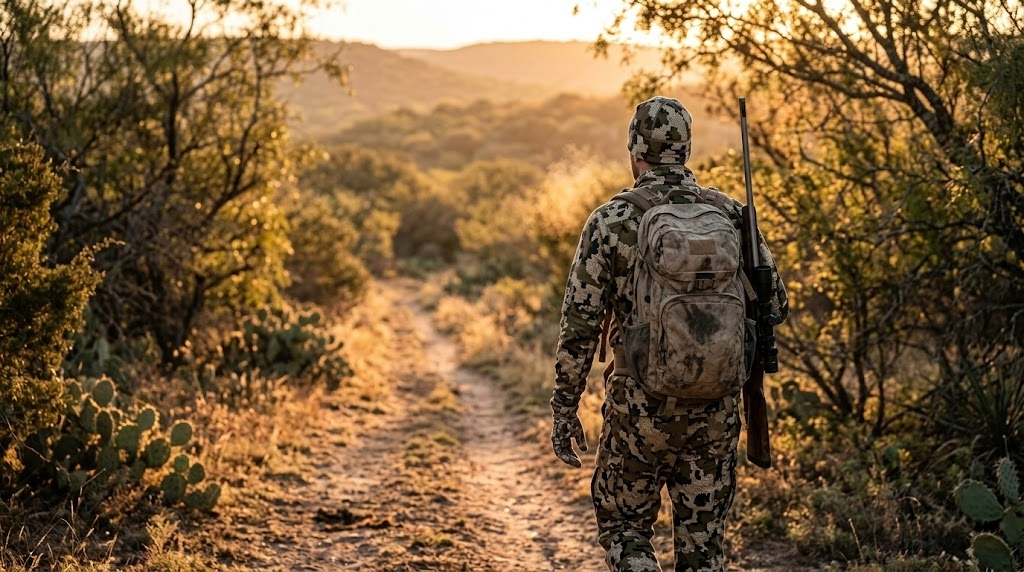
Texas gets a bad rap with public land hunters, and most of it is wrong. Yes, the state is roughly 95 percent privately owned. Yes, you won't find the giant blocks of federal ground you'd hunt in Montana or Colorado. But Texas also runs one of the most creative public hunting programs in the country, and if you know where to look, you can hunt whitetail, hogs, turkey, waterfowl, javelina, mule deer, aoudad, and dove across more than a million acres without ever knocking on a gate.
The catch is that public land hunting in Texas rewards hunters who do their homework. The state's system is built around permits, draws, and specific rules that trip up first-timers. Once you understand how the pieces fit together, Texas opens up in ways most out-of-state hunters never realize.
How Much Public Land Texas Really Has
The Texas Parks and Wildlife Department (TPWD) operates more than 50 Wildlife Management Areas totaling around 760,000 acres. Add in four national forests in East Texas (Sam Houston, Davy Crockett, Angelina, and Sabine) covering about 637,000 acres, plus scattered Corps of Engineers lakes, state parks that allow hunting, and leased private tracts inside the state's public hunting program, and the number climbs past a million accessible acres.
The key document for any Texas public land hunter is the Annual Public Hunting (APH) Permit. It runs about $48, and it unlocks roughly 180 hunt units across the state. That permit is the single best value in Texas hunting, and if you're serious about chasing public ground here, it's your first purchase every fall.
For residents, a standard hunting license runs around $25. Non-residents pay roughly $315 for a general non-resident license, with a $48 five-day special non-resident license available for dove, waterfowl, and exotic hunts. Everyone who buys a license also pays into the federal migratory bird stamp and the state habitat stamp, depending on the species.
TPWD also runs a drawn hunt program, issuing roughly 8,000 permits each year for high-quality hunts on premium properties. Application fees are small (usually $3 to $10), and the odds on some hunts are better than people think. Applying every year is free money if you like a chance at quality ground.
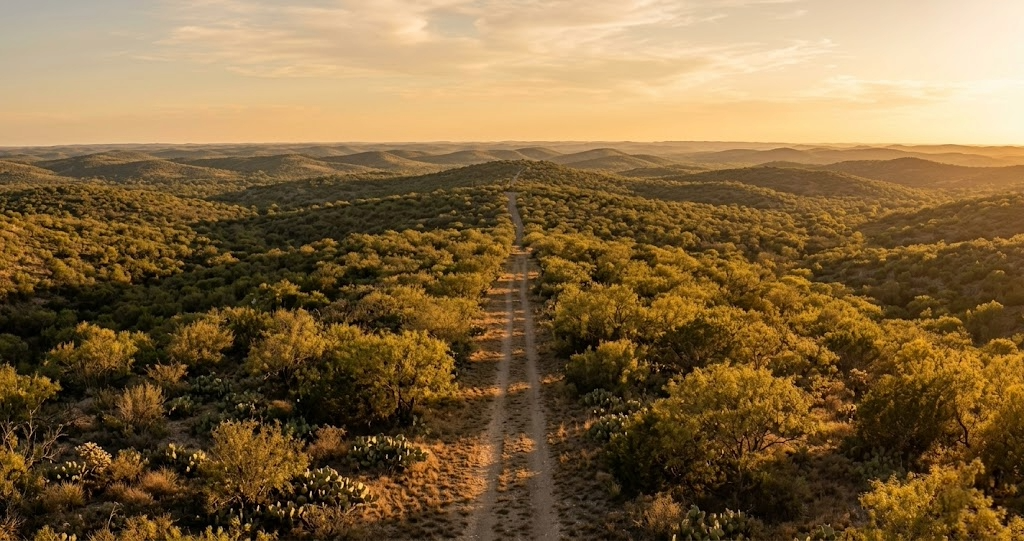
Top Public Hunting Areas in Texas
These are the places worth your time if you're building a Texas public land strategy from scratch.
Sam Houston National Forest
Managing agency: U.S. Forest Service
Acreage: 163,000
Region: Walker, Montgomery, and San Jacinto counties (east of Huntsville)
Primary species: Whitetail, feral hogs, squirrel, turkey
Terrain: Pine and hardwood bottoms, creek drainages, thick understory
Access: Open with a valid Texas hunting license. No APH permit required for general seasons, but check the Stubblefield and Big Creek units for specific rules.
Insider tip: Get deep. Sam Houston gets pounded within a half mile of any forest road, so plan to walk at least a mile and hunt the nasty stuff near creek bottoms. The hogs don't read the pressure maps.
Chaparral WMA
Managing agency: TPWD
Acreage: 15,200
Region: Dimmit and La Salle counties, South Texas brush country
Primary species: Whitetail, javelina, feral hogs, bobwhite quail, dove
Terrain: Classic South Texas thornscrub, mesquite flats, sendero country
Access: Requires an APH permit for most hunts or a drawn permit for the quality deer hunts
Insider tip: The drawn gun deer hunts here are some of the best odds in the state for a mature South Texas buck on public ground. Apply every year. If you don't draw, the APH-period archery hunts still put you on deer that most Texans only see in brochures.
Alabama Creek WMA
Managing agency: TPWD inside Davy Crockett National Forest
Acreage: 14,561
Region: Trinity County
Primary species: Whitetail, hogs, turkey, squirrel
Terrain: Mixed pine and hardwood, creek drainages
Access: APH permit required during TPWD hunt periods
Insider tip: The creek bottoms along Hickory Creek hold good deer and see a fraction of the pressure Sam Houston gets. Use the boundary between the WMA rules and the surrounding national forest to your advantage on pressured days.
Gene Howe WMA
Managing agency: TPWD
Acreage: 5,821
Region: Hemphill County in the Panhandle
Primary species: Whitetail, Rio Grande turkey, bobwhite, dove
Terrain: Canadian River bottomlands, sand sage, cottonwoods
Access: APH permit or drawn hunt
Insider tip: This is one of the better Rio Grande turkey spots on public ground in Texas. The river bottom roost trees are obvious, so set up on travel corridors between roost and feed rather than trying to call birds off the limb.
Black Gap WMA
Managing agency: TPWD
Acreage: 103,000
Region: Brewster County, Big Bend Country
Primary species: Mule deer, aoudad, javelina, desert bighorn (drawn only)
Terrain: Desert mountains, arroyos, cliffs, sotol flats
Access: Most hunts are drawn, but there are APH-eligible archery windows
Insider tip: Aoudad hunting here is world-class and often overlooked by out-of-staters. You can hunt them year-round on APH archery days, and the population is strong enough that success rates for spot-and-stalk hunters who put in miles are legitimate.
Matagorda Island WMA
Managing agency: TPWD
Acreage: 43,893
Region: Calhoun County, Gulf Coast barrier island
Primary species: Whitetail, feral hogs, waterfowl
Terrain: Coastal prairie, salt marsh, brush pockets
Access: Boat access only, drawn hunts for deer, APH for some hunts
Insider tip: The deer here are smaller-bodied than inland Texas whitetail, but the hunt experience is unlike anything else in the state. Bring a kayak or shallow-draft boat and plan for wind.
J.D. Murphree WMA
Managing agency: TPWD
Acreage: 24,498
Region: Jefferson County, Southeast Texas
Primary species: Waterfowl (puddle ducks, teal, geese), alligator (drawn)
Terrain: Freshwater and brackish marsh
Access: APH permit, boat required for most productive areas
Insider tip: Teal season in September is a sleeper here. Locals know about it, but out-of-staters almost never make the trip. A shallow-water boat and a handful of decoys is all you need.
Las Palomas WMA (Ocotillo Unit)
Managing agency: TPWD
Acreage: 3,300 across multiple units in the Rio Grande Valley
Region: Hidalgo, Cameron, and Starr counties
Primary species: White-winged dove, mourning dove, quail
Terrain: Mesquite brush, agricultural edges, river bottom
Access: APH permit
Insider tip: White-wing opening weekend in September is the whole point of this place. Scout for water tanks and roost trees a week ahead, and expect company.
Caddo National Grasslands
Managing agency: U.S. Forest Service
Acreage: 17,785
Region: Fannin County, North Texas
Primary species: Whitetail, hogs, dove, rabbit, squirrel
Terrain: Post oak savannah, creek bottoms, scattered hardwoods
Access: Texas hunting license only, no APH required
Insider tip: The little pockets of thick cover along Bois d'Arc Creek hold surprising numbers of deer for how open the surrounding ground looks. Hunt the transitions.
What You Can Hunt on Texas Public Land
Whitetail are the headliner, and you'll find them across every ecoregion from the Piney Woods to the South Texas brush to the Edwards Plateau. Rio Grande turkey populations are strong in the Hill Country, Panhandle, and Cross Timbers, while Eastern turkey populations are under tighter regulations in a handful of East Texas counties.
Feral hogs are open year-round on most public land with a valid hunting license, and they're the best excuse to learn a new piece of ground. Waterfowl hunters have strong options on the coastal WMAs and the Texas High Plains playa lakes. Dove hunting is a September tradition, especially on the Las Palomas units.
For something different, Texas public ground also offers javelina in South and West Texas, aoudad (free-range Barbary sheep) in Black Gap and other Trans-Pecos units, and occasional drawn hunts for desert bighorn, pronghorn, and exotics like blackbuck.
Season Structure and Drawn Hunts
Texas runs a split general whitetail season roughly from early November through early January in most counties, with a special late youth-only season and a late muzzleloader and archery window in select areas. The archery-only season starts statewide in late September or early October. The specific dates shift each year, so always check current TPWD regulations before planning a trip.
Turkey seasons run from spring (roughly mid-March through early May, depending on zone) and fall in some counties. Waterfowl seasons follow federal frameworks, with the High Plains, North, and South zones splitting Texas into different calendars.
The drawn hunt system is worth understanding. Applications open in August and run through mid-October for most fall hunts. You pay a small non-refundable application fee, list your preferred hunts, and wait for draw results. Some hunts have preference points, some don't. Reading the drawn hunt booklet cover to cover before applying is time well spent.
Access Tips That Save You Headaches
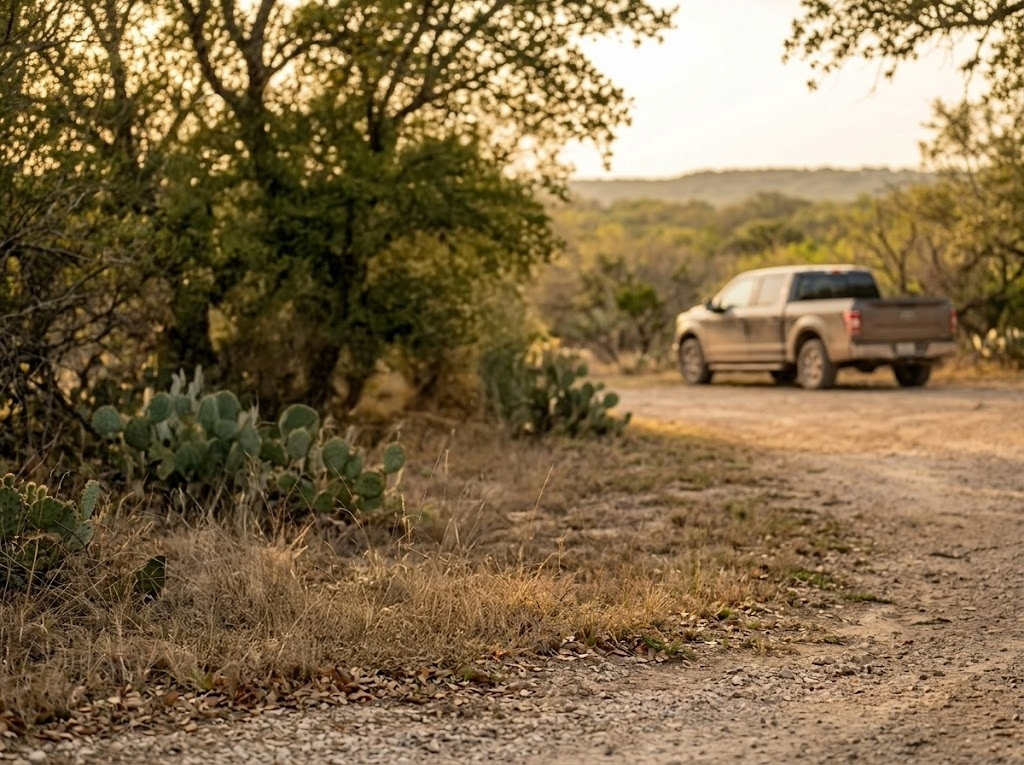
Carry your APH permit in your wallet and keep a printed copy of the current Map Booklet in your truck. Wardens do check, and some units have sign-in boards at entry points that you're required to fill out.
Not every WMA allows vehicle access beyond the entrance. Walk-in-only rules are common, and driving past a gate you weren't supposed to pass is a fast way to lose your permit and get a citation. Read the unit-specific rules in the Map Booklet for the place you're hunting.
Camping rules vary by unit. Some allow primitive camping on the WMA itself, some require you to camp off-site at nearby state parks or private campgrounds. The national forests in East Texas are more flexible, with dispersed camping allowed in most areas.
Check-in stations are available at some high-pressure WMAs during scheduled hunts. If a unit requires self-check-in, do it. That data is what keeps the hunt structure funded.
Gear Considerations for Texas
The terrain and climate in Texas demand gear that handles heat, thorns, and long sightlines. A few things that make a real difference:
Snake boots or gaiters. Western diamondback, copperhead, and coral snake are all part of the deal in Texas, and archery deer season overlaps with the warm months when snakes are still active. The LaCrosse AeroHead Sport and Irish Setter VaprTrek with snake protection are solid picks. Check the current price at Cabela's
Brush-proof pants. South Texas thornscrub and West Texas sotol will shred regular hunting pants in a day. KUIU Attack pants hold up well, and the First Lite Guide pants are another strong option. Check the current price at KUIU.com
Quality optics. The open country of the Panhandle, Hill Country, and Trans-Pecos makes binoculars the single most valuable piece of gear. The Vortex Diamondback HD 10x42 is the best value pick under $300. Check the current price at Amazon. If you're on a tighter budget, the Vortex Crossfire HD 10x42 runs around $150 and gets the job done.
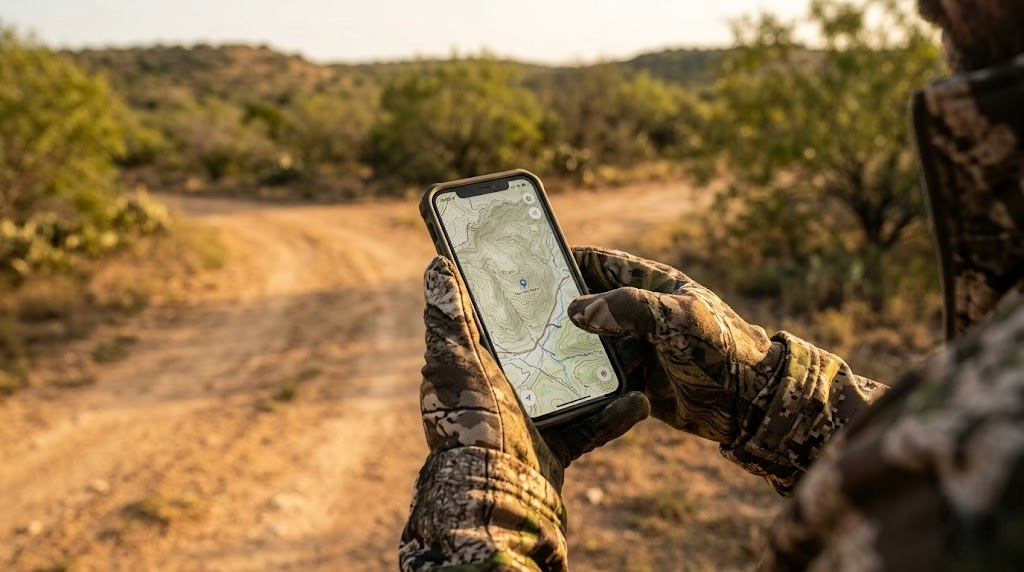
A mapping app with Texas public land layers. OnX Hunt is the standard for good reason. The APH unit boundaries are loaded in, and being able to verify you're on legal ground in real time is worth the subscription cost by itself. Try onX Hunt free for seven days.
Heat management. Even in November, Texas afternoons run 70-plus in South Texas. Light base layers, plenty of water, and a way to quickly carry quartered meat matter more here than insulated everything.
The limitation on Texas gear is that no single setup works statewide. What you wear in Sam Houston National Forest in December is very different from what you need in the Panhandle during the same week. Plan by region, not by season alone.
Finding Spots Other Hunters Skip
The single best edge on Texas public land is effort. The pressure on most WMAs drops off sharply past the first half mile from any road or parking area. People drive the two-tracks, hunt the obvious stands, and go home.
Pull up satellite imagery and look for thick cover pockets that are hard to reach. Creek bottoms, old burn scars that have grown back into cover, and transition zones between habitat types are your friends. Hogs and mature deer both key on the stuff other hunters can't be bothered to push into.
Timing matters as much as location. Weekday hunts on any Texas WMA are dramatically less pressured than weekends. If you can hunt Tuesday through Thursday, you're essentially on private ground compared to the Saturday crowd.
Mapping apps like onX Hunt let you do serious e-scouting from your couch. Drop pins on terrain features, water sources, and bedding cover, then verify on the ground your first morning.
Frequently Asked Questions
Do I need a separate permit to hunt Texas WMAs?
Yes, most TPWD WMAs require an Annual Public Hunting Permit ($48) in addition to your regular Texas hunting license. The national forests in East Texas (Sam Houston, Davy Crockett, Angelina, Sabine) don't require an APH permit for general-season hunting, just a valid Texas license.
How hard is it to draw a Texas quality deer hunt?
Odds vary by unit, but some drawn hunts have 1 in 20 odds or better, and most cost only a few dollars to apply. The premium South Texas and Hill Country hunts are the longest odds. Apply every year, even for hunts you think you'll never draw, because the application fees are cheap and somebody wins every draw.
Can non-residents hunt Texas public land?
Yes. Non-residents buy a non-resident hunting license (around $315 for general or $48 for a five-day special) and, if they're hunting on WMAs that require it, the APH permit. There's no separate public land tag lottery for non-residents. You're on the same ground as Texas residents.
Is there free hunting land in Texas?
The Caddo National Grasslands and the four East Texas national forests are the closest thing to truly free public hunting in Texas, requiring only a standard hunting license. Everything else through TPWD needs either the APH permit or a drawn hunt tag.
What's the best WMA for a first-time Texas public land hunter?
Sam Houston National Forest is the most forgiving entry point. It's big, it holds deer and hogs, it doesn't require an APH permit, and it's within driving distance of Houston, Dallas, and Austin. You'll get your feet wet without committing to a drawn hunt system you don't yet understand.
Want the full breakdown of Texas WMAs with unit-by-unit notes plus the same for all 50 states? Subscribe to the LandsToHunt newsletter below and get our free state-by-state public land hunting guides delivered to your inbox.
