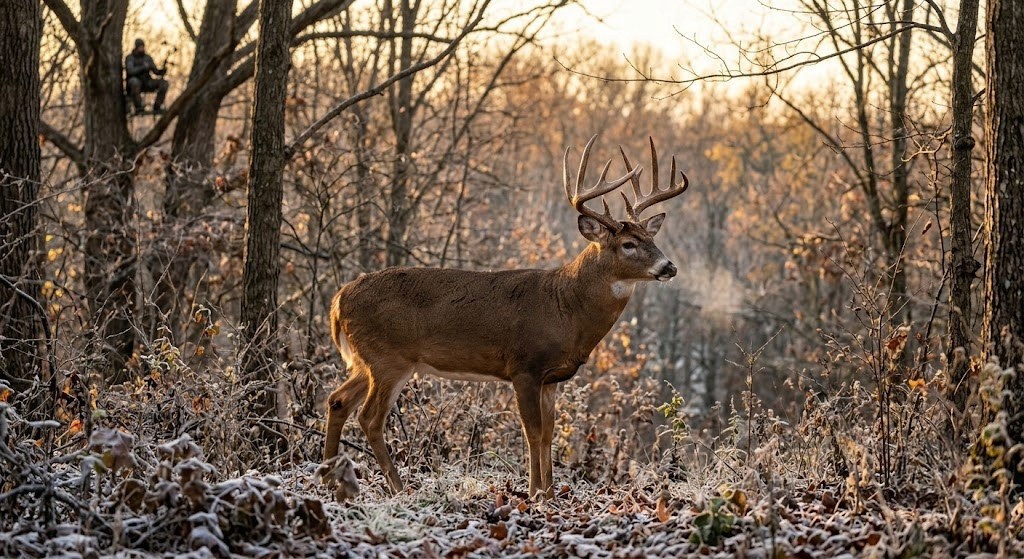
Deer Hunting: Strategy, Gear, and the Grind of Public Land
Deer hunting is the reason most of us got into the woods in the first place. This section covers the full spectrum: strategy articles that walk through how to hunt specific terrain and situations, gear reviews grounded in seasons of use, food plot guides for the hunters running their own habitat, and state-by-state deer hunting resources that map where the biggest whitetails live on public ground.
Strategy that skips the beginner explainer
Nothing here is written by someone who has never carried a bow into a swamp at 4 a.m. or field-dressed a buck by headlamp. Every strategy article assumes you already know the basics and skips the beginner explainer to get to the specifics that actually change outcomes. How to read a topo map for deer travel corridors. When to hunt terrain funnels versus food source edges. How to pattern a mature buck on 500 acres of pressured woods. How to hunt the October lull, the rut peak, and the late season when everyone else has hung up their bow. Each article is built around what works in the field, tested across multiple states and terrain types. Read the full library in our Field Notes blog.
Honest gear reviews grounded in real seasons
Gear coverage is honest. If a boot is uncomfortable after 6 miles, that's in the review. If a rangefinder struggles in low light, you'll read about it. We focus on the gear that actually matters for public land hunters: boots that handle wet cold, layering systems that scale from a September 60-degree bow sit to a below-zero December stand, saddles and treestand platforms that work on the mid-diameter aspens and hickories most public hunters run into, optics that earn their weight, and mapping apps that pay for themselves the first weekend. The full Gear Reviews section has the current tested picks.
Food plots, habitat, and management
Food plots and habitat work matter even for public-land hunters because most of us hunt private ground too. The food plot section runs from small-property kill plots to whole-property habitat plans, with real seed rates, soil prep, and rotation strategy from hunters who have been running the same ground for a decade or more. For deeper background on herd health, deer biology, and habitat science, the National Deer Association is the authoritative research hub, and their extension articles pair well with the field-tested content here.
State-by-state whitetail resources
State guides tie everything together. When you're planning a trip to Michigan, Kentucky, or Kansas, the state guide gives you the WMAs, the season structure, and the terrain-specific gear notes so you can pack once and hunt smart. Federal public lands add another layer: the National Wildlife Refuge System maintained by the U.S. Fish and Wildlife Service opens deer hunts on refuges across nearly every state, and refuge hunts often see less pressure than nearby state WMAs. For record-book context and fair-chase ethics standards for the biggest bucks, the Boone and Crockett Club maintains the definitive records and management-ethics guidance.
Start with the strategy articles below, or jump to a specific topic using the categories.

Public Deer Hunting Opportunities by State
Explore public land deer hunting across all U.S. regions. Discover the best states for whitetail and mule deer based on terrain, access, and season options.
Colorado supports strong mule deer populations with access to public BLM and national forest lands across the western half of the state.
Montana offers both whitetail and mule deer hunting. General-season licenses are available, with vast public land and mountain access.
Home to healthy mule deer herds, Idaho also provides solid public land access through its national forests and state land programs.
One of the top public land whitetail destinations in the Midwest. National forests and state lands offer varied terrain and long seasons.