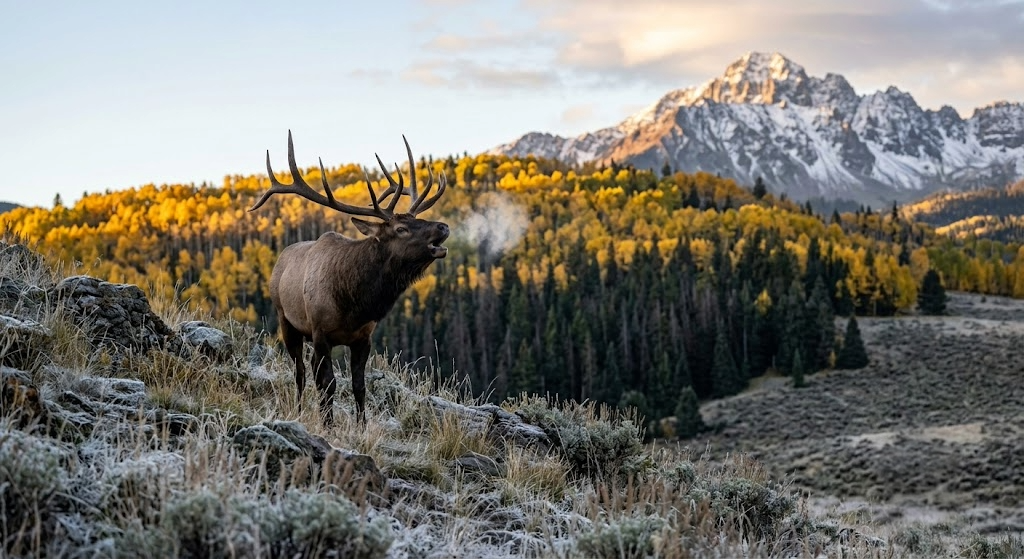
Elk Hunting: DIY Public Land Strategy, Gear, and State Guides
Elk hunting is the hunt that pulls whitetail hunters west. Bigger country, bigger animals, and a level of physical difficulty that changes what you carry and how you prepare. Nothing else in North American hunting quite matches archery elk at 20 yards after a two-mile stalk on a bull that's been raking timber all morning.
Western state coverage state by state
This section covers DIY public land elk hunting across the western states. Colorado holds the country's largest elk herd and offers over-the-counter archery tags in most units. Wyoming and Montana run draw-based systems that reward preference-point strategy. Idaho, New Mexico, Arizona, Utah, and Nevada each have their own draw structures and their own terrain to learn. Every western elk state gets its own guide with the top public units, draw odds, terrain notes, and local intelligence. Start with our State Guides directory to see coverage by state.
Most western elk country is national forest ground. The U.S. Forest Service visitor system maintains motor vehicle use maps, seasonal road closures, and campground listings for every unit you might hunt. Downloading the current MVUM before a trip is one of the single most useful pieces of planning you can do.
Strategy, calling, and reading elk daily
Strategy content covers what actually kills bulls. Reading the daily bugle pattern to locate herds without spooking them. Cold-calling versus locate-and-stalk. Setting up on wallows, saddles, benches, and dark timber transitions. Elk behavior across the rut peak, the post-rut lull, and the late-season snow migrations. Solo hunts, two-person hunts, and the pack-out logistics that determine how deep you can push in on day one. The Rocky Mountain Elk Foundation is the definitive source on elk habitat, herd management, and range restoration, and their state-by-state population reports pair well with these tactical articles.
Backcountry gear for real elevation
Gear coverage assumes you're hunting from your truck, from a wall tent, or from a backpack camp four miles from the nearest road. Boots that handle 8,000-11,000 feet of elevation gain in a week. Packs that carry a bone-out bull off the mountain in three trips. Optics that let you glass a basin from four miles out. Layering systems that scale from a 45-degree pre-rut afternoon to a 15-degree post-storm morning. Bow tuning specifics for the shots you actually take at elk. Calls, tuning, and the diaphragm technique that separates hunters who get answered from hunters who don't. See tested picks in Gear Reviews.
DIY logistics and the public land tradition
DIY is the emphasis here because elk hunting on public land is a genuinely different sport from a guided ranch hunt. You are your own outfitter, packer, and butcher. The strategy articles walk through the logistics that most beginners underestimate: water sourcing at altitude, meat preservation in September heat, weight management for a solo pack-out, and the map work that keeps you from getting turned around in country you've never seen before. Public land elk hunting exists because of decades of advocacy, and organizations like Backcountry Hunters & Anglers are why access remains as strong as it is.
Whether you're planning your first western hunt or looking to sharpen a system that already works, start with the strategy articles below and open your target state's guide.

Public Elk Hunting Opportunities by State
Explore DIY elk hunting access on public lands across the U.S. Use this guide to find top states, habitat types, and general tag info.
Home to the largest elk population in North America, Colorado offers OTC and limited draw tags. Access is excellent via national forests and BLM lands.
Montana offers general-season elk licenses for residents and many units for nonresidents. Huge expanses of national forest and backcountry access.
Idaho features both OTC and controlled hunts across rugged terrain. National forest and state lands provide prime elk habitat.
Mostly draw-only for nonresidents, but offers high elk success rates and large expanses of huntable public land.
Utah's trophy-quality elk units are mostly limited-entry. Some general hunts are available with high elevation access.
Hunt both Roosevelt and Rocky Mountain elk with a mix of OTC and controlled tags. Public lands offer strong access opportunities.
Draw-only elk tags with high success in many units. BLM and national forest lands offer open terrain and great hunting access.
Known for giant bulls, Arizona’s elk tags are lottery-only. Northern zones offer public land access for experienced hunters.
All elk tags are awarded by draw. BLM and high desert habitats provide challenging but rewarding hunts.
Washington offers Roosevelt and Rocky Mountain elk hunts, with a mix of public land access and tag types by zone.
The premier eastern elk state with a successful reintroduction program. All tags are awarded via lottery for public and private lands.
Elk hunting is available through lottery draws. Public game lands and forests offer good access in central PA elk zones.
A small elk herd in northern Michigan is huntable via lottery. Public lands in elk zones are accessible but hunts are very limited.