Best Cellular Trail Cameras for 2026: Field-Tested Picks for Public Land Hunters
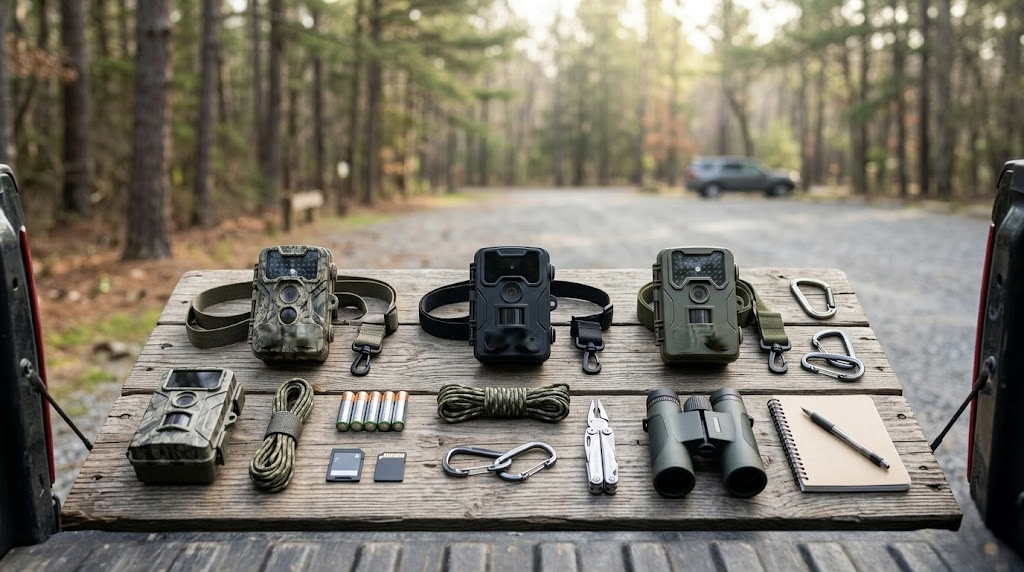
Running cameras on public land changes everything about how you scout. You can't just walk in every weekend to swap SD cards without bumping deer, alerting other hunters to your spot, or risking a stolen camera. That's why a good cellular trail camera earns its keep fast. The best cellular trail cameras send you photos and video the moment a deer steps in front of the lens, which means you scout from your phone instead of your boots, and your spot stays cold until you're ready to hunt it.
I've run cellular cameras across food plots, scrapes, pinch points, and beaver dam crossings on both private ground in southwest Michigan and public land in three different states. Some of these units have lived through brutal winters, soaking spring rains, and 100-degree summer days. Some of them have failed me at the worst possible time. Here's what I've learned, what I'd buy again, and what to skip.
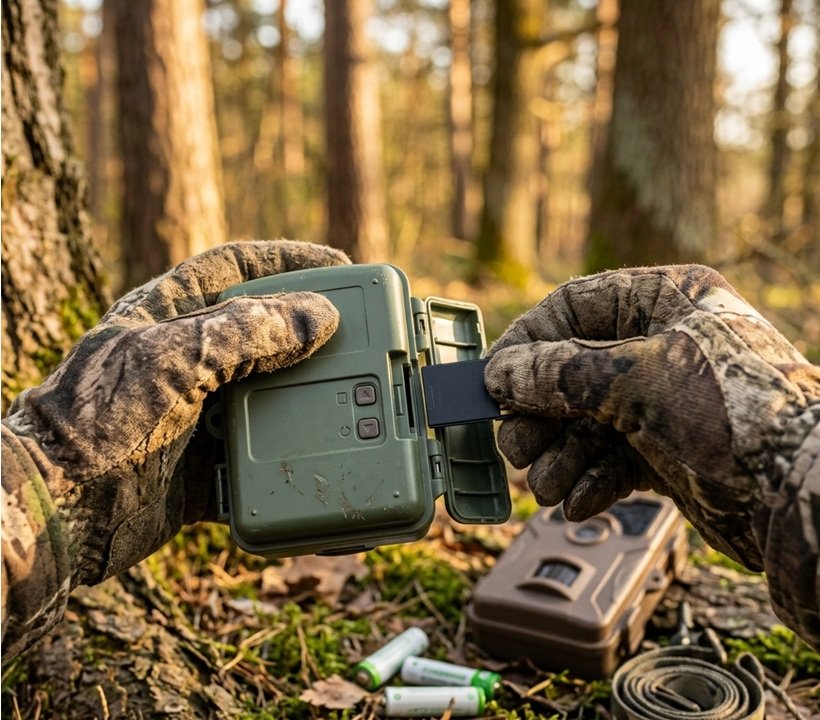
Quick Picks: Best Cellular Trail Cameras at a Glance
Best Overall: Stealth Cam Spectre 4K Dual-Core Cellular Trail Camera, no gimmicks. $200 range.
Best Premium: Spartan GoLive 3 4G/LTE, real-time video. $290 range.
Best Budget: Moultrie Mobile Edge Pro. Solid value, no contract required for trial. $100 range.
Best for Public Land: Muddy Matrix 2.0. Dual-SIM auto-connect, killer battery life, runs on the Command Pro app, $80 range.
Best Image Quality: Stealth Cam Deceptor Max 2.0. 40MP photos, 1440qhd video, strong night flash. $125 range.
Best Long Battery Life: Bushnell CelluCORE 20 Solar. Solar panel keeps it running for months. $160 range.
Best for Big Properties: Reconyx HyperFire 2 Cellular. Bombproof build, fastest trigger out there. $700+ range.
Stealth Cam Spectre 4K: Best Overall Cellular Trail Camera
The Spectre 4K is what I hand to anyone who asks me which cellular camera to buy first. It does the basics right and skips the gimmicks. The dual-core processor handles the trigger and the cellular transmission as separate jobs, so you don't get the lag you see on cheaper cameras when they're mid-upload and a deer walks by. Daytime photos run a true 4K resolution, video clips are sharp enough to pick out individual points on a rack, and the Command Pro app is one of the cleanest I've used. You can change settings remotely, request HD images on demand, and tag locations so you actually remember which camera is on which scrape.
What stands out is reliability. I've had three of these running for two seasons now. Two of them are still pulling photos every day, and the one that quit got knocked off a tree by what I'm pretty sure was a black bear. The dual SIM auto-connect feature automatically selects the strongest carrier signal between Verizon and AT&T, so you don't have to guess during setup. The no-glow infrared flash doesn't spook deer, which matters when you're trying to inventory bucks on a heavily used scrape line.
Limitations: It's a bigger camera than the Tactacam units, so concealment takes a little more thought on public land. The 4K video files chew through your data plan fast if you don't dial back the resolution for routine surveillance. And the price tag is at the upper end of the mainstream cellular market.
Best for: The hunter who wants top-tier image quality on private ground or a leased property where the camera can stay put long-term.
Price: Around $200. Check the Stealth Cam Spectre 4K Dual-Core Cellular Trail Camera’s price at Amazon.
Spartan GoLive 3 4G/LTE: Best Premium Cellular Trail Camera
Spartan sits in a different tier than most cellular cameras, and the GoLive 3 is the camera that earns the price. The headline feature is real-time live video streaming straight to your phone at up to 30 frames per second. Tap a button in the app and you're watching your food plot in something close to real time, with about a 4-second delay. For inventorying mature bucks during the rut or watching a scrape line on a property you can't get to, that capability is in a class by itself.
The hardware backs it up. Multi-carrier auto-connect picks the strongest signal between Verizon and AT&T, so you're covered in spots where other cameras drop off. The 96-degree wide field of view catches deer that would walk past the edge of a narrower frame, and the no-glow infrared flash reaches 60 feet without throwing any visible light. The newer GoLive 3 added a 30% jump in battery efficiency, plus a repositioned 12V DC port that makes solar panel hookups cleaner. The built-in anti-theft GPS will track the camera if someone walks off with it, even if they pull the antenna off or rip out the batteries.
I've got one of these on a private piece in southwest Michigan, watching a clover and chicory plot from across a draw. The image quality is honestly better than the megapixel rating suggests because Spartan doesn't blow up the sensor with interpolation games, so you get clean, real photos instead of bloated files that take forever to send.
Limitations: The price tag is the obvious one. Plans run $6 to $12 per camera per month depending on volume, which is fair but adds up across multiple units. The 80-foot detection range is solid, not class-leading. And the live stream eats data fast, so it's a feature you'll use selectively, not constantly.
Best for: Serious land managers, lease holders, or property owners who want top-tier reliability, theft protection, and the option to watch their ground in real time.
Price: Around $290 depending on configuration. Check the Spartan GoLive 3 4G/LTE price on Amazon.
Moultrie Mobile Edge Pro: Best Budget Cellular Trail Camera
If you're getting into cellular cameras and don't want to spend $200 to find out if you even like them, the Moultrie Edge Pro is your starting point. It uses Moultrie's own auto-connect system that picks between Verizon and AT&T, and it includes a free trial of their data plan so you can see if cellular cameras fit how you hunt before committing.
The image quality is honestly better than the price suggests. Daytime photos are clean, the trigger is reasonably fast, and the app is well organized once you get past the initial setup. Battery life on 16 AAs has run me about 4 to 5 months of moderate activity per camera.
Limitations: Night photos are noticeably grainier than the Tactacam or SPYPOINT. The trigger lag is a hair slower, so you'll occasionally get a photo of a deer's back end instead of its head. And the app, while functional, has a learning curve that takes a weekend to get past.
Best for: First-time cellular camera buyer or anyone running a lot of cameras on a budget.
Price: Around $100. Check the Moultrie Mobile Edge Pro’s price on Amazon.
Muddy Matrix 2.0: Best Cellular Trail Camera for Public Land
Public land cameras have one job above all others: stay running and stay unnoticed. The Muddy Matrix 2.0 hits both marks better than anything else in its price range. The dark housing blends into bark without any reflective surfaces giving it away, and the battery life is the real story. Loaded with 16 AA lithiums, this camera will run for the better part of a year on photo mode, which means fewer check-ins, fewer scent deposits, and less risk of someone watching you walk to your spot.
The dual-SIM auto-connect switches between Verizon and AT&T based on which has the better signal at your setup, and that flexibility matters when you're hanging cameras a half mile back into a state forest where coverage drops off. The 0.4-second trigger speed catches deer cleanly on trail crossings, the 36MP daytime photos give you enough resolution to pick out brow tines, and the Command Pro app handles on-demand photo requests, camera sharing with hunting buddies, and HuntStand integration if that's your mapping platform.
I run a bunch of these in southwest Michigan. Both have been out for a full season without a single missed connection or theft attempt. The 12V external power jack is a nice option if you want to add a battery box for setups you really don't want to revisit until you're ready to hunt.
Limitations: The 80-foot detection range is solid but not class-leading, so place these on tight pinch points and trail crossings rather than wide field edges. Night photos are good but not as sharp as the Spectre 4K or Spartan GoLive 3.. The plastic battery tray takes a firm pull to remove because the batteries seat tightly, which is a small annoyance you'll only notice on swap day.
Best for: Public land, leased ground with shared access, or any setup where you want to walk away and not come back for months.
Price: Around $80. Check the Muddy Matrix 2.0 Cellular Trail Camera on Amazon.
Stealth Cam Deceptor Max 2.0: Best Image Quality
If you care more about photo quality than anything else, the Stealth Cam Deceptor Max 2.0 delivers. The 40MP photos are sharp enough to count individual hairs on a deer's brisket, and the 1440qhd video runs smoothly with audio. The night flash is one of the strongest in this price range, reaching out past 100 feet without washing out the foreground.
The Command Pro app has gotten better over the last two years, and the camera now connects to Verizon, AT&T, or T-Mobile networks. The build is solid, with a thicker housing than most competitors, which I've found shrugs off rain and snow without issue.
Limitations: Bigger and heavier than the competition. The data plans are middle-of-the-road in cost. Setup takes a bit more patience than the Tactacam or Moultrie units.
Best for: Hunters who want gallery-quality images for inventorying bucks, especially on private ground or food plots where the camera can stay put long-term.
Price: Around $125. Check the Stealth Cam Deceptor’s price on Amazon.
Bushnell CelluCORE 20 Solar: Best Long Battery Life
The integrated solar panel on the CelluCORE 20 Solar is the feature that sells this camera. Set it on a south-facing tree with reasonable sun exposure, and you can leave it for an entire season without touching it. Mine ran from June through December last year on the original battery charge, averaging 30 photos a day.
The image quality is solid for the price, the trigger is fast enough for most situations, and the Bushnell app is straightforward. Plans run through Bushnell's own service, which is pretty reasonably priced.
Limitations: If you put this camera in deep timber or a heavily shaded creek bottom, the solar panel won't keep up, and you'll need to fall back on battery power. Night images are average. The whole package is a bit larger due to the solar panel.
Best for: Cameras you want to set and forget on field edges, food plots, or other open settings with sun exposure.
Price: Around $160. Check the Bushnell CelluCORE 20 Solar’s most recent price at Amazon.
HyperFire 4K Covert Cellular: Best for Serious Hunters with Big Properties
This is the camera you buy when money matters less than performance. Reconyx builds these things like military gear. The trigger fires in about a fifth of a second, which is fast enough to catch a deer at a full trot. The no-glow infrared is invisible to deer and humans, and the housing has survived multiple seasons of hard use without a single failure across the three units I've run.
The cellular integration ties into Reconyx's UltraFire platform, which is the cleanest professional-grade interface I've used. If you're managing 20+ cameras across a large property or an outfitting operation, this is the system that scales.
Limitations: Price. At $500+ per camera, this is a serious investment. Subscription costs are also higher. Overkill for the average weekend hunter.
Best for: Land managers, outfitters, or hunters with large properties who need maximum reliability.
Price: $500+. Check the Reconyx HyperFire 4K Cellular’s price at Reconyx.
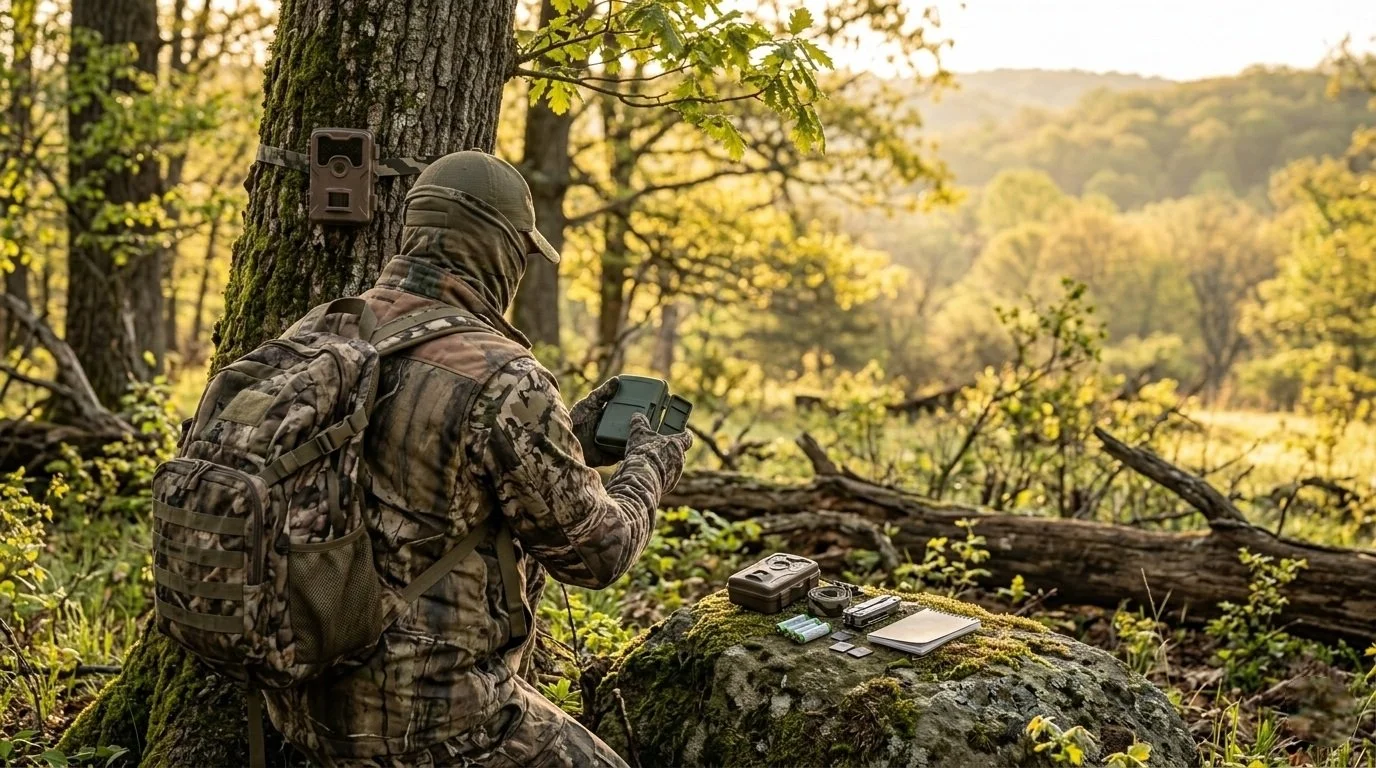
Cellular Trail Camera Buyer's Guide: What Actually Matters
Marketing for trail cameras is full of numbers that sound impressive but don't translate to real-world results in the field. Here's what to pay attention to and what to ignore.
Trigger Speed
Anything under 0.5 seconds is fast enough for most hunting situations. Below 0.3 seconds, you get cleaner photos of moving animals on trails. Trigger speed matters more than megapixels for action shots.
Image Resolution
You don't need 40MP photos. Most modern cameras list inflated resolution numbers from interpolated sensors. A real 12MP sensor will give you a sharper photo than a software-boosted 40MP image. Pay attention to the actual sensor size, not the headline number.
Cellular Carrier Coverage
This is the single most important thing. A camera that doesn't have a signal at your spot is a $200 paperweight. Auto-connect cameras that switch between Verizon and AT&T (and sometimes T-Mobile) save you a lot of headaches. Check coverage maps before you buy, and if your spot is borderline, get a camera with an external antenna port so you can add a booster.
Battery Life and Power Options
Look for cameras that take 12 or 16 AA batteries, or that accept external 12V power and solar. Avoid cameras that rely on proprietary battery packs that you can only buy from the manufacturer. Lithium AAs nearly double the runtime of alkalines in cold weather.
Data Plans
Read the fine print. Some companies advertise low monthly costs but throttle you after a few hundred photos. Plan on at least 1,000 photos per camera per month if you're running it in a productive spot during the rut. The cheapest camera with the most expensive plan will cost more over a year than a midrange camera with a fair plan.
Detection Range and Flash Range
Most cellular cameras claim 80 to 100 feet. In reality, expect 50-70 feet of usable detection range on most units. Don't put one in a wide field expecting it to cover both sides of a draw. Place them in pinch points, on trails, or near scrapes where deer will pass within 30 feet.
Budget Pick Spotlight: Moultrie Mobile Edge Pro
If $100 is your ceiling and you want a real cellular camera that won't disappoint you, the Edge Pro is the pick. The performance gap between it and a $200 camera is smaller than the price gap. You give up some night photo quality and a hair of trigger speed, but you get a camera that connects reliably, sends photos consistently, and gives you the cellular advantage of remote scouting at a price where you can afford to run three or four of them across a property.
The free trial of Moultrie's data plan is the other reason this camera makes the list. It lets you test cellular scouting without committing to a subscription before you know it'll work for how you hunt.
Frequently Asked Questions
Do cellular trail cameras work in areas without cell service?
No. Cellular cameras need at least one bar of signal from a compatible carrier to send photos. Before you buy, check the cellular coverage maps for Verizon, AT&T, and T-Mobile at your hunting location. If you're on the edge of coverage, look for a camera with an external antenna port so you can add a directional antenna to pull in a usable signal.
How much does a cellular trail camera plan cost per month?
Plans run from about $5 a month for low-volume use up to $20 or more for unlimited photos and HD video. For a typical setup sending 30 to 50 photos a day, expect to pay around $10 to $15 per camera per month. Most companies offer discounts when you bundle multiple cameras under one account.
Are cellular trail cameras legal on public land?
It depends on the state. Some states have banned all trail cameras on public land; some have banned only cellular cameras; some restrict them during certain seasons; and some have no restrictions at all. Always check your state wildlife agency's regulations before placing a camera on public ground. The rules change often, so verify each year.
How do I keep my trail camera from being stolen on public land?
Use a low-profile camera like the Muddy Matrix 2.0, place it 10 to 12 feet up the tree with a screw-in tree step ladder, angle it down toward the trail, and secure it with a Python cable lock threaded through the camera and around the tree. Set it back from the trail 15 to 20 feet so casual passersby don't notice it. Avoid placing cameras on heavily traveled trails or near parking areas.
What's the best cellular trail camera under $200?
The Stealth Cam Spectre 4K is the best all-around option under $200. For pure budget value, the Moultrie Mobile Edge Pro at around $100 punches well above its price and I am personlly content with the Muddy Matrix. They all will give you reliable cellular service, decent image quality, and a workable app experience without forcing you into expensive data plans.
Cellular trail cameras have changed how serious hunters scout, especially on public land where every visit risks burning a spot. Pick the camera that matches how and where you hunt, set it up in the right location, and pair it with a smart data plan. The intel you'll gather over a single season will pay back the investment many times over.
Want help finding the right public land for your next cellular camera setup? Subscribe for free state-by-state public land hunting guides delivered straight to your inbox, with maps, regulations, and the kind of access intel you won't find on the state agency website below.
