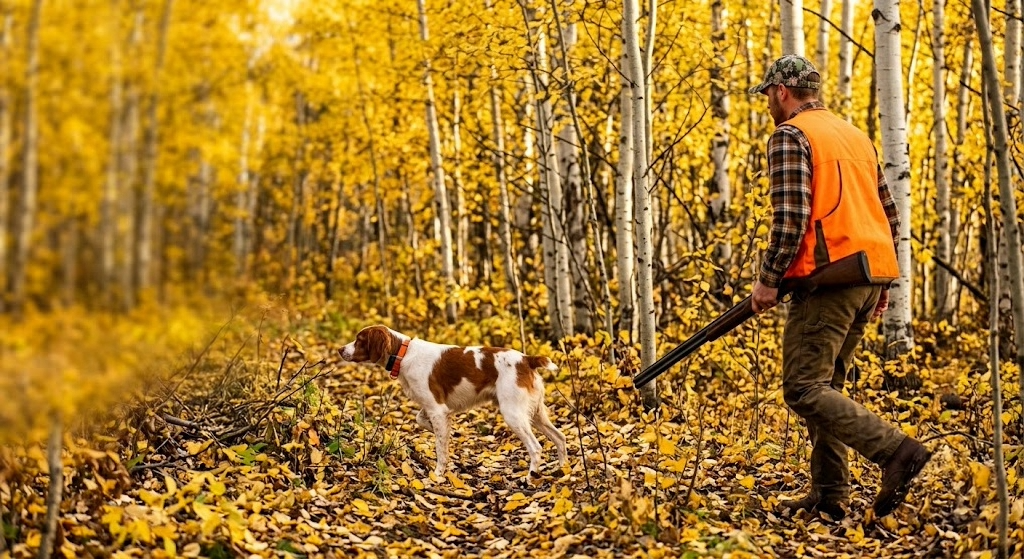
Upland Bird Hunting: Grouse, Pheasant, Woodcock, and the Cover Work
Upland bird hunting is a slower way to move through the woods. You walk more than you sit. You watch a dog do the finding. You shoot fast at birds that give you a two-second window in a wall of alder or a corn edge running to prairie. The reward is a hunt that feels unlike any stand hunt you'll do in your lifetime.
Species coverage across the country
This section covers the full upland spectrum. Ruffed grouse in the aspen belts of the Great Lakes states and New England. Pheasants across the plains and the farm country. Woodcock migrating through the same young forest cover that holds grouse. Bobwhite quail in the southeast pine belt. Sharptails on the prairie. Chukar and Hungarian partridge on the sagebrush and grass country of the western states. Each species gets its own treatment because each one behaves differently and lives in different cover.
Habitat-focused organizations do the heavy lifting on the conservation side. Pheasants Forever and its sister organization, Quail Forever, restore and maintain grassland and edge habitats across the plains and the Southeast. The Ruffed Grouse Society funds young-forest management in the northern hardwoods that keeps grouse and woodcock populations strong. Their state chapters run habitat days and mentor programs worth joining.
Dog work as the through-line
Dog work is the through-line of upland hunting. Whether you run pointers, setters, spaniels, or retrievers, hunting rises and falls with how well you and your dog work together. Articles here cover dog selection by hunting style and species, e-collar training, first-season expectations, wing-tip mechanics for training birds, and field management decisions that keep a young dog progressing without ruining an older one.
Gear for walking country
Gear coverage focuses on what actually matters when you're walking 8 to 12 miles a day through brush. Boots that support the ankle without cooking your feet. Vests that carry water, birds, gear, and shells without shifting. Brush-resistant pants that survive alder and thornapple. 20- and 28-gauge shotguns that swing fast and don't beat you up. Blaze orange caps and vests that meet state requirements and do not flash bird warnings. The tested picks live in Gear Reviews.
Public land options across the map
Public land upland hunting is stronger than most people realize. State forest, national forest, and Waterfowl Production Area lands across the plains and Great Lakes hold miles of walkable cover. Walk-In Access programs in Iowa, Kansas, Nebraska, and South Dakota open private land to any licensed hunter. Our State Guides highlight the top upland areas by species so you can plan a trip that stacks the odds in your favor.
Pick a species or a state below to get started.

Public Upland Bird Hunting Opportunities by State
Find the best upland bird hunting states, from prairie pheasants to thick-forest grouse and quail country. Explore public land access across the U.S.
The pheasant capital of the world. Game Production Areas, CREP land, and walk-in areas offer abundant public access in prime habitat.
Known for wild quail and pheasants, Kansas supports strong bird numbers across its Walk-In Hunting Access (WIHA) lands and public areas.
Montana offers mixed upland bird species — pheasant, Hungarian partridge, and sharp-tailed grouse — across vast Block Management Areas.
Upland game hunting is on the rise, with pheasants returning to restored habitat and walk-in areas expanding each season.
Grasslands, CRP, and PLOTS lands provide excellent access to pheasants, grouse, and partridge throughout the prairie pothole region.
Explore aspen stands and forest edges in northern Wisconsin for ruffed grouse and woodcock, with access through public forests and leases.
Excellent ruffed grouse and woodcock hunting across state forests, game areas, and the UP. Interactive maps make public access easy.
Idaho supports chukar, gray partridge, and forest grouse, all huntable on national forests, BLM land, and WMAs throughout the state.