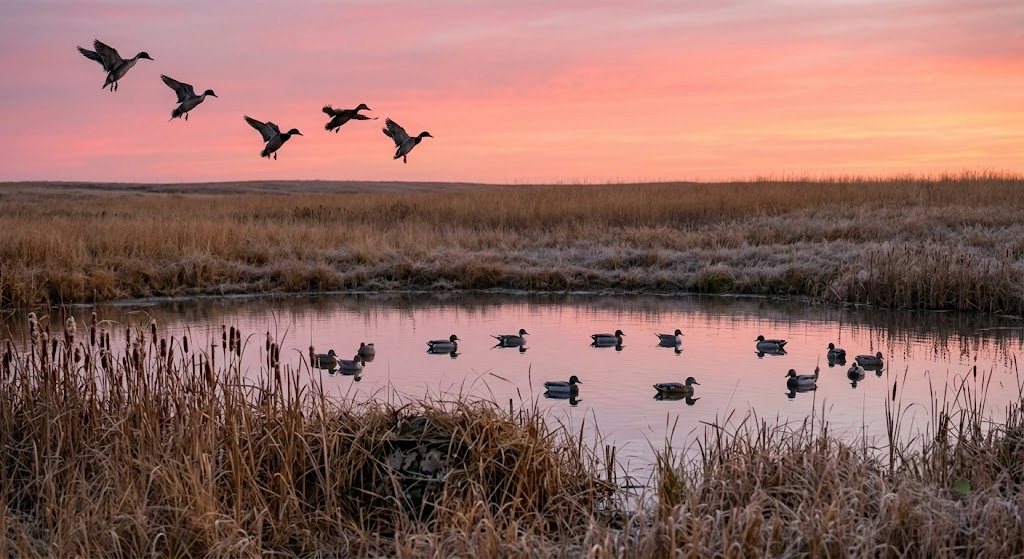
Waterfowl Hunting: Ducks, Geese, and the Flyway Playbook
Waterfowl hunting works on a bigger stage than most other hunts. Your success depends on birds moving thousands of miles between breeding grounds in the northern plains and Canada down to the Gulf, the Atlantic coast, or the desert Southwest. Reading that migration, matching your setup to the season's phase, and hunting the right water on the right day is the entire game.
The four flyways and how to read them
The four flyways each have their own personality. The Pacific flyway trades size for consistency. The Central flyway funnels enormous numbers of Canada and snow geese through the plains. The Mississippi flyway is a mallard highway from the northern breeding grounds down to Louisiana rice country. The Atlantic flyway draws sea ducks, black ducks, and northern mallards along the coast. The USFWS Migratory Bird Program tracks flyway population trends and sets federal season frameworks each year, and its annual reports are where the underlying data for every state's season structure originate.
Strategy, decoys, blinds, and calling
Strategy articles break down decoy spreads by species and phase of the season, calling technique for mallards, teal, wood ducks, honkers, and specks, blind construction and concealment on public marsh and river, and the timing decisions that separate a full strap from an empty morning. Habitat and conservation partners like Ducks Unlimited and Delta Waterfowl fund much of the wetland restoration and hen habitat work that keeps flyway populations strong. Their state chapters and habitat maps are worth knowing if you're planning a hunt in unfamiliar country.
Public waterfowl access across the flyways
Public-land waterfowl hunting is a specialty in its own right. Managed hunt draws, standby lines, refuge day zones, walk-in wetlands, and river-corridor sneak setups all require different tactics from the private-club spread. Our State Guides cover the top public waterfowl areas by flyway, the draw systems worth applying for, and the day-of tactics that put birds in the decoys when the pressure is high.
Season timing that actually works
Timing matters as much as location. Early teal, the October woodie push, the November big-bird arrivals, the December cold-front migrations, and the January-into-February late season all get their own coverage. Each article gives you the specific weather and conditions to watch for so you can pick the right morning to burn the gas. See the full library of waterfowl articles in Field Notes.
Start with a strategy article that matches your setup, or open your state guide to see where to hunt this weekend.

Public Waterfowl Hunting Opportunities by State
Discover top states for duck and goose hunting on public land. Browse waterfowl-rich regions and access opportunities by state.
Arkansas is a waterfowl mecca, with flooded timber and rice fields drawing massive duck numbers. Bayou Meto and other WMAs offer incredible public access.
The Mississippi Delta provides rich habitat for ducks and geese. Public land includes waterfowl-focused WMAs and state-leased areas.
Coastal marshes and inland WMAs provide legendary duck hunting opportunities. Access varies by tide, but the hunting is world-class.
The Central Valley is key in the Pacific Flyway. State-managed wildlife areas offer draw and walk-in waterfowl access across the region.
Public waterfowl hunting is available in coastal marshes and inland reservoirs. The APH program provides access to productive areas for ducks and geese.
Prairie potholes and grasslands attract millions of migrating ducks. PLOTS and federal lands offer walk-in access throughout the state.
Excellent field hunting for Canada geese and mallards. Public options include Game Production Areas and walk-in lands near rivers and wetlands.
The Illinois River and Mississippi flyways produce strong late-season hunts. Managed areas and draw-in blinds provide public opportunity.
From the prairie potholes in the west to the Mississippi River in the southeast, Minnesota offers quality waterfowl hunting on diverse public lands.
The Klamath Basin and Willamette Valley host strong migrations. State WMAs and national wildlife refuges offer seasonal blind access.