Public Land Turkey Hunting: DIY Tactics That Actually Put Birds on the Ground
Most turkey hunting content assumes you've got 200 private acres with a food plot full of strutting longbeards. That's not how it works for DIY hunters on public land. Public land turkey hunting is a different discipline. You're dealing with pressured birds, competing hunters, limited access, and terrain you don't control. But the birds are there, and the hunters willing to adapt their approach will fill tags while everyone else sits in a parking lot listening to distant gobbles.
I've been chasing public-land turkeys across Michigan's state game areas for over two decades. What I've learned comes down to one thing: you have to hunt differently than the magazine articles tell you to.
The Core Concept Behind DIY Public Land Turkey Hunting
Public land turkey hunting rewards the mobile, patient hunter who treats scouting as the real season. The strategy is simple. Find birds before the season through systematic e-scouting and on-the-ground observation, then execute a low-impact approach on opening day that puts you where the birds want to be, not where you want them to be. You adapt to the bird. The bird never adapts to you.
Step-by-Step Walkthrough: How to Hunt Turkeys on Public Land
Start With E-Scouting, Not Boot Leather
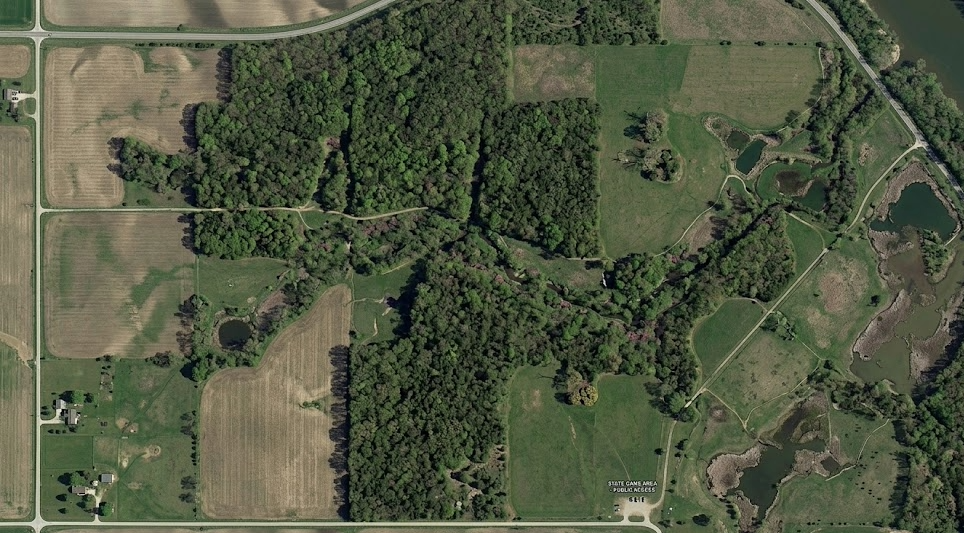
Before you set foot on public ground, spend time with aerial imagery and mapping tools. A mapping app like onX Hunt is non-negotiable here. You're looking for the intersection of three things: roosting timber, open strutting areas, and limited hunter access.
Pull up satellite imagery of your target state game area or WMA. Find mature hardwood stands near field edges, especially oaks and cottonwoods along creek corridors. Turkeys roost in trees with large horizontal limbs over open understory, so tight young growth doesn't cut it. Mark every spot where mature timber meets an opening, whether that's an ag field edge, a gas line cut, a powerline right-of-way, or a natural meadow.
Now look at access. Where are the parking areas? Draw a half-mile circle around each one. Everything inside that circle gets heavy pressure on the opening weekend. Your best hunting will start outside that ring.
Ground-Truth Your E-Scouting
Two to three weeks before the season, get out and verify what the aerial photos showed you. Walk the areas you marked and look for signs:
Scratchings in leaf litter, especially on south-facing slopes that warm up first in spring
Feathers along field edges and logging roads
Droppings near roost trees (look for the J-shaped droppings that indicate toms)
Dusting bowls in dry, sandy soil or along field edges
Tracks in mud on two-tracks and creek crossings
Do your scouting in the afternoon, not the morning. You want to see where birds are heading to roost without bumping them off the roost at dawn. Glass field edges from a distance in the last two hours of daylight. If you can hear gobbling on the roost, mark those trees and back out quietly.
Set Up Where Birds Already Want to Be
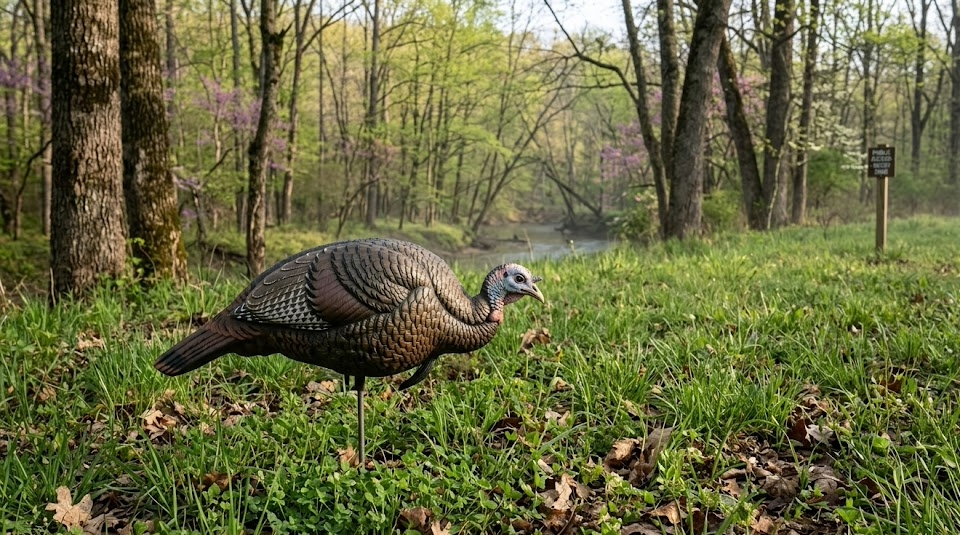
This is where most public land hunters go wrong. They hear a gobble at dawn, rush toward it, set up too close, and blow the whole deal. On public land, that gobbling bird has already been pressured. He's heard bad calling. He's seen hunters moving through the woods.
Instead, use your scouting data. Set up before first light in a spot between the roost and where you've seen birds heading after fly-down. Think about it from the turkey's perspective. He's going to fly down and head toward a strutting area where he's met hens before. You want to be on that route, not on top of the roost tree.
Your setup position should give you:
A clear shooting lane of 30 to 40 yards in the direction you expect the bird to approach
A large tree or blowdown at your back that breaks up your outline
A view of at least one open lane or trail the bird might use
Enough cover that you don't feel exposed, but not so much that you can't see
Call Less Than You Think You Should
On public land, less is more when it comes to calling. Pressured birds have heard every bad yelp and aggressive cutt from hunters since opening morning. Start soft. Three to four tree yelps before fly-down, then go quiet for 15 to 20 minutes. If a bird gobbles back, don't answer immediately. Let him wonder where that hen went.
When you do call, use realistic cadence and volume. A few soft yelps every 15 to 20 minutes is plenty. If a bird is gobbling and moving your direction, stop calling entirely. He's already committed. Adding more sound just gives him a chance to pinpoint your position and hang up at 60 yards waiting for the "hen" to come to him.
The Midday Reset
Here's where DIY hunters gain a real edge on public land. Most hunters leave by 10 a.m. They had a slow morning, got frustrated, and headed to the truck. Meanwhile, the woods just got quiet for the first time all day.
From 10 a.m. to 2 p.m., gobblers that spent the morning with hens are now alone. The hens have gone to nest. These birds are lonely, less pressured, and very callable. Move slowly through areas with good strut zone habitat, stopping every 100 yards to make a few yelps and listen. Some of my best public land birds have come in dead silent during this window, no gobble, just a red head appearing at 25 yards.
When This Strategy Works Best
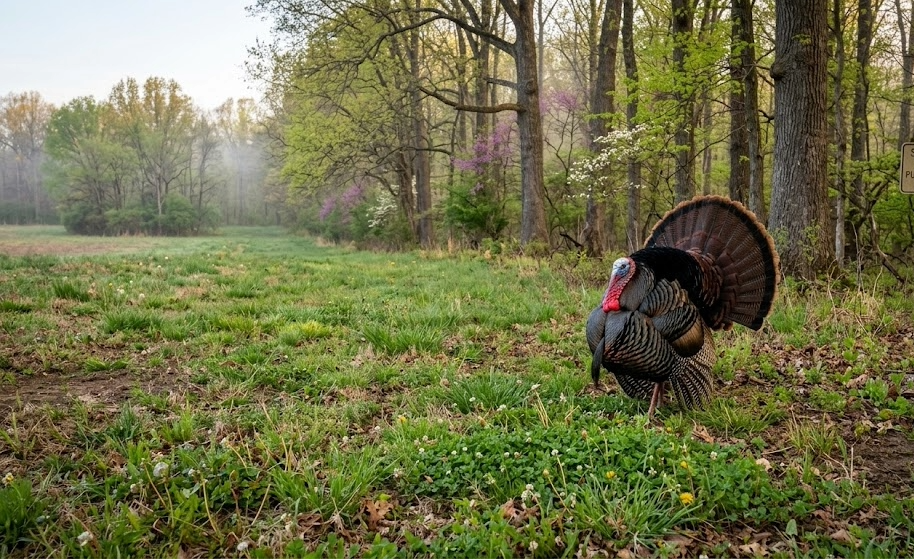
This approach is built for spring turkey seasons on public land, specifically pressured state game areas, WMAs, and national forest land during the first two weeks of the season when hunting pressure is highest.
It works best in terrain with a mix of hardwood timber and openings. River bottoms, ridge-and-valley terrain, and areas where agricultural fields border state land are all ideal. Flat, uniform timber with no openings is tougher because turkeys have less reason to be in any specific spot.
Weather matters too. Calm, clear mornings produce the most gobbling, but don't skip windy or rainy days. Pressured public-land birds often gobble more on bad-weather days because there are fewer hunters in the woods making noise.
Tools and Gear for Public Land Turkey Hunting
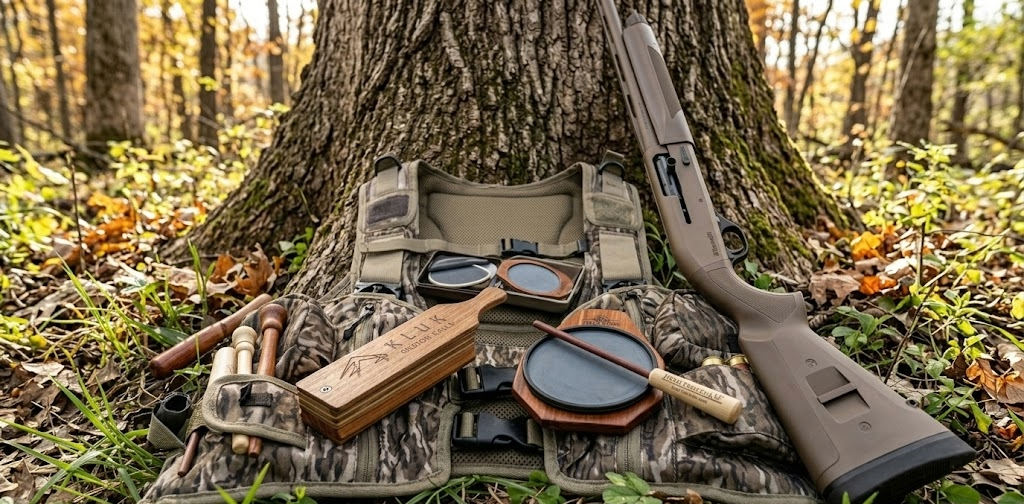
You don't need a truck full of decoys and a vest stuffed with calls. For mobile public land hunting, keep it simple.
Calls: Carry a quality pot call and a diaphragm mouth call. The pot call gives you range and realism for initial contact. The diaphragm keeps your hands free when a bird is closing the distance. A simple slate call from a reputable maker covers 90% of situations.
Decoys: One hen decoy, either a quarter-strut or a feeding position. Skip the full strut Jake and the breeding pair setup on public land. Dominant tom decoys can intimidate subordinate two-year-olds, which are the birds you're most likely to encounter on pressured ground.
Optics: A compact binocular like the Vortex Diamondback HD 10x42 is worth its weight for glassing field edges during afternoon scouting. You don't need a high-dollar optic for turkey hunting, but you do need glass that lets you identify birds at 300 yards without walking closer and blowing them out. [Check current price at Amazon]
Vest or pack: Something with a built-in seat pad. You're going to sit for long stretches. Comfort directly affects how still you stay, and how still you stay directly affects whether you kill a bird.
Mapping app: onX Hunt with the state game area boundaries and private land overlay. Knowing exactly where public land ends has kept me legal more than once when following a gobbling bird along a boundary. We also have a comprehensive list of public hunting areas here: public-hunting.
What Most Hunters Get Wrong on Public Land
Hunting the Same Spot Every Day
Turkeys shift their patterns in response to pressure. If you hunted a spot on Saturday morning and bumped birds, don't go right back Sunday. Those birds moved. Check a different area of the same game area or rotate to another property entirely. Come back to the original spot in four to five days after the birds have settled.
Setting Up Too Close to the Roost
I get it. You heard him thundering on the limb at 80 yards, and your heart rate spiked. But setting up that close on public land is a losing play. The bird flies down, sees your decoy or your movement at close range, and he's done with that area for days. Set up 150 to 200 yards from the roost in the direction of his likely travel route. Let him come to you on his own terms.
Overcalling to Pressured Birds
This is the biggest one. Aggressive calling works on unpressured private land gobblers. On public land, it does the opposite. Every loud cutt and aggressive yelp sounds exactly like the three other hunters who called to that bird this week. Drop your volume by half, cut your calling frequency by 75%, and focus on sounding like a real hen, which means imperfect, irregular, and quiet.
Advanced Tactics for Experienced DIY Hunters
Run and Gun With a Purpose
Once you've built a mental map of your area through scouting, you can run and gun effectively. This means covering ground between known strut zones and feeding areas, making contact calls at each stop, and setting up fast when a bird responds. The key is moving with purpose between spots you've already scouted, not wandering randomly through the woods calling. Cover a mile of ground between contact points if you need to. Don't just loop the same 200-yard circle hoping something changes.
Use Terrain to Close Distance
If a bird is gobbling on the far side of a ridge and won't come to you, don't keep calling louder. Use the terrain. Circle downhill, use the creek bottom to mask your movement, and come up on his side of the ridge 150 yards from where you started. Set up, give him three soft yelps from the new position, and you've just changed the entire equation. He thought the hen was behind him. Now she's at his level and close.
The Concrete Scenario
Here's a real situation from a state game area in southwest Michigan. Opening weekend, I'd scouted a creek bottom where mature oaks lined both banks with an old hay field running along the north edge. Two weeks before the season, I watched three longbeards fly up to roost in the oaks on the south bank, then fly down and walk north across the creek into the hay field every morning.
Opening day, I set up 180 yards north of the roost on the field edge where the two-track met the tree line. I put a single feeding hen decoy at 25 yards in the short grass.
At 6:15 a.m., I heard the first gobble on the roost. I gave three soft tree yelps on a diaphragm and went quiet. Ten minutes later, I heard him fly down. Nothing for 20 minutes. Then I caught movement at the creek crossing, 140 yards out. He was already on the ground heading my way without another sound. At 35 yards, he saw the decoy, broke into a half-strut, and closed the distance to 22 yards. I didn't call once after those initial three yelps. The scouting did the work. The patience closed the deal.
That's public land turkey hunting. No tricks, no secret calls. Just scouting, positioning, and discipline.
Frequently Asked Questions
How early should you scout public land for turkey season?
Start e-scouting with aerial imagery and onX Hunt four to six weeks before the season opens. Begin on-the-ground scouting two to three weeks out, focusing on afternoon roost observation and sign identification. This gives you enough time to pattern bird movement without over-pressuring the area right before the season.
What is the best time of day to hunt turkeys on public land?
Dawn gets the most attention, but the late morning window from 10 a.m. to 2 p.m. is often more productive on pressured public land. Most hunters leave by mid-morning, and gobblers that were henned up early are now alone and responsive. If you can only hunt one window on public land, stay through midday.
How many decoys should you bring for public land turkey hunting?
One. A single hen decoy in a feeding or relaxed position is all you need on public land. Multiple decoys and full-strut tom setups look unnatural along timber edges, where most public-land encounters happen. They also add weight and setup noise when you need to stay mobile. Keep it simple.
Can you hunt turkeys on public land without a blind?
Yes, and on pressured public land, you probably should. Ground blinds limit your mobility and commit you to a single location. The strength of DIY public-land hunting lies in your ability to read conditions and relocate. A good tree at your back and full camo, including a face mask and gloves, will hide you just as well, and you can be mobile when the situation calls for it.
