How to Prepare for a Late Spring Switchgrass Planting
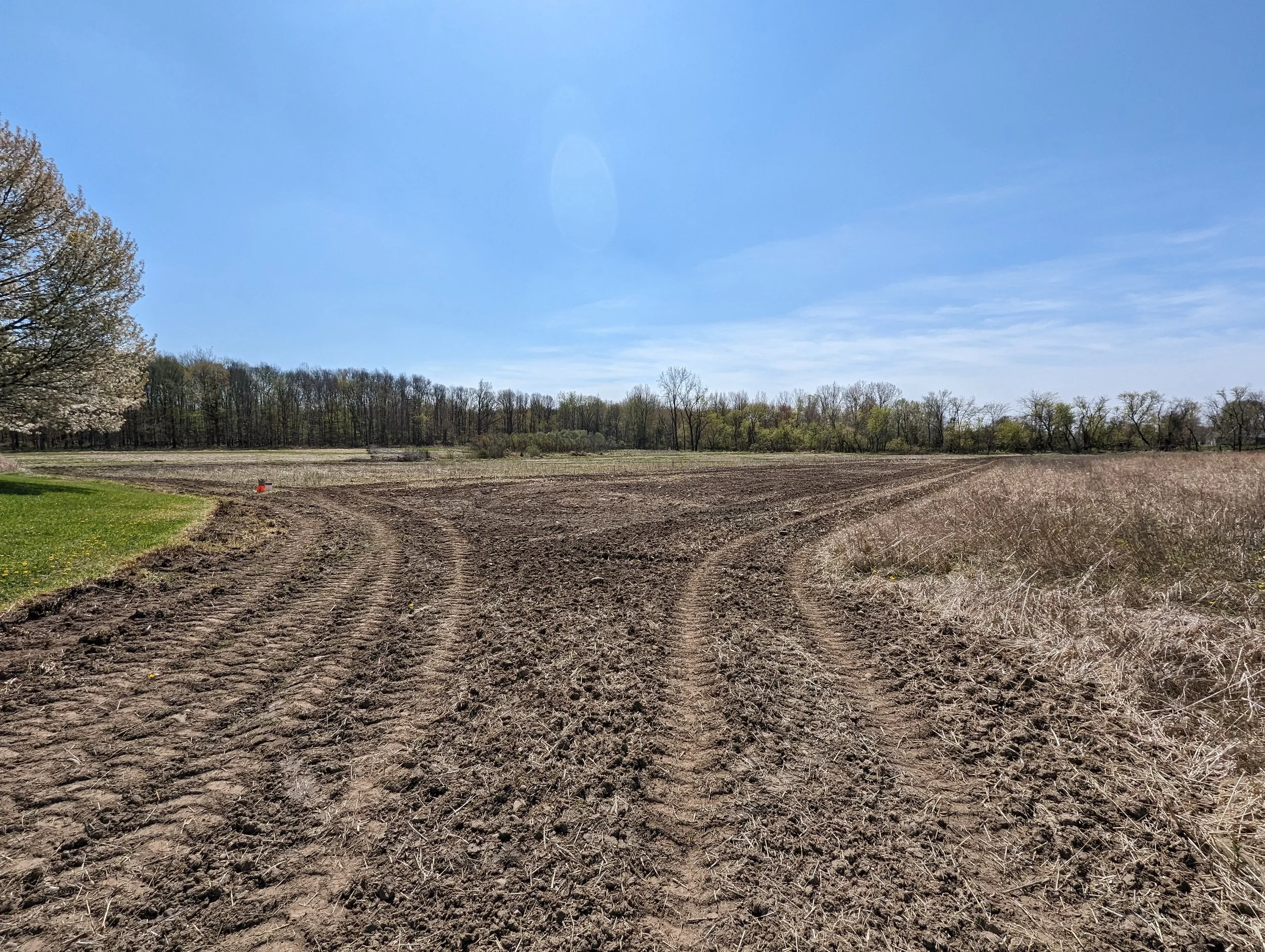
Switchgrass is the single best native grass planting you can put on a hunting property. Nothing else gives you 6 to 8 feet of standing bedding cover that holds through January, builds soil structure year over year, supports pollinators and ground-nesting birds, and requires almost zero maintenance once it's established. But it's also one of the easiest plantings to fail if you skip the prep work or rush the timing.
If you're planning a late-spring switchgrass planting on clay loam soil in southwest Michigan or at a similar latitude, here's how to set yourself up for a stand that lasts 15 to 20 years with very little ongoing effort.
Why Switchgrass Matters for Your Property and the Ecosystem
Most land managers think about switchgrass as a deer screen or bedding cover, and it does both of those things very well. A mature stand of Cave-in-Rock or Blackwell switchgrass will hit 5 to 8 feet tall by late summer, creating a visual barrier that lets deer move unseen between bedding areas and food sources. That kind of screening is worth more to your hunting setup than another food plot.
But the value goes well beyond whitetail. Switchgrass roots can reach 10 feet deep into clay loam soil, breaking up compaction layers created by decades of row cropping. Those roots build organic matter, improve water infiltration, and prevent erosion on slopes where bare soil would wash out during spring rains. A well-established stand becomes a self-sustaining ecosystem. Pheasants and quail use it for nesting. Songbirds forage in the seed heads through winter. Pollinators work the warm-season grass margins all summer. You're not just planting a deer screen. You're building a habitat that will support the entire property for decades.
Site Selection and Soil Preparation for Clay Loam
Switchgrass thrives on the clay loam soils common across southwest Michigan. It tolerates a wide pH range, but aim for 5.5-7.0 for best germination and establishment. The sweet spot is right around 6.5. If your soil test comes back below 5.5, apply pelletized lime at the rate recommended by your soil test in the fall before planting. Lime takes months to break down and adjust pH in clay soils, so don't wait until spring to fix this.
Pull soil samples in the fall or early winter before your planned planting year. Your county MSU Extension office or a private lab like A&L Great Lakes can run a standard agronomic panel for $15 to $25. You're looking at pH, phosphorus, and potassium levels. Do not apply nitrogen at planting. Nitrogen feeds weeds faster than it feeds switchgrass seedlings, and weed competition is the number one reason switchgrass plantings fail.
Choosing Your Site
Pick a spot with full sun exposure. Switchgrass will tolerate partial shade, but stands in shaded areas thin out over time and never reach the height and density you need for effective screening or bedding cover. Old crop fields, CRP ground coming out of contract, and field edges adjacent to timber are all strong candidates.
Avoid low spots that hold standing water for extended periods. Switchgrass handles brief flooding, but clay loam that stays saturated for weeks in spring will drown young seedlings before they establish root systems. Moderate slopes and well-drained flats are your best sites.
Spring Site Prep
If you're planting in June, your prep work starts in April. Apply 3 to 4 quarts per acre of simazine (brand name Princep 4L) as a pre-emergent before weed seeds germinate. Simazine is not a restricted-use pesticide, so you don't need an applicator's license to purchase or apply it. It suppresses annual broadleaf weeds and some grasses by preventing germination at the soil surface. Apply it on a calm day when rain is expected within 3 to 5 days to activate it in the soil.
Two to three weeks later, once cool-season grasses and broadleaf weeds have emerged to 4 to 6 inches, spray 2 quarts per acre of glyphosate to burn down everything that's growing. This combination of pre-emergent simazine followed by post-emergent glyphosate gives you the cleanest seedbed you can get without tillage.
On clay loam soil, no-till is your best friend. Tilling clay loam in spring invites compaction, exposes weed seed, and destroys the soil structure you're trying to build with switchgrass. Keep the ground undisturbed and let the herbicides do the work.
Step-by-Step Planting Guide for Late Spring Switchgrass
This is the approach that's produced the best stands I've ever planted. We run two methods on our properties in southwest Michigan, and both have delivered thick, healthy switchgrass that required nothing but a burn at the start of year four.
Method 1: Mid-June Drill Seeding with Hybrid Sorghum Nurse Crop (Preferred)
Our best stands have been planted in mid-June, using hybrid sorghum as a nurse crop. Wait for soil temperatures to reach 60 degrees Fahrenheit at 2 inches deep. In southwest Michigan, that's reliably mid-June, sometimes a touch earlier in a warm year.
Here's the process:
Apply simazine at 3 to 4 quarts per acre and Drive XLR8 (quinclorac) at 5 to 8 ounces per acre as pre-emergent and early post-emergent treatments at initial planting in spring.
Drill 6 to 8 pounds of pure live seed (PLS) per acre of Cave-in-Rock switchgrass at 1/4 to 1/2 inch depth. For screening purposes, bump that to 8 to 10 pounds PLS per acre to get a denser stand.
Mix in 5 to 8 pounds per acre of hybrid sorghum seed as a nurse crop. The sorghum germinates quickly, shades out competing weeds during that critical first 60 days, and dies at first frost. It's the cheapest weed control insurance you can buy.
Cultipack after drilling if your drill doesn't have packer wheels. Seed-to-soil contact is everything on clay loam. If the seed sits on top of the surface, it won't germinate.
If you don't own a no-till drill, check with your local NRCS office or county conservation district. Many offer native grass drill rentals for $10 to $15 per acre. The Truax or Great Plains no-till drills with native seed boxes handle the fluffy switchgrass seed far better than a standard grain drill.
Method 2: July Planting with Sorghum Cover, No Chemicals
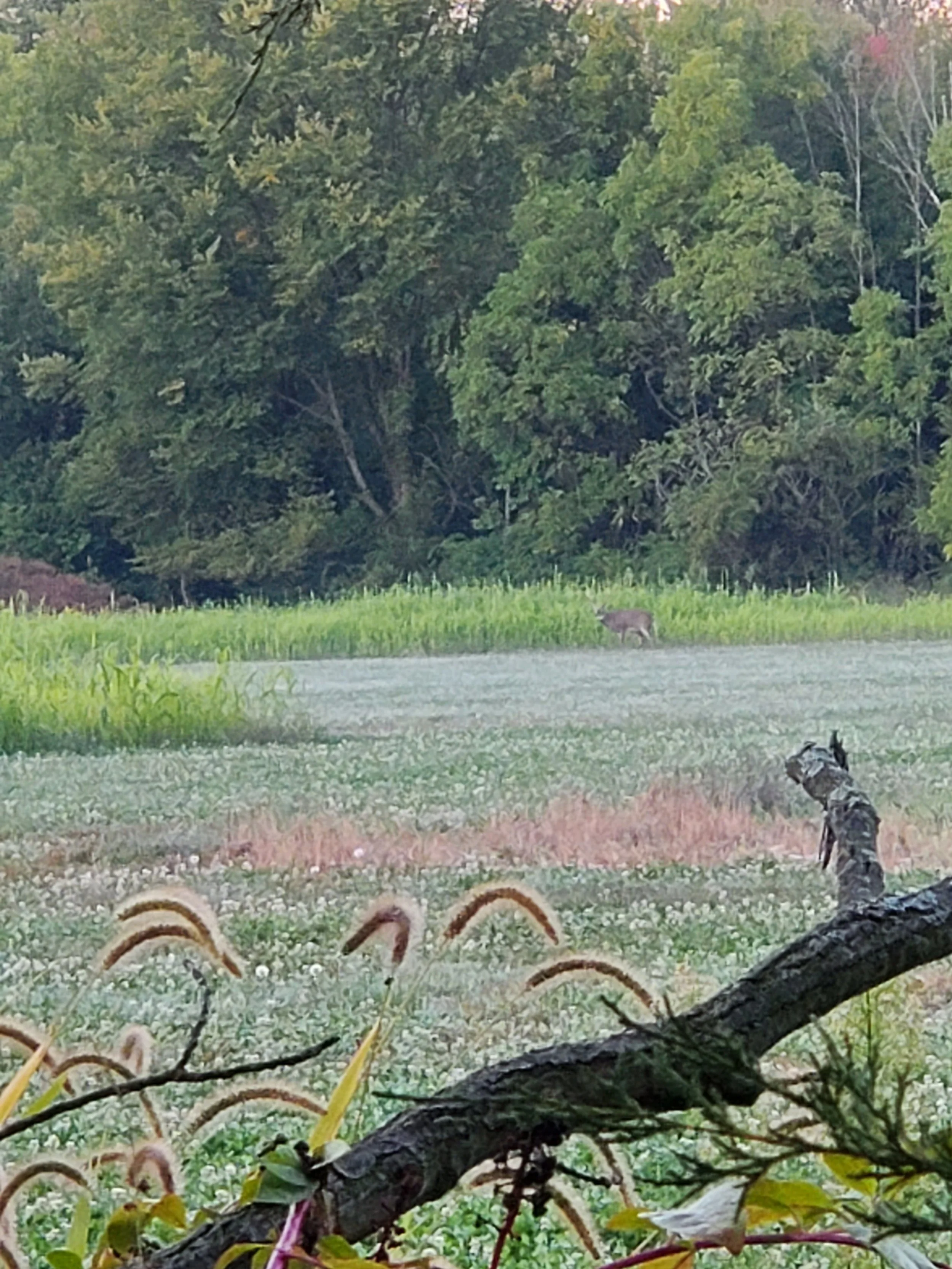
The other half of our plantings take a different approach that works well for land managers who want to avoid herbicides beyond a burndown. Apply a glyphosate burndown prior to planting to knock back everything green. Then, in July, drill switchgrass at the same rate of 6 to 10 pounds PLS per acre, mixed with hybrid sorghum as a cover crop. No simazine. No XLR8. Just the roundup, burndown, and the sorghum are doing the heavy lifting on weed suppression.
This method relies on the later planting date to miss the peak flush of cool-season weed germination. By July, most annual cool-season weeds have already emerged and been killed by your burndown. The warm-season switchgrass and sorghum then germinate in a window with less competition.
Both methods have produced stands on our properties that we have not done anything to other than a burn at the beginning of year four. They all look great. The key takeaway is that you have more than one path to a successful stand, and the hybrid sorghum nurse crop is the common thread in both approaches.
What to Expect: Year 1 Through Year 3 and Beyond
Year 1
Manage your expectations. First-year switchgrass looks terrible to the untrained eye. The seedlings are thin, wispy, and rarely exceed 12 to 18 inches in height. The sorghum nurse crop will tower over them. Annual weeds will fill in any gaps. You'll wonder if it worked.
It did. Switchgrass spends year one building root mass rather than above-ground growth. Those roots are pushing 3 to 4 feet into your clay loam, anchoring the plant and storing energy for year two. If you can see switchgrass seedlings scattered throughout the stand at 1 plant per square foot or better, you have a successful planting. Resist the urge to rip it up and start over.
If weed pressure is extreme, mow to 8 to 10 inches once or twice during the first growing season. This knocks back competing broadleaves and grasses without damaging the switchgrass below. Do not mow shorter than 6 inches or you'll clip the switchgrass and set it back.
Year 2
This is when you start to see the real plant. Switchgrass will reach 3 to 5 feet tall and begin to form a recognizable stand. The root system is now deep enough to outcompete most weeds on its own. You may need one mowing in mid-summer if cool-season grasses are trying to invade, but many stands don't need any intervention at all in year two.
Year 3 and Beyond
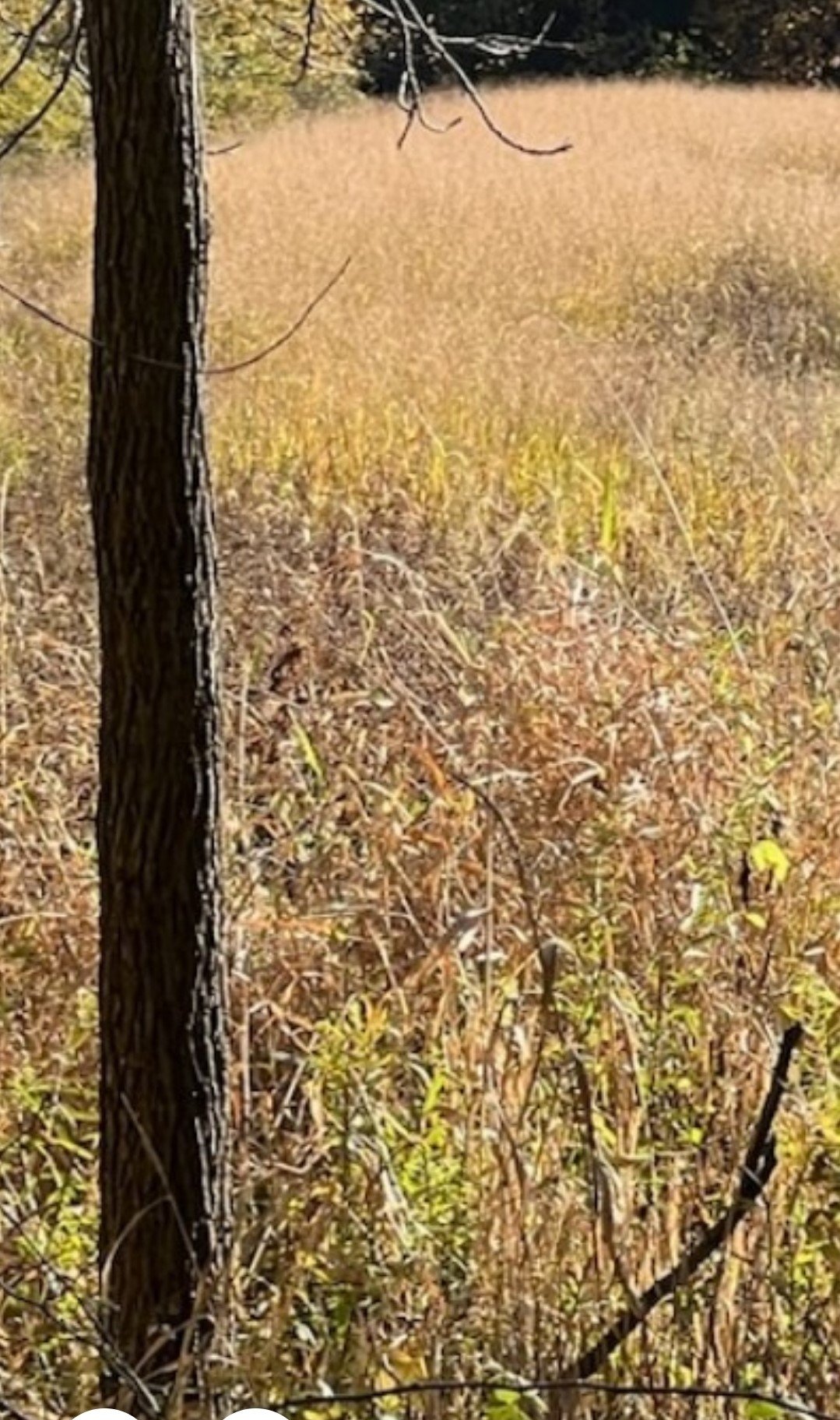
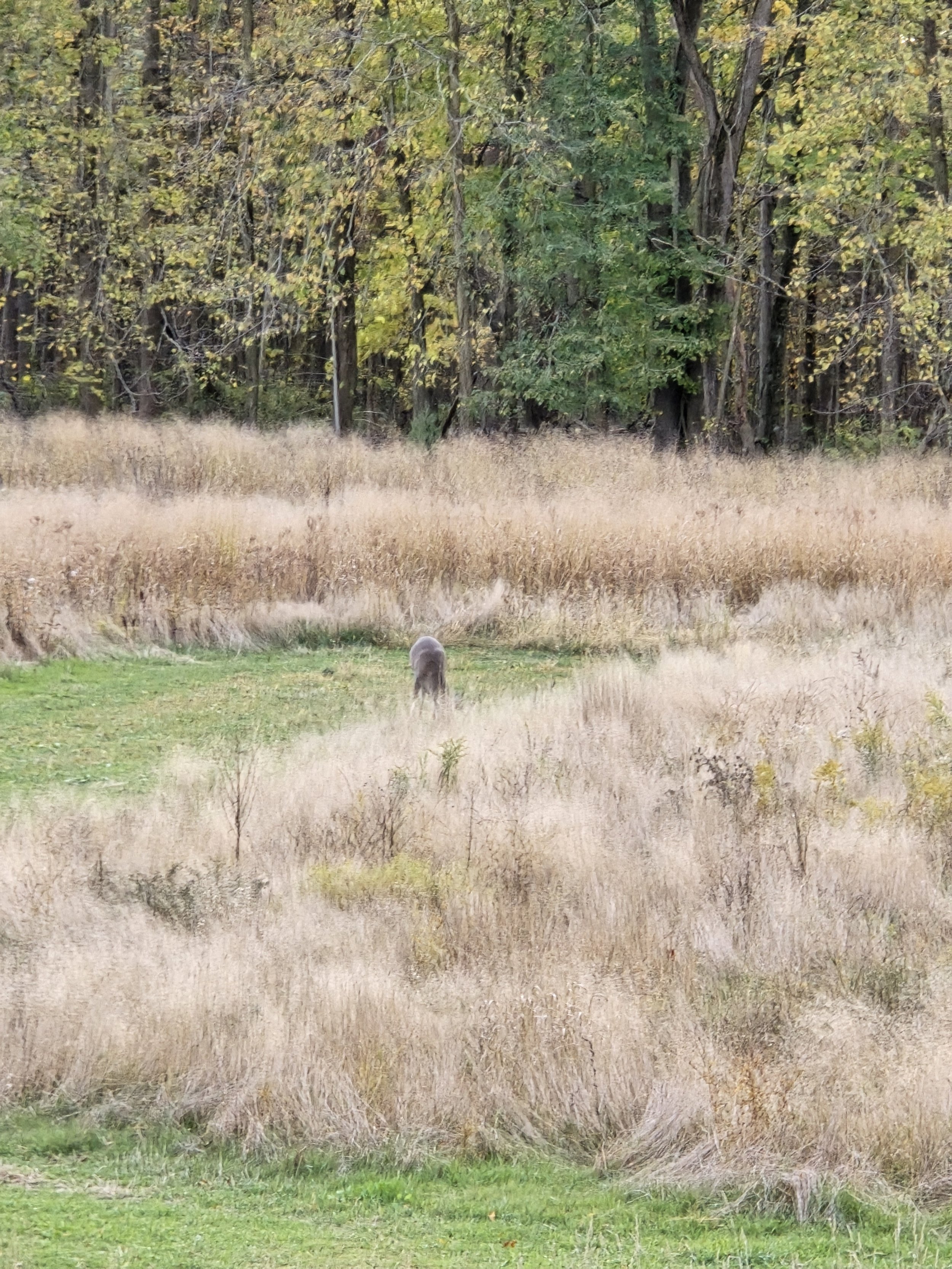
By year three, the switchgrass dominates. Expect 5 to 8 feet of dense growth that holds up through winter storms and provides standing cover into February and March. The stand is now self-sustaining. Deer will be using it as bedding cover, and you'll notice travel corridors forming through the stand where animals enter and exit on predictable routes. A well-established switchgrass stand can remain productive for 15 to 20 years with minimal maintenance.
Maintenance: Burning, Mowing, and Long-Term Care
Prescribed Burns
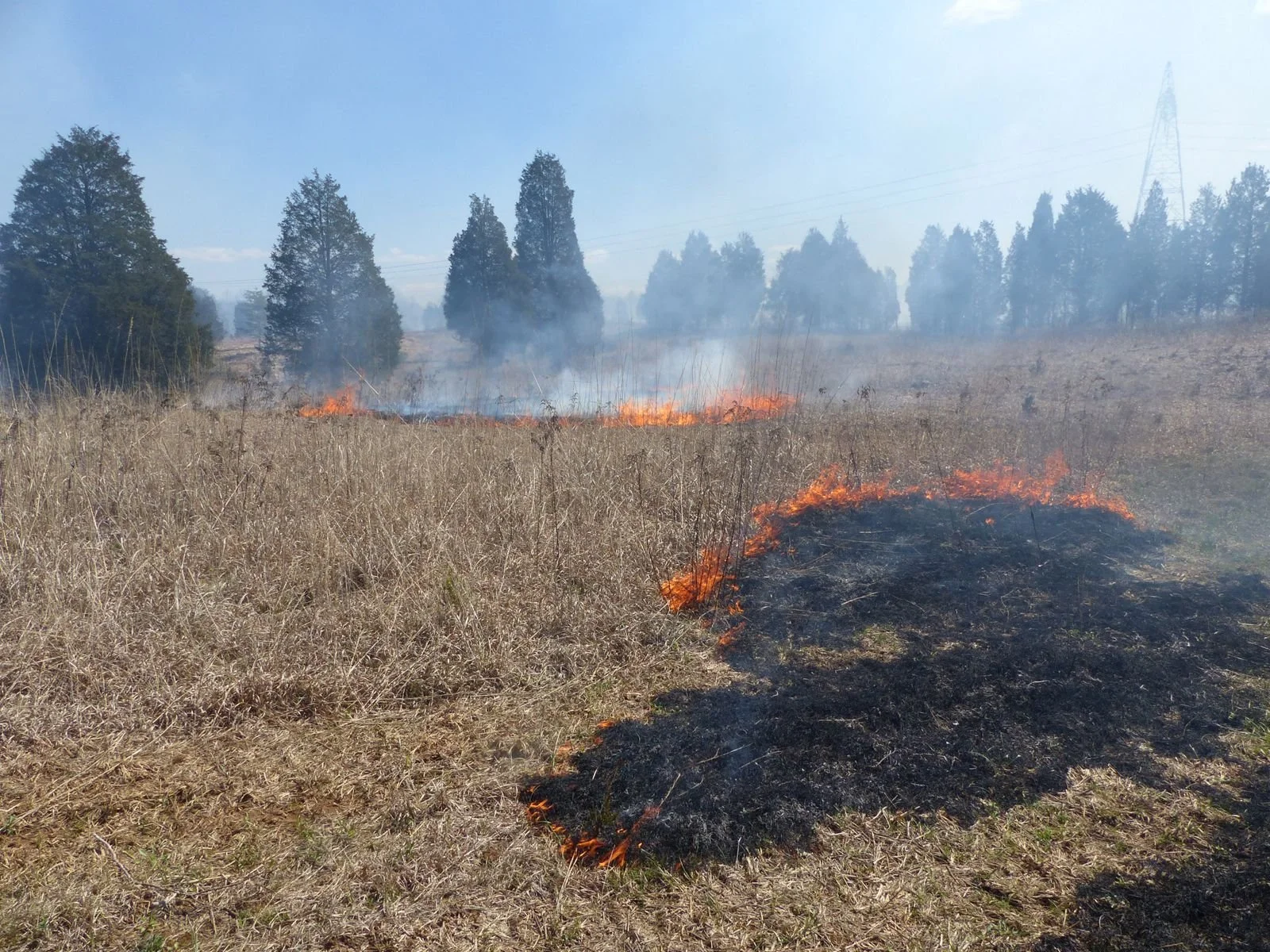
A prescribed burn every 3 to 5 years is the single most effective maintenance tool for switchgrass. Burn in late spring, late April through mid-May in southwest Michigan, just before green-up. Late burns set back invading cool-season grasses and fescue while the switchgrass is still dormant. The blackened soil warms faster, giving the switchgrass a head start when it breaks dormancy in late May.
We've done a burn at the beginning of year four on all of our stands. That's it. The combination of good initial weed control, the sorghum nurse crop, and a single well-timed burn has been enough to keep every stand clean and thick. Contact your local fire department or DNR before burning. Most counties in Michigan require a burn permit, and conditions vary by township.
If You Can't Burn
Mow the stand to 6 to 8 inches in late March or early April before green-up. This removes the dead thatch, allowing sunlight to reach the crowns. It's not as effective as fire at suppressing cool-season invaders, but it works well enough for stands in good condition. You may need to mow annually if burning isn't an option, whereas a burned stand can go 4 to 5 years between treatments.
Weed Management in Established Stands
Once your stand is established through year two, weed management becomes very simple. Switchgrass outcompetes most weeds on its own. If cool-season grasses start creeping in from field edges, a targeted application of glyphosate in early spring, before switchgrass emerges, can clean them up. Spot-spray only. Do not broadcast glyphosate over an actively growing switchgrass stand.
The 5 Mistakes That Kill Switchgrass Plantings
1. Skipping Weed Control at Establishment
This is the number one killer. Switchgrass seedlings grow very slowly in year one. Without pre-emergent herbicide treatment, a burndown, or a nurse crop to suppress weeds, foxtail and pigweed will bury your switchgrass before it ever gets started. You don't need all three tools, but you need at least one. Our best results use two: pre-emergent chemistry and a sorghum nurse crop together, or just the sorghum with a burndown.
2. Planting Too Deep
Switchgrass seed is small, roughly 300,000 to 370,000 seeds per pound. At 1/4 to 1/2 inch, it germinates well. At 1 inch deep, germination drops significantly. Clay loam soil is especially unforgiving here because it crusts after rain, trapping seedlings below the surface. Calibrate your drill carefully and cultipack after seeding to press seeds into firm contact without burying them.
3. Planting Too Early
Switchgrass is a warm-season grass. It needs soil temperatures of 60 degrees F to germinate. Planting in April or early May in Michigan puts seed in cold soil where it sits and rots while cool-season weeds explode around it. Mid-June is the sweet spot for southwest Michigan. Don't rush it.
4. Applying Nitrogen at Planting
Nitrogen fertilizer in the establishment year feeds weeds, not switchgrass. The seedlings can't use it. The foxtail and pigweed absolutely can. Hold off on nitrogen until year three or later, and only then if a soil test shows a deficiency.
5. Giving Up After Year One
More switchgrass stands are destroyed by impatient land managers than by any weed or weather event. A first-year stand that looks thin and weedy is normal. The plant is building roots, not shoots. If you have 1 or more seedlings per square foot, the stand will fill in by year three. Walk away, come back in September of year two, and you'll see a completely different picture.
How Switchgrass Fits the Bigger Property Picture
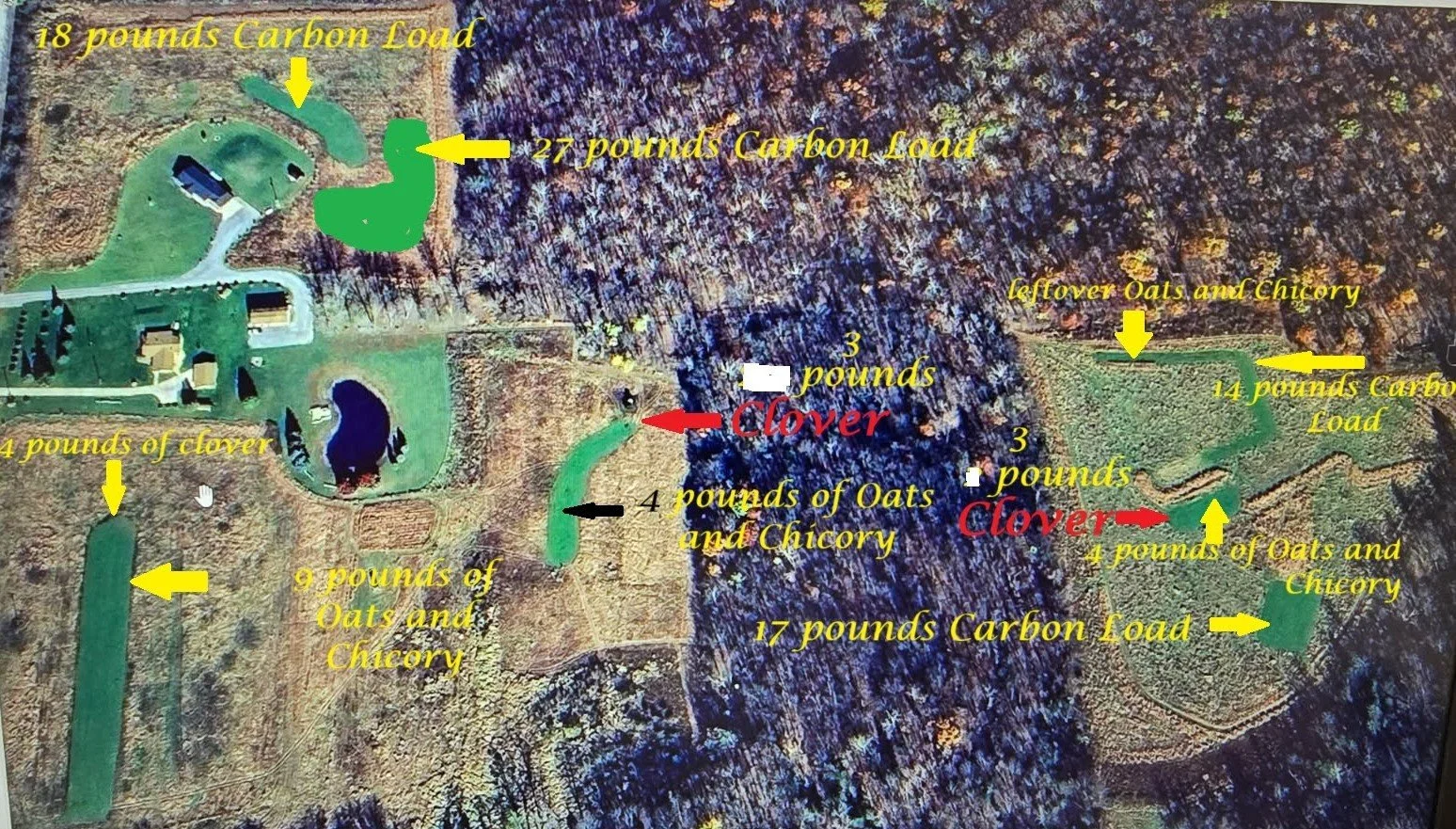
Switchgrass is not a standalone planting. It's a component in a larger habitat plan. The real value shows up when you use it to connect and complement other features on your property.
Place switchgrass screens between your food plots and your access routes so deer can't see you walking in. Use it as a visual barrier between two food plots to create the illusion that each plot is more isolated than it really is. Plant it along the transition edge between open fields and mature timber to create a bedding zone that deer prefer over open woods with no understory.
Switchgrass pairs well with adjacent plantings of white clover or brassicas. A deer beds in the switchgrass during the day, then steps 50 yards to a clover plot at dusk. That movement pattern, from bedding cover to food source across a short transition, is the foundation of every good property-level hunting strategy. You're designing predictable deer movement, not just growing plants.
If you manage timber on the same property, switchgrass fills the role of early successional cover that most managed woodlands lack. A timber stand improvement project that opens the canopy creates browse and sunlight, but it doesn't create the thick, ground-level screening that deer need to feel secure. Switchgrass does. Plant it in the openings you create, and you've built a complete habitat system from the canopy to the ground.
Recommended Products for Switchgrass Establishment
Seed
Cave-in-Rock is the go-to variety for southwest Michigan and the entire upper Midwest (USDA Hardiness Zones 4 through 6). It's an upland ecotype with strong cold tolerance and reliable establishment on clay loam. For seed sources, RC Switchgrass sells quality switchgrass designed for wildlife plantings. Check availability at their retailers. Real World also offers quality switchgrass seed blends through their habitat product line.Check current pricing at Real World Wildlife Products. If you're in southern Michigan, Schmucker’s Country Sales has a great selection of switchgrass seed.
Blackwell and Shawnee are other solid upland varieties that perform well in this region, though they tend to be slightly less dormant than Cave-in-Rock, making them better suited for spring drilling than frost seeding.
Herbicides
Simazine 4L (Princep): 3 to 4 quarts per acre as a pre-emergent. Not a restricted-use pesticide. Available through farm supply retailers and online. Check current price on Amazon
Drive XLR8 (quinclorac): 5 to 8 ounces per acre for post-emergent grass control, particularly foxtail. Safe on switchgrass seedlings. Apply with a surfactant. Worth its weight in gold. Check current price on Amazon.
Glyphosate: 2 quarts per acre for burndown. Any brand will work. Apply when weeds are actively growing and temperatures are above 60 degrees F. Check current price on Amazon.
Nurse Crop
Hybrid sorghum at 5 to 8 pounds per acre mixed with switchgrass seed. Sorghum provides shade and weed suppression during the first growing season and dies at the first frost. Available through most farm supply stores. It's cheap insurance, usually $15 to $25 for enough seed to cover a few acres. Hit it with XLR8 in May the following year, and you won’t have to do anything until you burn it in year 4 or 5.
Equipment
A Truax or Great Plains no-till drill with a native seed box is the ideal tool. These drills handle the fluffy, chaffy switchgrass seed that clogs standard grain drills. Check with your local NRCS or conservation district for rental availability. If you're working smaller plots under an acre, a hand-crank broadcast spreader works well for getting seed on the ground, followed by cultipacking to ensure soil contact. The Earthway 2750 is a reliable option for small-acreage broadcasting. I have used one for 15 years to plant hundreds of acres. Check current price on Amazon
Soil Amendments
If your pH is below 5.5, apply pelletized lime at the rate recommended by your soil test in the fall before planting. Most clay loam soils in southwest Michigan have a pH between 6.0 and 6.8, so lime isn't always necessary. Pull the soil test first. Apply P and K only if the test shows a deficiency. No nitrogen at planting. Period.
Frequently Asked Questions
When Is the Best Time to Plant Switchgrass in Michigan?
Mid-June through early July for southwest Michigan. Soil temperatures need to be at or above 60°F at a depth of 2 inches. Planting earlier puts seed into cold soil where it won't germinate and gives cool-season weeds a head start. Our best results have come from mid-June plantings, and we've had strong success with July plantings using a sorghum cover crop as well.
How Many Pounds of Switchgrass Seed Per Acre?
6 to 8 pounds of pure live seed (PLS) per acre for habitat plantings. For dense screening, go with 8 to 10 pounds PLS per acre. Always check the PLS percentage on the seed tag and adjust your rate accordingly. If your seed tests at 70% PLS, you need to plant more physical seed to hit your target rate.
Can You Plant Switchgrass Without a No-Till Drill?
Yes. Broadcast seeding works, especially if you can cultipack or drag a chain-link section after broadcasting to press seeds into the soil surface. Frost seeding in late winter (broadcasting onto exposed soil from November through March and letting freeze-thaw cycles work the seed in) is another successful method that requires no drill at all. Your stand may take slightly longer to fill in than a drilled stand, but the end result is the same. (I broadcast all of my switchgrass plantings).
How Long Does Switchgrass Take to Fully Establish?
Plan for three full growing seasons before you have a mature, self-sustaining stand. Year one is root development. Year two shows significant above-ground growth. Year three, the stand reaches full height and density. Once established, expect 15 to 20 years of productive life with minimal maintenance, just a burn or mow every 3 to 5 years.
Does Switchgrass Need Fertilizer?
Not at establishment, and often not at all for wildlife habitat purposes. Switchgrass is a low-input plant. It evolved on the prairies without supplemental fertility. If you're managing for maximum biomass production, you can apply 40 to 60 pounds of nitrogen per acre starting in year three. For wildlife habitat and screening, native soil fertility on a former crop field is more than sufficient.
Thinking about adding switchgrass or other native plantings to your property? A ScoutFlight Hunting Assessment uses drone-based aerial imagery to map your property's existing cover types, food sources, and terrain features, giving you a clear picture of where switchgrass and other habitat plantings will have the most impact on deer movement and overall wildlife value. Or sign up for our free state-by-state public land hunting guides and get the latest land management strategies delivered straight to your inbox.
