Michigan Spring Turkey Hunting on Public Land: 2026 Guide
Michigan holds about 200,000 wild turkeys. Hunters tag 30,000 to 40,000 of them every spring. And with roughly 4.6 million acres of publicly accessible hunting land spread across both peninsulas, you don't need private ground to fill a tag.
But hunting turkeys on public land in Michigan is a different game than sitting in a field behind your buddy's barn. The birds get pressured. The good spots get crowded. And the regulations changed for 2026, so if you're running on last year's playbook, you need to update it.
This guide covers everything you need to plan a public land spring turkey hunt in Michigan this year. The new TMU structure, license options, the best state game areas and national forest land to hunt, calling strategies for pressured birds, gear that matters, and the mistakes that send most public-land turkey hunters home empty-handed.
What Changed for 2026
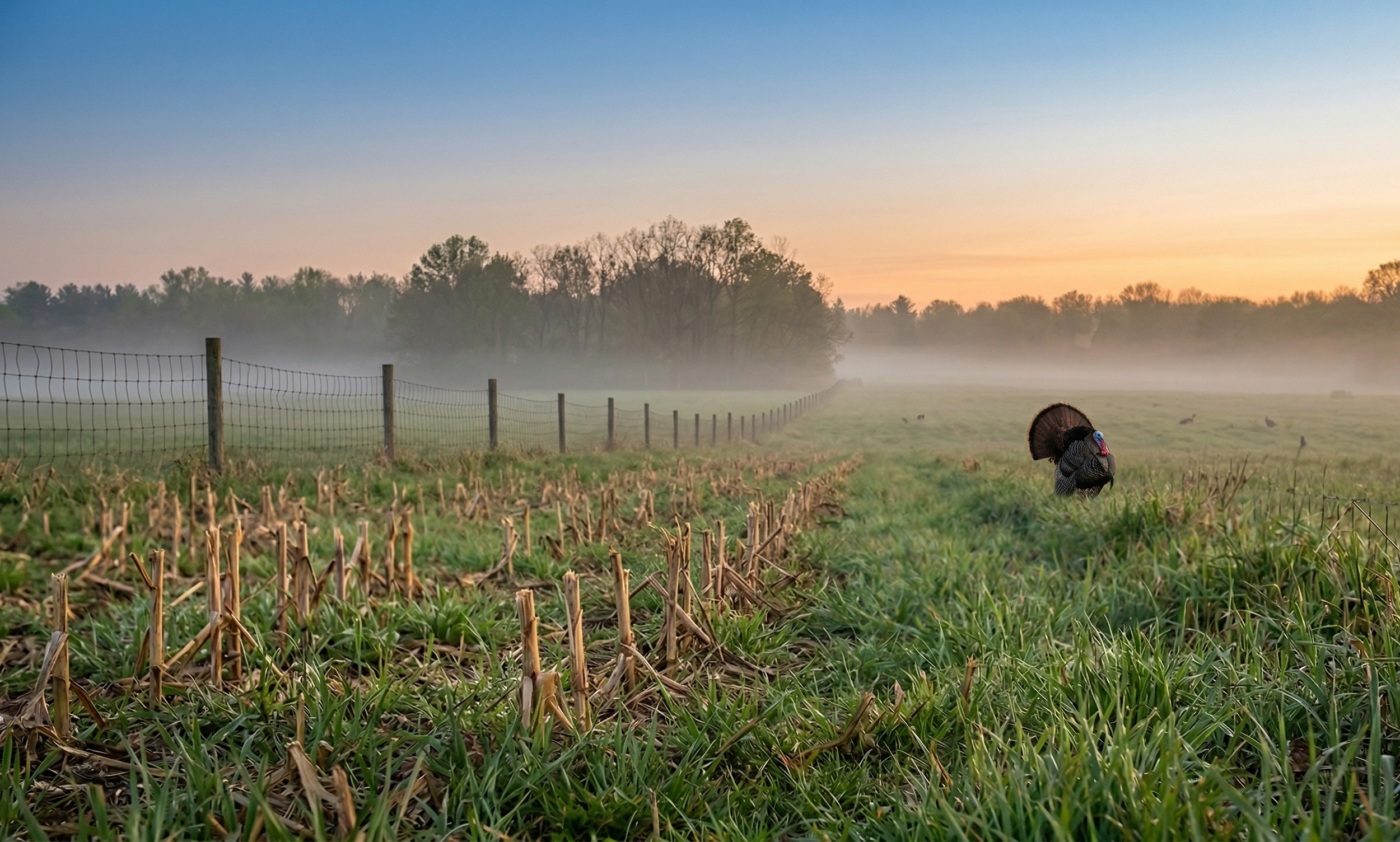
The Michigan DNR made some significant changes to the spring turkey season this year. If you hunted Michigan turkeys before 2025, pay attention here.
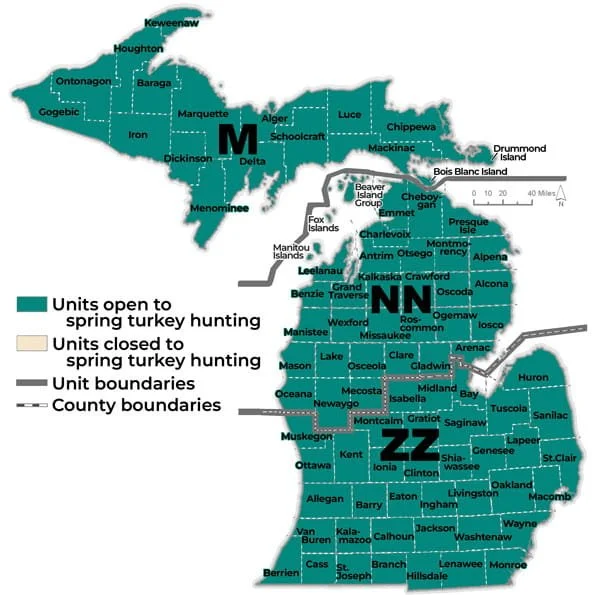
The biggest change is the structure of the Turkey Management Unit. Michigan reduced the number of TMUs from 14 down to three. That's it. Three units for the entire state.
Unit M covers the Upper Peninsula. Unit NN covers the Northern Lower Peninsula. Unit ZZ covers the Southern Lower Peninsula.
The DNR's upland game bird specialist, Adam Bump, said the goal was to give hunters longer seasons and bigger units. In practice, this means less boundary confusion and more flexibility in where you hunt within your unit. But it also means more hunters spread across fewer administrative zones, so quota dynamics shifted.
The other major change: mandatory harvest reporting. All successful spring turkey hunters must report harvests within 72 hours or before transferring possession of the birds, whichever comes first. You can report online or through the Michigan DNR Hunt Fish app. Don't skip this. It's not optional anymore.
2026 Season Dates and License Options
Here's the full breakdown of license types, dates, and quotas for 2026.
Drawing Licenses (required application by Feb. 1)
These options are valid on public and private land within the three TMUs.
Hunt 0110, Unit M (Upper Peninsula): April 18 through May 31. Quota of 6,000 licenses. This is the longest season window in the state, covering the entire UP. If you drew this tag, you've got over six weeks to find a gobbler.
Hunt 0134, Unit NN (Northern Lower Peninsula): April 18 through May 1. Quota of 18,000 licenses. A shorter window, just two weeks, but it lands right on peak gobbling activity for the northern LP.
Hunt 0302, Unit ZZ (Southern Lower Peninsula): April 18 through May 1. Quota of 8,000 licenses.
Hunt 0303, Unit ZZ (Southern Lower Peninsula): May 2 through May 31. Quota of 8,000 licenses. This is the latter season in southern Michigan, running through the entire month of May.
Guaranteed Licenses (no drawing required)
These went on sale on March 16 at 10 a.m. and don't require entry into the drawing.
Hunt 0234, Statewide: May 2 through May 31. Unlimited quota. Valid on public and private lands statewide except for public lands in Unit ZZ. This is your fallback if you didn't draw. You can hunt public land in the UP and northern LP, plus all private land statewide, for the entire month of May.
Hunt 0301, Unit ZZ (Private land only): April 18 through May 31. Unlimited quota. Valid only on private land in southern Michigan.
Leftover Licenses
If you didn't draw, leftover licenses became available on March 9 for unsuccessful applicants and on March 16 for everyone else. Availability depends on how many people applied in each unit.
The Bottom Line on Licenses
If you're reading this and didn't apply for the drawing, your best public land option is the Hunt 0234 statewide license. It runs May 2-31 and gives you access to public land everywhere except the southern LP. For a public land hunter willing to drive to the northern LP or UP, this is a very good tag. May gobbling activity is strong, and you'll face less pressure than the early-season hunters who hit the woods in mid-April.
Regulations You Need to Know
Bag limit: one bearded turkey per license. You get one tag for the entire spring season.
Legal weapons: shotgun (must fire a fixed shotgun shell), muzzle-loading shotgun, bow and arrow, or crossbow. No rifles. No handguns.
Decoy rules: mechanical, electronic, and live decoys are prohibited. You can use standard foam or inflatable decoys. Just nothing that moves on its own.
Baiting: illegal. You cannot bait turkeys in Michigan. Hunting over standing crops is legal, but anything you place to attract birds is a violation.
Roosted birds: You cannot shoot a turkey while it's roosting or sitting in a tree.
Shooting hours: half an hour before sunrise to sunset.
Your name and address must be on any equipment left in the field, including ground blinds on public land.
For complete regulations, visit the Michigan DNR Spring Turkey Regulations page.
Looking for more Michigan public land info? Check out our full Michigan public land hunting guide.
Best Public Land for Spring Turkeys in Michigan
Michigan's turkey population is concentrated in the Lower Peninsula, with the southern LP holding the highest densities. The UP has a growing population, particularly in the eastern counties. Here are the properties that consistently produce for public land turkey hunters.
Southern Lower Peninsula
Allegan State Game Area. Allegan County. 50,000 acres. This is arguably the best public land spring turkey property in Michigan. The mix of mature hardwoods, agricultural edges, and open ridges creates textbook turkey habitat. Gobblers use the oak ridges as strut zones and roost in the tall hardwoods along creek drainages. Morning gobbling activity is very strong here from mid-April through early May.
The pressure is real, especially opening weekend. Your edge is going deeper than the parking lot crowds. Most turkey hunters in Allegan set up within 400 yards of a road. The birds learn this fast. Push into the interior timber, especially along the hardwood ridges between creek bottoms, and you'll find gobblers that haven't heard a call in days.
Barry State Game Area. Barry County. 17,000 acres. Rolling hardwood terrain with scattered agricultural fields. Turkey populations are strong, and the terrain creates natural funnels where birds travel between roosting timber and feeding areas. The interior ridges south of Thornapple Lake consistently hold birds.
Flat River State Game Area. Montcalm and Ionia Counties. 11,000 acres. The river bottom and adjacent hardwood ridges provide roosting and strutting habitat. Turkeys work the field edges in the morning and retreat to timber by mid-morning. Set up along the transition zones where hardwoods meet the river floodplain for morning hunts.
Rogue River State Game Area. Kent County. 7,000 acres. Closer to Grand Rapids than most quality turkey ground. The upland hardwoods and swamp edges hold birds throughout the season. Pressure is moderate, and the property is small enough that you can e-scout it thoroughly before your hunt.
Sharonville State Game Area. Lenawee County. 4,000 acres. Southern Michigan farmland is fringed with good turkey numbers. The small size concentrates birds, and the surrounding agricultural land brings them onto public ground to roost and loaf during the day.
Portland State Game Area. Ionia County. 6,400 acres. Underrated turkey property. The mix of upland forest and grassland openings gives you room to work birds with decoys in open areas or call them through timber.
Northern Lower Peninsula
Pigeon River Country State Forest. Otsego and Cheboygan Counties. 106,000 acres. This is big country, and the turkeys here are spread out, but the population is growing. The hardwood ridges in the southern portion of Pigeon River hold the best turkey numbers. The birds are under less pressure than anywhere else in the southern LP.
Your challenge here is to locate birds in a vast landscape. Spend time on the roads at dawn, windows down, listening for gobbles. Once you locate a vocal bird, mark the spot on your app and plan your approach for the next morning.
Au Sable State Forest. Multiple counties. 782,000 acres. The scattered parcels of state forest across the northern LP include some very good turkey ground, especially where the forest borders agricultural land. Look for hardwood stands near open fields. The turkeys in these transition areas are patternable and often less pressured than state game area birds.
Huron National Forest. Multiple counties. 439,000 acres. The hardwood ridges along the Au Sable River corridor hold turkeys, and the dispersed camping option means you can set up a base camp right in the middle of your hunting area. Get on a ridge at dawn and listen. The river bottom acts as a sound funnel, and you can locate gobbling birds from surprising distances.
Upper Peninsula
Menominee and Delta County state lands. The southeastern UP has the strongest turkey population in the Upper Peninsula. State forest parcels near agricultural land hold huntable numbers of birds, and the pressure is almost nonexistent compared to the LP. If you drew a Hunt 0110 tag, the southeastern UP counties are your best bet.
Hiawatha National Forest. Schoolcraft and Alger Counties. 880,000 acres. Turkey numbers in the interior are low, but the southern fringe near farmland holds birds. This is adventure turkey hunting. You won't see other hunters, but you'll need to work for your gobbler.
Explore our state-by-state public hunting directory for more public land across the country.
Scouting for Spring Gobblers on Public Land
Start scouting weeks before the season opens. The goal is simple: find where turkeys roost and where they go in the morning.
Roosting
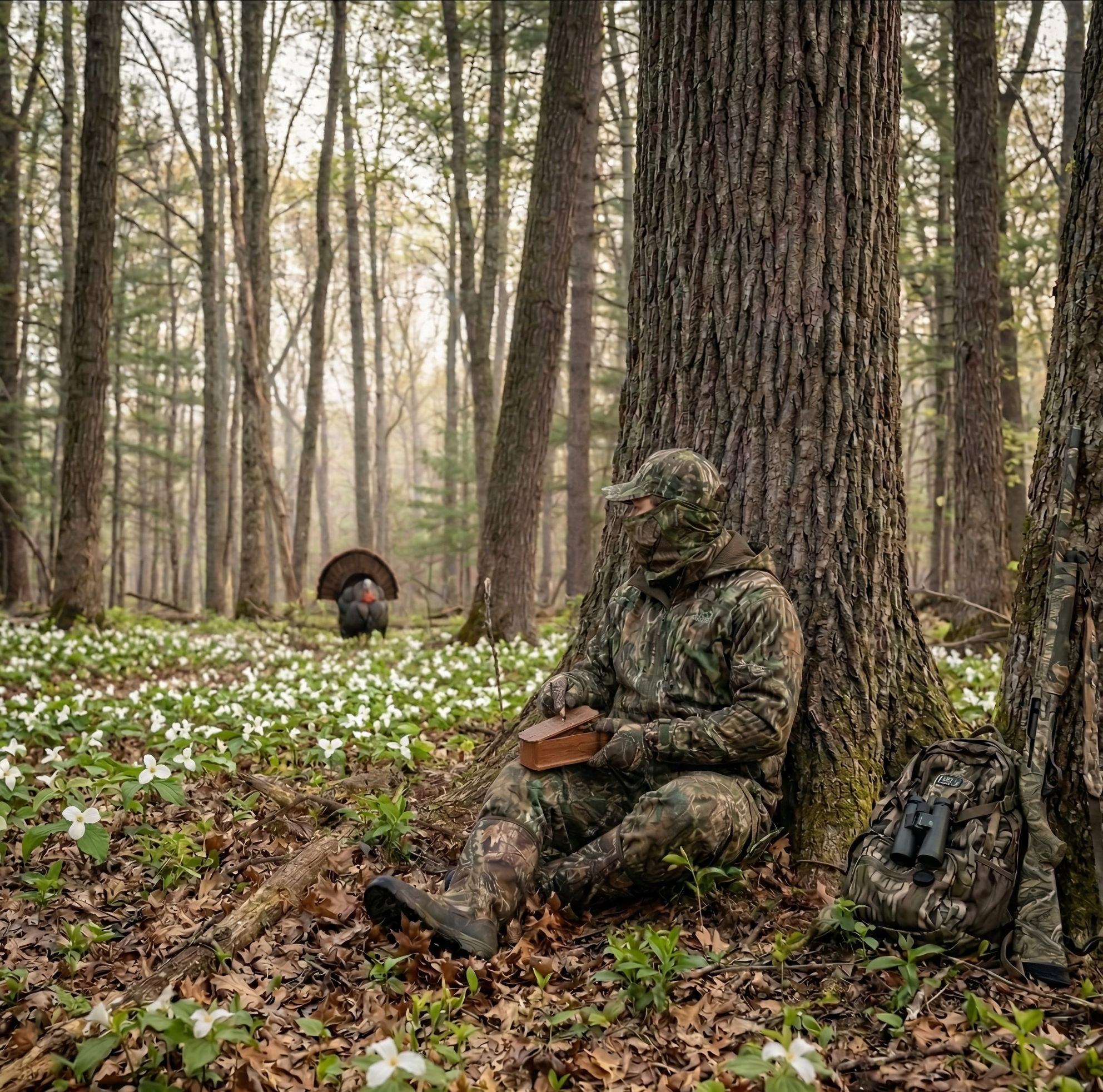
Turkeys roost in mature trees, usually hardwoods, near some kind of terrain feature that provides them a clear view. River bluffs, ridgelines, and timber edges are prime roosting spots. On a calm evening in early April, drive the roads near your hunting area and listen for fly-up gobbles or wingbeats 30-45 minutes before dark. Mark every roost location on your mapping app.
On public land, don't roost a bird and then set up 50 yards from his tree at dawn. You'll bump him. Set up 150-200 yards away, in the direction he's likely to fly down and travel. That usually means downhill, toward an opening or a field edge.
Strutting Areas
Gobblers strut where hens can see them. That means open ground. Look for field edges, logging roads, ridgetop clearings, power line cuts, and grassy openings within the timber. Glass these areas from a distance during mid-morning (9-11 a.m.) in the weeks before the season. If you find a strut zone, you've found a repeatable setup.
Sign
Turkey scratching in leaf litter is hard to miss. Look for disturbed leaves in hardwood stands, especially on south-facing slopes where the ground thaws first in spring. Dusting bowls (shallow depressions in dry dirt where turkeys dust their feathers) indicate regular use. Droppings and feathers confirm the area is getting consistent traffic.
Use Technology
A mapping app like onX Hunt or HuntStand shows you every piece of public land, terrain contours, and property boundaries. Zoom in on the hardwood ridges and field edges adjacent to state game areas. Those transition zones are where turkeys spend their mornings.
Satellite imagery on Google Earth is free and lets you identify strutting areas, clearings, and logging roads from your couch. Look for open patches within hardwood stands. Those are your setup spots.
Calling Strategy for Pressured Public Land Gobblers
Public land turkeys in Michigan hear a lot of calling. By the second week of the season, most gobblers in popular state game areas have been called to, set up on, and either spooked or pressured into going silent.
Here's how to beat that.
Less is More
The biggest mistake public land turkey hunters make is calling too much. A gobbler that answers but won't commit is telling you something. He's heard this before. Instead of cranking up the volume and frequency, do the opposite. Give him a few soft yelps, then go quiet. Set a timer on your phone for 20 minutes. Don't touch your call. Patience kills more pressured gobblers than aggressive calling ever will.
Use Soft Calls
Leave the loud box call in the truck after opening week. Switch to a slate call or a mouth call and keep your volume down. Soft purrs, clucks, and feeding yelps sound like a real hen going about her business. A three-note tree yelp at first light, followed by a fly-down cackle, followed by silence, is a deadly sequence for a roost-adjacent setup.
Call from Where He Wants to Go
Don't call from where you are. Call from where the gobbler wants to be. If you know he roosts on a ridge and flies down to a field edge every morning, set up on the field edge and call from his travel route, not from 200 yards away in the wrong direction. Turkeys take the path of least resistance. Set up on it.
Reap the Silent Bird
Some gobblers go completely silent under pressure. They still gobble, just not when they hear calling. If you've located a bird through scouting but he won't answer your calls, try a silent setup. Get in his travel path between the roost and the strut zone before dawn. Put out a single hen decoy. Don't call. Wait. These silent setups account for a lot of mature longbeards on public ground.
Mid-Morning Reset
Opening morning chaos dies down by 9 a.m. Most hunters leave. The woods get quiet. And gobblers that went silent at dawn often fire back up between 10 a.m. and noon once the hens leave them to nest. Stay in the woods. Move slowly through the timber, pausing every 100-150 yards to give a series of yelps. If a bird answers, sit down immediately, set up, and work him. Some of the best public land turkey hunting of the season happens between 10 a.m. and 1 p.m.
Gear for Michigan Spring Turkey Hunting
You don't need a truckload of equipment. Here's what matters.
Shotgun and Ammo
A 12-gauge is the standard. A 20-gauge works well out to 35 yards, especially with modern TSS (Tungsten Super Shot) loads. If you're shooting lead or standard tungsten, stick with the 12.
Pattern your gun before the season. This is non-negotiable. Set up a turkey target at 30 and 40 yards and shoot it with the choke and load combination you plan to hunt with. You need to know where your pattern centers and where your pellet density drops off. Most turkey misses happen because hunters never pattern their gun.
TSS loads have changed the game. They extend clean kill range to 50-60 yards with the right choke. Federal Heavyweight TSS and Apex TSS are two of the best options. They're expensive, around $5-7 per shell, but you only need one.
Calls
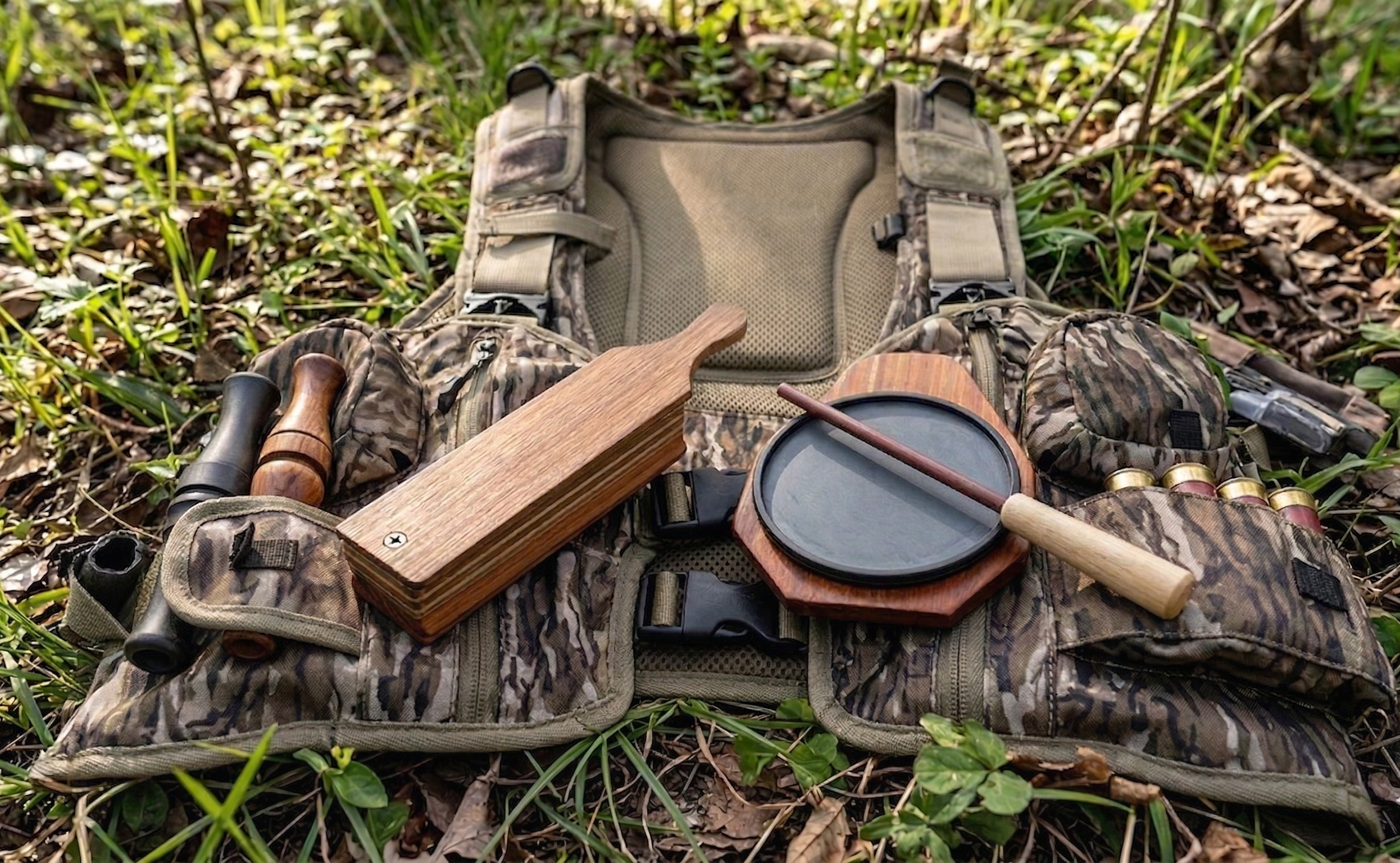
Bring at least three types. A box call for volume and for windy days. A slate or glass call for soft, realistic yelps and purrs. A diaphragm (mouth) call for hands-free calling when a bird is close. If you can only carry one, make it a slate call. It's the most versatile and forgiving for calling cadence.
Primos, Woodhaven, and Zink all make quality slate calls in the $20-35 range. Don't overthink the brand. Pick one and practice with it until your yelps sound clean and consistent. Check the current price on the Woodhaven cherry classic.
Decoys
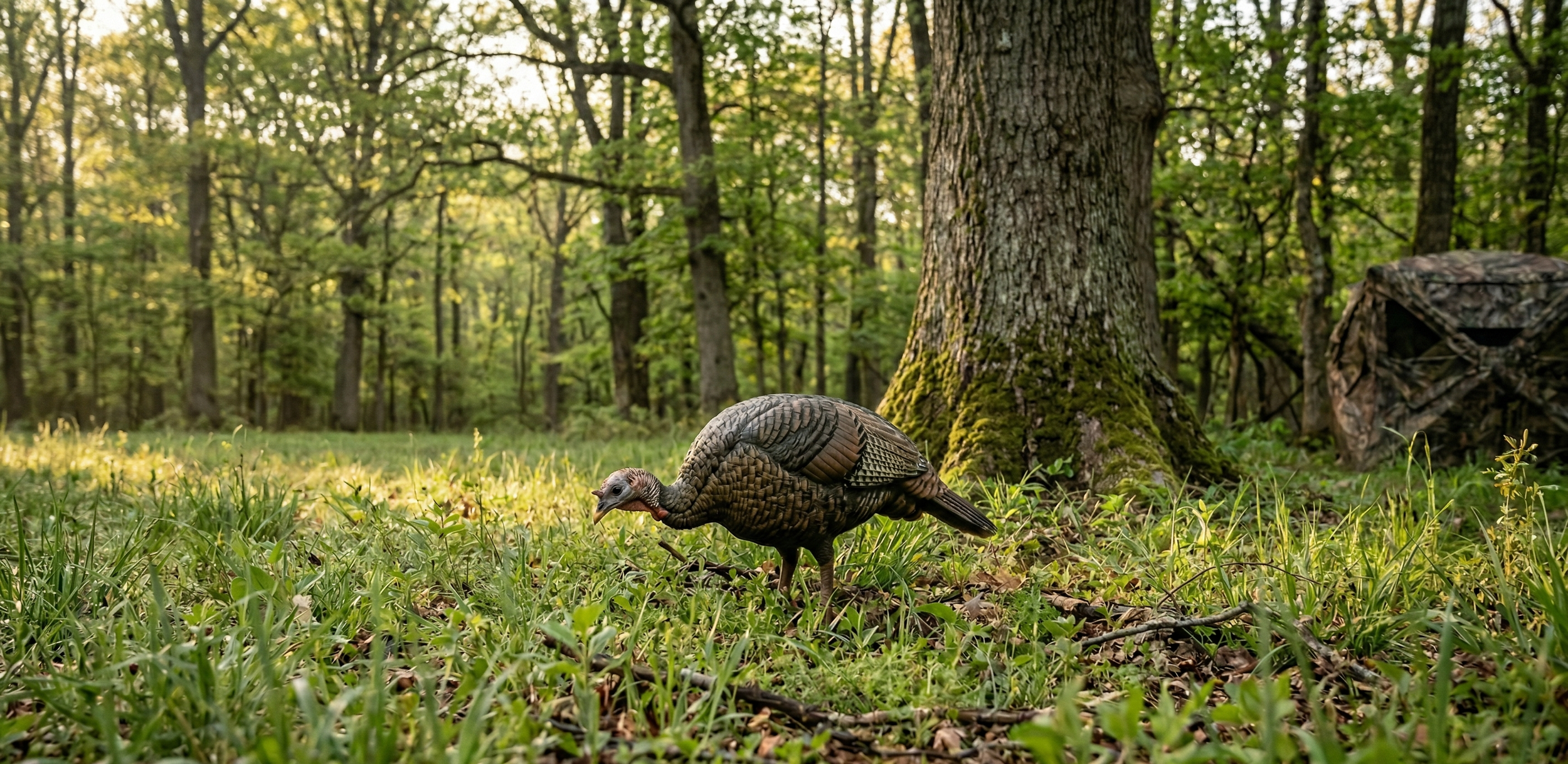
You're allowed standard, non-mechanical decoys in Michigan. A single hen decoy is enough for most public land setups. A hen and jake combination gets aggressive gobblers to commit faster, but it can also spook subordinate toms. Read the situation.
Avian-X and Dave Smith Decoys make the most realistic options. A budget-friendly Avian-X Lookout Hen does the job for under $80.
Clothing
Full camo from head to toe. Face mask or face paint. Gloves. Turkeys have extraordinary eyesight, and they pick up movement and contrast at distances that will humble you. Your camo pattern matters less than breaking up your outline and staying still.
Michigan spring mornings are cold. Expect 30s at dawn in mid-April, warming to the 50s by mid-morning. Layer accordingly. A lightweight insulated jacket over a moisture-wicking base layer works for the cold sit, and you can shed the jacket as the morning warms up.
Ground Blind vs. Run-and-Gun
Both work on public land. A pop-up ground blind is excellent for field edge setups where you're watching a strut zone and working decoys. It hides your movement completely and keeps you comfortable during long sits. Set the blind several days before you plan to hunt so turkeys can acclimate to it.
For timber hunting and covering ground to locate birds, go mobile. A lightweight turkey vest with a built-in seat pad lets you sit against a tree anywhere. The Tenzing or Alps OutdoorZ turkey vests give you a seat, call pockets, and storage without bulk.
Other Essentials
Bring a headlamp with a red light mode for the pre-dawn walk-in. Bring insect repellent because Michigan mosquitoes show up in May and are aggressive. A compact pair of binoculars lets you glass field edges and identify birds at a distance without moving. The Vortex Crossfire HD 8x42 is a solid, affordable option that earns its place in a turkey vest.
See all of our hunting gear reviews for more recommendations.
Common Mistakes on Public Land
These are the things that burn most hunters every spring.
Setting up too close to the roost. You spook the bird before he even flies down. Give roosting gobblers 150-200 yards of space, minimum.
Calling too aggressively, too early in the sit. Let the woods wake up. Give a bird time to gobble on its own. Your first calls of the morning should be soft.
Leaving too early. Most public land turkey hunters are back at the truck by 9 a.m. Stay until noon. Mid-morning is when lonely gobblers come looking for company.
Hunting the same spot every day. If you pressure a bird two mornings in a row without killing him, he'll change his pattern. Rotate spots. Give areas a day or two of rest.
Not patterning your shotgun. You get one shot. Make sure you know exactly where your pellets are going at 30 and 40 yards.
Ignoring the wind. Turkeys don't smell you, but wind affects how far your calls carry and how well you can hear gobbles. Hunt with the wind at your back or quartering so your calls project toward where you expect birds. On windy days, get into sheltered timber where gobbles carry better, and birds feel more comfortable.
Frequently Asked Questions
Can I hunt spring turkeys on Michigan public land without entering the drawing?
Yes. The Hunt 0234 statewide license is available without a drawing and costs $15. It runs May 2-31 and is valid on public and private land statewide, except for public land in TMU ZZ (southern LP). If you want to hunt public land specifically in the southern LP, you need to draw a Hunt 0302 or 0303 tag or purchase a leftover license, if available.
What time should I be set up for a morning turkey hunt?
Be in position at least 30 minutes before first light. In mid-April, that means being set up by about 6:15 a.m. In May, you'll want to be in place by 5:45 a.m. Getting in early matters because turkeys can gobble on the roost before you can see your hand in front of your face. If you're still walking in when the first gobble rips, you're late.
Is a ground blind or sitting against a tree better for public land turkeys?
Both work. A ground blind is better for field edge setups where you're watching a strut zone and working decoys. Sitting against a tree is better for timber hunting, run-and-gun tactics, and situations where you need to move quickly to a new spot. On public land, versatility matters. If you had to pick one approach, go mobile with a turkey vest and a good seat pad.
Can I use a crossbow for spring turkeys in Michigan?
Yes. Crossbows are legal during the spring turkey season. Bow and crossbow are both valid methods alongside the shotgun and the muzzle-loading shotgun.
What's the best call for public land turkeys in Michigan?
A slate call is the most versatile. It produces soft, realistic yelps and purrs that don't sound like every other hunter in the woods running a box call at full volume. For hands-free calling when a bird is inside 100 yards, a diaphragm call is essential. Carry both plus a box call for high-wind situations or locating distant birds.
The drawing is done, and the season is either open or about to open, depending on your tag. Get your gun patterned, your boots muddy, and your calls tuned. Michigan's 200,000 turkeys are out there. Go find one.
Sign up for our free Michigan Public Land Hunting Guide (PDF) and get weekly updates on access tips, gear reviews, and hunting strategy delivered to your inbox.
