Best Turkey Hunting Boots for 2026: 7 Picks for Every Terrain and Budget
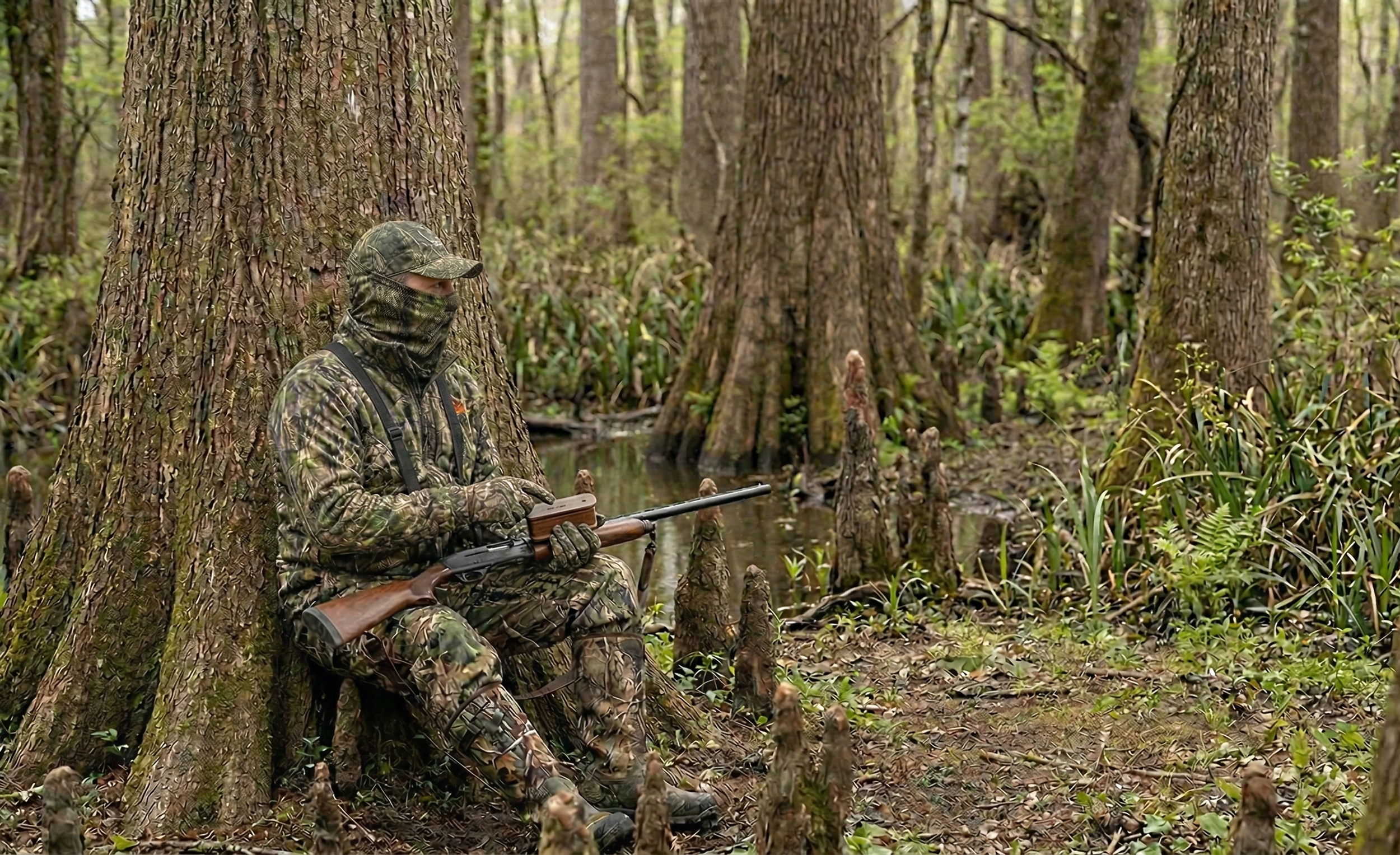
Turkey season punishes your feet in ways deer season doesn't. You're walking logging roads in the dark, crossing flooded creek bottoms at first light, sitting motionless against a tree for two hours, then jumping up and covering a half mile to get ahead of a gobbler that just moved. The boot that handles all of that without leaving you blistered, soaked, or snake-bit is the boot you want on your feet this spring.
I've worn everything from trail runners to knee-high rubber boots chasing birds across public land, and the truth is this: there's no single perfect turkey boot. The right pick depends on your terrain, your hunting style, and what might try to bite your ankle where you hunt. Here are seven boots that cover the full range, ranked by how well they perform for the spring turkey hunter who covers real ground.
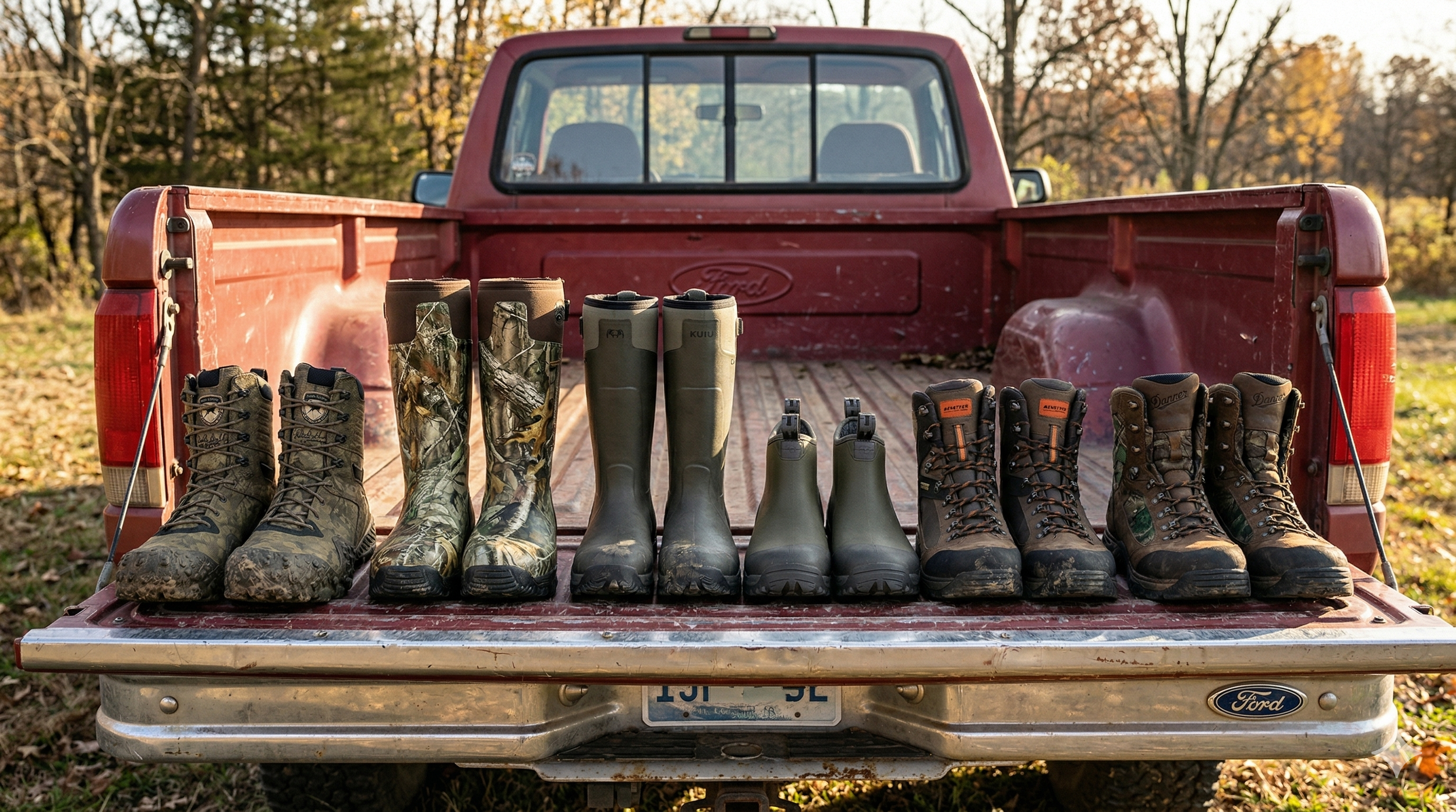
Quick Picks: Best Turkey Hunting Boots at a Glance
Best Overall (Lace-Up): Irish Setter VaprTrek 8" — Ultralight, athletic feel, built for run-and-gun hunters. $190-$230.
Best Rubber Boot for Turkey Season: LaCrosse Alphaburly Pro 18" — Waterproof, comfortable enough for miles. $160-$230.
Best for Wet and Muddy Public Land: KUIU HD Mud Boot — Self-cleaning tread and real ankle support in a neoprene boot. $199-$229.
Best Budget Rubber Boot: KUIU Ankle Mud Boot — Same tread technology as the HD, lower profile, lower price. $149.
Best for Hilly Terrain: Kenetrek Corrie 3.2 Hiker — Mountain-boot support with all-day comfort. $250-$290.
Best Snake Boot: Danner Sharptail — 17 inches of fang protection without the typical brick-on-your-foot feel. $320-360.
Best Leather All-Rounder: Danner Pronghorn — Five generations of proven performance in a boot that works from September through May. $240-$270.
Best Boots 2026: Individual Reviews
Irish Setter VaprTrek 8" — Best Overall for Turkey Hunting
The VaprTrek is the boot I grab when I know I'm going to cover ground. At roughly 18 ounces per boot, it weighs less than some trail runners, but it's still a legitimate hunting boot with full-grain waterproof leather, ankle support, and an aggressive Hex Lite outsole that grabs wet hillsides and leaf-covered slopes better than it has any right to at this weight.
What makes it a standout turkey boot is the athletic fit. When a gobbler moves, and you need to circle 300 yards through timber to cut him off, you're not fighting a clunky boot. The sugarcane-based EVA midsole returns energy with every step, and the CuShin tongue design eliminates the pressure point at the front of your shin that most 8-inch boots cause during long walks. UltraDry waterproofing has held up through dewy fields and shallow creek crossings without letting moisture in.
Limitations: This isn't a deep-water or snake-country boot. At 8 inches tall, it won't keep water out if you sink past the ankle, and it offers zero snake protection. If you're hunting bottomland swamps or southern pine flats where copperheads and rattlesnakes are active in April, look further down this list.
Best for: The run-and-gun turkey hunter on public land who covers miles of ridges, hardwood flats, and moderate terrain. Also doubles as an excellent early-season deer boot and scouting shoe.
Price: $190-$230, depending on model and insulation level. Check current price
LaCrosse Alphaburly Pro 18" — Best Rubber Boot for Spring Turkey
The Alphaburly Pro has been the standard rubber hunting boot for a reason. The hand-laid rubber-over-neoprene construction is waterproof, a feature that matters more during spring turkey season than most hunters realize. You're walking through wet fields, crossing creeks, and sitting on damp ground for hours. A boot that keeps moisture out is doing real work.
The EVA midsole is what separates this from cheaper rubber boots. It absorbs impact and adds genuine comfort even after several miles of walking. The adjustable rear gusset fits different calf sizes and makes slipping the boot on and off easier than most 18-inch designs. The multi-layered rubber in the toe and heel withstands rocks and roots without cracking, even in cold morning temps.
Limitations: At 18 inches tall and with a rubber exterior, these are heavier and hotter than lace-up boots. On warm late-April mornings in the South, your feet will sweat. They also take up more pack space if you're traveling, and the break-in period is real; give them a few walks before opening morning. Some users report the neoprene-to-rubber seam degrading after two to three seasons of heavy use.
Best for: Hunters working wet bottomland, river timber, or any ground where you're consistently stepping in water. Also excellent for scent-conscious whitetail hunters who want a boot that pulls double duty in fall.
Price: $160-$230, depending on insulation level. Non-insulated runs are the cheapest and are the right pick for spring. Check the current price on Amazon
KUIU HD Mud Boot — Best for Wet and Muddy Public Land
KUIU's boot lineup is newer to the market than that of the legacy names on this list, but the HD Mud Boot has earned its spot. The standout feature is the patent-pending tread design, inspired by self-cleaning mountain bike tires. The spaced lugs shed mud instead of packing it into the sole, a detail that matters enormously when you're crossing clay bottoms on public WMAs in Missouri or Tennessee, where every step in a standard boot adds a pound of mud to each foot.
The heavy-duty neoprene with a vulcanized rubber overlay keeps water out, and the interior grid fleece liner adds warmth without trapping moisture. What surprised me most about this boot is the ankle support. Most neoprene slip-ons feel sloppy laterally, but the combination of the fitted ankle and 3/4 shank in the HD Mud Boot gives you structure that a typical rubber boot doesn't offer. The EVA sole is comfortable enough for multi-mile walks to remote public land spots.
Limitations: Like all neoprene boots, these will run warm on hot days. The slip-on design means no lacing adjustment; if the fit isn't right out of the box, you're stuck with it. Some users report a pressure point on the front shin from the rubber overlay during long hikes, particularly when wearing jeans instead of hunting pants. Size carefully, as the snug ankle fit that provides support also makes them harder to pull off at the end of the day.
Best for: Turkey hunters on flat to rolling public land where mud, standing water, and creek crossings are constant. The self-cleaning tread earns its keep in clay-heavy soils across the Midwest and Southeast.
Price: $199-$229, depending on color/pattern. Available exclusively at KUIU.com. Check the current price at KUIU.com
KUIU Ankle Mud Boot — Best Budget Pick
If you want the same self-cleaning tread technology and neoprene construction as the HD Mud Boot but don't need 16 inches of height, the Ankle Mud Boot delivers at a meaningfully lower price. It uses the same vulcanized rubber overlay and EVA sole in a lower-profile design that's easier to slip on, lighter on the foot, and cooler in warm weather.
The ankle height makes it a true do-everything boot. I've worn this style for everything from pre-season scouting to food plot work to early-morning turkey sits on higher, drier ground. It works well when paired with gaiters for snake protection or when you just need a reliable, waterproof boot that won't slow you down.
Limitations: The ankle height means no protection in deep water or tall grass with snakes. The neoprene offers no bite resistance. On steep, uneven terrain, you'll miss the ankle support of a taller lace-up boot. This is a fair-weather, moderate-terrain boot; don't ask it to do more than that.
Best for: Budget-conscious hunters who want quality construction without paying $ 200 or more. Also works well as a camp boot, scouting boot, or casual hunting shoe for quick morning hunts on familiar ground.
Price: $149 at KUIU.com. Check the current price at KUIU.com
Kenetrek Corrie 3.2 Hiker — Best for Hilly Terrain
A hiking boot on a turkey hunting list might raise eyebrows, but the Corrie 3.2 is the best boot I've used for covering serious elevation on spring gobbler hunts. If you're chasing Merriam's in the Black Hills, eastern birds through Appalachian hollows, or Rio Grandes across canyon country in Texas, you need a boot built for climbing and descending, not just walking flat logging roads.
The 7-inch leather-and-synthetic upper with K-strap ankle support provides stability on steep sidehills without restricting mobility. The 5mm nylon midsole paired with lightweight Grapon outsoles grips rock and loose dirt confidently, and the cushioning holds up through 10-plus-mile days without breaking down. This boot hikes like a premium backpacking shoe but has the durability and protection of a hunting boot.
Limitations: Not waterproof like a rubber boot; Gore-Tex lined, which means it handles rain and dew but won't survive a creek crossing above the ankle. No insulation in the standard model, so cold early-morning sits can be chilly. The price is steep for a boot that doesn't do everything. And like any lace-up leather boot, there's a break-in period of 15-20 miles before it truly conforms to your foot.
Best for: The mobile turkey hunter in mountainous or hilly terrain who values stability, support, and all-day hiking comfort over waterproof depth. Western turkey hunters chasing Merriam's and Rio Grandes will appreciate this boot most.
Price: $290-325. Check current price
Danner Sharptail Snake Boot Side Zip — Best Snake Boot
Every turkey hunter south of the Mason-Dixon line should own a snake boot, and the Sharptail is the one I recommend for spring. Most snake boots feel like you're wearing a cast, stiff, heavy, and guaranteed to cause blisters by noon. Danner built the Sharptail differently. At 17 inches tall, it provides full lower-leg protection against copperheads, timber rattlesnakes, and cottonmouths, and its full-grain leather upper is noticeably more flexible than that of competing models.
The Open Cell Polyurethane footbed absorbs shock well, and the Plyolite midsole keeps overall weight manageable for a boot in this protection class. The multi-directional lug outsole handles the mix of hardwood ridges, swamp edges, and pine plantations that define Southern and Southeastern turkey country. The 360-degree snake guard doesn't rely on a single panel; it wraps the entire boot.
Limitations: They're still a snake boot, which means they're heavier and less breathable than any lace-up hiker or rubber boot on this list. Breaking them in takes time and patience. On long, aggressive walks in warm weather, your feet will be hot. If you don't hunt in active snake territory, there's no reason to carry this weight.
Best for: Turkey hunters in the Southeast, South, and Mid-Atlantic, where venomous snakes are active in the spring. If you hunt public land in Alabama, Georgia, Florida, the Carolinas, Arkansas, or East Texas, this boot should be in your truck.
Price: $320-360. Check current price
Danner Pronghorn — Best Leather All-Rounder
The Pronghorn is on its fifth generation, and it's earned the reputation it carries. Military, law enforcement, and serious hunters have been wearing this boot for decades, and the combination of full-grain leather, Gore-Tex lining, and Vibram outsole delivers performance that justifies the price across multiple seasons and species.
For turkey hunting specifically, the Pronghorn works on almost any terrain. It provides enough ankle support for steep ridges, enough waterproofing for morning dew and light creek crossings, and enough cushioning for all-day comfort. The build quality means this boot will last three to five seasons of hard use, making the per-season cost very competitive with cheaper boots you'll replace every year or two.
Limitations: At roughly $270, this is one of the most expensive lace-ups on the list. The leather upper is heavier than synthetic alternatives, and it takes 20-plus miles to fully break in. It's also not the quietest boot in the woods; the Vibram sole can click on rock and hardpan in a way that softer-soled boots won't. Not ideal for run-and-gun speed, and not a rubber boot, so deep mud and standing water will get inside.
Best for: The hunter who wants one boot that works for turkey season, early bow season, and late-season sits. If you're buying one pair of lace-up hunting boots and want them to last, this is the investment pick.
Price: $240-$270. Check current price
Turkey Hunting Boots Buyer's Guide: What Actually Matters
Height
Boot height should match your terrain and threats. In snake country, 16 to 18 inches is mandatory. For wet bottomland and creek crossings, 14 to 18 inches keeps water out. For dry ridges and upland timber, 6 to 8 inches is plenty, and you'll move faster and more quietly for it.
Weight
This matters more to turkey hunters than to most other hunters. You're covering ground, sometimes lots of it, in a single morning. Every ounce adds up over miles. A sub-20-ounce-per-boot lace-up like the VaprTrek vs. a 3-pound rubber boot is a meaningful difference by your fifth mile.
Waterproofing vs. Breathability
These are always a tradeoff. Full rubber boots are 100% waterproof but trap heat. Gore-Tex lined leather boots breathe better but won't survive a deep crossing. For spring turkey, where temps can swing from 30 degrees at dawn to 65 degrees by 10 AM, I lean toward boots that breathe unless I know I'm hitting standing water.
Tread Design
Ignore marketing language about "aggressive traction." What matters is how the sole performs on wet leaves, clay, and loose hillside dirt, the three surfaces you'll encounter most during spring turkey season. Self-cleaning designs like KUIU's spaced-lug system matter in heavy mud. Vibram and similar compounds grip wet rock. Shallow lugs tend to pack with clay and become skis.
What's Marketing Hype
Temperature ratings on boots are largely meaningless; they're not standardized, and your feet's warmth depends more on socks, activity level, and blood circulation than any insulation rating. And any boot claiming to be "the only boot you'll ever need" is lying. Different hunts demand different boots.
Budget Spotlight: KUIU Ankle Mud Boot
At $149, the KUIU Ankle Mud Boot is the best value on this list for the turkey hunter who doesn't need snake protection or deep-water capability. You get the same self-cleaning tread technology and waterproof neoprene construction as the $229 HD model, just in a lower-profile package. Pair it with a quality merino wool sock and, if needed, snake gaiters, and you have a spring setup that costs less than most single boots on this list. The ankle height also makes it the most versatile option here; it works for scouting, food plot work, early-season hunts, and camp duty without feeling like specialized gear.
Frequently Asked Questions
Do You Need Snake Boots for Turkey Hunting?
It depends entirely on where you hunt. If you're in the Southeast, Gulf states, or anywhere with an active venomous snake population during April and May, yes, invest in snake boots or, at a minimum, snake gaiters. Copperheads, timber rattlesnakes, and cottonmouths are active during the same warm-up that triggers spring gobbling. If you hunt the Upper Midwest, Northeast, or the Mountain West, where venomous snakes are rare or absent, standard boots are fine.
Are Rubber Boots or Lace-Up Boots Better for Turkey Hunting?
Rubber boots are better for consistently wet terrain, swamps, flooded timber, and creek-bottom hunts. Lace-up boots are better for covering distance on dry to moderately wet ground because they're lighter, more supportive on uneven terrain, and breathe better in warm weather. Most serious turkey hunters own one of each and choose based on the morning's conditions.
How Important Is Boot Weight for Turkey Hunting?
More important than most hunters think. Turkey hunting involves more walking than a typical deer sit, and spring conditions mean warmer temps, which cause fatigue to set in faster. If you regularly cover two to five miles per hunt, the difference between a 20-ounce boot and a 40-ounce boot is significant by mid-morning. Lighter boots also let you move more quietly through dry leaves and timber, a real advantage when you're trying to close distance on a gobbler.
Should You Wear Insulated Boots for Spring Turkey Season?
In most regions, no. Non-insulated or lightly insulated boots are the better choice for spring. Early-morning temps might be cold, but you'll be walking to your setup and generating heat. By mid-morning, insulation becomes a liability. If you hunt northern states where opening week can still bring frost or snow, a lightly insulated option (200-400 grams) makes sense. For the Southeast, Gulf Coast, or any hunt after mid-April, skip the insulation entirely and wear a heavier sock if mornings are cool.
Can You Use the Same Boots for Turkey and Deer Season?
Absolutely. Crossover is one of the best ways to justify spending more on quality boots. The Danner Pronghorn, Irish Setter VaprTrek, and LaCrosse Alphaburly Pro all transition seamlessly from spring turkey to fall deer. The only adjustments are insulation level (swap to insulated models or heavier socks for late-season deer sits) and height (you might want a taller rubber boot for November's rain and snow). Buying a boot that works across seasons is smarter than owning a closet full of specialized footwear you wear three times a year.
Want more gear recommendations and public land strategies delivered straight to your inbox? Sign up for our free state-by-state public land hunting guides and never miss a new review.