This guide includes affiliate links. LandsToHunt.com earns a commission on qualifying purchases.
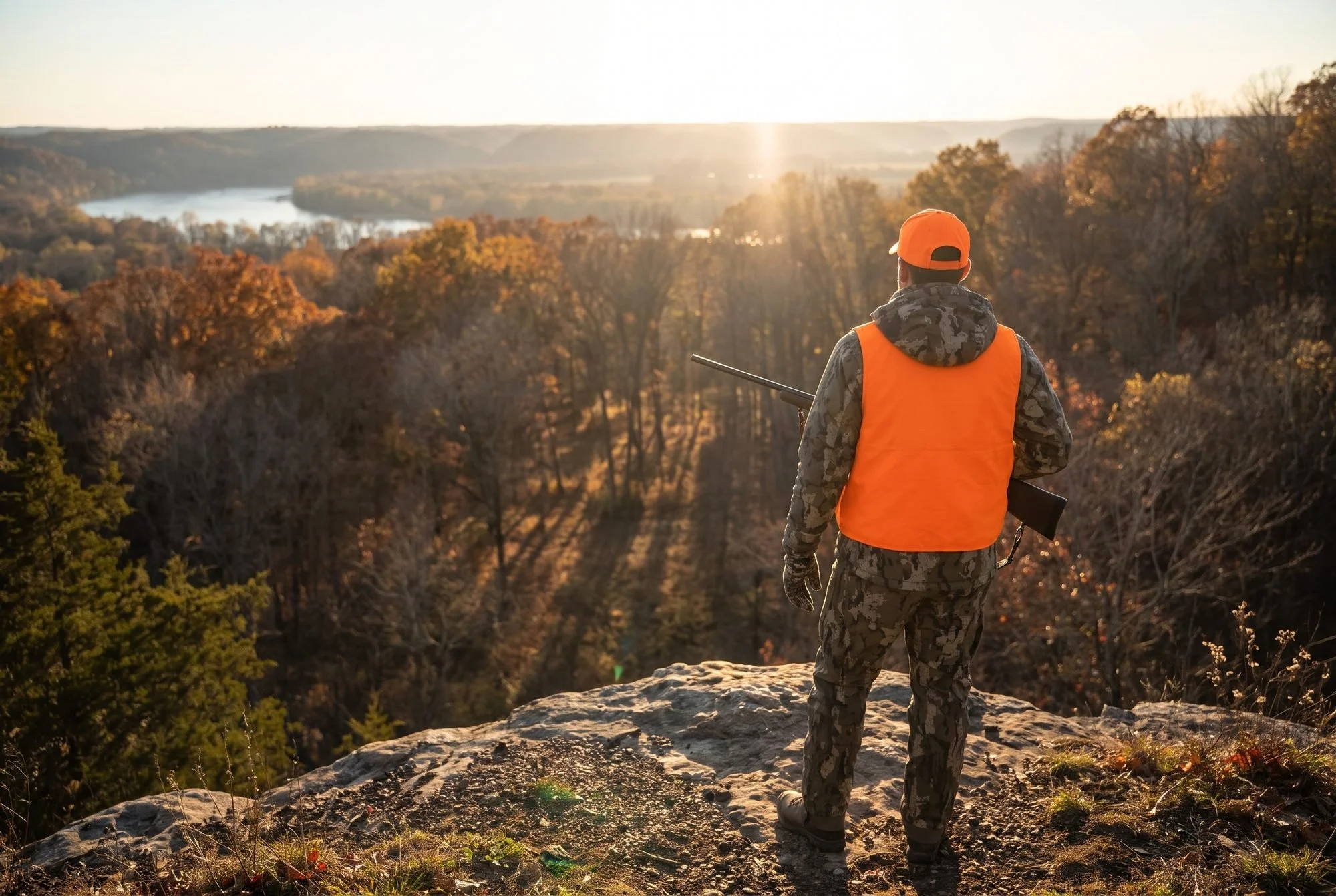
Pike County. Say those two words at any deer camp in the country and somebody starts talking about a 180-inch buck. Illinois built that reputation on deep river-bottom soils, wall-to-wall corn and soybeans, and short firearm seasons with no traditional centerfire rifles, so a lot of bucks live long enough to grow up. If you're shopping the top whitetail outfitters in Illinois, you're paying for access to that combination, and the price tag reflects demand. This guide covers where the best guided operations cluster, what a fair rate looks like, the red flags that should end a phone call, and the public ground worth hunting if you'd rather do the work yourself.
Why Illinois Draws Serious Whitetail Hunters
Genetics get the credit. Food does the work.
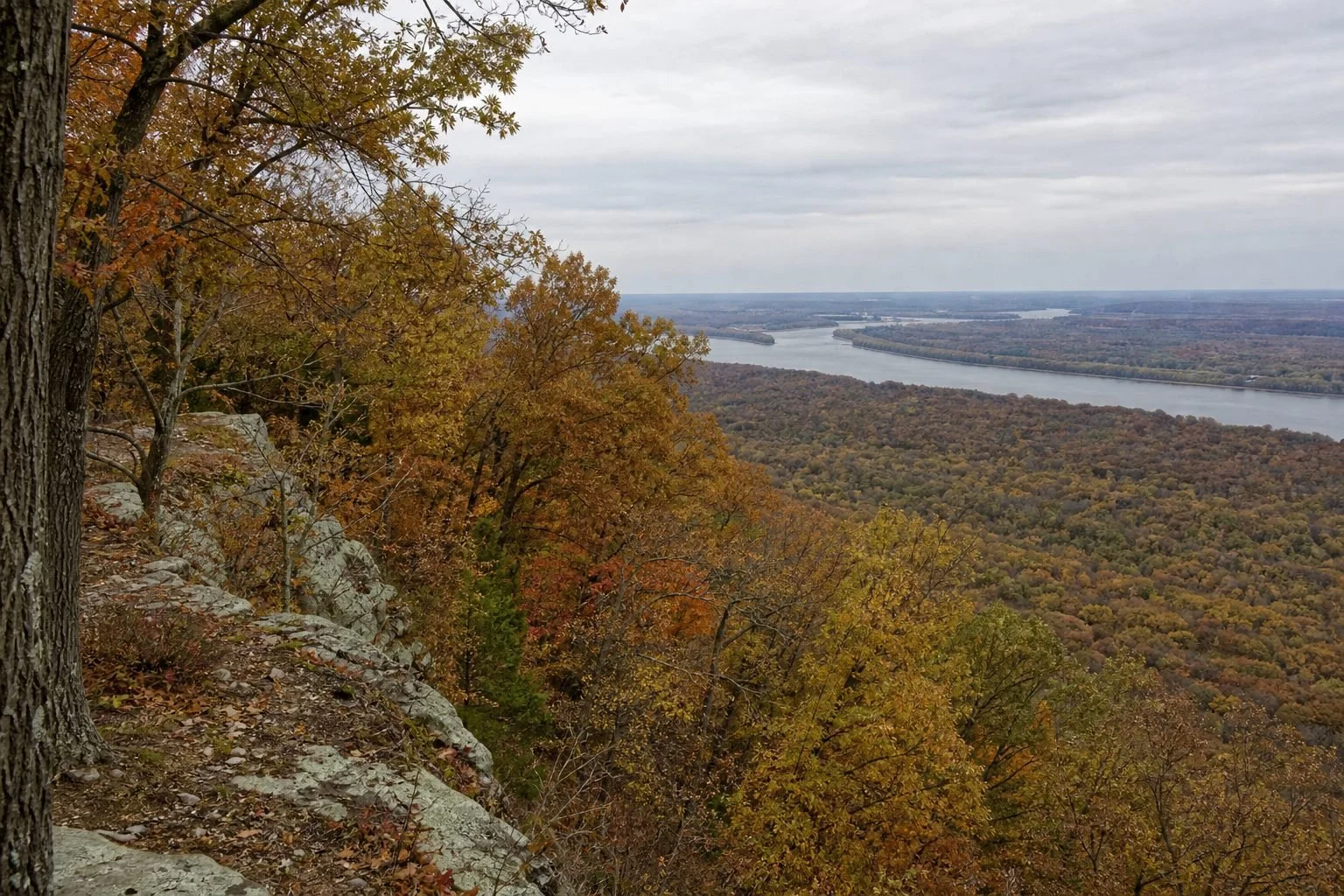
West-central Illinois sits in a wedge between the Mississippi and Illinois rivers, and that country holds some of the most fertile farm ground in North America. Bucks grow on soybeans all summer, hit standing corn in fall, and bed in brushy bluff timber and creek drainages nobody farms because nobody can. Layer on a firearm season that runs only seven days total, split across two segments in late November and early December, and you get an age structure most states can't touch. Illinois consistently lands near the top of the Boone and Crockett record book for whitetails, with Pike, Adams, Fulton, and Jo Daviess counties showing up year after year.
The catch? Almost none of that ground is public.
Illinois ranks near the bottom nationally for public land, with well under 5 percent of the state in public ownership. So most nonresidents chasing a true Illinois giant end up booking guided whitetail hunting in Illinois, leasing a farm, or grinding the few public options that hold up under pressure. Each path works. Each one costs you something different.
Booking a hunt or going DIY nearby? I built Hunting Scout to size up any ground from home, with real terrain, public-land boundaries, and wind history. Check the area before you put money down. 3 free reports a month. Run a free scout report
How to Vet the Top Whitetail Outfitters in Illinois
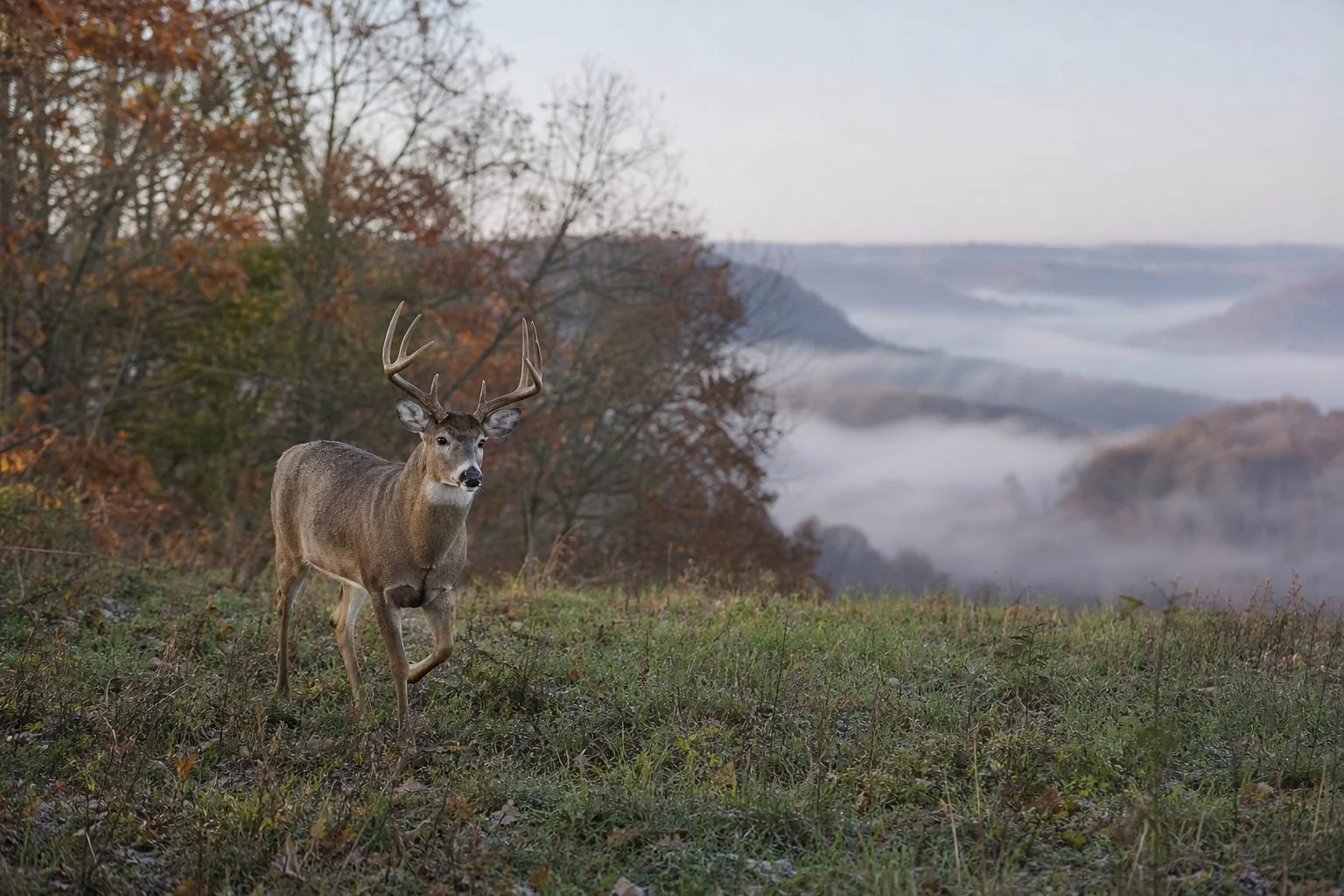
A slick website and a wall of grip-and-grin photos tell you almost nothing. Some of those bucks came off the property a decade ago. Others came off a neighbor's farm. Before you put down a deposit, which commonly runs a third to half of the hunt price, get straight answers to the questions below.
Green Flags
Opportunity rates, not just kill rates. A good outfitter tells you what percentage of clients saw a shooter buck in bow range, not only how many tagged one.
A full reference list from last season, including hunters who went home with an unpunched tag. Call those guys first.
Clear numbers on acreage and hunter density. Ask how many acres each hunter gets per week and how many weeks each farm gets hunted.
Honest talk about the nonresident tag lottery. Illinois nonresident deer permits run through a draw, and the best camps spell out exactly what happens to your deposit if you don't get drawn.
Multiple stand sites hung and trimmed before you arrive, set up for different wind directions.
Red Flags
Guaranteed bucks or guaranteed shots. Free-range Illinois whitetails don't come with guarantees, and anybody promising one isn't being straight with you.
Trophy fees or wounding fees buried in the fine print. Some outfitters charge extra once a buck crosses a score threshold. That's not automatically shady, but you should see the number in writing before you book.
Vague answers about the ground. If they won't name the county or get cagey about lease agreements, walk away.
Too many hunters in camp. Eight bowhunters on 1,200 acres during the first week of November means somebody's sitting a burned-out stand.
Pressure to commit before the draw results come out, with no refund language anywhere in the contract.
Here's one more test I like. Ask what happens when the wind's wrong for your assigned stand. A guide who says "sit anyway" just told you everything about how that camp manages pressure.
Top Whitetail Outfitters in Illinois by Region
Outfitter lists go stale fast in this state. Farmland investors buy up leased ground, guides retire, and a camp that killed giants five years ago might be hunting half the acreage today. So rather than a ranked list that's outdated by next fall, this section profiles the five regions where the best-reviewed Illinois outfitters cluster, what a typical hunt costs in each, and which hunter each region fits. Pair this with the vetting questions above to pick a specific camp that matches your style.
1. Pike, Adams, and Brown Counties (The Golden Triangle)
Location: West-central Illinois between the Mississippi and Illinois rivers, roughly two hours north of St. Louis.
Typical price range: $4,500 to $7,000 for a five- or six-day guided archery hunt during the November rut. Shotgun hunts run lower.
What sets this region apart: Name recognition and proven genetics. Pike County bucks put Illinois on the map, and the bluff-and-ag country here still turns out mature deer every season. Steep hardwood ridges drop into creek bottoms, with CRP and crop fields on the flats.
Best for: Bowhunters with a big budget who want the strongest odds at a 150-inch-plus buck. Plan to book 12 to 18 months ahead for prime November dates.
2. Fulton and Schuyler Counties (Illinois River Corridor)
Location: West of Peoria along the Illinois and Spoon rivers.
Typical price range: $3,500 to $5,500 for a five-day archery hunt.
What sets this region apart: Reclaimed strip-mine ground. Fulton County holds thousands of acres of old mine land that grew back into nasty thickets, ponds, and grass, and big bucks love that kind of security cover. You'll often find Golden Triangle-caliber deer at a lower day rate.
Best for: Value-minded bowhunters who want trophy potential without Pike County prices.
3. Jo Daviess County (The Driftless Northwest)
Location: The far northwest corner near Galena, about 20 minutes from Dubuque, Iowa.
Typical price range: $3,500 to $5,500 for an archery hunt.
What sets this region apart: Terrain. Glaciers skipped this corner of the state, leaving deep coulees, limestone bluffs, and timbered ridges that look more like southwest Wisconsin than flat Illinois. Thermals and swirling wind make stand placement tough, and a good guide earns his pay here.
Best for: Hunters who like hill-country bowhunting and cold late-season sits. Chronic wasting disease is present in northern Illinois counties, so read up on carcass transport rules before you travel.
4. Southern Illinois and the Shawnee Hills
Location: Pope, Johnson, Union, Jackson, and Williamson counties, around Carbondale and Marion.
Typical price range: $2,500 to $4,500 for a guided hunt.
What sets this region apart: Big timber and friendlier prices. With less ag ground, bucks key hard on acorns, and hunts feel more like classic hardwood bowhunting than field-edge sitting. Average antler mass runs a notch below Pike County, but the value for the money is very good.
Best for: First-time Illinois hunters, budget-conscious groups, and anyone who prefers ridges and hollows over crop edges.
5. Firearm-Season Specialists (Statewide)
Location: Scattered across the state, heaviest in the west-central counties.
Typical price range: $2,000 to $3,500 for a three- or four-day shotgun or muzzleloader hunt.
What sets this format apart: Plenty of camps fill bow stands through early November, then run a separate shotgun camp during the two firearm segments. Deer move hard because every other hunter in the county is bumping them, and short-range setups in pinch points get really productive.
Best for: Gun hunters, anybody who can't commit a full week, and hunters who want Illinois genetics at the lowest guided price.
The DIY Alternative: Public Land Whitetail Hunting in Illinois
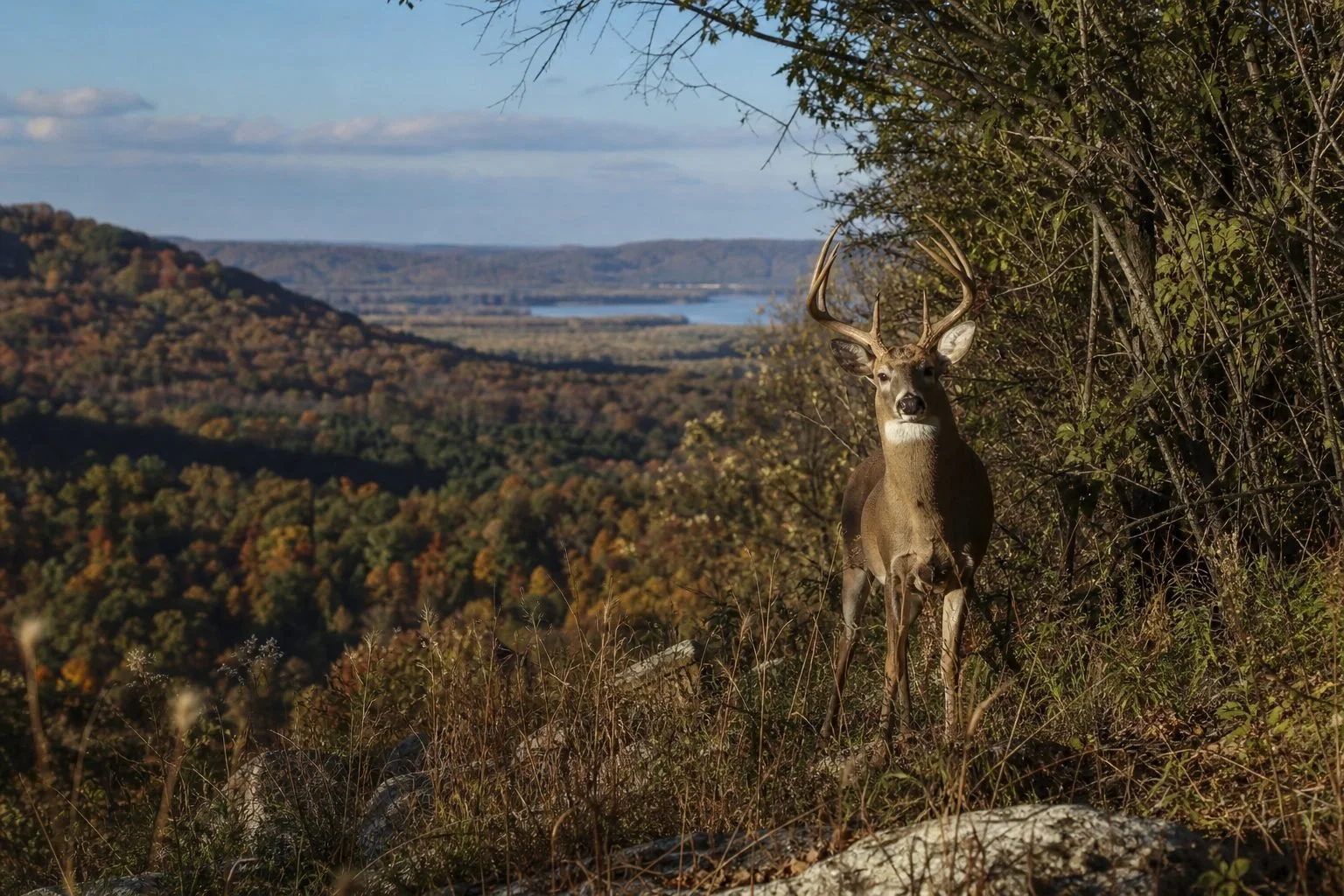
No guide fee doesn't mean no cost. Public ground here gets hammered, and you'll pay in sweat and scouting hours. Still, hunters kill good bucks on Illinois public land every year by walking past the parking lot crowd and hunting the spots nobody else wants to reach.
Shawnee National Forest
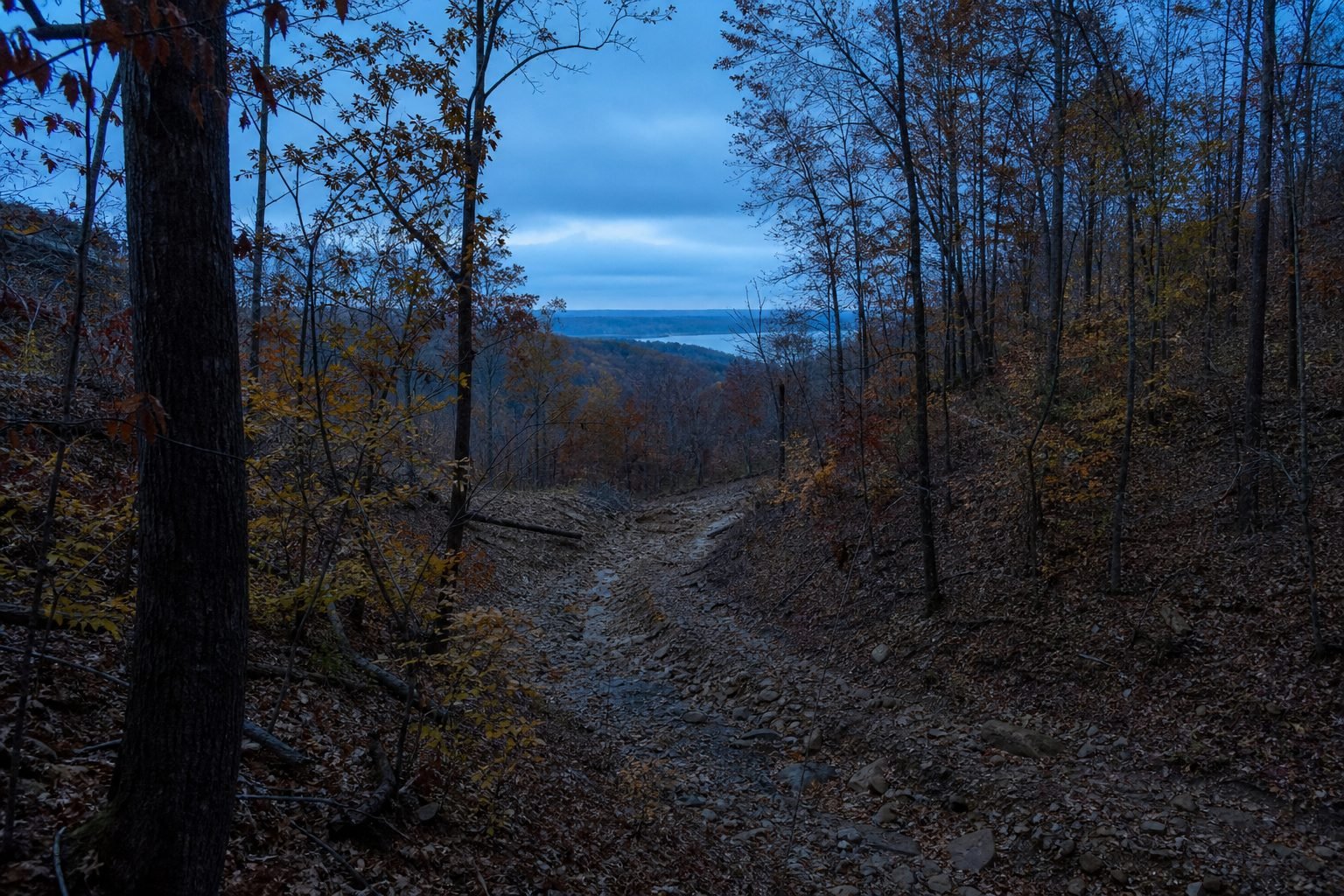
Covering roughly 280,000 acres across the southern tip of the state, the Shawnee National Forest is the biggest block of public hunting ground in Illinois. Deer hunting follows statewide seasons, so your regular license and permits cover you. Terrain runs from oak-hickory ridges to sandstone bluffs and tight hollows. Seven designated wilderness areas, including Lusk Creek, Bay Creek, and Garden of the Gods, prohibit motorized access, which keeps pressure way down.
Access tips that matter on the Shawnee:
Scout acorns first. Find the white oaks dropping in early October and you've found the deer.
Watch boundaries closely. Private inholdings checkerboard the forest, and lines aren't always posted. onX Hunt shows ownership boundaries and landowner names on your phone, and downloaded offline maps work even where cell service dies in the hollows.
Hunt behind gated forest roads. A mile past the gate drops most of your competition.
Expect ticks well into November in southern Illinois. Treat your clothes with permethrin before the season.
Jim Edgar Panther Creek State Fish and Wildlife Area
Out in Cass County, this site covers roughly 16,000 acres in the same west-central belt that grows the state's biggest bucks. Panther Creek runs deer hunting under site-specific rules that can include permits, quotas, and daily check-in, so read the site regulations well before your trip. Land a spot here and you get a crack at Illinois genetics without a lease.
Golden Triangle Public Sites
Siloam Springs State Park in Adams and Brown counties and Ray Norbut State Fish and Wildlife Area in Pike County give you small public footprints inside the most famous deer country in the state. Neither one is big. Both draw a crowd. Your best bets: hunt weekdays, go deeper than anybody wants to drag a deer, and find the thickest cover on onX Hunt's satellite and hybrid layers. HuntStand works as an alternative if you already run that app.
Don't stop at state parks and wildlife areas, either. Army Corps of Engineers ground around Carlyle Lake, Lake Shelbyville, and Rend Lake allows hunting in many areas, and those spots get overlooked. Our guide to hunting beyond the WMA on BLM, state forests, and trust lands walks through how to find these less obvious parcels. Many Illinois sites also carry rules you won't see in the statewide digest, from check-in cards to limits on overnight stands and trail cameras, so pull the site-specific regulations before your first sit.
If Illinois tags or prices don't line up this year, the state next door deserves a look. Our Indiana public land hunting guide covers state forests and fish and wildlife areas with similar Midwest deer and simpler nonresident access.
Planning Your Guided Whitetail Hunting Trip to Illinois
License and Permit Costs
Nonresidents need a nonresident hunting license, an Illinois habitat stamp, and a deer permit. Nonresident archery and firearm deer permits both go through lotteries with application windows earlier in the year, and leftover permits sometimes become available later. Budget somewhere around $450 to $600 for a nonresident archery package once everything stacks up. Hunters born on or after January 1, 1980, also need proof of hunter education. Fees and deadlines shift from year to year, so confirm everything with the Illinois Department of Natural Resources before you send a deposit anywhere.
Best Timing
Late October: Pre-rut scraping and early seeking. Many camps charge less, and dates are easier to get.
November 1 to 15: Peak rut activity across most of the state. Highest prices, and these weeks book first.
Firearm seasons: The first segment is a three-day weekend in mid-to-late November. The second runs four days, Thursday through Sunday, about a week and a half later. Archery closes during firearm days in counties open to gun hunting.
Late season, December into mid-January: Bucks pile onto standing grain and cut fields. Brutal cold, short sits, and some of the most predictable patterns of the year.
Travel Logistics
Golden Triangle: Fly into St. Louis Lambert (STL) and drive about two hours north. Quincy also has a small regional airport.
Fulton and Schuyler counties: Peoria (PIA) puts you under an hour from most camps.
Jo Daviess County: Dubuque or the Quad Cities airport in Moline.
Southern Illinois: Paducah, Kentucky, sits about an hour from much of the Shawnee. St. Louis runs closer to two and a half hours.
Set up meat processing before you arrive. Ask your outfitter which processor they use and whether they ship. Driving home with a buck? Check your home state's CWD carcass import rules first, because many states only allow deboned meat and a cleaned skull cap from Illinois.
What to Pack
River-bottom ground means mud, sloughs, and creek crossings. The LaCrosse Alphaburly Pro keeps your feet dry through wet CRP and shallow creeks, and rubber helps hold down scent on your walk in. The downside shows up on long, warm October hikes, when they get clammy fast.
Good glass pays off more than most guided hunters expect. Guides often set you on field edges where a buck steps out 300 yards away at last light, and you need to judge him before he closes the gap. The Vortex Diamondback HD 10x42 gives you solid low-light clarity at a mid-range price. You'll see some edge softness compared to $1,000-plus binoculars, but for the money they hold their own.
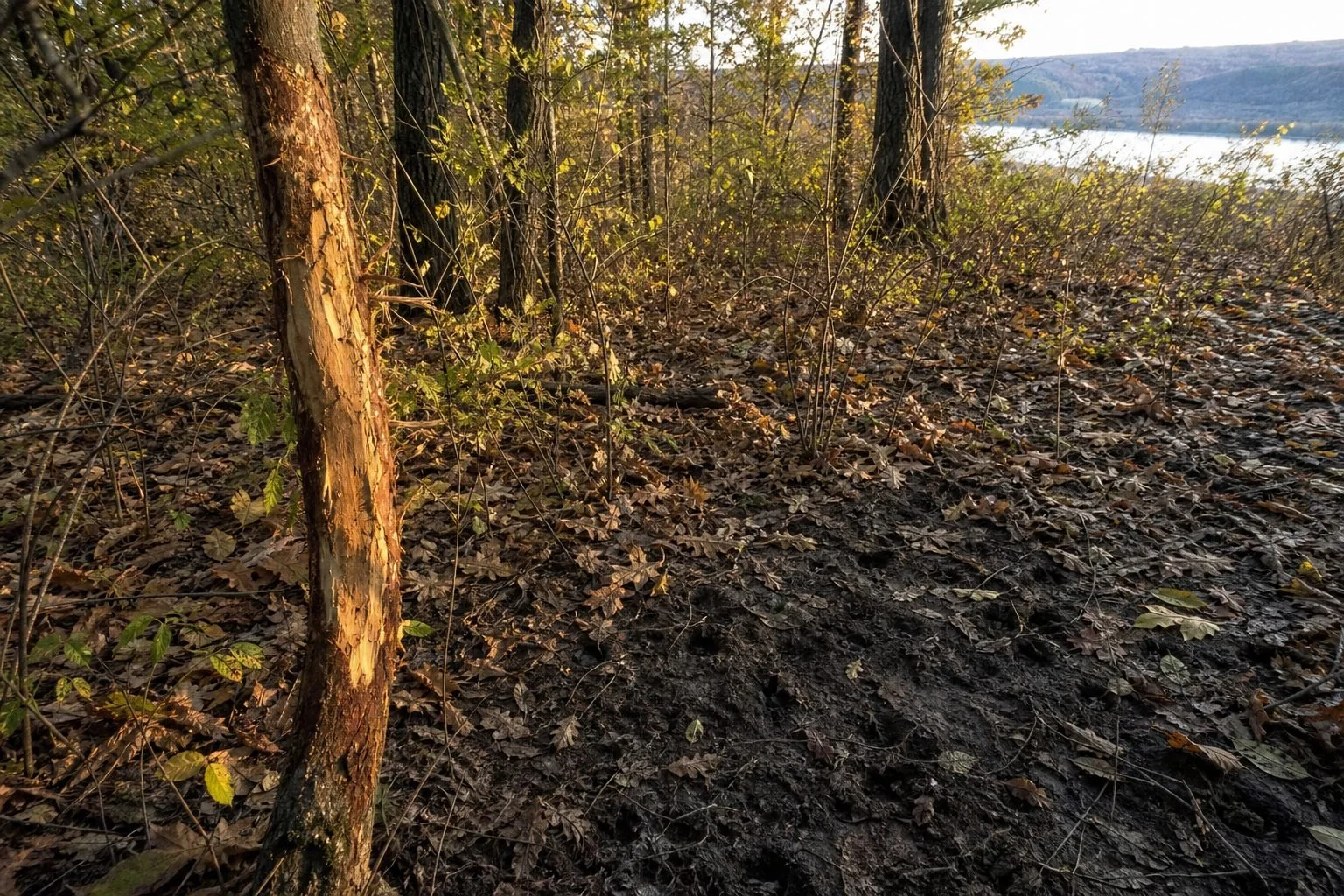
Going DIY on the Shawnee? A saddle like the Tethrd Phantom lets you climb the straight hardwoods of southern Illinois without hauling a 20-pound climber up a ridge. Expect a learning curve and plan several backyard practice sessions before opening day. A mobile setup also keeps you legal on sites that ban leaving stands overnight.
Illinois Whitetail Outfitter FAQ
How much does a guided whitetail hunt in Illinois cost?
Most guided archery hunts in Illinois run $3,500 to $7,000 for five or six days, with prime November dates in Pike and Adams counties at the top end. Shotgun hunts and southern Illinois hunts typically cost $2,000 to $4,500. License and permit fees come on top of the hunt price.
Can nonresidents hunt whitetails in Illinois without an outfitter?
Yes. Once you draw a nonresident deer permit through the state lottery, you can hunt public land or private land with landowner permission. Shawnee National Forest, at roughly 280,000 acres, is the best large public option for a DIY Illinois trip.
When should I book an Illinois whitetail outfitter?
Book 12 to 18 months ahead for first-half-of-November archery dates at well-reviewed camps. Late October and late-season dates stay open longer and usually cost less.
Can you hunt deer with a rifle in Illinois?
Not with a traditional centerfire rifle. Illinois firearm deer seasons allow shotguns with slugs and muzzleloaders, and handguns and other options carry specific caliber and cartridge requirements. Check the current IDNR hunting digest for the legal firearm list before you go.
Illinois rewards hunters who do their homework, whether that means grilling an outfitter on hunter density or burning boot leather in a Shawnee hollow. Compare Illinois against other destinations in our state-by-state public land directory, or browse the species directory to plan your next hunt. Then subscribe to the LandsToHunt email list and get our free state-by-state public land hunting guides sent straight to your inbox.
Want a head start on the ground itself? I built Hunting Scout to scout any spot from home. Your first 3 reports each month are free. Try Hunting Scout
