Sometimes You Just Have to Start Over: Replanting 3 Acres After a Season That Fought Back
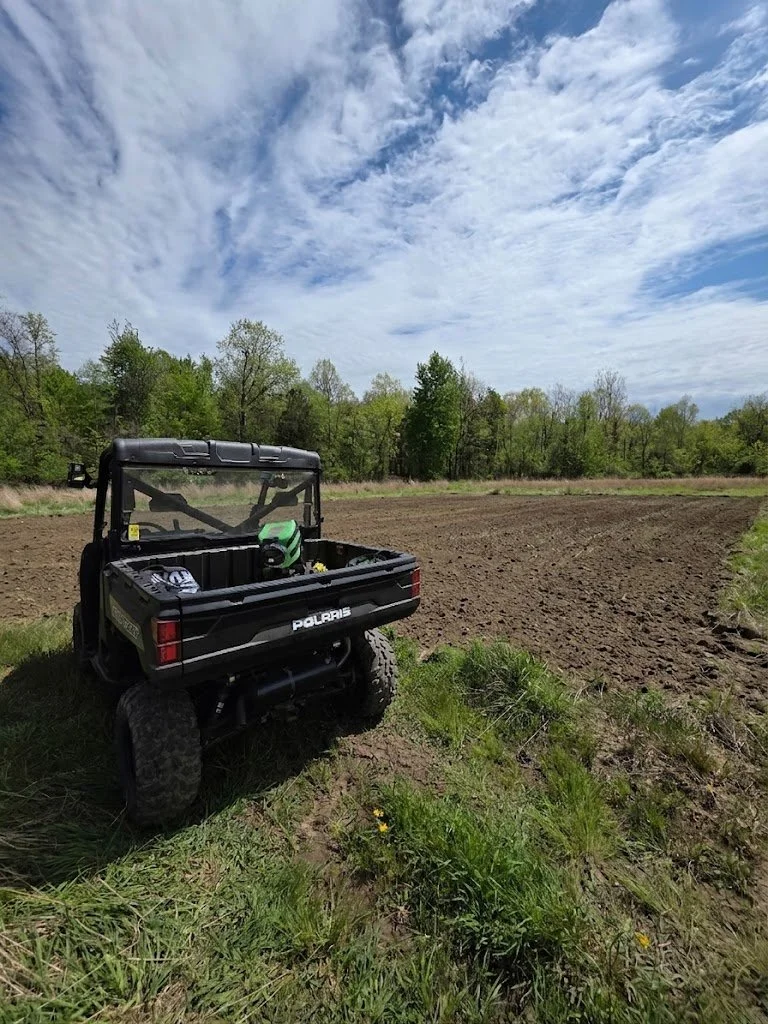
This isn't the article I planned to write this spring. The plan was to show you what a second-year food plot program looks like when everything goes right. A follow-up to the fall planting, green fields, deer on camera, the whole progression.
Instead, I'm showing you what a tilled-under failure looks like from the seat of a Polaris, and what comes next when the ground tells you the only move left is to wipe the slate clean.
What Went Wrong
Last year's growing season in southwest Michigan was brutal. We caught near-drought conditions through the summer that stressed everything in the ground. Soil moisture dropped to levels where even established plantings started checking out. The fall plots that should have been hitting their stride going into hunting season came in thin and patchy, with bare spots where germination just didn't happen.
By late fall, the situation was clear enough that I made a call to salvage what I had. I topped the struggling plots with a late broadcast of rye and oats, hoping to get enough winter cover established to hold the soil and give deer something green to hit through the late season and into early spring. Rye and oats are the standard salvage play. They germinate fast, tolerate cold soil, and give you a living root in the ground when everything else has quit.
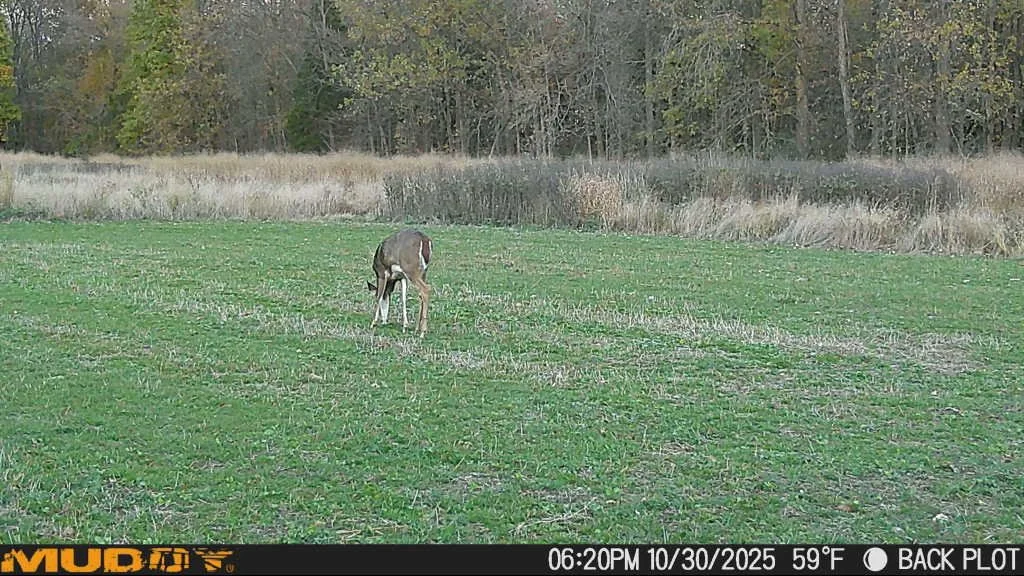
It helped. Some. The rye came in okay in the spots where there was still enough soil moisture to support germination. The oats winterkilled as expected, which is fine because the dead biomass protects the soil surface through freeze-thaw. But by this spring, the honest assessment was that these plots were running on fumes. The soil was depleted from a season of stress. The stand was uneven. The weed pressure was building in every thin spot. And the root diversity that drives the soil biology I'm trying to build was gone.
You can nurse a struggling plot along for another season and hope conditions improve. Or you can accept the loss, tear it up, and restart with intention. I tore it up.
The Reset: 2.5 Acres of Vitalize Seed Nitro Boost
I put 2.5 acres back to bare dirt and replanted with Vitalize Seed Nitro Boost, their spring and summer blend. The reason I went with Nitro Boost instead of just throwing more rye and clover at the problem is that the soil needs more than food right now. It needs biology.
Nitro Boost is a 14-species mix of legumes, brassicas, grasses, and broadleaves, built around the idea that diverse root systems fix nitrogen, feed soil microbes, and rebuild the organic matter that a bad season strips out. The legumes in the blend pull atmospheric nitrogen and convert it into plant-available form. The brassica roots break up compaction. The grasses and broadleaves add carbon and feed the microbial community that makes nutrients available to whatever you plant next.
Vitalize runs a two-part system. Nitro Boost goes in the spring to rebuild nitrogen levels and soil biology through the summer. Their fall blend, Carbon Load, follows in late summer with a higher carbon-to-nitrogen ratio that carries thatch through winter and into the next spring. The idea is that each planting feeds the one that follows. You're not just growing a food plot. You're building soil that grows better food plots every year.
I ran it at 45 pounds per acre on clean-tilled ground. Seed-to-soil contact was good. Southwest Michigan got rain within the first week after planting, which is the kind of timing you can't plan for but are grateful when it happens.
The Half-Acre Experiment: Northwoods Whitetails Forbs and Forage
Alongside the Nitro Boost acres, I converted a half-acre plot to something different. Northwoods Whitetails Forbs and Forage is a 12-species forb blend designed for a very specific purpose: adding diversity pockets to switchgrass bedding areas and hinge-cut zones.
This isn't a traditional food plot. You're not planting brassicas or clover to attract deer to a kill plot. You're planting natural forbs that enhance the daytime food available inside or adjacent to bedding cover. The concept is that deer already browse forbs and soft mast near their bedding areas during daylight. This blend increases the density and diversity of what's available in those spots, which keeps deer on your property longer during the hours that matter and pulls them out of bedding earlier in the afternoon.
At $72 for a 3-pound bag that covers half an acre to a full acre, the cost per acre is reasonable for what you're getting. Northwoods says their bag runs 50 to 65 percent less than comparable forb blends from other companies. I planted the half-acre plot adjacent to a switchgrass bedding block on the property where I want to enhance the browse quality without putting a traditional food plot inside the security cover.
One note: Northwoods is very clear that you can't use Simazine or 2,4-D with this blend. Clethodim is the only grass control option. Plan your weed management around that before you plant.
Topping Everything with Vitalize CoreMicros
After planting both the Nitro Boost acres and the Forbs and Forage half-acre, I topped all 3 acres with Vitalize CoreMicros. CoreMicros is a micronutrient and biological support blend that covers the trace elements most food plot programs ignore: calcium, sulfur, zinc, magnesium, boron, copper, manganese, and molybdenum, plus humic substances that kickstart microbial activity in the root zone. One 45-pound bag treats up to 2 acres at 20 to 25 pounds per acre, so two bags covered all three plots.
The reason I added this layer is specific. After a drought-stressed season and a depleted soil profile, the macronutrients (nitrogen, phosphorus, potassium) get all the attention. But micronutrients are what drive root development, enzyme function, and the biological processes that make those macronutrients available to plants. The molybdenum in the blend is especially relevant here because it supports nitrogen fixation in legumes. The Nitro Boost mix is loaded with legume species designed to pull atmospheric nitrogen into the soil. Without adequate molybdenum, those legumes don't nodulate efficiently, and the nitrogen fixation falls short. CoreMicros closes that gap.
The humic substances in the blend serve a different purpose. They stimulate the microbial community that drought and bare soil have depleted. Humics improve the soil's cation exchange capacity, which is a technical way of saying the soil holds onto nutrients instead of letting them leach away with the next rain. On the ground that just went through what mine went through, that retention matters as much as the nutrients themselves.
I broadcast the CoreMicros right over the top of the freshly planted seed and let the next rain work it into the soil profile. No incorporation needed. On the Forbs and Forage plot, the same application gives those 12 forb species the trace nutrients they need to establish in soil that's been running on empty. It's a $200 investment across 3 acres that sets the table for everything the seed aims to do beneath it.
What the Photos Show
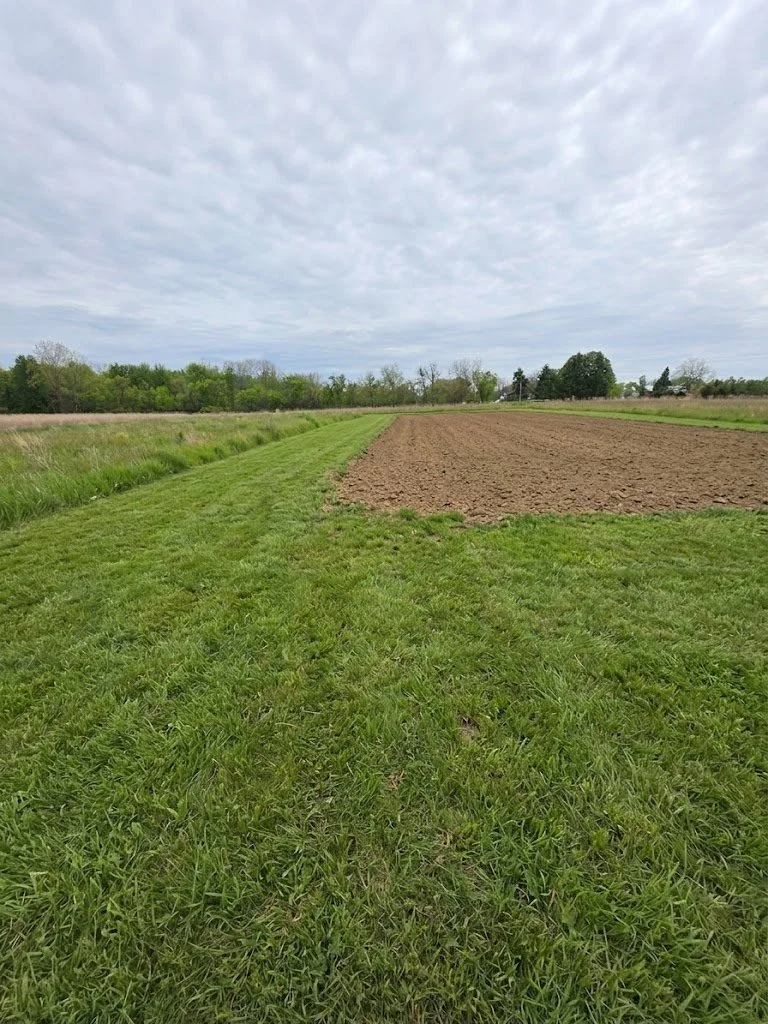
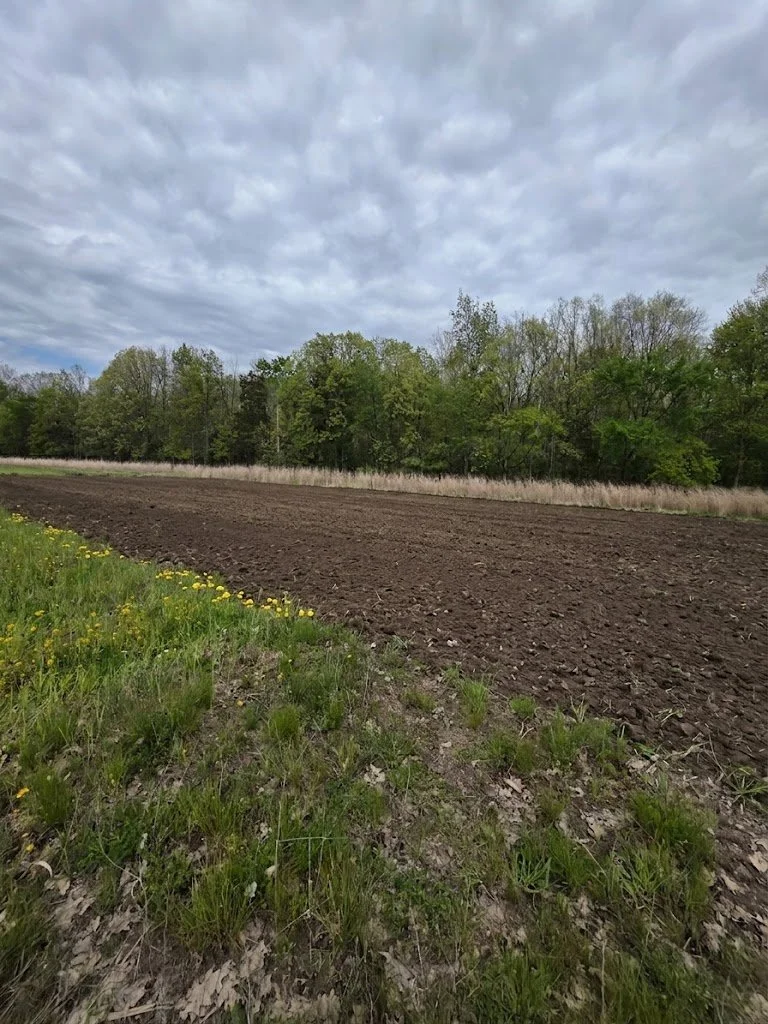
The three images in this article are what reset looks like. Freshly tilled ground, bare dirt, and a whole lot of potential that hasn't germinated yet. No lush green fields. No trail camera photos of bucks standing in chest-high brassicas. Just prepped soil and seed in the ground.
That's the honest version of land management. The Instagram version is the November photo of a mature buck standing in a perfect food plot at last light. The real version includes seasons where drought hammers you, salvage attempts that buy time but don't fix the problem, and spring mornings on a UTV staring at dirt you just tilled under for the second time.
If you manage food plots long enough, you'll have a year like this. The question isn't whether it happens. The question is whether you throw the same seed at the same tired soil and hope for a different result, or whether you use the failure as a reset point to build something better underneath.
Why Starting Over Is Sometimes the Best Habitat Decision
The instinct when a food plot fails is to patch it. Broadcast something over the top, drag it in, and move on. I've done that. It works when the underlying soil is healthy and the failure was weather or timing. It doesn't work when the soil biology is shot.
After a near-drought season followed by a thin winter cover crop, the ground on these 2.5 acres needed more than another round of seed. The microbial community that makes nutrients available to plants was depleted. The organic matter that holds moisture in the root zone was burned through. Throwing clover and brassica seed at that soil in the fall would have given me another thin, patchy, disappointing stand and wasted another season.
Nitro Boost is a reset button for the biology. The 14-species diversity drives root systems at different depths and architectures, feeding different microbial communities in different soil layers. The nitrogen fixation from the legume component deposits fertility that the fall Carbon Load planting will feed on. By the time I plant for hunting season this August, the soil under these plots will be in a fundamentally different place than it was when I tilled the failed rye under.
The Forbs and Forage half-acre is a different play entirely. That plot isn't about soil recovery. It's about enhancing the food value of a bedding transition zone that was previously just grass and whatever forbs came up on their own. By fall, the 12-species blend should give deer a reason to linger near bedding during daylight hours, which changes the movement timing on the whole property.
Lessons for Your Food Plot Program
A few things I'd pass along from this experience:
Don't throw good seed at bad soil. If your plot failed because of weather, a re-seed on the same ground makes sense. If your plot failed because the soil is depleted, no seed blend will fix that. You need a biology-first planting before you plant for attraction.
Salvage crops buy time, not solutions. Rye and oats over a struggling fall plot will hold soil and give deer something green. They won't rebuild organic matter, fix nitrogen, or restore the microbial community. They're a band-aid, and sometimes you need surgery.
Document your failures. I took soil tests before I tilled under and I'll take them again in August before the fall planting. That data tells me whether the Nitro Boost did its job. Without the test, I'm guessing. With the test, I'm managing.
Think about bedding-area food, not just plot food. The Forbs and Forage half-acre is a different category than a traditional food plot. It's not about drawing deer across the property. It's about feeding deer where they already want to be. That's a concept most food plot programs miss entirely.
What Comes Next
I'll follow up on these plots through the summer. The Nitro Boost acres should show strong growth within 4 to 6 weeks, and by mid-July, I'll know whether the soil recovery is on track. The plan is to terminate the Nitro Boost in late summer and transition those 2.5 acres to Vitalize's Carbon Load fall blend, which picks up where the spring planting left off, with a high-carbon-to-nitrogen mix designed to carry food and cover through hunting season and into winter.
The Forbs and Forage half-acre will get its own progress update once the blend is established. I want to see which of the 12 species dominate in my soil type and how deer use the plot relative to the adjacent switchgrass bedding through the summer and into early archery.
If you're managing habitat and want to see how these plantings connect to the bigger picture of bedding, staging, and food plot design on your own ground, Hunting Scout's Habitat Strategist reads your drawn property and prescribes specific plantings at specific anchor points. It's the tool I use to plan where every plot, screen, and bedding block goes before I touch the dirt.
More to come as these plots grow. Sometimes starting over is the best move you make all year.
