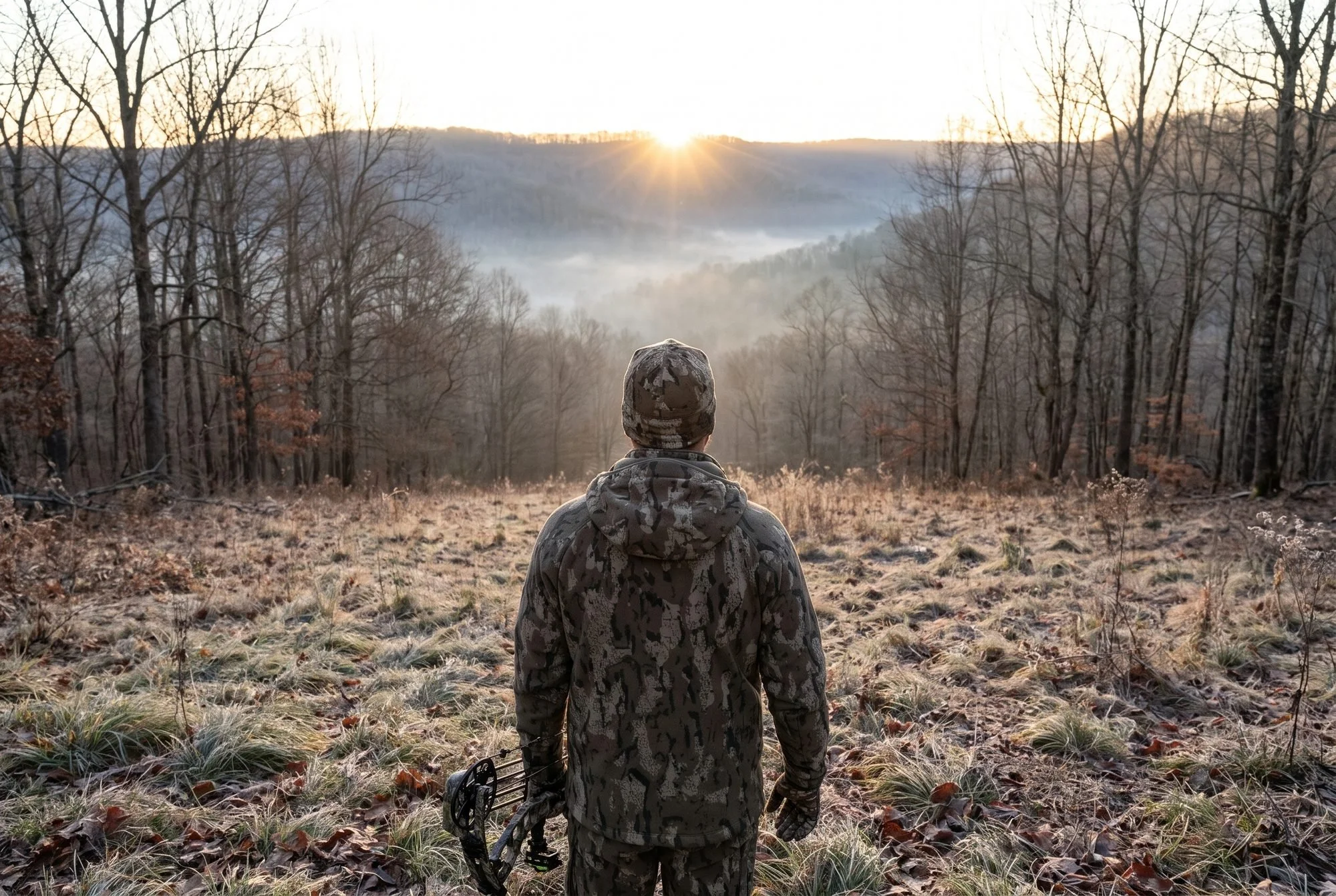
This guide includes affiliate links. LandsToHunt.com earns a commission on qualifying purchases.
Ask ten Tennessee deer hunters to name the best public ground in the state and you'll start ten arguments. Mine ends at Catoosa. This is a field guide on how to hunt Tennessee's best public hunting area, the roughly 80,000-acre Catoosa Wildlife Management Area on the Cumberland Plateau. It runs from the flat tableland on top down to the laurel-choked creeks at the bottom of the gorges. You'll get the terrain, the species, the access, the pressure, and a day plan you can run on your first trip.
Catoosa spreads across parts of Cumberland, Morgan, and Fentress counties, north and east of Crossville. Big country. Rough enough that most of the crowd never gets far from the gravel.
If you're still comparing areas across the state, start with our Tennessee public hunting land overview and come back once Catoosa makes your short list. One ground rule first. Hunt types, quota permits, check-in requirements, and access rules on Catoosa change from year to year, and I won't pretend to know this season's version. Pull the current area regulations straight from the Tennessee Wildlife Resources Agency before you book a motel room or burn a vacation day.
Why Catoosa WMA Is Tennessee's Best Public Hunting Area
North Cumberland WMA is bigger and holds elk. Land Between the Lakes gets more press. So why Catoosa?
Because the ground does a lot of the work for you. Catoosa gives you big-woods size on terrain a regular hunter can learn in a few seasons, and the habitat mix beats what most people expect from plateau ground.
Big, unbroken blocks. You can walk a mile in most directions without hitting a house or a pasture fence. Deer that need room to dodge people find plenty of it here.
Edge everywhere. Managed openings, timber cuts, pine stands, and hardwood ridges sit side by side. Deer and turkeys key on the seams between cover types, and Catoosa has miles of seams.
Terrain that filters people. The gorges cut by Daddy's Creek, Clear Creek, and the Obed River drop hundreds of feet. Most hunters won't drag a deer out of one, so they never go down in the first place.
Now the honest part. Plateau soils are thin, sandy, and acidic, so body weights and antler growth trail what you'll see on the ag ground in West Tennessee. Catoosa won't hand you a 150-inch buck on a whim. What you get instead is room to scout, room to move, and a real shot at an older deer that survives because nobody follows him off the rim.
Picked a spot from this guide? Run it through Hunting Scout first. I built it to map benches, pinch points, and today's wind on any public parcel using USGS and NOAA data, not guesses. Your first 3 reports each month are free. Run a free scout report
How to Hunt Tennessee's Best Public Hunting Area by Reading the Terrain
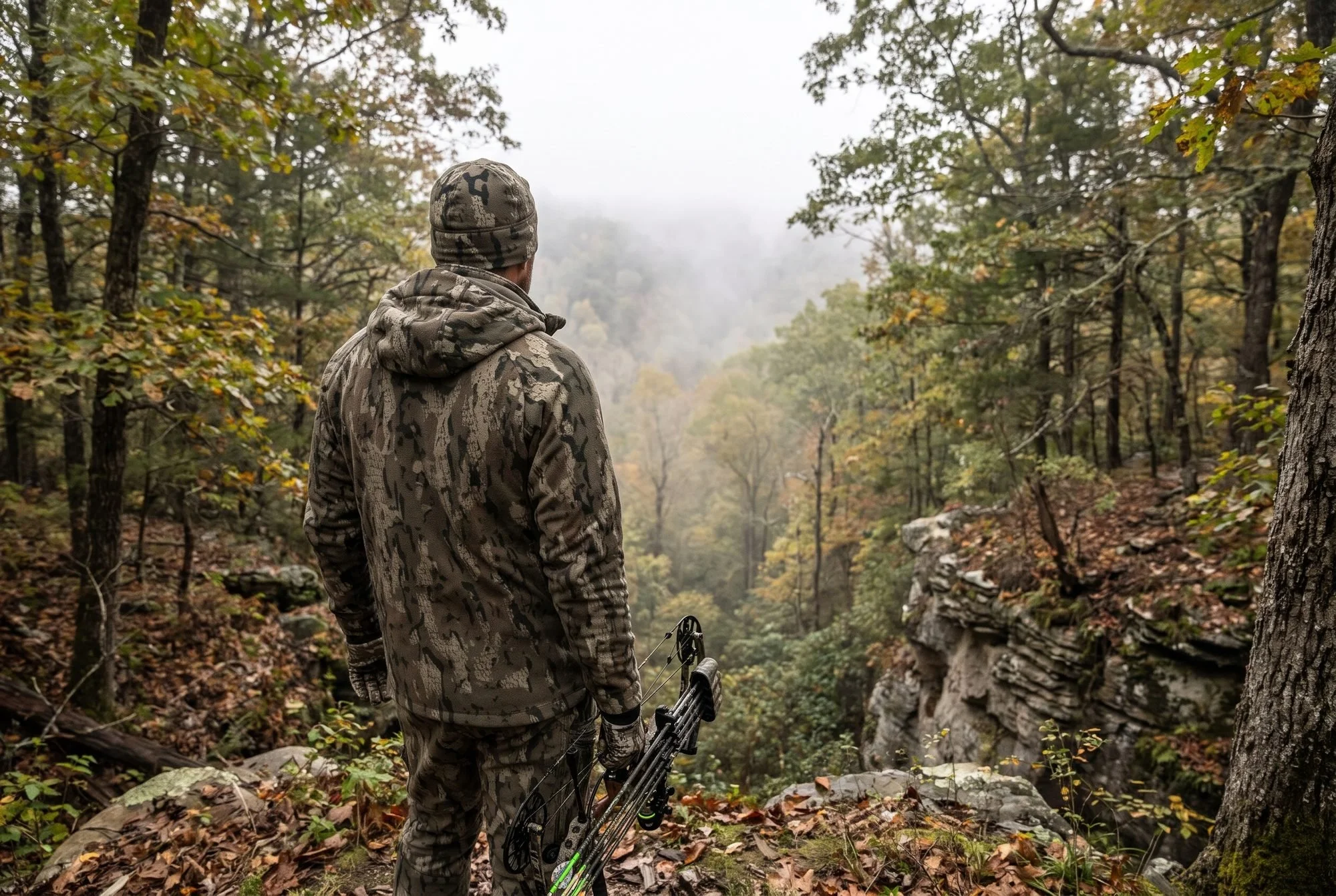
Think of Catoosa as three layers stacked on top of each other. Deer move between them every day, and nearly every good setup sits where two layers meet.
The Tableland
On top, the plateau runs flat to gently rolling, with oak-hickory stands, pine plantations, regenerating clearcuts, and wildlife openings scattered through the interior. This is the kitchen. Acorns in the fall, green browse in the openings, soft mast along the cutover edges.
Pay close attention to timber cuts in the 3-to-8-year range. Once those stems get head-high and thick, the cut turns into bedding cover right next to food. Scroll back through historical aerial imagery and you can age every cut on the WMA from your kitchen table.
Gorge Rims and Benches
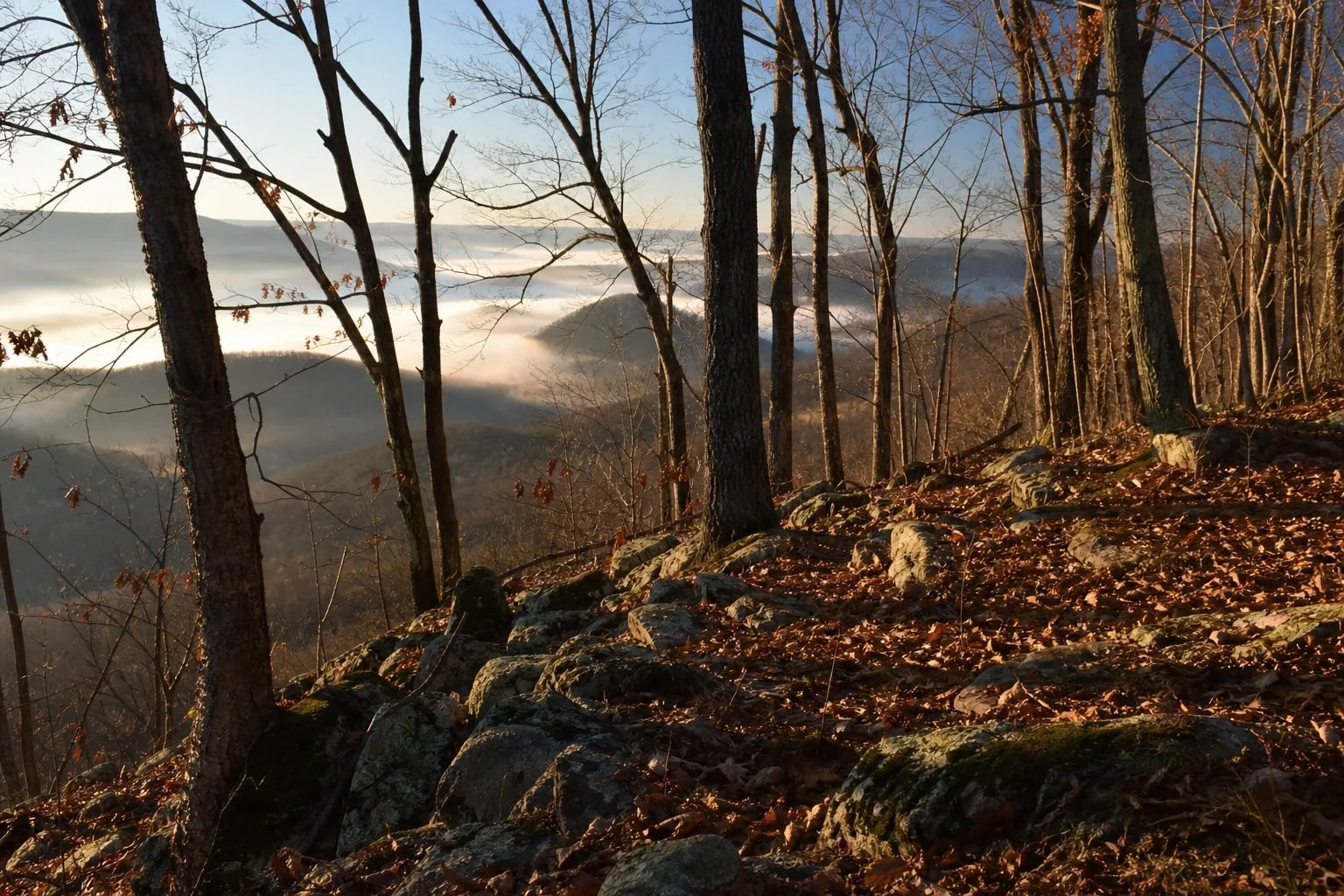
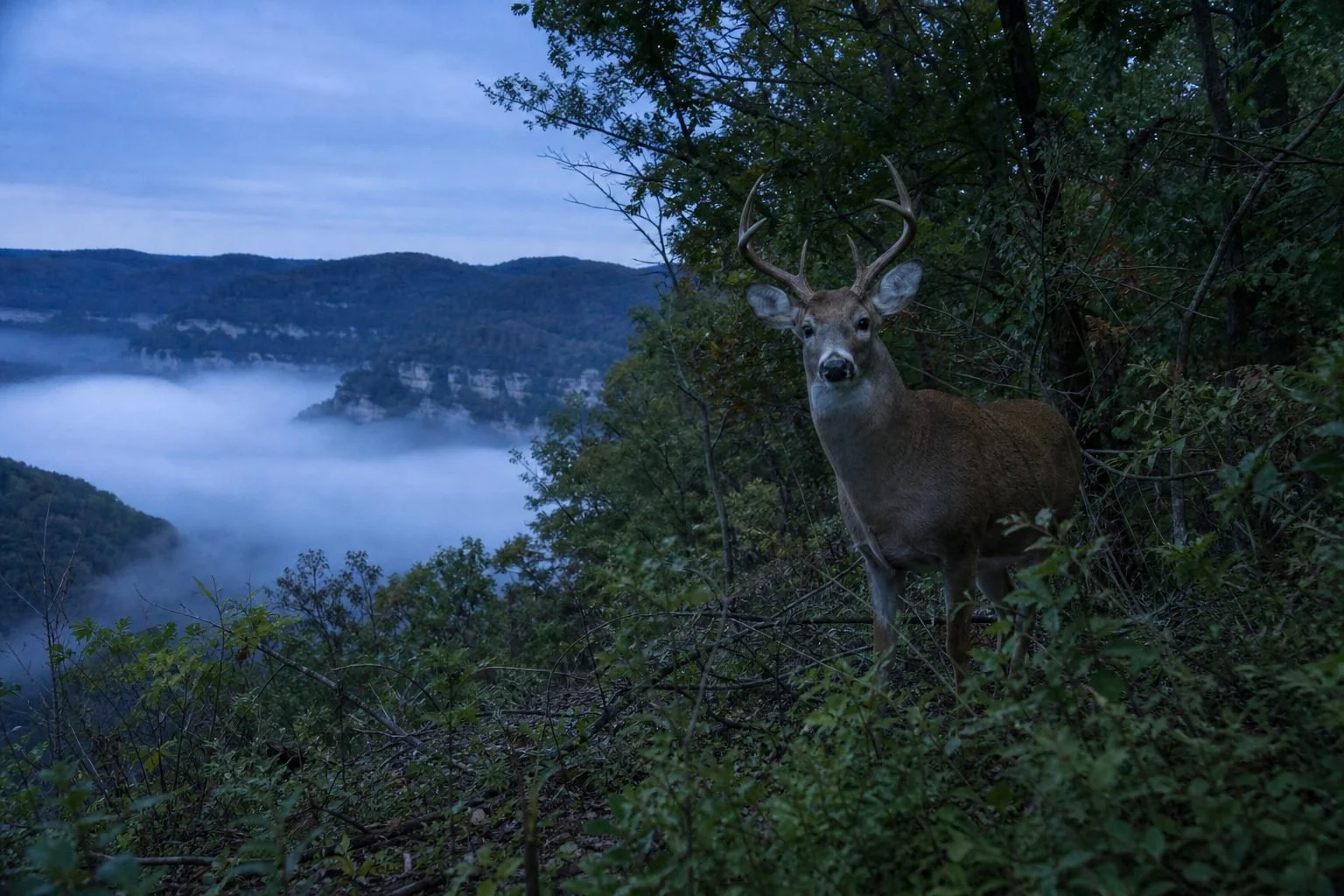
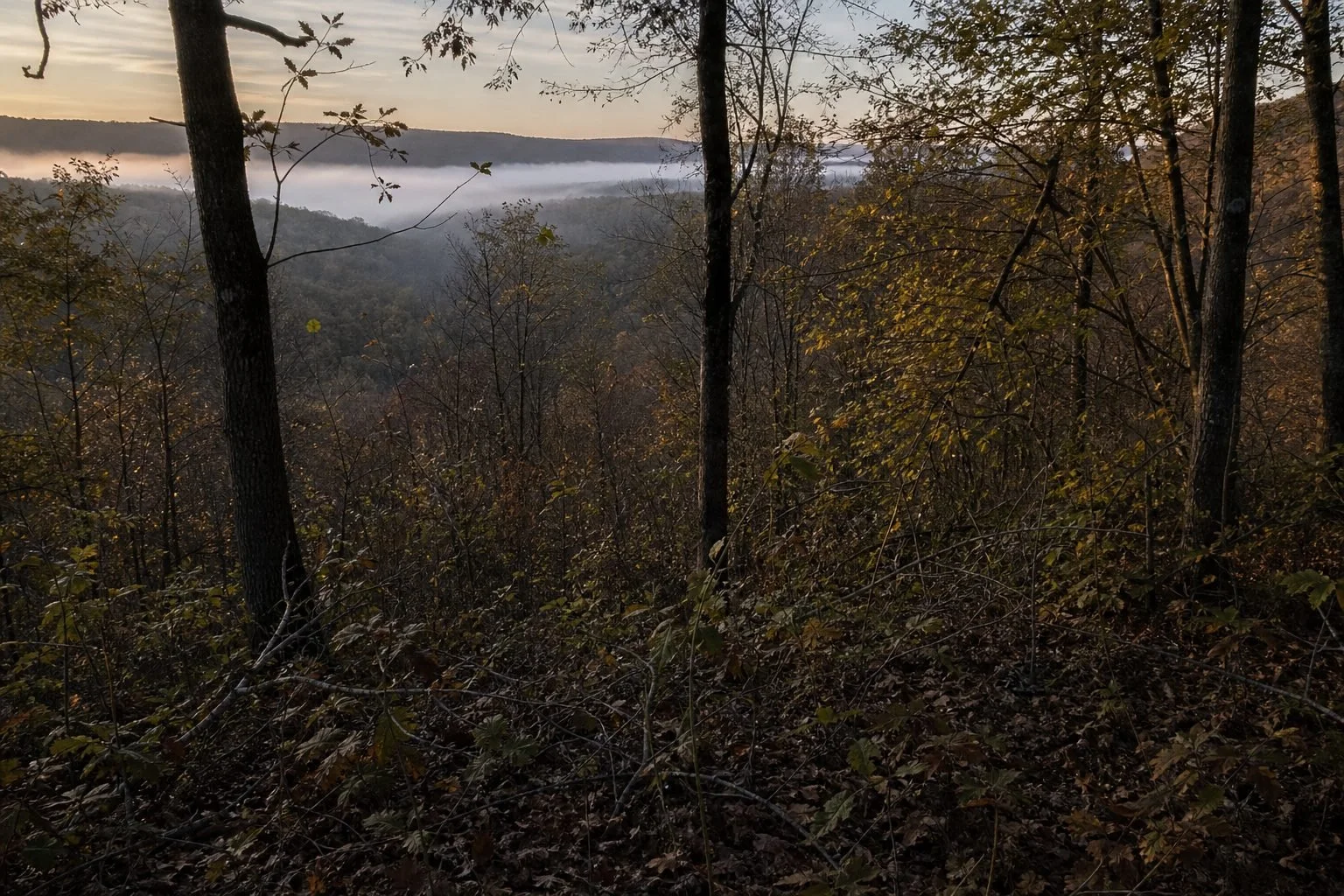
Here's the money layer. Where the tableland breaks off into a gorge, you'll find a sandstone bluff line, a band of chestnut oak and white oak along the rim, and one or more benches stepping down the slope below. Deer love those benches. They bed with the wind coming up the hill and a rock wall at their back.
The bluffs aren't solid walls, though. A crack, a rockslide, or a spur ridge gives deer an easy route up and down, and every deer on that stretch of rim funnels through the break. On a topo map, find spots where tightly stacked contour lines suddenly spread apart for a short run. That's a bench. A small draw cutting back into the rim, shown as a V in the contour lines, usually marks a crossing. Our guide on reading a topo map for deer hunting breaks this down step by step.
Creek Bottoms and Laurel Thickets
Down low you hit the creeks, and along the creeks you hit rhododendron and mountain laurel so thick you'll crawl in places. Very few hunters work these bottoms. Pressured deer know that.
Parts of the gorge country overlap the Obed Wild and Scenic River corridor, managed by the National Park Service. Rules there don't always line up with the WMA's, so keep a boundary layer on your screen and confirm what's allowed before you hunt the river corridor.
What You Can Hunt on Catoosa WMA
Whitetail Deer
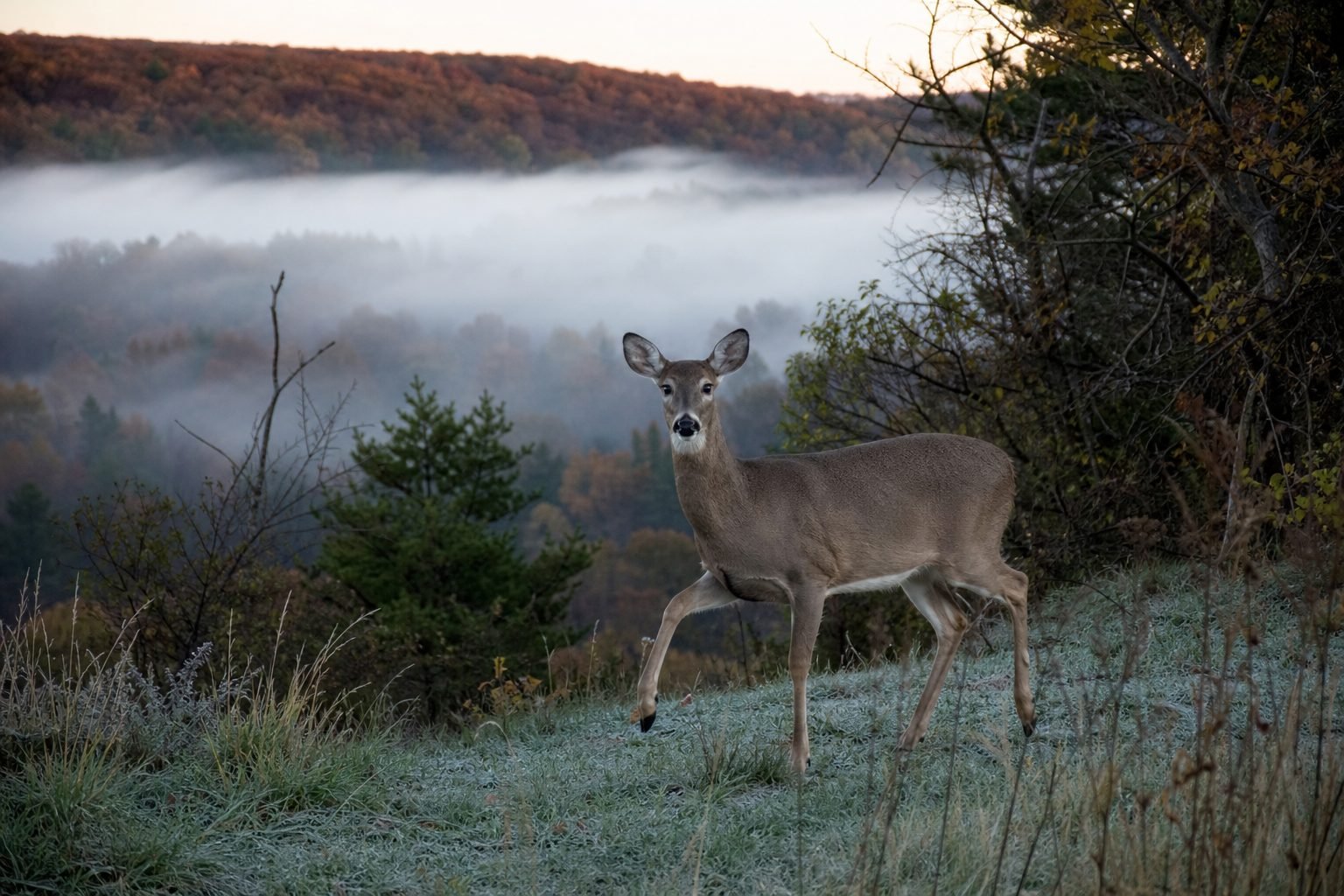
Deer are the main draw, and the rut is prime time. Bucks cruise the rims checking the benches below for does, and the bluff-line crossings get hammered. Early season favors the tableland, where deer feed in openings and under white oaks. Later, once the woods take some pressure, they shift into laurel and steep north-facing slopes, and you have to go get them. Confirm with TWRA which seasons, weapons, and permits apply to Catoosa this year.
Wild Turkey
Spring gobblers here roost on the slopes and pitch down onto the tableland, so rim edges and nearby openings make great listening spots at first light. Sound carries a long way across a gorge. A bird that sounds close might be on the far side of a 400-foot drop, so learn the terrain before you commit to a setup. For more on working pressured birds, read our spring turkey public land tactics.
Squirrels, Rabbits, and Grouse
A cool October morning in the hickory flats is some of the most underrated squirrel hunting in the state. Rabbits hold in the briars of young cutovers. Ruffed grouse still turn up in the right young timber, but numbers across the region have dropped hard, so treat a flush as a bonus.
A Word on Feral Hogs
Catoosa has a long history with feral hogs, and TWRA's approach to hogs on public land has shifted over the years toward removal instead of managing them as game. Don't assume you can shoot one. Read the current WMA rules first, and report sightings to the agency.
Catoosa Access Points and Getting Around
Most hunters come in from the Crossville side, using the roads that run north and northeast of town toward the WMA. Crossville sits right on I-40 between Nashville and Knoxville, so this side catches the bulk of the out-of-town traffic. Coming in from the Morgan County side, around Lancing and Wartburg, you'll see fewer trucks and sit closer to the lower gorge country.
Inside the WMA, a network of gravel roads splits the tableland into blocks. Some stay open. Others sit behind gates for part of the year or during certain hunts. Gated roads are your friend, because a locked gate turns a 200-yard stroll into a mile-and-a-half hike, and that thins the crowd faster than anything.
Check-in rules. Many TWRA quota and big-game hunts come with check-in or game-check requirements. Confirm Catoosa's current setup before opening morning.
Road conditions. Rain washes the gravel and turns low spots into soup. Decent clearance and all-terrain tires really help.
Cell coverage. Signal fades fast once you drop below the rim. Download offline maps before you leave the pavement.
Off-season access. WMA access rules aren't the same year-round. Confirm the area is open before any scouting trip.
For maps, run TWRA's WMA map viewer alongside a phone app. I use onX Hunt for boundary layers, aerial history, and pins on every crossing and rub I find. The downside is that the full feature set takes a paid membership, and running GPS all day in the cold drains a phone battery fast. Carry a power bank.
Hunting Pressure on Catoosa and How to Beat It
Catoosa gets hunted. Hard, on certain days. Opening days of the bigger hunts and rut weekends put trucks at every pull-off, and you'll hear doors slamming in the dark from three directions.
Good news, though. Pressure here follows the roads almost perfectly. Most hunters set up within a quarter mile of where they parked, usually on flat ground. Vertical distance beats horizontal distance on this WMA, and dropping 200 feet off a rim onto a bench puts more space between you and the crowd than walking a mile across the flat.
Count trucks. Three trucks at a pull-off at 5 a.m. means keep driving. Have a backup, and a backup to the backup.
Hunt midweek. A Tuesday in archery season feels like a different WMA.
Use the crowd. When opening-day hunters push the tableland, deer slide off the rim into benches and laurel. Be sitting on a crossing below the rim by 8 a.m. and let everybody else move deer to you.
Stay late in the hunt. Crowds thin after the first couple of days. Deer keep moving after the parking lots empty.
How to Hunt Tennessee's Best Public Hunting Area: A Full Day Plan
Here's the day I'd run on a cold, clear November morning with a light southwest wind and high pressure settling in. Deer move well in those conditions, and the thermals behave predictably.
Before Daylight
Leave the truck 90 minutes before legal light. Walk the gated road with your headlamp on low, and kill the light once you step off the gravel. Your target is a crossing where a trail drops off the tableland through a break in the bluff line, ideally one you marked during scouting with fresh tracks and a rub or two on the rim.
Set up on the tableland side, 30 to 60 yards back from where the trail tips over. Why there? Early in the morning, cool air drains downhill, pulling your scent over the rim and away from deer walking back from the feeding areas behind you.
The Morning Sit
Sit until at least 9:30. Deer drift from openings and oak flats toward their beds on the benches, and rim crossings catch them in the last hour of movement. During the rut, stay longer, since bucks cruise rim edges scent-checking the benches well into midmorning.
Watch the sun. Once it hits the slope below you and warms the air, the thermal flips and climbs out of the gorge, carrying your scent back across the tableland. Feel air drifting up from below? Your sit is about done.
Midday
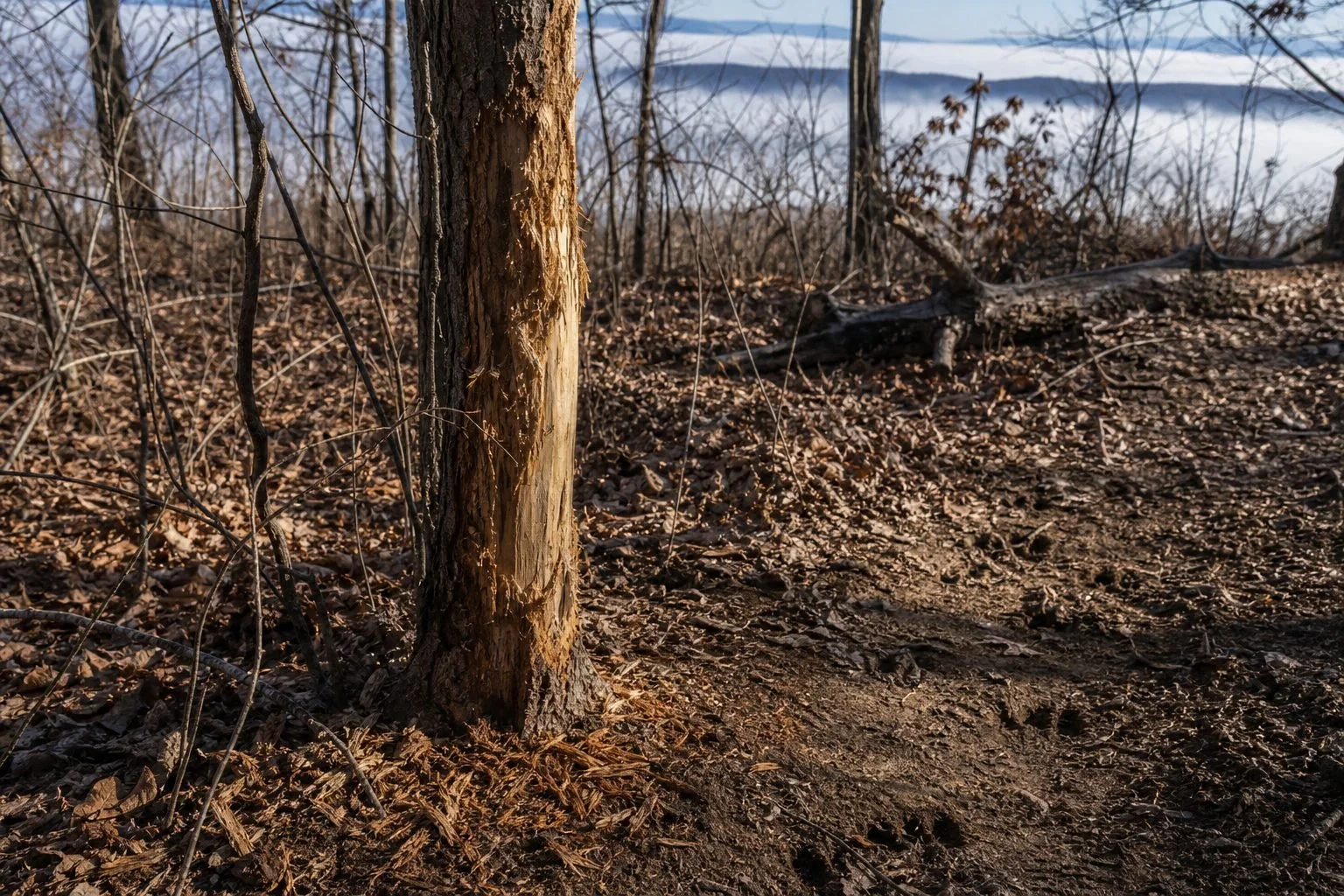
Spend the middle of the day learning country. Slip along a bench you haven't walked and look for beds and rub lines. Tracks in the creek sandbars tell you which crossings deer are using right now. During the rut, a slow still-hunt along a bench with the wind in your face puts deer in front of you at noon more often than you'd think. Mark everything in your app so next year starts from data, not memory.
The Evening Sit
Flip the plan for the evening. Pick a bench on a south- or west-facing slope and settle in by 2:30. Those slopes soak up afternoon sun, so the rising thermal holds longer and carries your scent up over the rim, away from deer moving below you. East-facing slopes fall into shade early, and the air starts draining down while you still have an hour of light. That's how you get winded at prime time.
No good bench on the right aspect? Back out to the tableland and hunt the edge of an opening or fresh cut. Deer coming up off the slopes to feed hit those edges in the last half hour.
After Dark
Wait a few minutes after legal light ends before you climb down. Walk out the way you came in, slow and quiet, because bumping deer off their evening feed ruins tomorrow's morning sit. Before you start the truck, drop pins on anything you saw. A buck crossing 80 yards down the rim tells you exactly where tomorrow's setup goes.
Gear That Fits Catoosa's Terrain
Boots
You'll walk gravel, climb sandstone ledges, and cross creeks, sometimes all before 10 a.m. For most days, the Danner Pronghorn handles the rim and tableland well with solid support on rocky ground. They're not the lightest boot out there, and they take a few wears to break in. For creek crossings and soaked laurel bottoms, the LaCrosse Alphaburly Pro keeps you dry, but rubber sweats and wears you down on the long climb back to the truck.
Optics
Across a gorge or a big opening, good glass earns its weight. The Vortex Diamondback HD 10x42 gives you clear, bright glass for picking apart a far slope at first light without a premium price. You'll feel the weight on a steep climb. On a tighter budget, the Vortex Crossfire HD 10x42 does the job for a lot less money, though you give up some clarity in low light.
Mobile Setup
Rim crossings shift as trees fall and deer adjust, so last year's perfect tree rarely stays perfect. A saddle lets you hunt the exact spot the sign points to. The Tethrd Phantom is light, packs small, and works on the crooked oaks you'll find along the rim. Expect a learning curve and a price that stings at first. Check TWRA's rules before you leave any stand or gear on the WMA overnight, and see our saddle hunting setup guide for the full system.
Catoosa WMA FAQ
How big is Catoosa WMA?
Catoosa covers roughly 80,000 acres of the Cumberland Plateau across parts of Cumberland, Morgan, and Fentress counties. That ranks among the larger WMAs in Tennessee, with plenty of room to get away from other hunters.
Do you need a quota permit to hunt Catoosa?
That depends on the hunt and the year. Some Tennessee WMA hunts run through quota draws, while others are open to anyone with the right license. Check the current Catoosa regulations from TWRA before you apply or show up.
Is Catoosa WMA good for turkey hunting?
Yes. Birds roost on the gorge slopes and fly down to the tableland, so rim edges and nearby openings make strong listening and setup spots. Expect company on spring weekends and hunt midweek when you can.
Can you camp on Catoosa WMA?
Camping rules on TWRA land vary by area and season. Check the current area regulations for whether and where camping is allowed, or base out of Crossville, close enough for daily trips.
Catoosa pays off for the hunter who walks farther, climbs lower, and scouts harder than the crowd at the pull-off. Want more ground like this? Subscribe to the LandsToHunt.com email list and get our free state-by-state public land hunting guides, starting with the Tennessee WMAs worth your time.
Want a head start on the ground itself? I built Hunting Scout to scout any spot from home. Your first 3 reports each month are free. Try Hunting Scout
