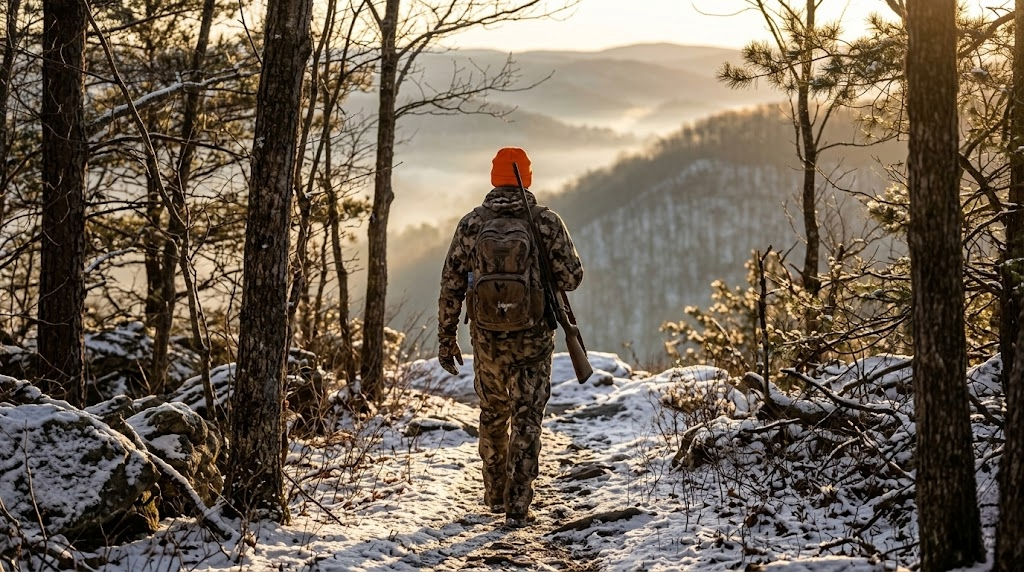
Pennsylvania doesn't get mentioned in the same breath as Iowa or Illinois when whitetail hunters start trading dream-state lists. That's a mistake. The state holds roughly 4.7 million acres of public hunting land, one of the highest totals east of the Mississippi, and the deer herd runs deep enough that hunters harvest around 300,000 whitetails in a typical year. Add a gobbler population pushing 300,000 birds, legit black bear hunting, elk draws, and a small game tradition that stretches back generations, and you're looking at one of the most well-rounded public land hunting states in the country.
The backbone of public hunting land in Pennsylvania is the State Game Lands system, which comprises 1.5 million acres across more than 300 tracts managed by the Pennsylvania Game Commission. But that's just one piece. National forests, state forests, Army Corps land, and state parks with hunting programs push the total well past what most hunters think is available. If you can read a map and don't mind walking past the parking lot crowd, Pennsylvania rewards effort in a way few eastern states can.
How Much Public Hunting Land Pennsylvania Holds
The numbers break down like this:
PA State Game Lands: 1.5 million acres across 300+ tracts, managed by the Pennsylvania Game Commission (PGC)
State forests: 2.2 million acres across 20 state forest districts, managed by the PA Department of Conservation and Natural Resources (DCNR)
Allegheny National Forest: 513,000 acres in the northwest, managed by the U.S. Forest Service
Army Corps of Engineers projects: Scattered tracts around reservoirs statewide
State parks allowing hunting: Select parks with designated hunting zones
The state forest acreage is the part most out-of-state hunters miss. PA's state forests are open to hunting with a valid license, and they're massive. Combined with game lands, you're looking at 3.7 million acres just between those two systems. The Allegheny National Forest pushes it past 4 million, and everything else fills in around the edges.
For licensing, Pennsylvania residents pay about $20.97 for a general hunting license. Non-residents pay $101.97. Archery and muzzleloader stamps run $16.97 each for residents, $36.97 each for non-residents. A bear license is an add-on for $16.97 for residents and $36.97 for non-residents. Turkey tags come with the general license (one spring, one fall). Migratory bird stamps and the federal duck stamp are required for waterfowl. You'll want a Pennsylvania hunting map from the PGC website or a digital version through a mapping app to see how game lands, state forests, and national forest tracts stitch together across the state.
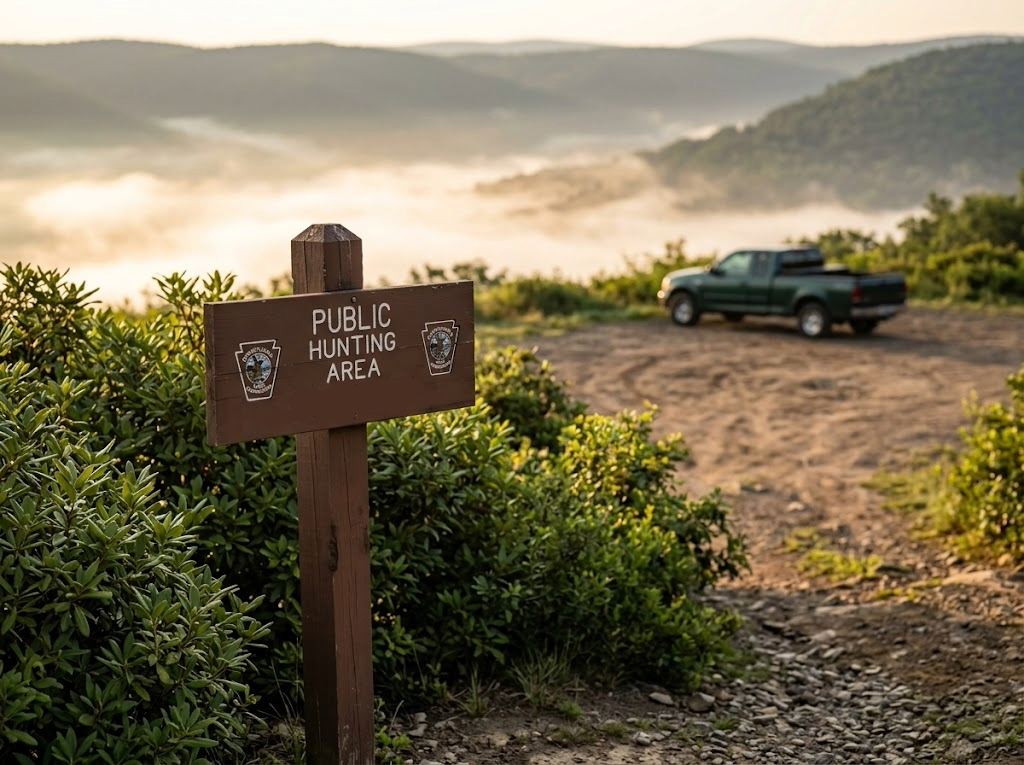
Top 12 Public Hunting Areas in Pennsylvania
These are the tracts worth building a strategy around, whether you're a Pennsylvania resident or an out-of-state hunter looking for serious public ground.
Allegheny National Forest
Managing agency: U.S. Forest Service
Acreage: 513,000
Region: Warren, McKean, Forest, and Elk counties (northwest PA)
Primary species: Whitetail, black bear, turkey, grouse, squirrel
Terrain: Northern hardwood plateau, deep stream gorges, cherry and beech forests, laurel thickets
Access: Open with a valid PA hunting license. Dispersed camping is allowed throughout. Extensive forest road network.
Insider tip: The eastern edge of the ANF around the Kinzua Creek watershed holds better deer densities than the interior plateau. Most pressure concentrates near the Allegheny Reservoir and along Route 59. Get east of there, drop into a stream drainage, and you'll find bucks that rarely see a hunter outside of rifle opener.
State Game Lands 76
Managing agency: PA Game Commission
Acreage: 43,000
Region: Clinton and Centre counties, north-central PA
Primary species: Whitetail, bear, turkey, grouse
Terrain: Steep mountain ridges, laurel-choked hollows, mixed oak and hardwood
Access: Multiple road access points, but the interior is rugged walk-in only
Insider tip: The laurel thickets on the north-facing slopes are brutal to hunt, and that's exactly why bears and pressured bucks bed there. If you can still-hunt through laurel without losing your mind, SGL 76 will reward you.
Sproul State Forest
Managing agency: DCNR
Acreage: 305,000
Region: Clinton and Centre counties
Primary species: Whitetail, bear, turkey, grouse, squirrel
Terrain: Remote mountain ridges, dense hemlock ravines, mixed hardwood slopes
Access: Gated roads limit vehicle access deep into the forest. Primitive camping allowed.
Insider tip: Sproul is one of the wildest chunks of public land east of the Mississippi. The Hammersley Wild Area within the forest is roadless and experiences very little hunting pressure after the first day of rifle season. Pack in, camp, and hunt areas that most people won't reach on a day trip from the parking lot.
State Game Lands 34
Managing agency: PA Game Commission
Acreage: 27,000
Region: Susquehanna County, northeast PA
Primary species: Whitetail, turkey, grouse, woodcock, rabbit
Terrain: Rolling farmland edges, hedgerows, hardwood woodlots, stream bottoms
Access: Road network provides good access across the tract
Insider tip: SGL 34 is surrounded by dairy farms, and deer densities here run higher than the big-woods tracts further west. The ag-edge habitat produces body weights and antler growth that surprise hunters who think PA public land is all mountain deer. Focus on funnels between woodlots and field edges during the rut.
Michaux State Forest
Managing agency: DCNR
Acreage: 85,000
Region: Adams and Franklin counties, south-central PA near Gettysburg
Primary species: Whitetail, turkey, squirrel
Terrain: South Mountain ridges, oak-hickory forest, mountain laurel understory
Access: Good road network with many pull-off parking spots. Popular with hikers and mountain bikers, so expect shared use on trails.
Insider tip: The shared-use traffic here works in your favor during archery season. Hikers push deer off the trail corridors into predictable staging areas by late afternoon. Set up 200 yards off a popular trail on the downwind side and let the foot traffic move deer to you.
State Game Lands 12
Managing agency: PA Game Commission
Acreage: 24,000
Region: Schuylkill County, eastern PA coal region
Primary species: Whitetail, bear, turkey, grouse, pheasant (stocked)
Terrain: Reclaimed strip mine land, scrubby regrowth, hardwood ridges, scattered wetlands
Access: Road access to multiple trailheads. Some interior roads are gated seasonally.
Insider tip: The reclaimed mine land creates a mosaic of thick early successional cover and open ground that's ideal for bears and turkeys. Don't let the coal country reputation turn you off. These reclaimed areas produce some of the densest cover on any PA game lands.
Elk State Forest
Managing agency: DCNR
Acreage: 200,000
Region: Elk and Cameron counties
Primary species: Whitetail, bear, turkey, grouse, elk (drawn only)
Terrain: Big mountain ridges, beech and black cherry forests, remote valleys
Access: Mix of forest roads and gated interior. Primitive camping allowed.
Insider tip: Even if you don't draw an elk tag, the whitetail hunting in Elk State Forest is strong. Elk get all the attention, and that means deer hunters are scarce. The valleys between Hicks Run and Sinnemahoning Creek hold very good bucks for north-central PA.
State Game Lands 57
Managing agency: PA Game Commission
Acreage: 10,300
Region: Greene County, southwest PA
Primary species: Whitetail, turkey
Terrain: Rolling hills, hardwood hollows, agricultural borders
Access: Standard game lands access with roadside parking areas
Insider tip: Greene County is one of the best deer counties in the state, and SGL 57 sits right in the middle of prime ag-country genetics. The terrain is gentler than the mountain tracts further north, which means more food, bigger bodies, and heavier antlers. Hunt the fingers of timber that run between crop fields.
Tuscarora State Forest
Managing agency: DCNR
Acreage: 96,000
Region: Perry, Juniata, and Mifflin counties
Primary species: Whitetail, turkey, bear, grouse
Terrain: Long mountain ridges, narrow valleys, mixed oak forest
Access: Forest roads with some gated interior sections. Primitive camping permitted.
Insider tip: The long parallel ridges here create natural funnels that deer use to move between feeding areas in the valleys and bedding on the upper slopes. Set up in saddles and gaps along the ridgelines during the rut. A topo map makes these funnels obvious.
State Game Lands 217
Managing agency: PA Game Commission
Acreage: 8,600
Region: Bucks County, southeast PA
Primary species: Whitetail, turkey, pheasant (stocked), rabbit
Terrain: Mixed hardwoods, creek bottoms, agricultural edges, suburban-rural fringe
Access: Multiple access points, but limited parking. Gets pressured on opening days.
Insider tip: SGL 217 is close to Philadelphia, and the hunter density reflects it on weekends. But the archery season here is a different animal entirely. The suburban deer population surrounding this tract pushes animals onto the game lands, and weekday sits in October and November produce sightings that rival private land in the farm belt.
Delaware State Forest
Managing agency: DCNR
Acreage: ~82,000
Region: Pike and Monroe counties, Poconos
Primary species: Whitetail, bear, turkey, grouse
Terrain: Pocono plateau, mixed hardwood with hemlock and rhododendron, swamps and bogs
Access: Good forest road access. Adjacent to State Game Lands 180 and 183 for even more contiguous public ground.
Insider tip: The Poconos bear population is one of the densest in the eastern U.S. Delaware State Forest gives you thousands of acres to pursue them during the extended bear season in November, and the hemlock and rhododendron lowlands are where bears go when pressure builds on the surrounding ridges.
State Game Lands 51
Managing agency: PA Game Commission
Acreage: 10,500
Region: Fayette County, southwest PA
Primary species: Whitetail, turkey, squirrel
Terrain: Appalachian ridges, oak forest, steep hollows
Access: Roadside parking with walk-in access to the interior
Insider tip: Fayette County produces great turkeys, and SGL 51 holds birds year after year. The hollows and benches on the east-facing slopes are where gobblers strut in the spring. Get high at dawn, listen for birds on the roost, then set up below the ridgeline on the bench where they'll pitch down.
Species You Can Hunt on Public Hunting Land in Pennsylvania
Whitetail is the main event. Pennsylvania routinely ranks in the top five nationally for total deer harvest, and the archery kill alone exceeds 100,000 animals in good years. The state's antler-point restriction program, which requires three points on one side in most Wildlife Management Units, has pushed buck age structure higher over the last two decades. Public land bucks in the 130 to 150 inch class are real possibilities if you hunt smart ground.
Black bear hunting in PA is legitimate. The state harvests between 3,000 and 4,500 bears annually, with the Poconos, the north-central mountains, and the Allegheny Plateau producing the highest numbers. No draw is required. Buy a bear license and hunt during the general bear season in November.
Turkey hunting is strong across the state, with a spring gobbler season that runs from late April through late May and a fall season that varies by WMU. Pennsylvania holds one of the largest wild turkey populations in the country, and nearly every PA State Game Lands tract holds birds.
Pennsylvania is one of a handful of eastern states with a wild elk herd, centered in Elk and Cameron counties. Tags are allocated through a lottery draw, and the odds are long, but people draw every year. Start applying now.
Small game and upland hunting round out the menu. Ruffed grouse populations have declined from their peak, but still offer good hunting in the northern tier. The PGC stocks pheasants on designated game lands tracts, and hunting for rabbit, squirrel, and woodcock remains solid options across the state. Waterfowl hunters find good public access on Lake Erie marshes, the Susquehanna River, and various Corps of Engineers reservoirs.
Season Structure and Draws
Pennsylvania's deer season structure is one of the most layered in the country:
Archery: Opens the Saturday before October 1 and runs through mid-November, then reopens from late December through late January
Muzzleloader: A short pre-Christmas season (about a week) and a post-Christmas season running into mid-January
Rifle: Two-week regular firearms season starting the Monday after Thanksgiving, plus a flintlock-only season in late December through late January
Special regulations areas: Some WMUs run extended archery or special seasons near urban centers
Bear season typically runs for about four days in November, with an extended season in select WMUs that stretches through Thanksgiving week and into early December.
Spring turkey runs Saturday closest to May 1 through late May in the regular season, with a youth day preceding it. Fall turkey is open by WMU with seasons running from October through November.
Elk draws open each year with applications due in the summer. The number of tags varies (usually around 130 to 180 total), and the draw is a true lottery. There's no preference point system for elk. Everyone starts from scratch each year.

Access Tips for PA State Game Lands and State Forests
A few things that'll save you trouble on Pennsylvania public ground:
No check-in system. Pennsylvania doesn't run check-in stations on game lands or state forests. You're free to hunt anywhere on the tract during legal season hours with a valid license. Harvest reporting is done online or by phone through the PA Game Commission.
Vehicle access. On State Game Lands, vehicles are restricted to designated roads only. No driving on gated roads or trails. State forests have more open road networks, but many interior roads are gated or seasonal. Don't assume you can drive to your spot.
Camping. Camping is NOT allowed on State Game Lands. This catches many out-of-state hunters off guard. You can camp on state forest land (primitive camping, up to one night in a single spot without a permit; longer stays require a free permit from the district office). The Allegheny National Forest allows dispersed camping up to 14 days.
Sunday hunting. Pennsylvania now allows Sunday hunting on three Sundays during the season, one each in archery, rifle, and spring turkey. This is a recent change and a big deal for hunters who only have weekends.
Safety zones. PA law requires 150 yards from occupied buildings for firearms, 50 yards for archery, unless you have written permission. On game lands bordered by houses, this can cut into your hunting area. Check boundaries before setting up.
Posting and boundaries. Game lands are marked with white paint blazes on boundary trees. State forests use different signage. Carry a Pennsylvania hunting map through your mapping app to stay on the right side of the line.
Gear Considerations for Pennsylvania
Pennsylvania's terrain and weather demand gear that handles two things: steep ground and cold, wet conditions.
Boots that grip. The mountain ridges and laurel-covered slopes in the northern and central zones are steep and slippery when wet. You need ankle support and aggressive tread. Danner Pronghorn (Check current price on Amazon) is one of the best all-around PA hunting boots for dry ground. For late-season wet and cold conditions, the LaCrosse Alphaburly Pro in 800- or 1600-gram insulation handles the worst of it (Check current price on Amazon).
Rain gear that works. November in Pennsylvania means rain, sleet, and sometimes wet snow before rifle season opens. A quality rain jacket over your outer layer is non-negotiable. KUIU Axis Hybrid jacket sheds weather while staying quiet enough for archery and still-hunting.
Layering for temperature swings. Archery season starts in 60-degree weather, and rifle season ends with single digits. A modular layering system beats one heavy coat every time. I prefer the KUIU Peloton 97 base layer because it works from October through January when you build on top of it, but it is no longer made. The closest option I have found is First Lite’s Yuma Synthetic. You need something to keep sweat off your skin that dries fast, and these do the trick.For a warmer option during late rifle and flintlock season, Kuiu’s Super Down Haven, First Lite’s Thermic, or Sitka’s Fanatic jackets are all bombproof options that handle the cold extremely well.
Optics for timber. You don't need 500-yard glass in PA. Most shots happen under 100 yards in hardwood timber. But good glass helps you pick apart dark timber at first and last light when deer move. The Vortex Diamondback HD 10x42 delivers the low-light performance that matters in thick PA woods. On a budget, Vortex Crossfire HD 10x42 gets the job done for around $150. Check the current price at Amazon.
A mobile setup. Public land hunting in Pennsylvania means adapting to pressure. A saddle or lightweight hang-on stand lets you move with the deer instead of hoping they walk past a fixed position. Tethrd Phantom saddle platform is the go-to for mobile public land setups.
Mapping app. onX Hunt with the Pennsylvania layer shows you every State Game Lands tract, state forest boundary, and property line. On PA public ground where game lands butt up against private land with minimal signage, knowing exactly where you are prevents trespassing headaches.
Finding Unpressured Spots on Public Hunting Land in Pennsylvania
Pennsylvania has a lot of hunters. Around 900,000 people buy licenses each year, and rifle opener still shuts down some rural school districts. Pressure is the defining challenge in PA public-land hunting.
The good news is that pressure is predictable. Hunters park at road pull-offs, walk along established trails, and set up within a half-mile of their trucks. In the mountain country of north-central PA, that means the ridgetops and easy-walking benches near roads get hammered while the steep hollows, laurel thickets, and stream bottoms a mile from any road see almost no hunters after opening morning.
Start your scouting digitally. Pull up a topo map of your target game lands or state forest and look for terrain features that discourage foot traffic: steep-sided ravines, laurel-covered slopes, swampy creek bottoms, and any area where the nearest road access requires a climb or a long walk. Those are the spots deer retreat to after the first wave of orange coats hits the woods.
Satellite imagery tells you what the topo doesn't. Look for recent timber cuts (5 to 15 years old) on the far side of a ridge away from the nearest parking area. Young regrowth offers food and cover, and if the walk-in is tough enough, you'll have the whole cut to yourself by day three of rifle season.
onX Hunt shows you parking areas and road access, which lets you work backward from where other hunters enter to find the gaps in coverage. For deeper property-level analysis,
Timing matters as much as location. Pennsylvania's rifle season concentrates 700,000 plus hunters into two weeks. Archery season, by contrast, draws a much smaller crowd over a much longer timeframe. If you can hunt weekday sits during late October and early November, archery, you'll encounter a fraction of the pressure, and the rut will be working in your favor.
Frequently Asked Questions
How much public hunting land is in Pennsylvania?
Pennsylvania has roughly 4.7 million acres of public hunting land when you combine PA State Game Lands (1.5 million), state forests (2.2 million), the Allegheny National Forest (513,000), and scattered Army Corps, state park, and other public tracts. That's one of the largest public hunting land bases in the eastern United States.
Do I need a special permit to hunt PA State Game Lands?
No. A valid Pennsylvania hunting license is all you need to hunt any State Game Lands tract during the appropriate season. There's no additional public land permit, no check-in requirement, and no quota system for deer or bear on game lands. Turkey requires a tag, but it comes with your license.
Can you camp on PA State Game Lands?
No. Camping is not allowed on State Game Lands. This is a common surprise for out-of-state hunters. If you need to camp, use nearby state forests (primitive camping permitted with a free permit for stays longer than one night), the Allegheny National Forest (dispersed camping up to 14 days), or private campgrounds. Plan your lodging before your hunt.
Is Sunday hunting legal in Pennsylvania?
Yes, on a limited basis. Pennsylvania now allows hunting on three Sundays per year: one during archery, one during rifle, and one during spring turkey. This is a relatively new change and a big win for weekend-only hunters. Check the current PGC season calendar for the exact dates each year.
What are the best counties for public land deer hunting in Pennsylvania?
For trophy potential on ag-edge habitat: Greene, Fayette, and Washington counties in the southwest and Susquehanna and Bradford counties in the northeast. For big-woods, lower-density but mature bucks: Potter, Clinton, Cameron, and Elk counties in the north-central mountains. Your choice depends on whether you want more deer sightings (south and east) or more solitude and mature buck potential (north-central).
How do I apply for a Pennsylvania elk tag?
Applications open annually through the PA Game Commission website, usually in the spring or early summer. There's no preference point system. The draw is a straight lottery, and the number of tags issued varies year to year (usually 130 to 180). The elk herd is centered in Elk and Cameron counties. Apply every year. Someone draws every year, and the experience is once-in-a-lifetime.
Can non-residents hunt Pennsylvania public land?
Yes. Non-residents buy a non-resident hunting license and have access to the same game lands, state forests, and national forests as residents. There's no separate non-resident quota or restriction on public land access. License fees are higher than resident rates, but the access is identical.
What's the difference between State Game Lands and state forests for hunting?
Both are open to public hunting with a valid license. The main differences are management focus and rules. State Game Lands are managed primarily for wildlife and hunting. State forests are managed for timber, recreation, and wildlife together. Game lands don't allow camping. State forests do. Game lands often have more active habitat management (food plots, brush clearing, timber cuts) specifically designed for game species. In practice, both hold huntable populations, and both deserve a spot on your Pennsylvania hunting map.
Want the full breakdown of every PA State Game Lands tract with WMU maps, plus the same for all 50 states? Subscribe to the LandsToHunt newsletter below and get our free state-by-state public land hunting guides delivered to your inbox.
