How to Hunt Whitetail on Public Land: A Practitioner's Guide
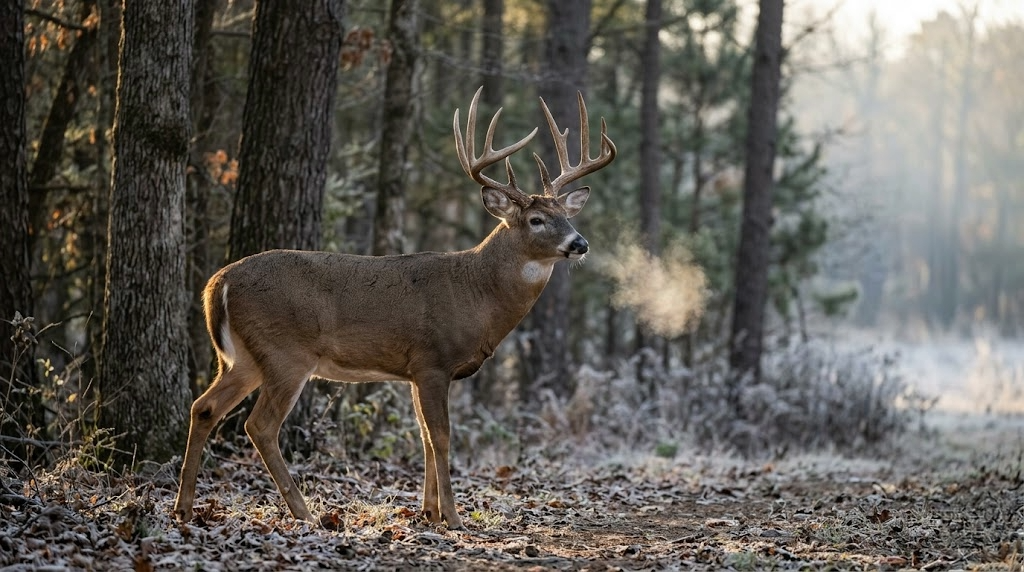
Public land whitetail hunting rewards patience, planning, and a willingness to walk farther than the other guy. If you've spent your hunting career on private ground and want to know how to hunt whitetail on public land without getting buried by pressure, the playbook is different than what works on a 40-acre lease. This guide walks you through the scouting, access, and stand strategy that puts deer in front of you on public ground season after season.
Most public land hunters fail for the same three reasons. They hunt too close to the parking area. They ignore wind and access. And they follow other people's sign instead of finding their own. Fix those three things and your odds jump dramatically.
Why Public Land Whitetail Hunting Is Different
On private land, you control the variables. You know where the food plot is, where the bedding is, who else is on the property, and when. On public land, you're one of dozens of hunters sharing the same chunk of woods, and the deer know it.
By the third day of firearm season, every piece of easy-access timber within 300 yards of a road has seen pressure. Deer adjust fast. They go nocturnal, push deeper into cover, and start bedding in spots that look miserable to hunt but stay quiet.
Your job is to think like the deer. Where would you bed if hunters pushed you around every weekend? The answer is almost always thick cover, awkward terrain, or a spot that takes real effort to reach.
E-Scout Before You Boot-Scout
Before you ever step foot on a piece of public ground, pull up the parcel on a mapping app. I run onX Hunt because the public land boundary layers and offline maps save me from trespassing and from getting lost in national forest timber I've never set foot in.
Here's what you're looking for during e-scouting:
Pinch points where two terrain features force deer through a narrow area
Inside corners of clearcuts, timber, or ag fields
Benches and saddles on ridges that funnel travel
Water sources in dry timber, especially during the early and late seasons
Thick cover more than a half-mile from the nearest road or trail
Mark 8 to 10 potential spots before you ever walk in. Then on your first boots-on-the-ground trip, you're verifying sign, not wandering aimlessly. I am working on an app that will make this a much easier process. Exciting news to come.
Finding the Terrain Features That Hold Whitetails on Public Land
Terrain tells you more than the sign does, especially after opening weekend when the rubs and scrapes you're reading might be two weeks cold. Focus on features that concentrate deer movement regardless of pressure.
Pinch points and saddles
A saddle is a low point on a ridge where deer cross from one drainage to another. In rolling hill country, Appalachian timber, or anywhere with real elevation change, saddles are gold. Deer use them because walking over a saddle burns less energy than climbing the whole ridge.
Pinch points work the same way. Anywhere two features squeeze deer movement into a narrow lane (a creek bend against a bluff, a fence corner against thick cover, a swamp edge along timber), you've got a high-percentage stand location.
Inside corners and transitions
The inside corner of a clearcut, ag field, or meadow where it meets standing timber is one of the most consistent deer movement features in existence. Deer skirt edges. They don't walk out into wide-open space during daylight if they can help it, and inside corners let them stage along the edge with multiple escape routes.
Thick bedding nobody else wants
Find the nastiest, thickest, most miserable cover on the parcel. Briars, blowdowns, cattail swamps, regenerating clearcut. That's where pressured bucks go. You're not hunting inside the bedding, you're hunting the access trail between that bedding and the nearest food source.

Beat the Pressure: How to Hunt Public Land Spots Other Hunters Skip
Here's the rule I live by on public land. If getting to the stand is easy, you're hunting the wrong spot.
Most public land hunters walk in no more than 400 yards. Some don't walk in at all. That means everything beyond the half-mile mark sees a fraction of the pressure, and the deer know which zones are safe.
Look at access differently:
Cross a creek that requires waders, and everyone else drives past
Walk a mile through a cattail swamp to reach an isolated island of timber
Come in from the non-obvious side, even if your walk triples in distance
Hunt the deep interior during midday when most hunters have packed up
The physical investment is real. You want solid boots for this kind of miles-heavy access. I run Danner Pronghorn on dry ground and LaCrosse Alphaburly Pro when I'm hitting wet cattail country. Check the most up-to-date prices on Amazon.
The Gear That Matters on Public Land
You don't need a truckload of gear for public land whitetail hunting. You need mobile gear that lets you move when a spot goes cold.
Mobile setups mean saddle hunting or a lightweight hang-on with climbing sticks. A saddle system like the Tethrd Phantom lets you slip in, set up on any tree, and be ready to hunt in under 20 minutes. Full disclosure: the learning curve on saddles is real. Most hunters need 5 to 10 practice sessions in the backyard before they're comfortable hunting from one.
Other gear that earns its place in my public land pack:
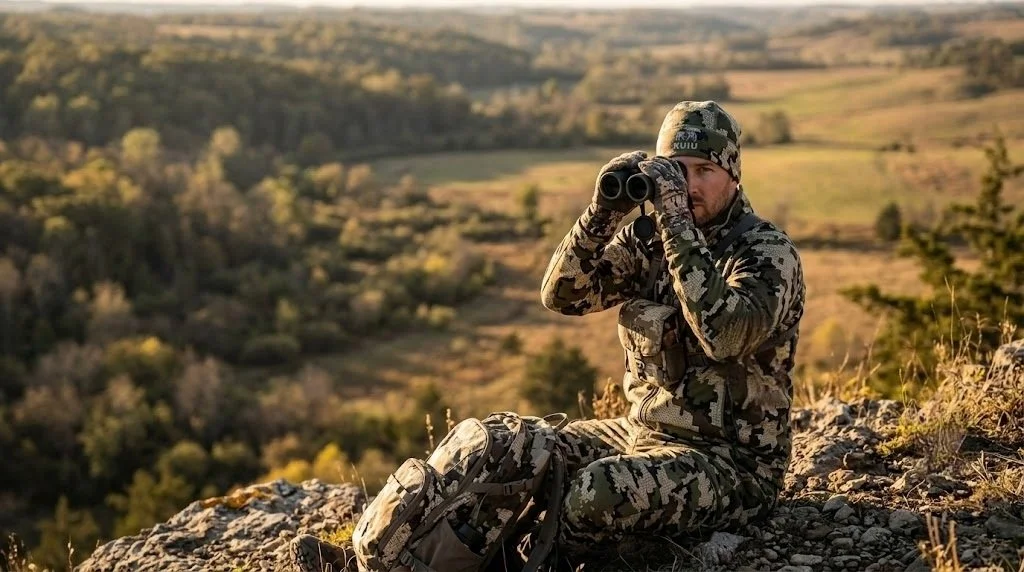
Quality mid-range binoculars like the Vortex Diamondback HD 10x42 for picking apart timber and verifying antlers at a distance
A quiet outer layer. I run the KUIU Axis Hybris jacket because it's weatherproof and is pretty quiet when you brush against branches
A cellular trail camera like the Muddy Matrix 2.0 positioned on an access trail or water source, assuming your state allows trail cameras on public land
A good headlamp with a red light mode for walking in and out quietly
Skip the gadgets you don't need. Grunt calls and rattling antlers earn their place during the rut. Scent eliminators matter less than playing the wind right. For a full breakdown of what to run in the woods, see our public land hunting gear guide.
Wind and Access: The Two Things That Kill Your Hunts
You can set up on the best pinch point in the county, but if you're walking in upwind of a bedding area or your scent is blowing into your shooting lane, deer know you're there before the sun comes up.
Before you pick a stand, map two things:
Your access route in. What wind direction lets you walk in without your scent hitting bedded deer or the travel corridor you plan to hunt?
Your stand wind. What wind lets you sit at the spot without deer catching you on approach?
Sometimes a spot only hunts well on one wind, like a northwest out of the northwest, and you just don't hunt it on other days. That's fine. You want a minimum of 5 or 6 stand locations so you can match stands to wind direction all season long.
Seasonal Strategy for Public Land Whitetails
How you hunt whitetail on public land shifts across the season. Bucks behave differently in September than they do in November, and your stand selection has to track those changes.
Early season: September through early October
Bucks are on a bed-to-food pattern. Find mast (white oak acorns are king), soft mast (persimmons, apples, crabapple), or any ag crop bordering the parcel. Set up 50 to 100 yards back from the food source on the travel corridor between bedding and feed. Hunt evenings. Morning hunts this time of year often push deer off their beds as you walk in.
The rut: November
Rut hunting is when public land gets its best window. Bucks drop their caution, and mature deer you've never caught on camera show up in daylight chasing does. Hunt all day if you can. Hunt doe bedding areas and the downwind trails they run. Pinch points between doe groups see the most buck traffic. Grunt calls and rattling work on pressured deer when used sparingly.
Late season: December through January
Deer are patterned on food and thermal cover. Find the most concentrated food source on the parcel (late-cut ag fields, standing corn, food plots on adjacent ground) and set up on the bedding side of the travel corridor. South-facing slopes hold deer on cold sunny days. Hunt midday if the temperature rises above freezing after a cold snap.
Common Public Land Mistakes to Avoid
I've watched hunters make the same mistakes for 25 years. Here are the big ones:
Hunting the same stand too many times. Pressured deer learn fast. Rotate through 3 or 4 stands minimum per season.
Ignoring thermals. In hill country, scent rises uphill in the morning and falls downhill in the evening, regardless of prevailing wind.
Walking past sign to get to "the spot." If you see fresh sign on your way in, hunt it. Don't push another half-mile out of stubbornness.
Skipping midday hunts during the rut. The 10 a.m. to 2 p.m. window produces a lot of mature bucks on public ground because most hunters are back at the truck eating lunch.
Not scouting post-season. February and March give you a clean look at rubs, scrapes, and bedding from the previous fall. That's your scouting window for next year.
If you want a more thorough property-level look before you invest weeks on a parcel, a drone-based assessment from ScoutFlight Hunting Assessments maps habitat features, access routes, and travel corridors from the air, which saves you a lot of boot miles.
Frequently Asked Questions
How far should I walk in from the road on public land?
The sweet spot on most public parcels starts around three-quarters of a mile from the nearest road or trailhead. That's far enough to get past the majority of hunters but close enough that you can pack out a deer without destroying yourself. On larger tracts with remote interior zones, walking 1.5 to 2 miles rewards you with undisturbed deer.
Is saddle hunting better than a climber on public land?
For mobile in-and-out public-land hunting, saddle systems have real advantages. They're lighter, work on any tree regardless of branch size or taper, and set up faster than a traditional climber. The tradeoff is comfort during long sits and a learning curve that takes practice. Climbers still work great on straight, branch-free trees if that's what's on your parcel.
When is the best time to hunt public land whitetails?
The first three days of archery season, before pressure builds, and the first two weeks of November during the rut, produce the highest daylight buck movement on public ground. Late season, after the first heavy snow, puts deer on a predictable food pattern, which gives patient hunters a third strong window.
Do I need a cellular trail camera on public land?
Cellular cameras help you monitor a spot without adding pressure from repeated check-ins. That said, some states restrict or prohibit trail cameras on public land, especially during hunting seasons. Check your state regulations first. When legal, one well-placed cellular camera on an access trail gives you better intel than a half-dozen standard cameras you only check every two weeks.
How do I avoid other hunters on public land?
Hunt harder-to-reach spots, come in from non-obvious access points, and shift your hunting hours. Midday hunts between 10 a.m. and 2 p.m. see far less competition, and the deer don't care what time it is on the clock during the rut.
Subscribe below for free state-by-state public land hunting guides delivered straight to your inbox, plus new tactics, gear breakdowns, and scouting resources from LandsToHunt.com.
