This guide includes affiliate links. LandsToHunt.com earns a commission on qualifying purchases.
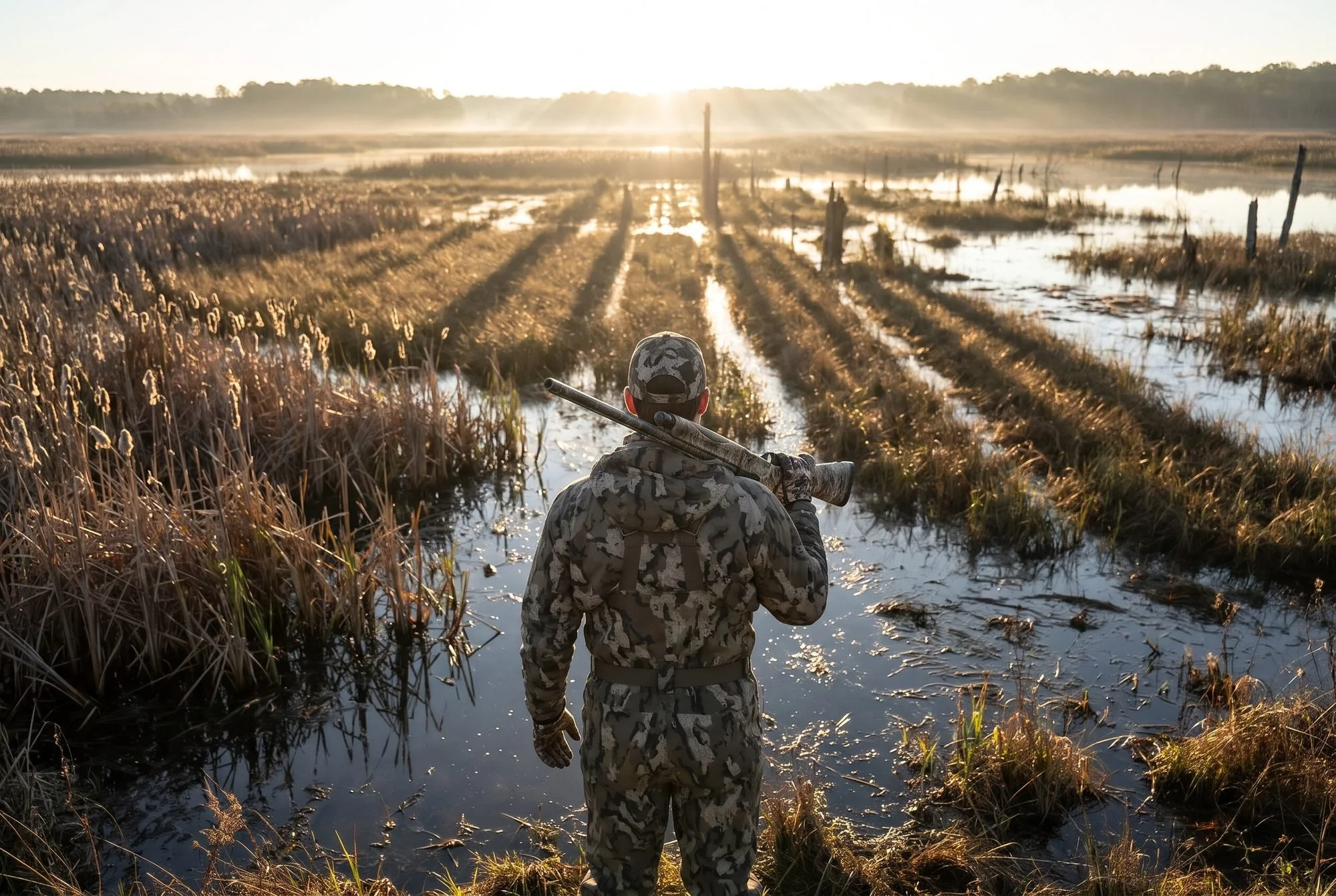
You hear the swans first. An hour before shooting light on the Hyde County side of Pamlico Sound, the marsh hums with them, and somewhere behind that noise a flock of pintails cuts over your decoys. On the right morning, public land waterfowl hunting in North Carolina feels like that. On the wrong one, you're sharing a boat ramp with nine trucks and watching birds raft up a mile out on water you can't reach.
Most of the difference comes down to three things. You need to know which ground is open, what rules apply to that exact piece of water, and how the birds behave once the shooting starts.
If you're still sorting out game land basics, start with our North Carolina public hunting land overview. That page covers the agencies, map tools and land types. This one goes straight to ducks and geese: the marshes, reservoirs, refuges and impoundments worth your gas money, plus the tactics that keep producing after the first week of pressure.
How Public Land Waterfowl Hunting in North Carolina Breaks Down
North Carolina sits deep in the Atlantic Flyway, and cold fronts up north decide a lot of your season. When the Chesapeake freezes or a hard blow rolls through Pennsylvania, new birds show up on the sounds within days. Mild winters stall them out farther north.
The public ground falls into three very different hunts:
Coastal sounds and open water. Currituck, Pamlico, Albemarle and Core Sounds. Big water, diving ducks, puddlers in the marsh fringes, and a boat is close to mandatory.
Managed impoundments. Flooded units on game lands and national wildlife refuges, mostly in the east, with some in the Piedmont. Great habitat, tight rules, and often a permit or restricted-day system.
Piedmont reservoirs and river bottoms. Falls Lake, Jordan Lake, Kerr Lake and the big bottomland swamps along the Roanoke and Chowan. Wood ducks, ring-necks, mallards, gadwall and resident Canada geese.
Each one rewards a different hunter. A guy with a 16-foot jon boat and a kayak can work the reservoirs all season. The sounds demand more boat, more decoys and a lot more respect for weather.
Before you burn gas on a new WMA, pull a scout report on it. I built Hunting Scout to read the real terrain, water, public-land boundaries, and wind for any piece of ground, so you show up with a plan. You get 3 free reports a month, no card needed. Run a free scout report
Coastal Marshes and Sounds: Where the Big Numbers Winter
Currituck Sound and the Northeast Corner
Currituck carries more waterfowl history than any water in the state. Market hunters and private clubs shaped this sound for a century, and the old club culture still shows up in how the water gets used today. Canvasback, redheads, scaup, buffleheads and big flocks of puddlers work the grass flats when submerged vegetation is healthy.
Public access runs through places like North River Game Land and Northwest River Marsh Game Land, along with Mackay Island National Wildlife Refuge on Knotts Island, which has offered limited waterfowl hunt days. Expect marsh, shallow water and plenty of mud.
Here's the catch. Parts of the northeast sounds run on a blind-licensing system with rules about where you can set up relative to licensed blinds. Show up and toss a spread on an open point without checking, and you're inviting a conversation with a wildlife officer. Read the current rules for the specific county and water before you launch.
Pamlico Sound and Hyde County
Hyde and Beaufort Counties hold some of the best public marsh in the Southeast. Gull Rock Game Land fronts Pamlico Sound and includes managed impoundments. Goose Creek Game Land, split between Beaufort and Pamlico Counties, has impoundment units like Pamlico Point and Spring Creek, along with miles of brackish marsh shoreline.
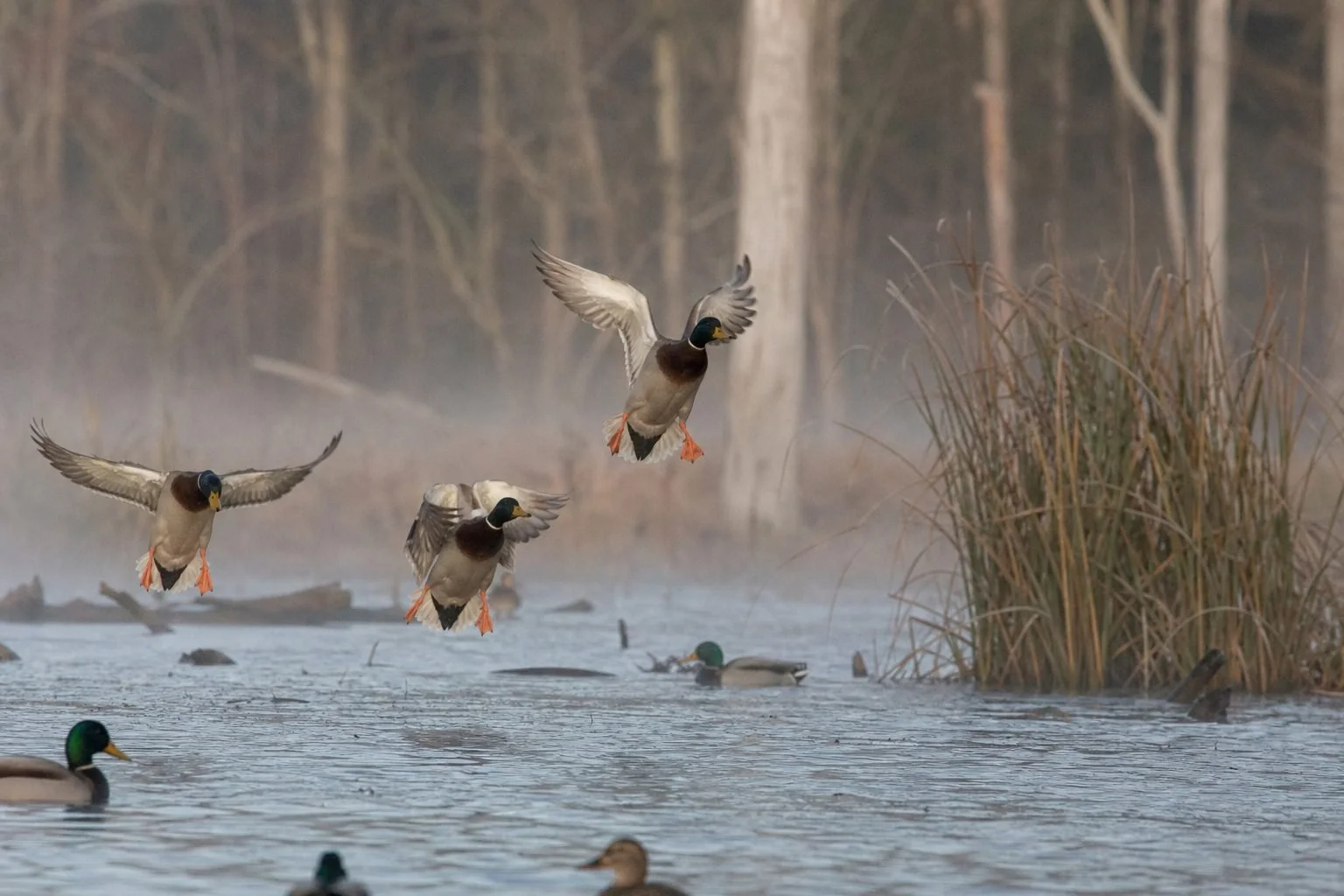
Black ducks, gadwall, wigeon, green-winged teal and pintails all use this country. The impoundments typically run on permits or limited days. The open marsh edges and creek mouths outside those units are where a mobile hunter with a small spread earns his birds.
Very few hunters walk far from the landing here. That's your edge.
Core Sound and Down East
Down East Carteret County is classic diver and brant country, and the old Core Sound decoy carvers didn't work out of a vacuum. Buffleheads, scaup and the occasional brant flock still trade along the shoals. Much of this is open public water, so your limiting factors are boat, weather and knowing where the channels cut through the flats. Run it at low water in daylight before you try it in the dark.
Refuges and Permit Hunts Worth Applying For
Mattamuskeet National Wildlife Refuge
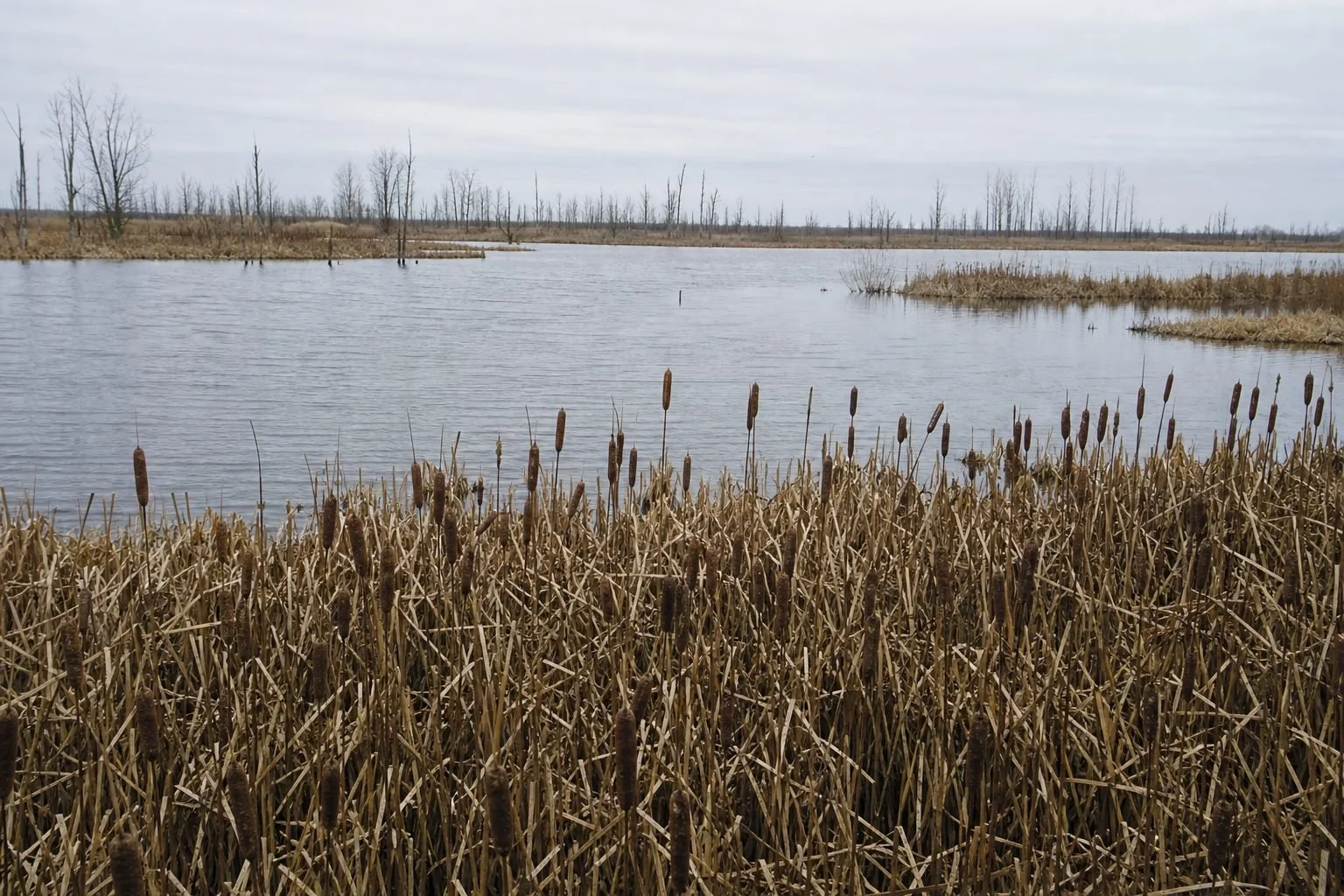
Lake Mattamuskeet is the largest natural lake in North Carolina, roughly 40,000 acres of water that averages only a couple feet deep. Tundra swans, pintails, wigeon and Canada geese have made this place famous for generations. Waterfowl hunting on the refuge has historically run through limited blind hunts awarded by draw, so your first job is learning the application window, not scouting.
Be honest with yourself about current conditions. Water quality and submerged grass on Mattamuskeet have declined in recent decades, and bird use has shifted with them. Check recent refuge reports before you build a whole trip around a draw.
Pocosin Lakes and the Pungo Unit
Pungo Lake pulls in tens of thousands of snow geese and tundra swans most winters. The sight alone is worth the drive. Most of those birds roost on the refuge and feed on private agricultural fields, so public shooting opportunity is a different story from the numbers you see. Use the Pungo area to read how birds move across Washington and Hyde Counties, then check refuge-specific rules for any open hunting.
Tundra Swan Permits
North Carolina is one of a handful of states that offers a tundra swan hunt, and it runs by permit. A big share of the eastern swan population winters in the state's coastal counties. If you want one, put in every year and treat a draw as a bonus. Application timing and permit numbers change, so get the details straight from the Commission.
Piedmont Reservoirs and Game Land Impoundments
Folks living in Raleigh, Durham, Greensboro or Charlotte don't need to drive to the coast every weekend. The Piedmont holds real duck hunting if you're willing to scout.
Falls Lake and Butner-Falls of Neuse Game Land
Butner-Falls of Neuse Game Land wraps the upper end of Falls Lake and includes several managed waterfowl impoundments. Some units run on permits, others on restricted hunt days. The upper lake flats and creek arms hold wood ducks, ring-necks, gadwall and mallards, especially after a hard freeze pushes birds off smaller water.
Pressure is the story here. You're 30 minutes from the Triangle, and everybody knows about the impoundments. Your best mornings come on the days other hunters can't make it.
Jordan Lake Game Land
Jordan Lake's game land surrounds a big Corps of Engineers reservoir south of Durham. The upper New Hope Creek arm and the shallow coves get most of the puddle duck activity. Divers raft on the main lake in cold snaps. Several areas around Jordan carry zone restrictions tied to recreation areas, so check the game land map closely.
Kerr Lake
John H. Kerr Reservoir straddles the Virginia line. Know which state's water you're sitting on, because license and regulation requirements follow the line, not the boat ramp. Big coves on the North Carolina side hold ring-necks and buffleheads, and Canada geese work the fields and points around the edges.
Roanoke and Chowan Bottomlands
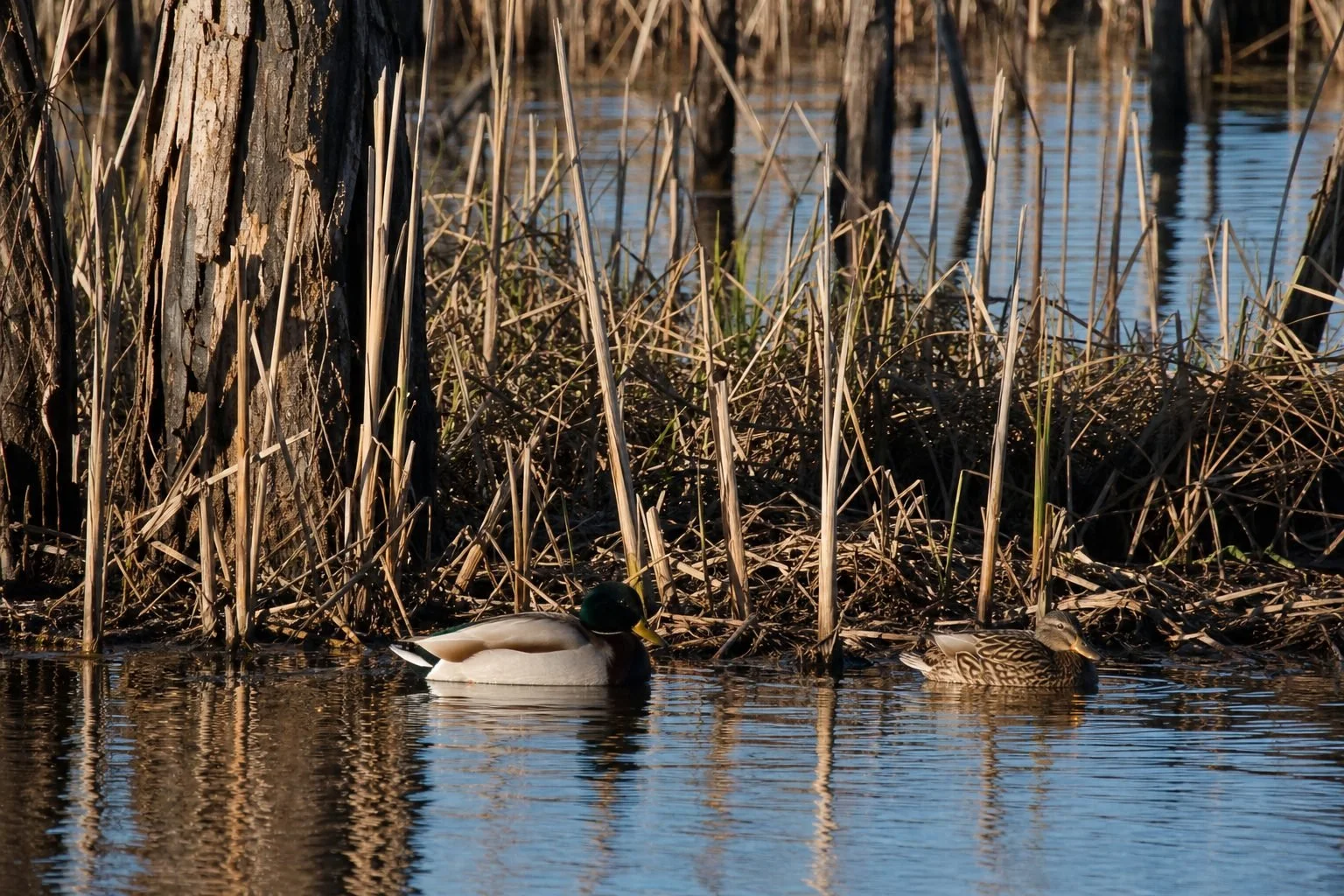
Wood duck hunters, this is your country. Chowan Swamp Game Land and the bottomland hardwood tracts along the lower Roanoke River hold flooded timber, sloughs and beaver ponds. Roanoke River Wetlands Game Land has run as a permit-only area, so confirm access before you show up. River levels drive everything here. A dam release on the Roanoke floods the bottoms one week and strands them the next.
Access Rules to Verify Before You Hunt
Rules change, and waterfowl regulations layer federal, state, game land and refuge requirements on top of each other. Don't trust last year's memory or a forum post. Pull the current regulations from the North Carolina Wildlife Resources Commission and check refuge-specific rules through the U.S. Fish and Wildlife Service before every season.
Here's what to confirm:
Season dates, splits, shooting hours and daily bag limits for each species
Required licenses, the state waterfowl privilege, HIP certification and the federal duck stamp
Whether the game land or impoundment you picked is permit-only, and when permit applications open
Hunt-day restrictions on impoundments, since many units limit hunting to specific days of the week
Sunday hunting rules for migratory birds on public land, which have changed in recent years
Blind-licensing rules and setback distances in the northeast sounds
Shot type requirements and any restrictions on motors, blinds or decoys left overnight
Refuge check-in procedures, quota hunts and closed sanctuary zones
State line boundaries on Kerr Lake and other shared water
A mapping app pays for itself on this list. onX Hunt shows game land boundaries, refuge lines and many restricted zones right on your phone, even with no cell signal if you download maps ahead. The downside is the annual subscription, and boundary layers are only as current as the data behind them, so treat posted signs and official maps as the final word.
Tactics for Pressured North Carolina Ducks
Hunt the Wind Tide, Not the Tide Chart
Most of North Carolina's sounds sit behind the Outer Banks with little lunar tide. Wind moves the water. A hard blow from one direction can leave a grass flat high and dry by sunrise, and a wind shift the next day floods the same flat a foot deep. Watch the forecast for wind speed and direction over the previous 24 to 48 hours, not just the morning of your hunt. Birds follow the water that just got deep enough to feed in.
Scout Impoundments on Closed Days
This is the single best habit you can build on managed units. Walk the dike or glass from a legal spot on a non-hunt day and watch where birds land, where they loaf at midday, and which corner holds the thickest smartweed or millet. Then match that to the wind forecast.
A few seasons back, a Piedmont impoundment I'd scouted showed birds piling into the north end every afternoon. The forecast called for a steady north wind on the hunt day. That put calm water along the north bank and gave us a wind at our backs with birds approaching into our faces. We tucked into the buttonbush on that bank with ten decoys and a landing hole right in front. Wood ducks poured in at shooting light, and a pair of gadwall committed an hour later. Hunters on the south bank, facing straight into the wind, watched most of it happen.
Go Small and Go Mobile on Reservoirs
Piedmont birds see the same 30-decoy spread every weekend. Cut it to a dozen. Mix in a few gadwall and wigeon decoys if those birds are using the cove. Skip the motion decoy on high-pressure water if birds keep flaring. A kayak or small boat lets you slip into back coves that the big-boat crowd motors past.
Beaver Swamps for Early Wood Ducks
Early season belongs to wood ducks in beaver ponds and flooded sloughs. You don't need a big spread. Many mornings you need no decoys at all, just a spot under the flight line and a stool. Scout the evening before by sitting quietly at the edge at sunset and listening for whistling woodies coming in to roost. Then hunt the morning, not the roost itself, so you don't burn the pond out.
Weekdays, Weather and the Late Season
Public pressure on North Carolina water drops hard on weekdays and on ugly-weather days. A cold front with rain and a 20-mph north wind keeps a lot of trucks at home and pushes fresh birds south. Late season, after the crowd thins out, is often when the sounds and reservoirs fish best for divers.
For more on reading ground before you ever drop a decoy, see our guide on how to scout public land.
Gear for North Carolina Marsh and Open Water
Coastal North Carolina in December looks mild on paper. Then a northeast wind blows across 40-degree water and you learn otherwise. Dress for the wind chill on the water, not the forecast high at the house.
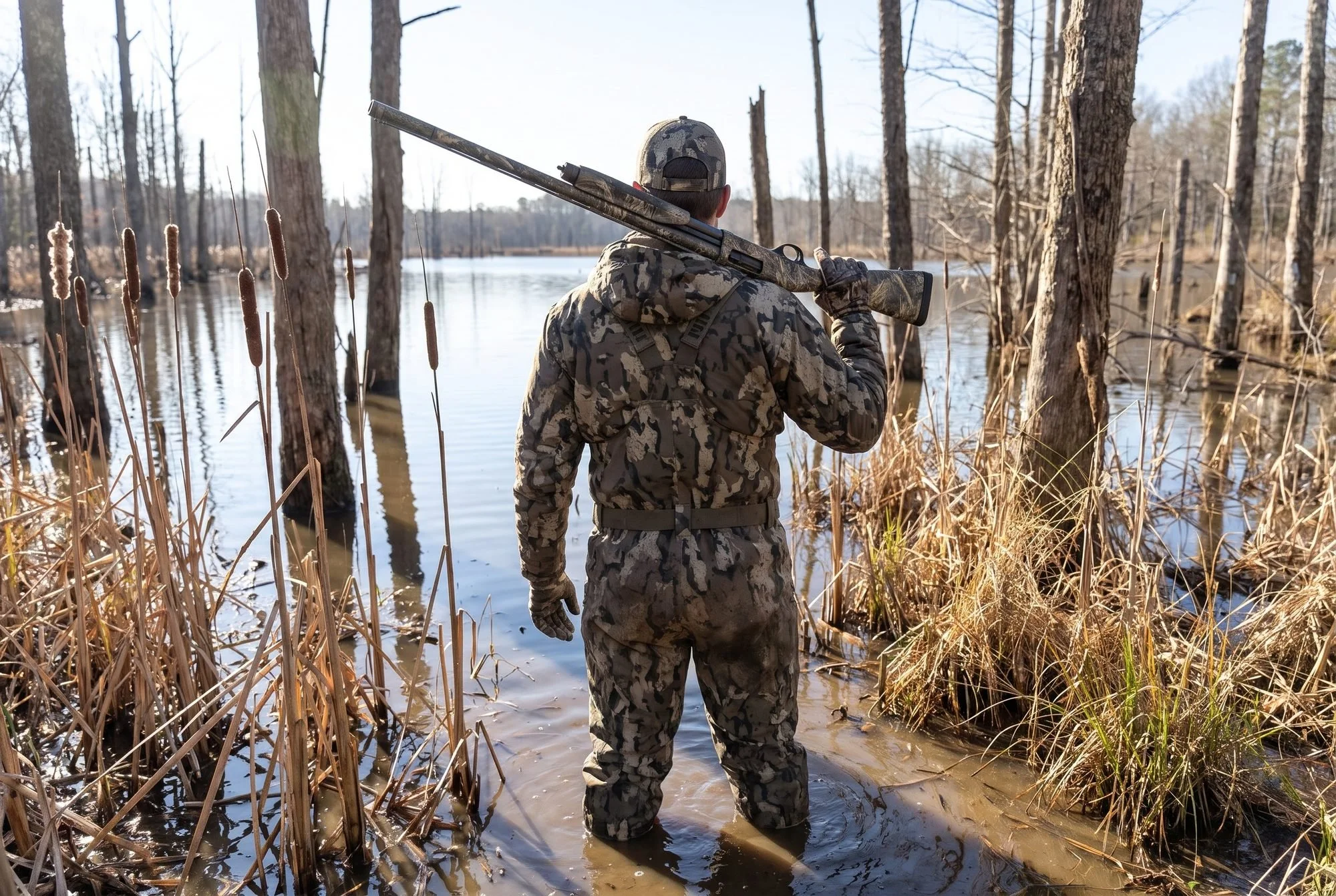
Waders come first. Breathable chest waders with a wading belt work for most marsh and impoundment hunting. Neoprene earns its weight on cold open-water mornings. Pack a wading staff for the soft mud in the Hyde County marshes, because some of that bottom swallows a leg to the knee.
For scouting dikes, field edges and muddy boat ramps, the LaCrosse Alphaburly Pro is a very solid rubber boot that keeps you dry in standing water and gumbo mud. It's not a wader, and the insulated versions run hot during early wood duck season, so match the insulation to the month.
Glass matters more than most duck hunters admit. Picking out a raft of canvasback against a gray horizon or confirming species before they commit takes good optics. The Vortex Diamondback HD 10x42 gives you clear glass and Vortex's warranty at a fair price. On a rocking boat, 10x magnification gets shaky, so some sound hunters prefer an 8x model for steadier views.
On the sounds, carry a float coat or inflatable PFD, a throw line, a handheld VHF or charged phone in a dry bag, and a spare kill switch lanyard. Cold-water accidents on the sounds happen fast. Tell someone your launch site and return time every trip.
For more boot options across wet and dry ground, check our breakdown of the best hunting boots for public land.
Public Land Waterfowl Hunting in North Carolina FAQ
Do you need a permit to hunt ducks on North Carolina game lands?
It depends on the unit. Many game lands allow waterfowl hunting with the proper licenses, but some impoundments and entire game lands run as permit-only or limit hunting to certain days. Check the current regulations and game land map for your exact area through the North Carolina Wildlife Resources Commission.
Where can you hunt tundra swans in North Carolina?
Tundra swan hunting in North Carolina runs by permit, and the birds concentrate in coastal counties around Mattamuskeet, Pungo Lake and the farm country between them. Apply through the Commission and confirm the open area, season and permit rules for the current year.
Can you hunt waterfowl on North Carolina national wildlife refuges?
Some refuges, including Mattamuskeet and Mackay Island, have offered limited waterfowl hunts, often by draw or on set days. Others stay closed to waterfowl hunting or hold sanctuary zones. Check each refuge's hunting page on the U.S. Fish and Wildlife Service site before you plan a trip.
What's the best public land for wood ducks in North Carolina?
Bottomland swamps along the Roanoke and Chowan Rivers, plus beaver ponds on Piedmont game lands like Butner-Falls of Neuse and Jordan Lake, hold the most consistent wood duck numbers. Early season and low-pressure weekdays produce the best shooting.
Is North Carolina good for public land goose hunting?
Resident Canada geese are common around Piedmont reservoirs and coastal farm country. Big migrant snow goose flocks mostly feed on private fields, so public goose hunting leans toward resident birds on reservoir points and game land fields.
North Carolina's ducks reward the hunter who reads wind, checks the rules twice and walks past the crowd at the landing. Want the same kind of breakdown for every state you hunt? Subscribe to the LandsToHunt.com email list and get our free state-by-state public land hunting guides, then browse the full 50-state public land directory to plan your next trip.
Want a head start on the ground itself? I built Hunting Scout to scout any spot from home. Your first 3 reports each month are free. Try Hunting Scout
