This guide includes affiliate links. As an Amazon Associate, I earn from qualifying purchases. See all my gear picks in the LandsToHunt Amazon store.
Cheap glass cost me a deer once, and I still don't know what kind of deer it was. Back then, picking the best hunting binoculars wasn't on my radar. I was hunting a clearcut on the Hoosier National Forest with a pair of compact 10x25s I'd grabbed off an endcap for forty bucks. Ten minutes before legal light ran out, a deer stepped onto the far edge of the cut, roughly 180 yards out. Through those little binos, it was a gray shape with a head. Buck? Doe? Spike with a broken side? I wiped the lenses, raised them again, and watched the deer drift back into the regrowth.
I walked out in the dark with nothing but a question.
That walk taught me something that took years to put into words. Binoculars don't just help you see deer. They let you make decisions from a distance, before you burn a spot by walking into it. I've carried glass through 25-plus years of hunting and land work, from hardwood ridges in Indiana to open draws in Kansas walk-in country. This hunting binocular review covers six pairs from budget to premium, and each one gets a straight answer on where it shines, where it falls short, and who should buy it.
Why Good Glass Matters More on Public Land
Private land hunters can get by with mediocre binoculars. On public ground, you can't, and the reasons are specific.
Pressured deer move at the margins of light. On heavily hunted ground, mature bucks push much of their daytime movement into the first and last 20 minutes of legal shooting time. That's exactly when cheap glass turns gray.
Every step you skip is scent you don't leave. Glassing a cutover edge or a CRP draw from 300 yards beats walking through it and bumping whatever's bedded there.
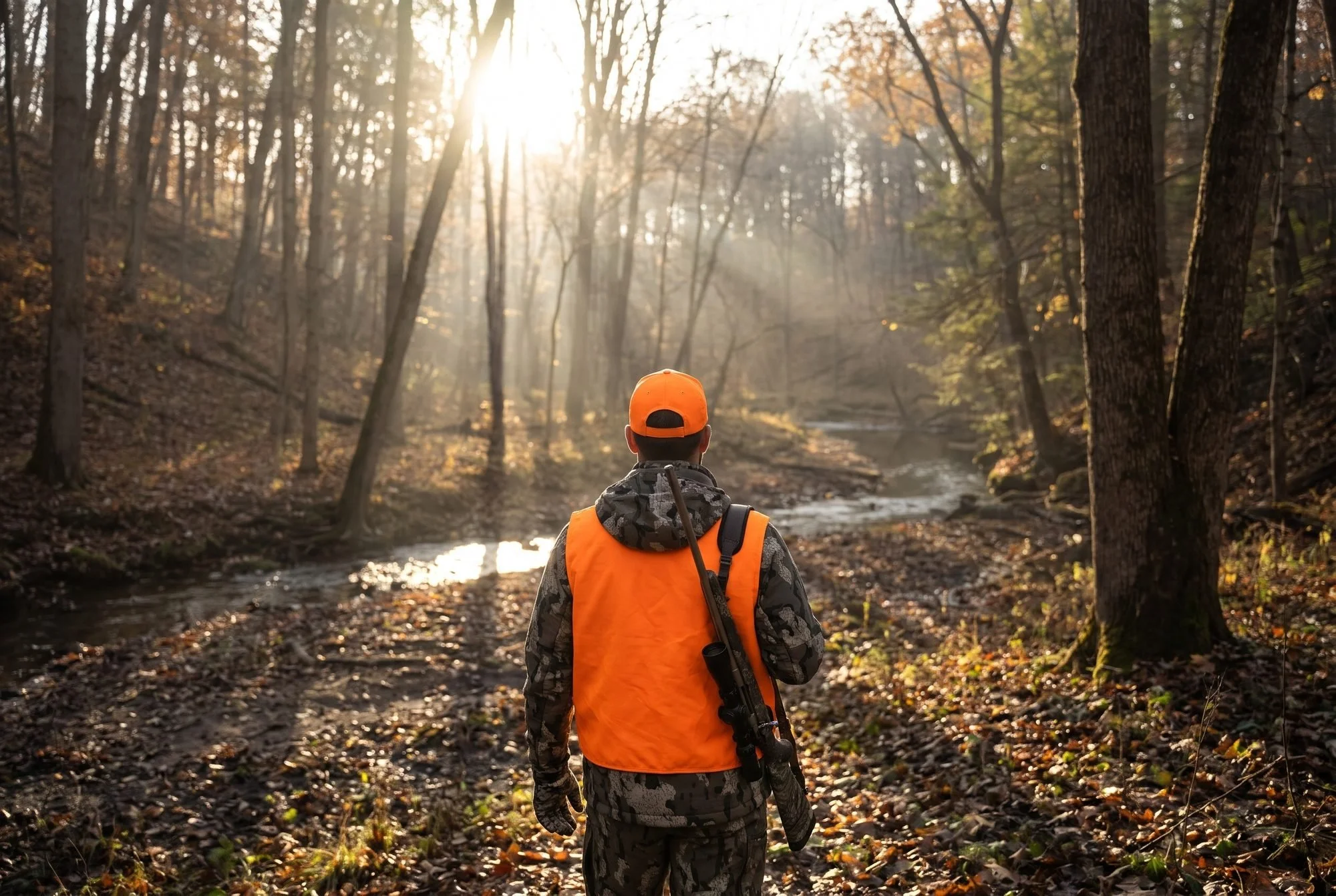
You share the woods. Good binos help you pick out a blaze orange hat, a hung climber, or a ground blind before you blunder into somebody's setup.
Your rifle scope isn't a binocular. Scanning with a scope means pointing a loaded gun at whatever you're looking at, including other hunters. Don't do it.
So glass isn't a luxury for the DIY hunter. For scouting, for safety, and for the shoot-or-pass call, your binoculars do the heavy lifting. If you want to pair better glass with a smarter plan, our guide on how to scout public land walks through the whole process.
Good gear matters less than good ground. I built Hunting Scout so you can scout a spot from home before you buy a thing. Real terrain, water, boundaries, and wind for any location. 3 free reports a month. Run a free scout report
Quick Picks: The Best Hunting Binoculars at a Glance
Vortex Diamondback HD 10x42: Best overall value. Sharp, tough, and backed by an unconditional warranty. Mid-range.
Leupold BX-4 Pro Guide HD 10x42: Best for low light without premium pricing. Upper mid-range.
Vortex Crossfire HD 10x42: Best budget pick. Daylight performance well above its price tag. Budget.
Zeiss Conquest HDX 10x42: Best premium glass without alpha pricing. Premium.
Vortex Fury HD 5000 10x42: Best rangefinding binocular. Premium.
Maven C.1 10x42: Best direct-to-consumer option. Mid-range.
Hunting Binocular Reviews: Six Pairs, Honest Pros and Cons
1. Vortex Diamondback HD 10x42: Best Overall Value
Hand one pair of binoculars to a public land whitetail hunter and send them off for a decade, and this is the pair I'd pick. The Diamondback HD 10x42 by Vortex sits right where glass quality stops climbing fast and price starts climbing steep. Edge-to-edge sharpness is good. Color looks natural, and the armored body shrugs off getting banged against bark and tailgates.
Mine have ridden in a chest harness through sleet in Kentucky and a sweaty September in Indiana without fogging internally once. At roughly 22 ounces, they're light enough that you forget about them until you need them.
Where it falls short: Low light. In the last ten minutes of shooting time, the Diamondback fades noticeably faster than pricier glass. You'll also see some color fringing on high-contrast edges, like bare branches against a bright November sky. Neither problem kills the deal, but you should know about both.
Best for: Whitetail and turkey hunters who want one pair that does everything well.
Cost: Mid-range. Check current price on the Vortex Diamondback HD 10x42.
2. Leupold BX-4 Pro Guide HD 10x42: Best for Low Light
Here's the pair for the hunter whose real problem is that last gray quarter hour. Leupold built the BX-4 Pro Guide HD around what it calls Twilight Max Light Management. Sounds like marketing. Then you put it next to a mid-tier binocular at dusk, and a buck's rack still reads as antler against the timber while the cheaper glass shows you a blob.
It's one of the most consistently well-reviewed binoculars in the upper mid-range, and Leupold backs it with a lifetime guarantee. Fringing is very minimal, even on backlit branches.
Where it falls short: In bright midday light, the jump over the Diamondback isn't dramatic. You're paying extra for the edges of the day. Leupold has also updated this line, so confirm which generation you're getting when you shop sales.
Best for: Hunters who sit field edges, cutovers, and powerline cuts where the action happens right at last light.
Cost: Upper mid-range. See today's price on the Leupold BX-4 Pro Guide HD 10x42.
3. Vortex Crossfire HD 10x42: Best Budget Binocular
For a lot of hunters, this is the right answer. The Crossfire HD gives you clear, usable daylight glass for about half the cost of a Diamondback, and it carries the same Vortex VIP warranty. I cover it in more depth in the budget spotlight below.
Where it falls short: Low-light performance drops off early, and the image softens toward the edges. Fine for spotting deer. Less fine for counting points at dusk.
Best for: New hunters, youth hunters, and anybody who wants a backup pair riding in the truck.
Cost: Budget. Compare prices on the Vortex Crossfire HD 10x42.
4. Zeiss Conquest HDX 10x42: Best Premium Glass Without Alpha Pricing
Top-tier glass from Swarovski and Leica costs a lot more. The Conquest HDX sits well below that and gets you a big share of the same experience, with bright, high-contrast images and a focus wheel that moves smooth and precise. Western spot-and-stalk hunters and anybody watching big ag edges on the Plains tend to love this pair.
I spent a long evening sit behind a buddy's Zeiss Conquests once. The difference over mid-range glass showed up in my eyes more than on the image itself. After an hour of glassing, my eyes just felt less tired.
Where it falls short: It's heavier than the Diamondback, and a grand is real money for something you'll knock against ladders and stand seats. The Zeiss warranty is solid, but it doesn't carry the no-questions reputation of the Vortex VIP.
Best for: Serious glassers who spend more time looking than walking.
Cost: Premium. Check current price on the Zeiss Conquest HDX 10x42.
5. Vortex Fury HD 5000 10x42: Best Rangefinding Binocular
One device on your chest instead of two. The Fury HD 5000 puts a laser rangefinder inside a 10x42 binocular, so you can find a deer, judge it, and range it without swapping tools. Angle-compensated readings matter if you're hunting steep Appalachian ridges or shooting down from a tree.
Out West, or on big open public ground, this setup really shines. You spot a mule deer bedded on a far slope, range him, and plan the stalk without ever taking your eyes off him.
Where it falls short: Weight and batteries. At just over 2 pounds, it hangs heavier than any standard binocular, and a dead battery on a cold morning puts you back to guessing yardage. Glass quality is good, not great for the money, because most of what you're paying for is the rangefinder. Timber whitetail hunters usually get better value from a Diamondback plus a compact standalone rangefinder.
Best for: Western hunters, open-country whitetail hunters, and anybody tired of juggling two optics.
Cost: Premium. See current price on the Vortex Fury HD 5000 10x42.
6. Maven C.1 10x42: Best Direct-to-Consumer Option
Maven built its name selling straight to hunters and skipping the retail markup. The C.1 is its entry model, and it's well-reviewed for clarity, light weight, and a compact frame that rides easy in a harness. If you like buying from a smaller, hunter-focused company, Maven deserves a look.
Where it falls short: You can't walk into most big-box stores and look through a pair first. Binoculars are personal. Eyecup fit and focus feel matter a lot, so buy with a return window in mind.
Best for: Hunters who shop online and want a Vortex alternative at a similar price.
Cost: Mid-range. Check today's price on the Maven C.1 10x42.
How to Choose the Best Hunting Binoculars: What Matters and What's Hype
8x or 10x Magnification?
This is your first fork in the road. A 10x binocular shows more detail at distance, while 8x gives you a wider field of view, a steadier image, and a brighter picture. For most Midwest public land whitetail hunting, where you're glassing field edges, cutovers, and CRP, 10x42 is the best single choice. Thick country flips that. In Southern pine plantations or Appalachian laurel, you're rarely looking past 100 yards, and an 8x42 helps you catch movement fast.
Why 42mm Is the Sweet Spot
Objective lens size controls how much light gets in. Divide the objective by the magnification and you get the exit pupil. A 10x42 gives you 4.2mm, an 8x42 gives you 5.25mm, and a 10x50 hits 5mm but adds real weight around your neck.
Why care? Your own pupil opens to roughly 5 to 7mm in dim light, and that number shrinks as you age. My old 10x25s had a 2.5mm exit pupil. No wonder that Indiana deer turned into a gray shape. For hunting, 42mm balances brightness and carry weight better than anything else on the shelf.
Coatings, "HD," and Other Marketing Words
"HD" isn't a standardized term. Every brand prints it on the box, and it means something different on each one. What matters is whether the lenses are fully multi-coated, whether roof prisms have phase correction coatings, and whether the body is nitrogen or argon purged to stop internal fog. Every pair in this hunting binocular review checks those boxes.
The best test costs nothing. Take a pair outside the store near dusk, or point it at a dark tree line against bright sky. Look for color fringing around branches and watch how fast the image goes muddy. Your eyes will tell you more than any spec sheet.
Weight and How You Carry Them
Binoculars left in the truck are worth zero. Neck straps let them bounce, swing, and clank against your bow riser. An enclosed chest harness keeps them quiet, keeps rain and pine needles off the lenses, and puts them right where your hands go. On public land, where you might walk a mile or more in the dark, that matters more than an extra ounce of glass quality. Pair the harness with footwear built for the walk in, and check our picks for the best hunting boots for public land.
Set Your Diopter Before Opening Day
Most hunters never touch it. Close your right eye, focus with the center wheel using your left, then close your left eye and adjust the diopter ring until the right side snaps sharp. Two minutes in the yard makes a budget pair look noticeably better.
Warranty Is Part of the Price
Hunting gear gets abused. Binoculars fall out of stands, get dunked in creeks, and get pinched in truck doors. The Vortex VIP warranty covers damage no matter how it happened, with no receipt and no registration needed. The Leupold lifetime guarantee is also well-regarded. Factor coverage into the real cost of any pair you're comparing.
Budget Pick Spotlight: Why the Crossfire HD Is Enough for Most Hunters
Let's be honest about who reads gear reviews. Plenty of you are buying a first real pair, outfitting a kid, or weighing a binocular against a tag fee and a tank of gas. The Vortex Crossfire HD 10x42 is the pair I point those hunters to every time.
A buddy's son carried a Crossfire HD through his first three deer seasons on Indiana public ground. He dropped it off a ladder stand. He soaked it in a November downpour, and once he left it on the truck hood for a mile of gravel road. Vortex replaced it without a single question. The glass never kept him from finding deer.
Here's what you give up. Edge sharpness is softer, colors look a touch flatter, and the image dims sooner at dusk. On mid-morning sits, spring turkey hunts, and daylight scouting walks, you won't notice much. Counting tines at 5:47 p.m. in late November? You will.
If your budget is tight, buy the Crossfire HD and spend the difference on gas money to hunt new ground. Our state-by-state public land directory will give you plenty of places to point it.
Best Hunting Binoculars FAQ
What magnification is best for deer hunting binoculars?
For most whitetail hunters, 10x42 is the best all-around choice. It gives you enough detail to judge antlers at 200 yards and stays bright enough for low light. Go with 8x42 if you hunt thick timber or swamps where shots rarely stretch past 100 yards.
Are expensive hunting binoculars worth the money?
Up to a point, yes. The jump from cheap glass to a solid mid-range pair is huge. Above mid-range, you mainly gain low-light performance and edge sharpness. At the premium end, the gains get smaller and show up mostly as less eye fatigue during long glassing sessions. Spend where your hunting style demands it.
Should I buy rangefinding binoculars or a separate rangefinder?
Buy rangefinding binoculars if you hunt open country and range often. Most timber whitetail hunters get better value from a standard pair like the Diamondback HD plus a compact rangefinder. The combo costs less, and a dead battery doesn't take your glass down with it.
How do I keep binoculars from fogging in cold weather?
Sealed, purged binoculars like every pair on this list won't fog inside. Outside fog shows up when you breathe on cold lenses or carry them from a warm truck into cold air. Keep them in a harness outside your jacket so they stay at air temperature, breathe away from the eyepieces, and leave the lens caps on until you need them.
Can I use my rifle scope instead of binoculars?
No. Glassing with a scope means pointing a loaded firearm at everything you look at, including other hunters. On crowded public land, that's a serious safety problem. Find and identify with binoculars, and bring the rifle up only when you've decided to shoot.
Put Good Glass on Good Ground
The best hunting binoculars won't fix a bad spot. They make a good spot better, and they help you figure out which spots deserve your time in the first place. So start with the ground, then let your glass do the walking. Our guide to hunting whitetail on public land picks up right where this article leaves off.
Want free state-by-state public land hunting guides sent straight to your inbox? Subscribe to the LandsToHunt.com email list and get the guide for your state, plus new gear reviews and field-tested tactics as they publish.
Want a head start on the ground itself? I built Hunting Scout to scout any spot from home. Your first 3 reports each month are free. Try Hunting Scout
As an Amazon Associate, I earn from qualifying purchases. See all my gear picks in the LandsToHunt Amazon store.
