This guide includes affiliate links. LandsToHunt.com earns a commission on qualifying purchases.
Two miles from the truck is a bad place to find out your headlamp is still on the kitchen counter. Public land punishes forgotten gear harder than private ground does. There's no shed to run back to and no landowner's side-by-side to haul your deer. This full public land hunting gear list covers everything I carry, sorted by what rides along on every hunt, what changes by season, and what stays in the truck. After 25 years of walking into WMAs, national forests, and state game lands, I've cut the list down to gear that earns the weight.
One rule shapes everything below. Every ounce you pack has to solve a real problem on a walk-in hunt, because you'll carry that ounce in the dark, uphill, while sweating through your base layer. Fancy doesn't matter. Quiet, dry, and easy to find in the dark matter a lot.
How This Full Public Land Hunting Gear List Is Organized
Most gear lists dump 80 items in one pile and leave you to sort the mess. This one runs in three tiers.
Tier 1, the daypack core: gear that comes on every single sit, from the archery opener through the last late-season evening.
Tier 2, the seasonal swaps: clothing weights, boots, and setup choices that change with temperature and terrain.
Tier 3, the truck kit: backups, meat care, and recovery tools that wait at the parking area until you need them.
Why tiers? Pressure. On public land, other hunters are working the same easy spots you see on the map, so mobility wins. A lighter pack lets you push a half mile past the crowd without showing up soaked. The tier system keeps your core kit lean and lets you scale up for an all-day rut sit or a frozen December evening.
Still picking a destination? Start with our state-by-state public land directory, then come back here to pack.
Good gear matters less than good ground. I built Hunting Scout so you can scout a spot from home before you buy a thing. Real terrain, water, boundaries, and wind for any location. 3 free reports a month. Run a free scout report
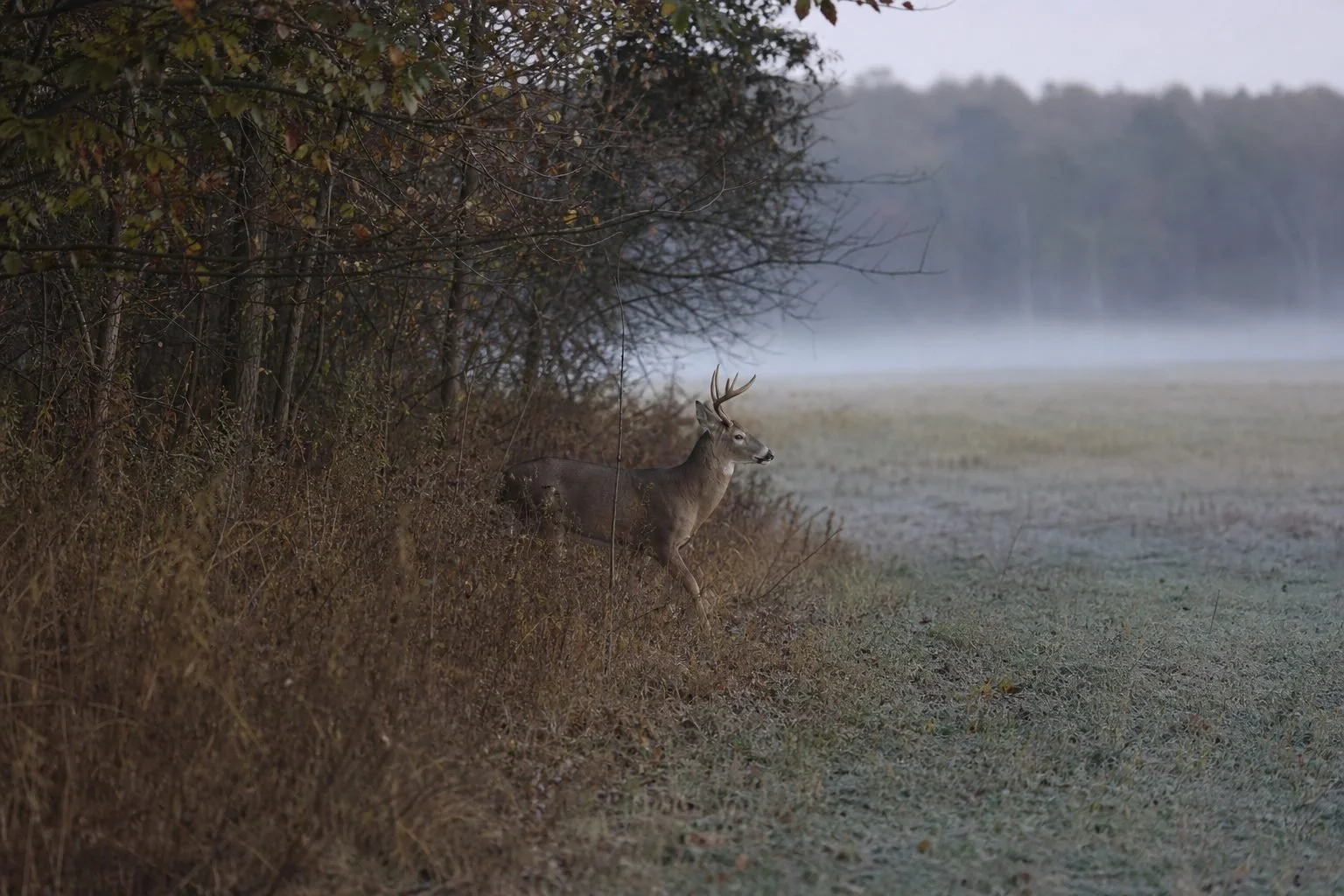
Navigation and Access Gear for Public Land
Mapping App and Backup Power
Your first piece of gear lives on your phone. onX Hunt shows public and private boundaries, landowner names, and WMA or national forest lines, and the offline maps keep working where cell service dies. During scouting, I drop pins on every rub line, bedding area, and access route. On opening morning, I follow those same pins in the dark without second-guessing a single turn.
The catch? Boundary data isn't perfect, and GPS tracking chews through battery. If a line looks odd, trust the posted signs or the county plat over the screen. Carry a 10,000 mAh power bank too. That size recharges most phones about twice and weighs around half a pound.
Headlamp and Trail Markers
Bring two lights. Always. The Black Diamond Spot 400 throws enough beam to pick up reflective tacks at 50 yards and runs on AAA batteries, so you can swap cells in the field. Small complaint: the battery door feels fiddly with cold fingers. Keep a tiny backup light in your hip-belt pocket, because headlamps quit at the worst moment, usually halfway down a blood trail.
Reflective markers belong in the pack as well, but check your state first. Some WMAs ban tacks that puncture trees, and clothespin-style markers keep you legal on that ground.
Paper Map and Compass
A printed topo of your unit and a baseplate compass weigh almost nothing. Phones crack, freeze, and die. Paper never needs a charge.
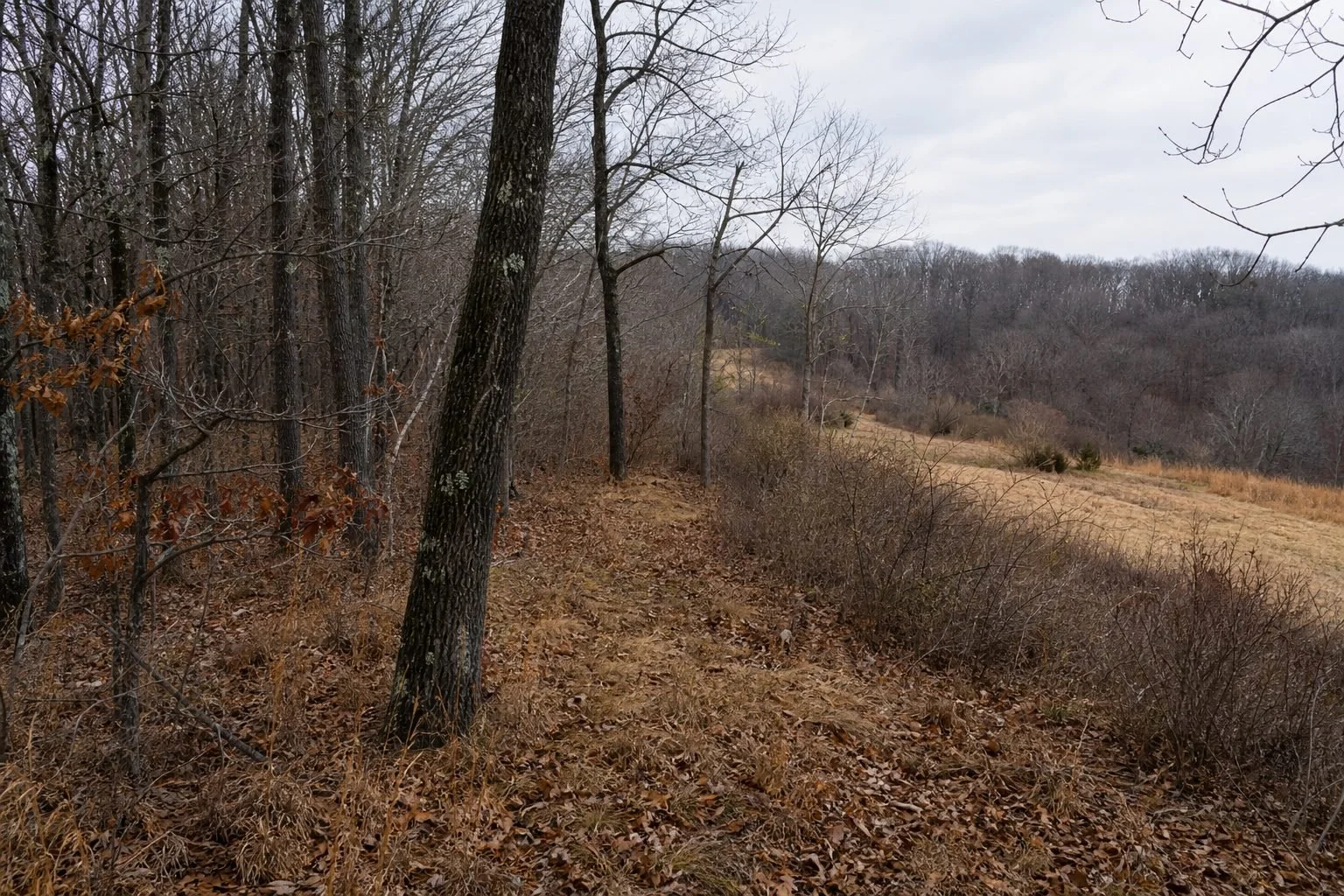
Clothing, Layering, and Boots for Walk-In Hunts
Here's where most public land hunters go wrong. They dress for the stand, then sweat through every layer on the hike in, and by the time they settle in they're shivering. Walk in cool. Pack your insulation and put the warm layers on once you're set up.
Base and Mid Layers
Your base layer handles sweat, so choose synthetic or merino over cotton every time. On steep walk-ins, the KUIU Peloton 200 Zip-T Hoodie grid fleece breathes very well and dries fast once you stop moving. One knock against the Peloton: synthetic fabric holds odor longer than merino, so wash after every couple of hunts. Over the base, add a light fleece or puffy vest for early season. From late October on in northern states, swap that vest for a heavier insulated jacket.
Outer Layer, Gloves, and Hats
Quiet matters as much as warmth on the outside. The KUIU Axis Hybrid Hooded Jacket has a soft face fabric that won't scratch against bark, and the shell sheds wind and light rain well. You're paying premium money, though, and a sustained downpour still calls for a dedicated rain jacket.
Budget move? A softshell from a big-box brand paired with a packable rain jacket gets you most of the way there for a fraction of the cost.
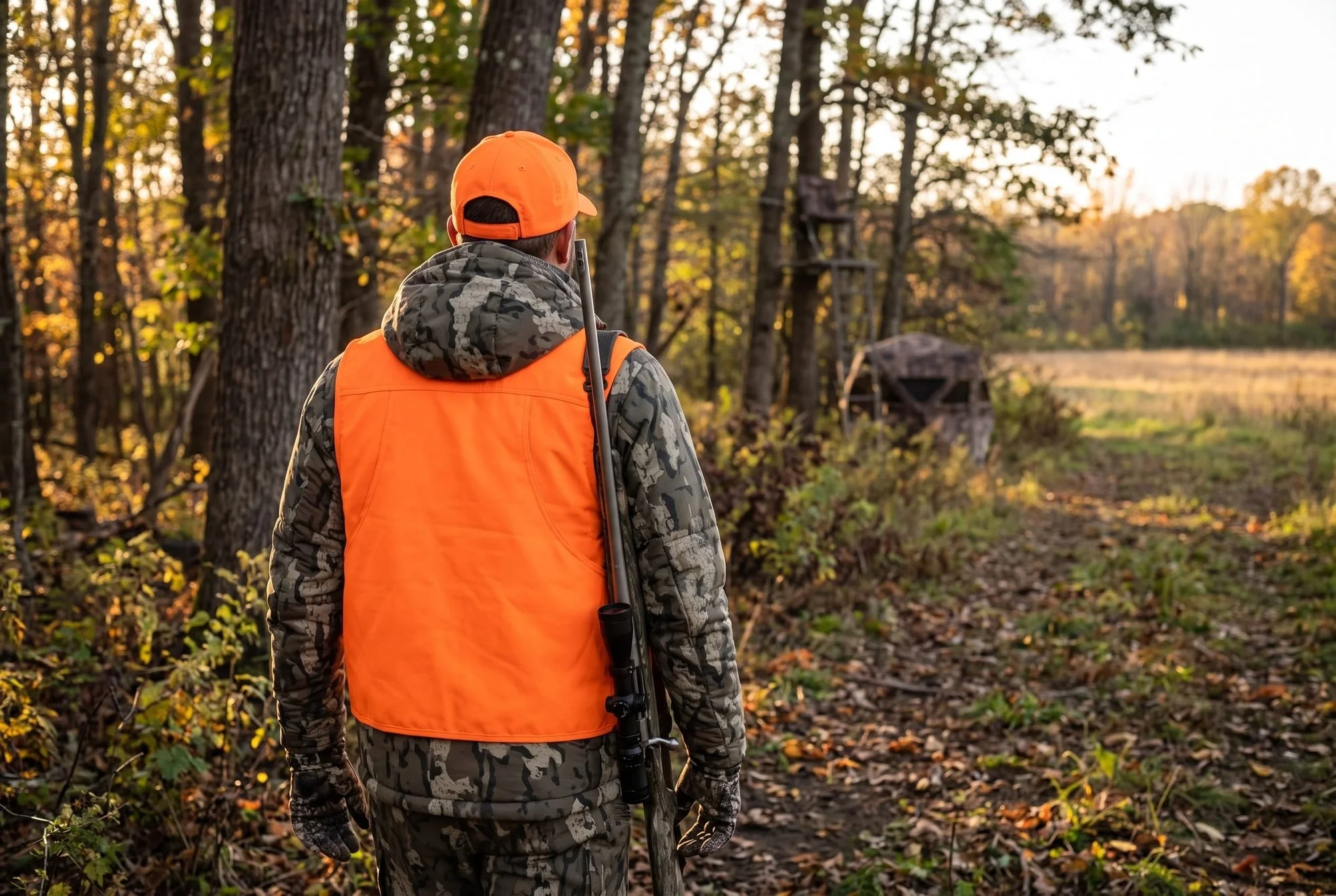
Thin liner gloves work for the walk, and insulated mitts go on at the tree. Blaze orange belongs in this section too. Requirements vary by state, with some spelling out square inches above the waist and others requiring an orange hat, so read the regs before firearm season opens.
Boots for Dry Ground and Wet Ground
No single boot covers every public tract. For dry ridges, oak flats, and long walk-ins, the Danner Pronghorn gives you solid ankle support and a waterproof liner. Expect a short break-in period. The insulated versions also run warm on September hikes.
River bottoms change the math. Cattail edges, flooded timber, and creek crossings call for the LaCrosse Alphaburly Pro, an 18-inch rubber boot that keeps water out of your socks and leaves far less scent on the trail than leather. Rubber gets heavy over two miles, and ankle support on steep sidehills is weak. Our guide to the best hunting boots for public land breaks down both styles in more detail.
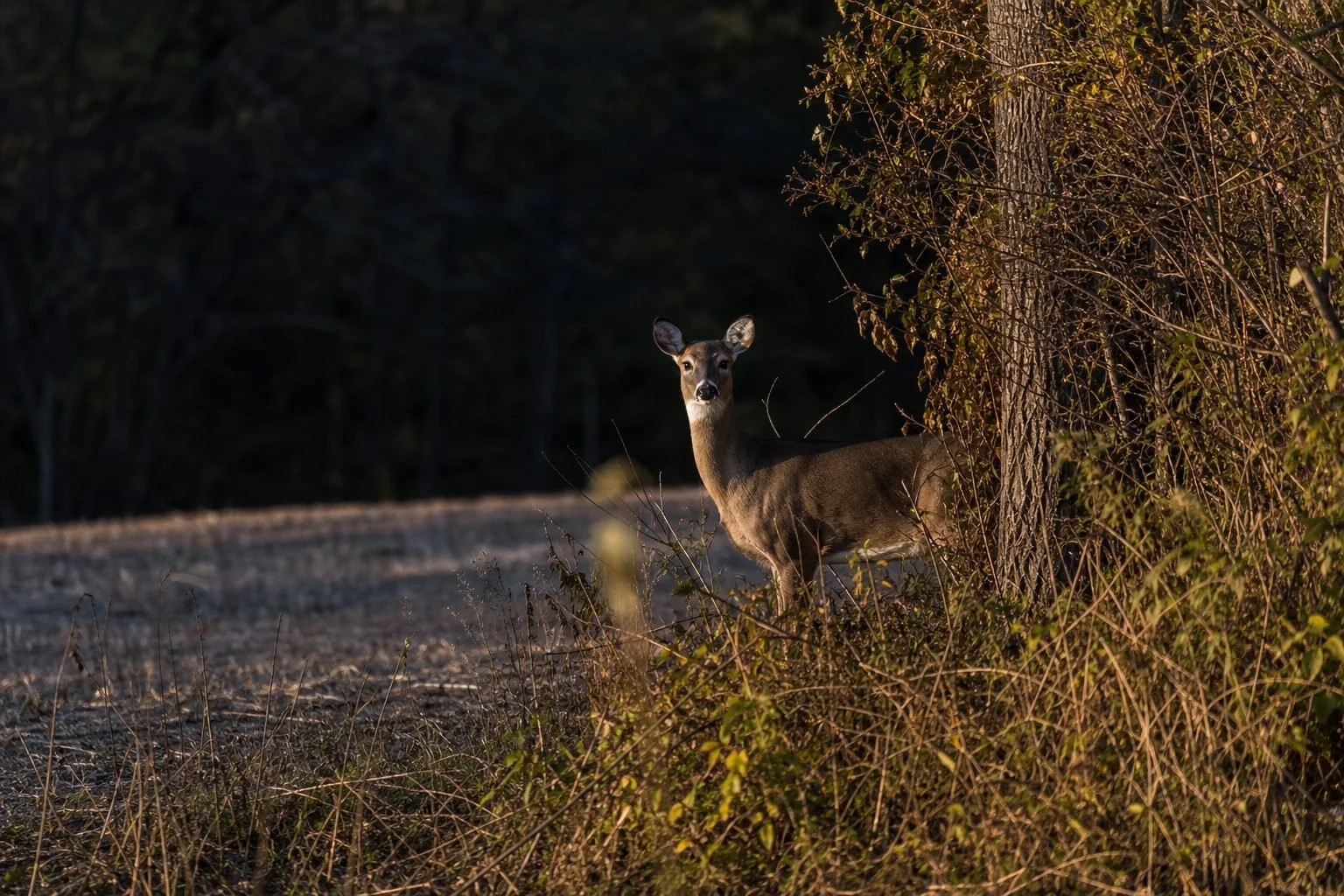
Optics and Scouting Gear on Your Public Land Hunting Gear List
Binoculars and Rangefinder
Good glass saves you steps. Picking apart a CRP edge or a fresh clearcut from 400 yards tells you where to set up without blundering through the bedding area first. For the money, the Vortex Diamondback HD 10x42 delivers sharp, bright images, and the Vortex VIP warranty covers nearly any accident you throw at the binos. In the last ten minutes of legal light, premium glass does pull ahead.
On a tighter budget, the Vortex Crossfire HD 10x42 runs about half the price and still handles most whitetail glassing. Want one tool for glassing and ranging? The Vortex Fury HD 5000 combines binocular and rangefinder in one body, but the price lands several times higher than the Diamondback, and the unit weighs more than a standalone pair.
Trail Cameras
Cellular cameras let you check a spot without walking in and spreading scent every few days. My main cellular cam is the Muddy Matrix 2.0, picked for simple setup and dependable trigger speed. You'll pay for a monthly data plan, and coverage gets spotty deep in national forest ground. For a cheaper entry point, the Moultrie Mobile Edge costs less up front, with image quality a notch below.
Read your state rules before you hang a single camera. Arizona and Nevada restrict trail camera use on public land, and plenty of WMAs require your name or customer ID on the unit. Pack a cable lock too, because cameras walk off public ground every season. Our cellular trail camera buyer's guide covers placement and settings.
Treestand, Saddle, and Ground Blind Setup
Mobility rules public land. Permanent stands get found, get hunted by somebody else, or get stolen outright. The best setup goes up quietly, comes down in minutes, and rides on your back.
Saddle Setup
A saddle is the lightest way to hunt from a tree. The Tethrd Phantom packs small, fits nearly any trunk (including the crooked ones a climber hates), and lets you shoot around the tree on both sides. The learning curve is real, though. By the time you add a platform, climbing sticks, and a tether, you've spent several hundred dollars. Practice in the backyard all summer, not on opening morning. Our saddle hunting setup guide walks through the full kit.
Climbers and Hang-Ons
Pine plantations and straight-trunk hardwoods suit a climber. Limbs and crooked trees stop a climber cold. Hang-ons such as the Millennium M150 give you a roomy, comfortable seat for long rut sits, at the cost of extra weight and a set of sticks. A lighter hang-on like the Lone Wolf Assault III saves weight on a long walk in.
Safety Gear
Whatever you climb with, wear a full-body harness and a lineman's rope, and run a lifeline from the ground to your stand. Treestand falls injure more hunters each year than firearms do. Overnight rules vary by agency, too. Some state WMAs allow a labeled stand for the season, many require you to pack out daily, and national forest rules change by district. Call the U.S. Forest Service office for your forest, or your state agency, before you leave anything hanging.
Ground Option
No good trees? A lightweight folding stool and a few yards of camo burlap set up anywhere. A smart ground setup beats a bad tree every time.
Pack, Field Dressing, and Meat Recovery
Everything above has to ride somewhere. If you hunt far back, pick a pack with a frame or load lifters. The Mystery Ranch Pop Up 28 carries comfortably all day, and the frame handles real weight if you end up packing out quartered meat. Some hunters find the Pop Up heavier and pricier than an evening sit near the road requires. For short hunts close to the truck, a basic 1,500 to 2,000 cubic inch daypack works fine.
Inside the pack, the field dressing and recovery core looks like this:
Replaceable-blade knife plus a small fixed-blade backup
Two pairs of nitrile gloves
Four game bags, enough for a quartered deer
Zip ties and a tag holder for your license and tags
Small first aid kit with blood-stop gauze
One to two liters of water, plus a filter for all-day sits
Wind checker powder
Pull-up rope for your bow or unloaded firearm
Toilet paper in a zip bag
Food you'll eat when you're cold
That last one matters more than you'd think. Frozen energy bars crack teeth on a 20-degree morning. Peanut butter crackers don't.
The Truck Kit and Printable Full Public Land Hunting Gear List
Some gear you'd hate to carry, but you'd hate even more to be without. That stuff lives in the truck.
Game cart or sled for the drag out
Cooler with ice or frozen jugs
Dry socks and a full change of clothes
Spare batteries, a spare headlamp, and a phone charger
Tire plug kit, jump pack, and tow strap, because forest roads eat tires
Paper copies of your license, tags, and any WMA permit or daily check-in card
Hand saw for trimming shooting lanes where rules allow, since many public areas ban cutting live vegetation
Print this section and tape the list inside your truck door. Here's the condensed version.
Every Hunt (Tier 1)
Phone with offline maps, power bank, paper map, compass
Two lights and trail markers
Base layer, insulation, quiet outer layer, gloves, hat, blaze orange when required
Binoculars and rangefinder
Saddle, climber, or hang-on with full safety system
Knife, gloves, game bags, first aid, water, food, wind checker
License, tags, and permits
Seasonal Swaps (Tier 2)
Early season: light base, mesh or thin outer, uninsulated boots, bug repellent
Rut: midweight insulation, a bigger pack for all-day sits, extra food and water
Late season: heavy insulation, mitts, insulated or rubber boots, hand warmers, a seat cushion
Truck Only (Tier 3)
Cart, cooler, dry clothes, spare lights, vehicle recovery gear, paper license copies
Gear only gets you halfway there. Our guide on how to scout public land covers the other half: picking ground that holds deer once the pressure starts.
Public Land Hunting Gear List FAQ
What gear do you really need to hunt public land?
You need a mapping app with offline boundaries, two light sources, layered clothing you can adjust on the walk, boots matched to the terrain, binoculars, a mobile stand or saddle with a full-body harness, a knife, game bags, water, and your license and tags. Everything else adds comfort or convenience.
How much should a public land hunting pack weigh?
Aim for 15 to 20 pounds for an all-day sit with a saddle setup included. Evening hunts close to the road need less, often 10 pounds or under. Once you go past 25 pounds, the walk-in sweat and fatigue start costing you more than the extra gear helps.
Can you leave a tree stand on public land overnight?
Rules depend on the state and the managing agency. Some state WMAs allow one labeled stand per hunter for the season, others require removal every day, and national forest rules vary by district. Check with the specific agency before leaving any stand, camera, or blind in the woods.
Do you need a mapping app for public land hunting?
Yes. A mapping app shows public and private boundaries in real time, which keeps you legal and helps you find overlooked parcels. Download offline maps before you go, carry a power bank, and confirm unclear boundaries with posted signs.
What's the best budget gear for public land hunting?
Spend first on boots, safety gear, and binoculars, then save on clothing. A Vortex Crossfire HD binocular, a big-box softshell with a packable rain jacket, and a basic daypack cover most hunts for a few hundred dollars total.
Your gear is packed. Now you need ground worth carrying the gear into. Subscribe to the LandsToHunt email list and get our free state-by-state public land hunting guides, packed with WMAs, national forests, access tips, and the spots most hunters drive right past.
Want a head start on the ground itself? I built Hunting Scout to scout any spot from home. Your first 3 reports each month are free. Try Hunting Scout
