Public Land Hunting in Ohio: Big Deer, Big Opportunity, and How to Hunt the Buckeye State
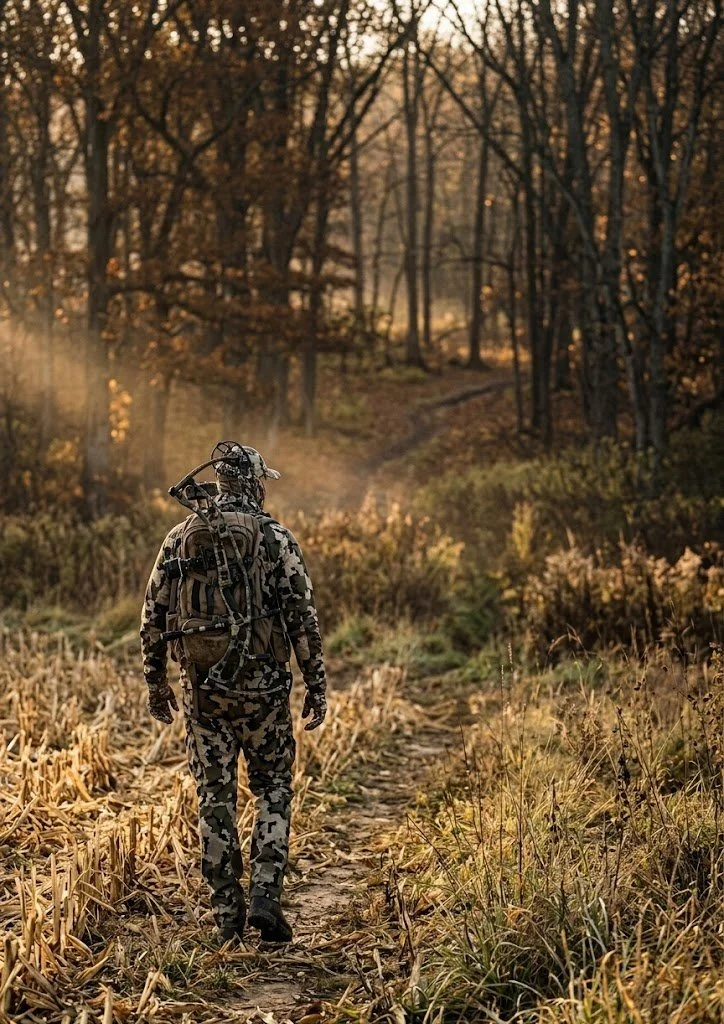
Ohio grows whitetails that compete with anything in the Midwest, and most of the country doesn't realize how much of that hunting happens on public ground. The state holds roughly 400,000 acres of public hunting land across wildlife areas, state forests, and the Wayne National Forest. The deer herd is managed with statewide antler restrictions and a firearms season limited to shotguns and straight-walled cartridges, which keeps the age structure healthier than in most neighboring states. Bucks in the 140 to 160 class come off public land in Ohio every year, and the archery season runs from late September into early February, one of the longest in the country.
Public land hunting in Ohio rewards the archer who's willing to learn the terrain. The southeast hill country, centered on the Wayne National Forest and surrounding wildlife areas, produces the state's best combination of mature bucks and low hunter density. The farm-country wildlife areas in the western and central regions have higher deer densities but face greater pressure. And the Lake Erie marshes give waterfowl hunters some of the best public access in the Great Lakes region.
If you're a DIY hunter looking for a state where you can buy a tag over the counter and hunt quality whitetails on accessible public ground through a season that stretches five months, Ohio belongs on your short list.
How Much Public Hunting Land Ohio Has
The breakdown of Ohio public hunting areas looks like this:
Wildlife Areas: More than 100 wildlife areas totaling roughly 200,000 acres, managed by the Ohio DNR Division of Wildlife
Wayne National Forest: 240,000 acres across three units in southeast Ohio, managed by the U.S. Forest Service
State Forests: Several state forests open to hunting, managed by the Ohio DNR Division of Forestry
Army Corps of Engineers lands: Tracts around reservoirs, including Deer Creek, Salt Fork, and Seneca
Metro parks and select nature preserves: Some allow controlled hunts through special permit programs
The Wayne National Forest is the centerpiece for DIY public land hunters. It's the only national forest in Ohio, and it sprawls across the unglaciated hill country of the southeast in three separate units: the Athens, Ironton, and Marietta. The terrain down there is steep, wooded, and very different from the flat farm country most people picture when they think about Ohio.
Licensing is straightforward. Ohio residents pay about $19 for a hunting license and $24 for a deer permit (one antlered, one antlerless per permit). Non-residents pay $149 for a hunting license and $40 for a deer permit. Tags are over the counter for both residents and non-residents. No draws, no preference points, no waiting. Turkey requires a separate permit ($28 for residents, $40 for non-residents). Waterfowl needs the federal duck stamp plus a state wetland habitat stamp.

Top 12 Ohio Public Hunting Areas for Deer and More
These are the properties that consistently produce for public land hunters across the state.
Wayne National Forest (Athens Unit)
Managing agency: U.S. Forest Service
Acreage: 74,000 (Athens Unit)
Region: Athens, Hocking, and Perry counties, southeast Ohio
Primary species: Whitetail, turkey, grouse, squirrel
Terrain: Steep wooded ridges, narrow hollows, oak-hickory forest, reclaimed mine land, small creek bottoms
Access: Open with a valid Ohio hunting license. Dispersed camping allowed. Extensive forest road and trail network.
Insider tip: The reclaimed mine land sections create open grassy areas surrounded by mature timber, and deer use these openings the way they use ag fields in farm country. Hunt the edges where reclaimed grassland meets standing hardwood, especially during early archery when deer are still on summer feed patterns. Most hunters walk the ridgetops and miss these openings entirely.
Wayne National Forest (Ironton Unit)
Managing agency: U.S. Forest Service
Acreage: 66,000
Region: Lawrence, Gallia, and Jackson counties
Primary species: Whitetail, turkey, squirrel
Terrain: Steep ridges, narrow bottoms, mature oak forest, laurel thickets on north-facing slopes
Access: Standard national forest access. Some interior roads are gated and seasonal.
Insider tip: The Ironton Unit is the least visited of the three Wayne units and holds bucks that see very little pressure outside of gun week. The terrain is steeper and the access is harder than the Athens Unit, which keeps the casual hunters out. Hunt the benches on the upper third of the ridges where deer bed with a view downhill.
Wayne National Forest (Marietta Unit)
Managing agency: U.S. Forest Service
Acreage: 98,000
Region: Washington, Noble, and Monroe counties
Primary species: Whitetail, turkey, grouse, squirrel
Terrain: Rolling hills, oak-hickory ridges, gas well roads, small stream valleys
Access: Good road network, including access roads to gas wells. Dispersed camping.
Insider tip: The gas well roads that crisscross the Marietta Unit give you access to interior terrain that would otherwise require long walks. Park at a locked gate and walk in on a gas road. The deer use these openings as travel corridors, and the two-track road edges hold browse that attracts feeding deer at first and last light.
Salt Fork Wildlife Area
Managing agency: Ohio DNR Division of Wildlife
Acreage: 19,000
Region: Guernsey County, east-central Ohio
Primary species: Whitetail, turkey, waterfowl, small game
Terrain: Rolling hills, mixed hardwood, pine plantations, Salt Fork Reservoir shoreline
Access: Multiple parking areas and road access. Adjacent to Salt Fork State Park.
Insider tip: Salt Fork is one of the most well-known Ohio WMA deer hunting destinations, and opening weekend pressure reflects it. The deer here are educated. Hunt weekdays during archery season and focus on the steep terrain between the reservoir fingers where the ground drops off sharply. Other hunters stick to the ridgetops and easy-walking pine plantations. The deer know that and bed in the steep stuff by day two of gun season.
Woodbury Wildlife Area
Managing agency: Ohio DNR Division of Wildlife
Acreage: 20,000
Region: Coshocton County
Primary species: Whitetail, turkey, grouse, waterfowl
Terrain: Steep wooded hollows, mature hardwood, creek bottoms, old strip mine reclamation areas
Access: Walk-in for most of the interior. Road access to perimeter parking areas.
Insider tip: Woodbury consistently produces mature bucks because the terrain discourages lazy hunting. The hollows are deep, and the climbs are real. Hunt the saddles connecting parallel ridges during the rut when bucks cruise between doe groups bedded on different drainages. A topo map makes these saddles obvious.
Shawnee State Forest
Managing agency: Ohio DNR Division of Forestry
Acreage: 63,000
Region: Scioto and Adams counties, far southern Ohio
Primary species: Whitetail, turkey, grouse, squirrel
Terrain: The most rugged terrain in Ohio. Deep ravines, sandstone cliffs, dense hardwood, rhododendron thickets
Access: Forest roads and hiking trails. Primitive camping available at designated sites.
Insider tip: Shawnee gets called "The Little Smokies" for a reason. The terrain is brutal, and the cover is thick. That combination produces deer that rarely see hunters past the first Saturday of gun season. If you can handle the hills and don't mind dragging a deer up a 400-foot elevation change, Shawnee rewards effort like few other public tracts in the Midwest.
Zaleski State Forest
Managing agency: Ohio DNR Division of Forestry
Acreage: 28,000
Region: Vinton County
Primary species: Whitetail, turkey, grouse, squirrel
Terrain: Deep hollows, oak-hickory ridges, hemlock ravines
Access: Backpack trail loops provide access to the remote interior. Horse camp and primitive camping are available.
Insider tip: The backpack trail system at Zaleski puts you deep into terrain that day-trippers from Columbus and Cincinnati never reach. Pack in for a two-day archery hunt during the first week of November and hunt the ridgetop saddles along the trail system. The deer in the interior of Zaleski see almost no hunting pressure during archery season.
Killdeer Plains Wildlife Area
Managing agency: Ohio DNR Division of Wildlife
Acreage: 8,600
Region: Wyandot County, northwest Ohio
Primary species: Waterfowl, pheasant (stocked), whitetail, dove
Terrain: Flat marshland, managed impoundments, agricultural fields, prairie grass
Access: Good road access. Designated parking areas. Waterfowl blinds on some units.
Insider tip: Killdeer Plains is the premier public land waterfowl spot in Ohio. The managed impoundments draw large numbers of ducks and geese during migration. Get there mid-week, and you'll have blinds to yourself that are standing room only on Saturday mornings. The pheasant stocking program also makes this one of the few places in Ohio where you can hunt roosters on public ground.
Grand River Wildlife Area
Managing agency: Ohio DNR Division of Wildlife
Acreage: 5,000
Region: Trumbull and Ashtabula counties, northeast Ohio
Primary species: Whitetail, turkey, waterfowl, pheasant (stocked), rabbit
Terrain: River bottomland, marshy wetlands, hardwood timber, brushy edges
Access: Multiple access points along the Grand River corridor.
Insider tip: The river bottom hardwood along the Grand River holds deer that feed on the ag fields bordering the wildlife area. Hunt the timber funnels between the river and the field edges during the rut. The narrow strips of cover squeeze buck movement into predictable travel lanes.
Crown City Wildlife Area
Managing agency: Ohio DNR Division of Wildlife
Acreage: ~22,000
Region: Gallia and Lawrence counties, far southeast Ohio
Primary species: Whitetail, turkey, grouse
Terrain: Reclaimed strip mine land, young hardwood regrowth, scrubby cover, steep grades
Access: Walk-in from designated parking. Interior is rugged and remote.
Insider tip: Crown City is reclaimed mine land that's growing back into excellent early successional habitat. The thick young cover holds deer and turkeys that rarely see pressure because the terrain is ugly and the walking is hard. Don't let the "reclaimed mine" label turn you away. The habitat quality here is better than a lot of mature timber tracts in the region.
Mosquito Creek Wildlife Area
Managing agency: Ohio DNR Division of Wildlife
Acreage: ~10,000
Region: Trumbull County, northeast Ohio
Primary species: Waterfowl, whitetail, turkey, rabbit, pheasant (stocked)
Terrain: Reservoir shoreline, managed wetlands, mixed hardwood and brush, ag field edges
Access: Road access around the reservoir. Boat access for waterfowl.
Insider tip: Mosquito Creek is primarily known for waterfowl, but the deer hunting on the wooded ridges above the reservoir gets overlooked. During archery season, the waterfowl hunters haven't shown up yet and the deer have the timber mostly to themselves. Hunt the transition between the hardwood ridges and the marshy reservoir edge where deer move to water in the evenings.
Tar Hollow State Forest
Managing agency: Ohio DNR Division of Forestry
Acreage: 16,000
Region: Ross and Vinton counties
Primary species: Whitetail, turkey, squirrel, grouse
Terrain: Deep hollows, sandstone outcrops, oak-hickory ridges, pine plantations
Access: Forest roads and hiking trails. Primitive camping at designated areas.
Insider tip: The pine plantations at Tar Hollow create thermal bedding cover that deer use heavily in late season when temperatures drop. Hunt the transition between the pine and the surrounding hardwood during the late muzzleloader and archery seasons. Deer bed in the warm pines and feed on the acorns in the adjacent hardwood.
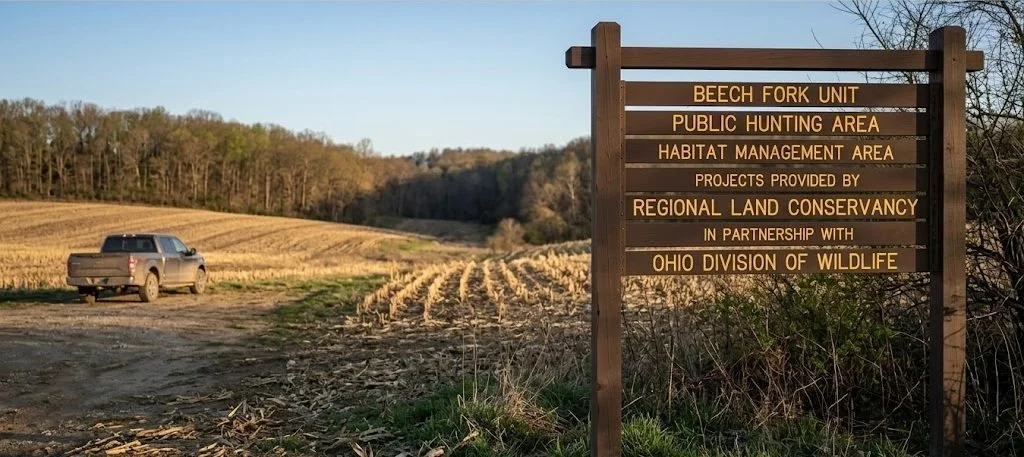
What You Can Hunt on Public Land in Ohio
Whitetail is the main draw, and Ohio delivers. The state consistently ranks in the top ten nationally for Boone and Crockett entries, and the statewide antler point restriction (at least four points on one side in most counties) pushes bucks past the 2.5-year-old mark before they become legal. That single regulation is why Ohio's public land buck quality outperforms neighboring states with more liberal harvest rules.
The state harvests between 180,000 and 200,000 deer in a typical season. The southeast hill country (Vinton, Athens, Hocking, Gallia, Lawrence counties) produces the best trophy potential on public ground, while the farm-country wildlife areas in the west and north hold higher deer densities with slightly younger age structure.
Turkey hunting is strong throughout the state, with a spring gobbler season running from late April through late May. Ohio's turkey population has expanded significantly over the past two decades, and nearly every wildlife area and state forest in the southeast holds huntable numbers. Fall turkey is also available in select counties.
Waterfowl hunters find the best public access on the Lake Erie marshes, the managed impoundments at Killdeer Plains and Mosquito Creek, and along the major river corridors. The western Lake Erie marshes are a migration corridor for ducks and geese that rivals anything in the Mississippi Flyway.
Small-game options include squirrel (common throughout the southeastern forests), rabbit, pheasant (stocked in select wildlife areas), grouse (limited but present in the hill country), and dove. Ohio also offers limited opportunities for bobcat (draw only) and river otter trapping.
Season Structure: Why Ohio Is an Archery State
Ohio's season structure is built around archery, which is the biggest advantage for DIY public-land hunters.
Archery: Late September through early February. That's roughly five months of bow season. The rut peaks in early to mid-November, which means you get the entire rut window during archery season with a fraction of the pressure that gun season brings.
Gun season: One week in late November/early December. Shotgun and straight-wall cartridge only (no centerfire rifles for deer). This short window concentrates pressure, and then it's over.
Muzzleloader: A short season in early January.
Youth gun: One weekend before the regular gun opener.
The gun-only restriction (no rifles) means the effective range of most deer hunters during firearms season is under 150 yards. That's important because it means deer don't get educated at long distances the way they do in rifle states. A mature buck that survives gun week in Ohio can still be killed at 25 yards with a bow in January because he hasn't been shot at from 300 yards across a field.
Turkey’s spring season runs from Saturday closest to the last Monday in April through late May. Tags come with a $28 resident or $40 non-resident permit. No draw required.
Ohio runs controlled hunts on select wildlife areas and metro parks for deer and other species. These require separate applications and are managed through the Ohio DNR website. The controlled hunts on metro park properties near Columbus, Cleveland, and Cincinnati often produce very good deer because the herds build up in suburban habitats with limited hunting pressure.
Access Tips for Public Land Hunting in Ohio
No check-in system in most areas. Ohio wildlife areas and state forests don't require hunter check-in. You park, walk in, and hunt. Harvest reporting is done online through the Ohio DNR Game Check system within 24 hours of the kill.
Vehicle access. In wildlife areas, vehicles are restricted to designated roads and parking lots. Don't drive on gated roads or field edges. The Wayne National Forest has a more open road network, but many interior roads are seasonal or gated.
Camping. Camping is not allowed on most Ohio wildlife areas. The Wayne National Forest allows dispersed camping (up to 14 days). State forests have designated primitive camping areas. If you're planning an out-of-state trip, book a nearby campground or plan around the Wayne for camping flexibility.
Blaze orange. Ohio requires a minimum of 400 square inches of blaze orange on the head, chest, and back during gun season. This also applies to anyone in the field during gun season, even if you're carrying a bow. Don't get caught without it.
Tree stand rules. You can use portable tree stands on public land in Ohio, but they must be removed at the end of each day in wildlife areas. The Wayne National Forest allows stands to remain up during the season,, but requires your name and address on each stand. Know the rules for the specific property you're hunting.
No baiting. Baiting for deer and turkey is illegal statewide. No corn piles, no mineral licks, no food-based attractants on public or private land.
Gear Considerations for Ohio
Ohio's terrain and climate vary enough between the hill country and the farm-country flatlands that your gear needs to flex. Here's what matters most.
Boots for steep terrain. The southeast hill country is the real deal. Steep ridges, loose shale, and slippery creek crossings demand boots with ankle support and aggressive tread. Danner Pronghorn handles the dry-ground ridge hunting well. For the creek bottoms and wet weather, the LaCrosse Alphaburly Pro with 800-gram insulation covers late-season cold and standing water.
A mobile stand setup. Ohio's daily-removal rule on wildlife areas means you're either carrying your stand in and out every sit or you're hunting saddle-style. Tethrd Phantom saddle platform is the go-to for mobile public land setups where you need to move light and fast. If you prefer a hang-on, keep it packable enough to carry in a stand bag with sticks every trip.
Mid-weight layering. Ohio archery runs from 70-degree September afternoons to single-digit January mornings. You need a system that covers all of it. First Lite’s Kiln Zip Off Long John serves as a foundation from October through January. Add the KUIU Axis Hybrid jacket as a quiet, weather-shedding outer layer for the November rut sits. For late-season cold, the First Lite Thermic insulated jacket handles long sits in the 10- to 20-degree range.
Good low-light optics. Ohio's thick hardwood timber means most shots happen under 30 yards, but a quality binocular helps you pick apart dark timber at first and last light when deer move. Vortex Diamondback HD 10x42 is the standard recommendation. Budget pick: Vortex Crossfire HD 10x42 at around $150.
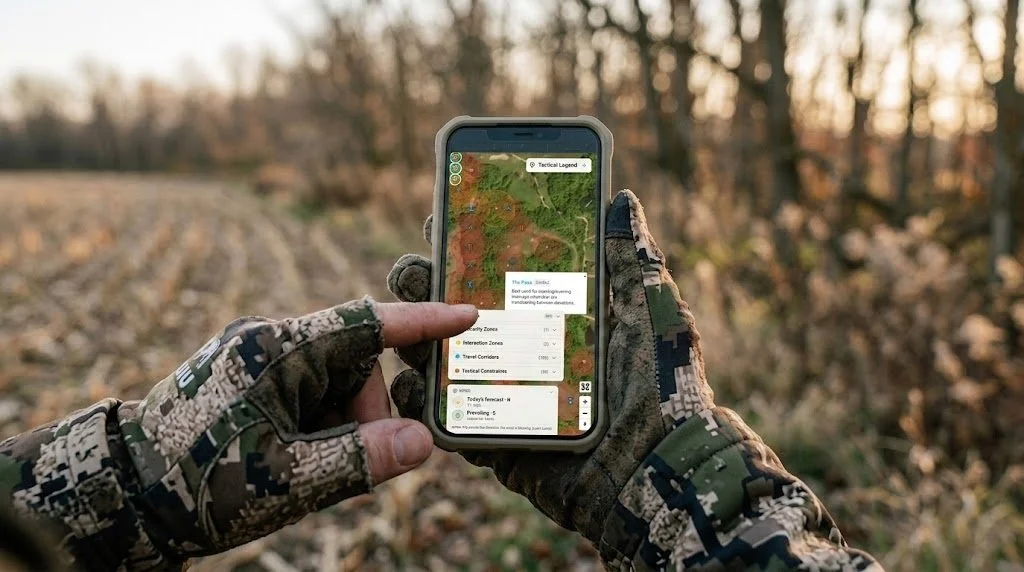
Mapping app. onX Hunt with the Ohio layer shows you wildlife area boundaries, Wayne National Forest tracts, and the private-public lines that are critical in southeast Ohio,, where the national forest is broken into scattered parcels mixed with private land. Knowing exactly where you stand keeps you legal in a region where boundary signage is inconsistent.
Finding Unpressured Spots on Public Land in Ohio
Ohio sells about 400,000 deer permits a year. That's a lot of hunters on 400,000 acres of public ground. Pressure management is the defining skill for public land hunting in Ohio.
The good news is that Ohio's pressure concentrates predictably. Gun week is the worst of it, a short, intense burst that pushes every casual hunter into the woods for seven days and then it's over. Archery season, by contrast, draws a fraction of the crowd spread over five months. If you hunt archery during the week, you're on functionally different ground than the weekend gun-season hunter.
In the Wayne National Forest, the scattered-parcel structure is your friend. The forest is broken into dozens of disconnected tracts mixed with private land. The big, easy-to-find tracts near the main ranger station and popular trailheads get the most pressure. The small, isolated parcels that require a mapping app to even locate, and a longer drive on township roads to access, hold deer that see very few hunters all season.
In wildlife management areas, push past the half-mile mark from any parking lot. Ohio's hill country is steep enough that most hunters don't walk far. Drop into a hollow, cross a creek, and climb to a bench or saddle on the far ridge. The deer you find there are on a different schedule than those within earshot of the parking area.
For property-level terrain analysis, Hunting Scout builds interactive scouting reports from real USGS and NOAA data for any public or private tract. Run a report on your target wildlife area before your trip and you'll find funnels and terrain features the topo alone won't show you. If you're evaluating a property adjacent to public ground for a lease or purchase, ScoutFlight Hunting Assessments gives you the aerial perspective and habitat analysis that walking the ground can take months to provide.
Frequently Asked Questions About Public Land Hunting in Ohio
How much public hunting land is in Ohio?
Ohio has roughly 400,000 acres of public hunting land, combining wildlife management areas (200,000 acres), the Wayne National Forest (240,000 acres), state forests, and Army Corps lands. The southeast hill country holds the largest concentrations of contiguous public ground.
Can you use a rifle for deer in Ohio?
No. Ohio does not allow centerfire rifles for deer hunting. The legal firearms are shotguns (slugs), straight-wall cartridges (.357 minimum through .50 caliber), muzzleloaders, bows, and crossbows. This regulation keeps the effective range short and is a major reason Ohio's buck age structure is so strong. Deer don't get shot at from 300 yards across a bean field.
Can non-residents hunt Ohio public land?
Yes. Non-residents buy a hunting license ($149) and a deer permit ($40) over the counter. No draws, no preference points, no non-resident quotas. You have access to the same wildlife areas, state forests, and national forests as residents. Ohio is one of the most non-resident-friendly states in the Midwest for public land deer hunting.
Can you camp in Ohio wildlife areas?
No. Camping is not allowed on most Ohio DNR wildlife areas. The Wayne National Forest allows dispersed camping up to 14 days. State forests have designated primitive camping areas. If you're planning a multi-day hunt in a wildlife management area, you'll need to find a nearby campground, state park campground, or private lodging.
Do you have to remove your tree stand daily on Ohio public land?
In wildlife management areas, yes. Portable stands must be removed at the end of each day. In the Wayne National Forest, stands can remain in place during the hunting season, but must have your name and address attached. On state forests, check the specific property rules. The daily-removal rule for wildlife areas makes saddle hunting and lightweight, mobile setups the standard approach for serious Ohio public-land hunters.
When is the best time to hunt public land deer in Ohio?
The first two weeks of November are during archery season. The rut is peaking, gun season hasn't started yet, and the midweek pressure is minimal. This is the window where mature bucks move during daylight on public ground in Ohio. If you can only hunt one week a year, pick the first week of November and hunt mornings and evenings from a mobile setup near a saddle or terrain funnel in the southeast hill country.
What are the best counties in Ohio for public land deer hunting?
For trophy potential: Vinton, Athens, Hocking, Gallia, and Lawrence counties in the southeast hill country, all of which have significant Wayne National Forest or state forest acreage. For higher deer density with more sightings: Coshocton (Woodbury, WA), Guernsey (Salt Fork, WA), and the farm-country wildlife areas in Wyandot, Crawford, and Marion counties. Your choice depends on whether you're optimizing for a mature buck or for more deer encounters.
Is Ohio WMA deer hunting worth it for out-of-state hunters?
Absolutely. Ohio's combination of over-the-counter non-resident tags, a five-month archery season, no-rifle regulations that protect buck age structure, and 400,000 acres of public hunting land makes it one of the best values in the Midwest for a DIY whitetail trip. The southeast hill country produces bucks that compete with those in Iowa and Kansas on accessible public ground, without a multi-year preference-point wait.
Want the full breakdown of every Ohio wildlife area and Wayne National Forest unit, plus the same for all 50 states? Subscribe to the LandsToHunt newsletter below and get our free state-by-state public land hunting guides delivered to your inbox.
