How to Set Up Trail Cameras on Public Land: Strategy, Placement, and the Best Cameras for the Job
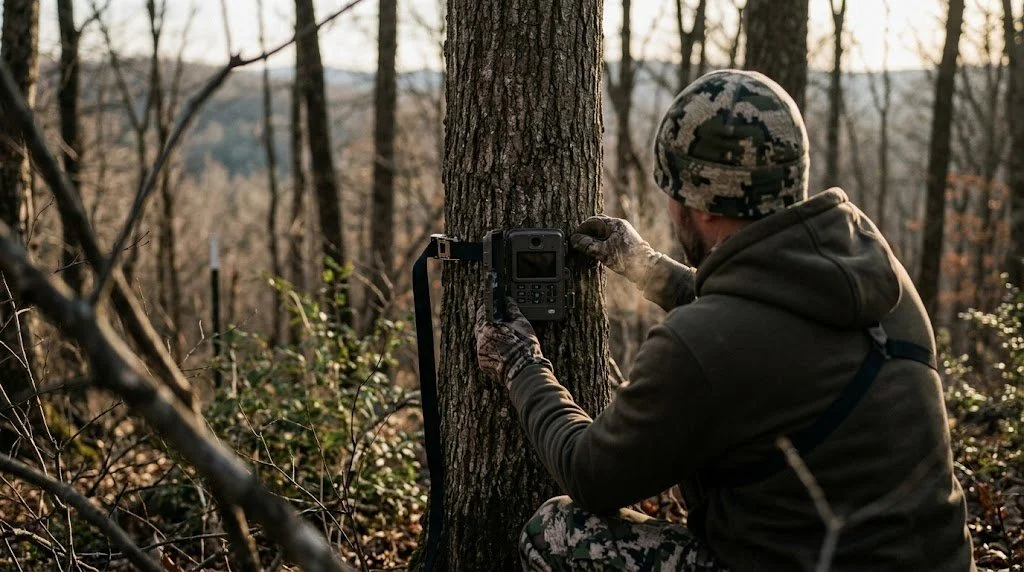
Running trail cameras on public land is a different game than running them on private ground. On your own property, you strap a camera to a tree in July and check it every two weeks until November. On public land, every camera you hang is a camera another hunter can find, steal, move, or follow straight to your best spots. The stakes are higher, the approach needs to be smarter, and the cameras you choose matter more than most hunters think.
When you get it right, trail cameras on public land give you data that nothing else can. Deer inventory on a piece of ground nobody else is monitoring. Movement timing at funnels you found through e-scouting. Confirmation that the saddle you pinned on a topo map in March is producing buck traffic in October. That information is worth the risk if you run cameras with a plan, rather than hanging them randomly and hoping for the best.
How to Scout Public Land.
Quick Picks: Best Trail Cameras for Public Land
Muddy Matrix 2.0 — Best overall cellular camera for public land. Reliable cell transmission, solid image quality, and you never have to walk in to check it. $80 range.
Stealth Cam Spectre 4K— Best image quality in a cellular camera. 4K photo and video capability for detailed inventory work. $130 range.
Spartan GoLive 3 — Best for real-time monitoring. Live-stream video and on-demand photo capture give you a live look at your setup. $200 range.
Moultrie Mobile Edge — Best budget cellular pick. Gets images to your phone at a price point that won't sting when one disappears. $60 range.
Tactacam Reveal X 2.0 — Fastest trigger speed in the cellular category. Strong image quality with dual-network connectivity. $130 range.
Bushnell CelluCORE 20 — Mid-range pick with good cell reliability and clean nighttime images. Solid all-around performer. $100 range.
One rule before we get into individual cameras: on public land, cellular is the only type worth running. Standard SD-card cameras require you to walk into check them, which means you're leaving scent, creating trails, and advertising your spots every time you pull a card. Cellular cameras send photos to your phone. You never have to visit the camera until you're ready to hunt. That single difference changes everything about how you scout public ground.
Why Cellular Cameras Win on Public Land
Every time you walk to a trail camera on public land, you're doing three things that hurt your hunt. You're leaving scent on the ground that deer can smell for days. You're wearing a path to a place you want to keep quiet about. And you're giving any other hunter who happens to be in the area a visual trail straight to your camera, which is hanging near the terrain feature you plan to hunt.
I learned this the hard way on a State Game Area in Michigan. I had a standard SD camera on a creek crossing that was producing consistent buck photos. Checked it every ten days. By mid-October, a boot trail ran from the two-track to the camera tree that anyone walking by would notice. I pulled photos of three different hunters standing in front of the camera. One of them set up a climbing stand 60 yards from my camera location. The spot was blown.
A cellular camera eliminates all of that. You hang it once, it sends you photos over the cell network, and you don't go back until you're ready to hunt. The camera tree isn't on your scent trail because you haven't walked to it since August. No boot path. No human sign. The only evidence it exists is the camera itself, and if you hang it right, most people walk past without looking up.
The Cameras: Individual Reviews
Muddy Matrix 2.0
The Muddy Matrix 2.0 is the camera I run the most on public land, and the reason is simple: it works, it sends photos reliably, and the price point doesn't make you sick when one goes missing. Image quality is good, not the best in the category, but clean enough to identify bucks and read body language. Night photos are solid with decent flash range. Cell transmission runs on the Muddy app, which has improved a lot over the past two seasons.
Honest limitation: The app can be slow to load on older phones, and the interface takes some getting used to compared to the cleaner apps from Tactacam or Spartan. If you're running 6 or more cameras across multiple properties, notification management gets clunky.
Best for: Hunters who want a reliable cellular camera at a fair price for public land where theft is a real risk. If you lose one, you're out $110, not $250.
Price: $80. Check the current price on Amazon.
Stealth Cam Spectre 4K
The Spectre 4K takes the best photos and video in the cellular trail camera category right now. If you're using cameras for serious buck inventory work and want to age deer from photos, the image detail matters. The 4K resolution makes a real difference when you're trying to tell the difference between a 3-year-old 130-class buck and a 4-year-old 140-class buck at 25 yards in low light.
Honest limitation: The price runs higher than the Muddy or the Moultrie, and the 4K images eat through your monthly data plan faster. If you're running it on a high-traffic trail with 200 triggers a day, your data costs add up.
Best for: Hunters doing detailed inventory on a specific property or monitoring a small number of high-value locations where image quality matters more than per-camera cost.
Price: $130. Check the current price on Amazon.
Spartan GoLive 3
The GoLive 3 does something no other camera on this list can do: live video on demand. Open the app, tap your camera, and get a live-stream view of what's happening right now. You can also trigger a photo manually from your phone. For public land, this means you can check whether another hunter is sitting near your spot before you walk in, or confirm deer are moving through a funnel before you commit to a 90-minute hike in the dark.
Honest limitation: It's the most expensive camera on this list by a wide margin, and the live-stream feature drains batteries fast. You'll want an external battery pack if you plan to use live view more than a few times a week. The monthly data plan is also higher than the competitors’.
Best for: Hunters who want real-time intelligence on a small number of critical locations and are willing to pay for the capability. Not the camera to run six across a big public tract.
Price: $200. Check the current price at Amazon.
Moultrie Mobile Edge
The Moultrie Mobile Edge is the camera you run when you want to cover a lot of ground with minimal financial risk. The image quality is adequate, not great. Night photos are grainier than those from the Muddy or Tactacam. But it sends photos to your phone reliably, the app works, and at $60 per camera you can hang three or four of them for the price of one Spartan.
Honest limitation: Detection range and trigger speed are both a step behind the higher-priced cameras. You'll miss fast-moving deer at the edges of the detection zone, and daytime images in heavy cover can be dark. It's a volume play, not a quality play.
Best for: Budget-conscious hunters who want to cover multiple locations on public land and accept that some cameras won't come home at the end of the season.
Price: $60. Check the current price at Amazon.
Tactacam Reveal X 2.0
The Reveal X 2.0 has the fastest trigger speed in the cellular category, which matters on tight trails where deer quickly cross the detection zone. Image quality is strong, the app is clean and easy to manage, and dual-network connectivity means the camera automatically selects the stronger cell signal from the two carriers at your location.
Honest limitation: Battery life is shorter than the Muddy Matrix in cold weather. If you're running this through a Michigan or Wisconsin winter, expect to swap batteries at least once during the season. The camera body is also slightly larger than competitors, making it harder to tuck into tight spots.
Best for: Hunters placing cameras on narrow trails, creek crossings, and pinch points where deer move through quickly, and a slow trigger means a photo of a tail.
Price: $130. Check the current price at Amazon.
Bushnell CelluCORE 20
The CelluCORE 20 is a solid mid-range cellular camera that doesn't stand out in any single category but performs well across the board. Good trigger speed, clean nighttime images, reliable cell transmission, and a reasonable price. It's the camera you recommend to someone who asks, “What should I get?" and you don't want to overthink it.
Honest limitation: The detection range drops off beyond 60 feet, so open-field coverage on food plots or wide trails is weaker than that of cameras with longer-range sensors. Works best on tighter setups.
Best for: A reliable all-around pick for hunters who want one or two cameras on public land without chasing the highest specs or the lowest price.
Price: $100. Check the current price at Amazon.
How to Set Up Trail Cameras on Public Land: Placement Strategy
The camera you buy matters less than where and how you hang it. Here's the placement strategy that works on pressured public ground.
Hang high, aim down
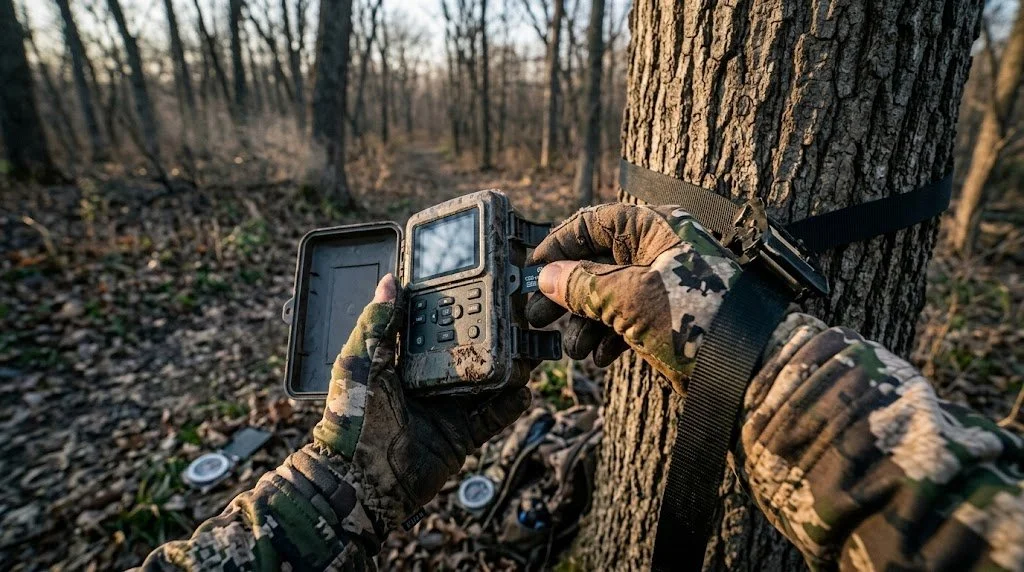
Mount the camera 7 to 8 feet up the tree, angled downward at about 30 degrees. Most hunters hang cameras at chest height because it's easy. Chest height is also eye height for every other hunter who walks by. A camera mounted high is harder to spot and harder to steal, yet still captures clear photos of deer passing below. You lose some detection range hanging high, so compensate by aiming the camera at a spot 15 to 20 feet from the tree where the trail crosses.
Face north
Aim the camera lens north whenever possible. A south-facing camera catches direct sunlight during the middle of the day, which blows out daytime photos and triggers false captures as shadows move across the sensor. North-facing cameras get even, indirect light all day and produce cleaner images from dawn to dusk.
Use terrain features, not random trails
Don't hang cameras on the first deer trail you cross. Hang them at terrain features where multiple trails converge: creek crossings, saddles, pinch points, and inside corners of field edges. These spots tell you more per photo than a random trail because they capture deer from a wider area funneling through one point. How to Read a Saddle Without an App.
Avoid high-traffic human areas
Never hang a camera within 200 yards of a parking area, gate, or established hiking trail on public land. Those are the zones where other hunters and hikers are most likely to spot your camera. Push past the half-mile mark from any road access before you start placing cameras. The same distance rule that makes stand locations better makes camera locations safer.
Use a cable lock, but don't rely on it
A Python cable lock keeps honest people honest and adds a few seconds of hassle for a thief. It won't stop someone with a pair of bolt cutters and bad intentions. Think of cable locks as a speed bump, not a wall. The real theft deterrent is placement. If nobody walks past the camera, nobody steals the camera.
Minimize your scent on the hang
Wear rubber boots and rubber gloves when you hang cameras. Handle the camera, the strap, and the tree with gloves on. Spray everything down with a scent elimination product before you leave. One visit to hang the camera in August is your only visit until you hunt the spot. Make that single trip as scent-free as possible.
When to Set Cameras and When to Pull Them
Hang cameras in late July or early August, before deer patterns shift into fall mode and before other hunters start scouting the same ground. This gives you four to six weeks of data before archery opens in most states. You're building a picture of what's using the area, when they're moving, and what direction they're coming from.
Pull cameras by mid-November in most states, or earlier if you're done hunting the spot. Every day a camera hangs on public land past the point where it's useful is a day it risks getting found. If a location isn't producing useful data by the third week of October, pull the camera and redeploy it somewhere else. Don't leave cameras out over winter unless you have a very good reason. Spring hikers, shed hunters, and turkey scouters will find them.
Budget Pick Spotlight: Moultrie Mobile Edge
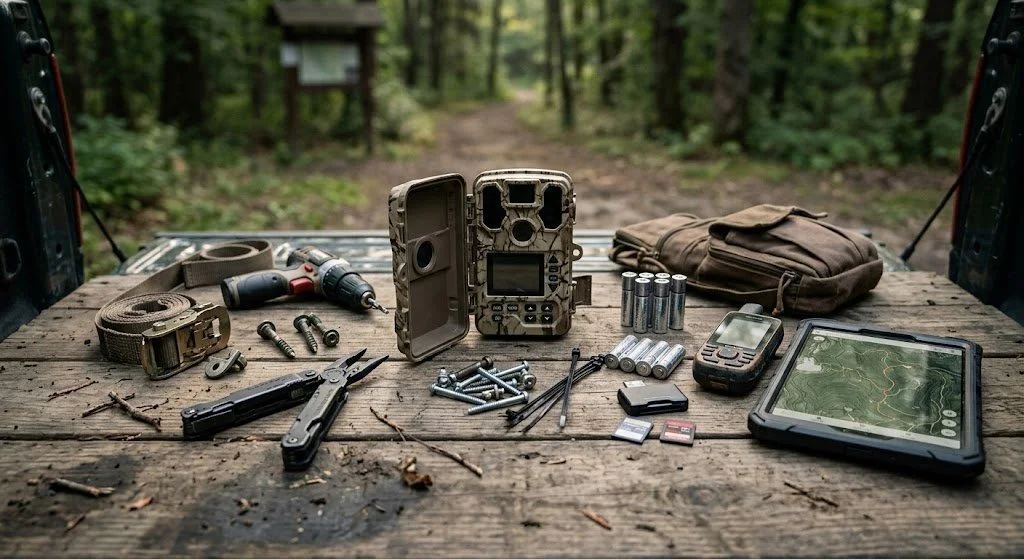
If you're getting started with cellular cameras on public land and you don't want to drop $600 to cover four spots, the Moultrie Mobile Edge is the right entry point. At $60 per camera, you can run four of them for the cost of one Spartan GoLive. The image quality is the weakest on this list, and the trigger speed is the slowest, but it sends photos to your phone, which is the only thing that truly matters on public land. Upgrade the cameras that survive the season. Replace the ones that don't without losing sleep over it.
What Most Hunters Get Wrong with Trail Cameras on Public Land
Checking cameras too often
If you're walking to a camera every week on public land, you're building a scent trail, wearing a boot path, and increasing the odds that another hunter finds your setup. The entire point of a cellular camera is that you don't have to go back. Trust the technology. Check the app, not the camera.
Hanging cameras near stands
Your trail camera and your stand should not be on the same tree or even within 50 yards of each other on public ground. If someone finds your camera, they've found your hunting spot. Put cameras on the funnels and terrain features that feed into your stand location, not on the stand itself. You're monitoring movement patterns, not decorating your tree.
Running too many cameras on one tract
Six cameras on a 2,000-acre State Game Lands tract means six opportunities for another hunter to find your setup and follow your scouting strategy to its conclusion. Two or three cameras at high-value terrain features give you 80 percent of the information at a fraction of the exposure. More cameras do not always mean more information on public land. It's more risk.
Frequently Asked Questions
Are trail cameras legal on public land?
In most states, yes. Some states (Arizona, Montana, Nevada, and a few others) have banned or restricted trail camera use on public land, especially during hunting season. A growing number of states are reviewing their policies. Always check your state's current regulations before hanging a camera on any public tract. The rules change, and ignorance isn't a defense.
How do I prevent trail cameras from being stolen on public land?
Mount cameras high (7 to 8 feet up), face them away from trails other hunters walk, use a cable lock, and place them more than a half mile from any parking area or established path. The best theft prevention is placement. If your camera hangs where other hunters don't walk, it doesn't get found. Cellular cameras add another layer because the first photo of the thief's face lands on your phone before they've finished cutting the lock.
How many trail cameras should I run on public land?
Two to three cellular cameras on a single tract is the sweet spot for most DIY public land hunters. Enough to cover your primary terrain features without overexposing your scouting strategy. If you're hunting multiple tracts, one to two cameras per tract keeps the operation manageable and the risk per location low.
When should I put out trail cameras on public land?
Late July to early August is the best window. Deer are in summer patterns, velvet bucks are hitting mineral sites and water sources, and you have four to six weeks of data building before archery season opens. Hanging cameras in September or October means you're walking through areas you should be hunting quietly, and you're already behind on pattern data.
Should I use SD card cameras or cellular cameras on public land?
Cellular. On private land where nobody else walks by, your cameras, SD card cameras, save you money on data plans. On public land, every trip to pull a card leaves scent, creates a boot trail, and risks another hunter spotting your camera. Cellular cameras send photos to your phone, eliminating all those problems. The monthly data cost is worth it.
Want the full breakdown of public land scouting strategies and camera placement for every state? Subscribe to the LandsToHunt newsletter below and get our free state-by-state public land hunting guides delivered to your inbox!
