Fall Food Plot Planting Window: What to Plant Now for a Hunting Season Payoff
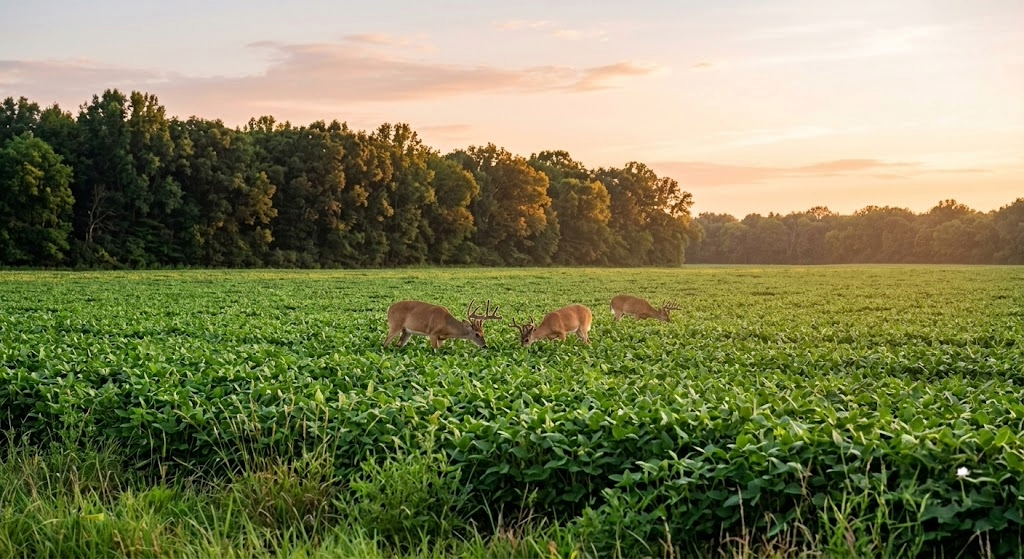
The fall food plot planting window opens in late July and runs through August in most of the whitetail range, and the plots you put in the ground over the next six weeks are the ones that draw deer during hunting season. Miss the window and your brassicas won't reach maturity before the first hard frost. Plant too early and your cereal grains get overgrazed and burned out before November. Timing is everything with fall plots, and right now is when the work happens.
Fall plots are the ones that matter most for hunting. A spring clover plot feeds deer through the summer, but a well-timed fall plot of brassicas, cereal grains, and winter peas becomes the primary food source exactly when deer are packing on calories for the rut and winter. That's the plot that pulls deer past your stand in October and November. Here's what to plant, when to plant it in your region, and how to build fall plots around the spots you plan to hunt.
Why the Late Summer Window Matters
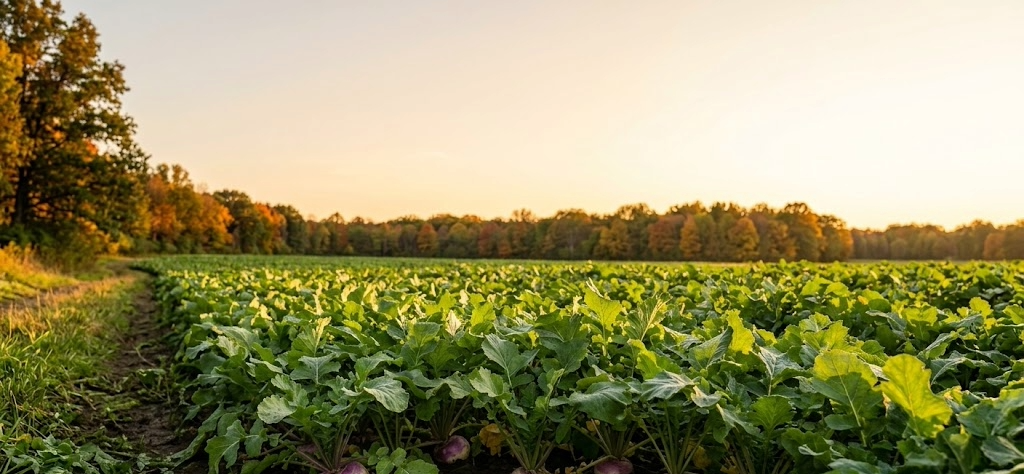
Fall food plot species need a specific amount of growing time before the first hard frost to reach peak attraction and nutritional value. Brassicas need 60 to 90 days. Cereal grains need 45 to 60 days to establish a strong stand. Winter peas need 60 to 70 days. Count backward from your average first frost date, and you get your planting window.
The mistake most hunters make is planting fall plots on the same schedule regardless of where they live. A Michigan hunter and an Alabama hunter should not plant brassicas on the same date. Frost hits Michigan in early October and Alabama in late November, which means the planting windows are six weeks apart. Plant by your frost date, not by the calendar page.
Regional Timing for Fall Food Plots
Here's the fall planting window by region, targeting the sweet spot where plants have enough time to mature but not so much time that cereal grains get overgrazed before season.
Northern zone (Michigan, Wisconsin, Minnesota, New York, New England, northern Plains): Late July through mid-August. The first frost hits in late September to early October, so brassicas need to go in the ground by early August to mature. Cereal grains can follow in mid to late August.
Transition zone (Ohio, Indiana, Pennsylvania, Iowa, Missouri, Kansas, mid-Atlantic): Early August through early September. First frost lands mid to late October. Brassicas in early to mid-August, cereal grains and winter peas through late August into early September.
Southern zone (Georgia, Alabama, Texas, the Carolinas, Tennessee, Kentucky, Deep South): Late August through late September. First frost comes in November or later. You have more flexibility, and cereal grains planted in September stay tender and attractive deep into the season because they don't get frost-pushed as early.
The single most important date to know is your average first frost. Look it up for your county, count back 60 to 90 days for brassicas, and that's your outside planting date. Earlier is better for brassicas (they need time to bulb up). Later is fine for cereal grains and peas.
What to Plant: The Fall Food Plot Menu
Brassicas (Turnips, Radishes, Rape, Kale)
Brassicas are the backbone of a hunting-season food plot. The plants produce leafy green tops that deer browse through fall, and tubers (turnips and radishes) that deer dig and eat after the first hard frost converts the plant starches to sugars. That frost conversion is why brassicas are a late-season magnet. A brassica plot that deer ignore in September becomes the hottest food source on the property in November, after the first freeze sweetens it.
Seeding rate: 5 to 8 pounds per acre for a pure brassica stand, broadcast. Brassica seed is tiny. Don't plant deeper than a quarter inch.
Timing: Plant early in your regional window. Brassicas need 60 to 90 days to bulb up, so they're the first thing you put in the ground.
Best for: Late-season hunting (late October through the end of season). The frost-sweetened tops and tubers pull deer hard once temperatures drop.
Cereal Grains (Oats, Wheat, Rye)
Cereal grains germinate fast, tolerate a wide range of soil conditions, and produce tender, palatable growth that deer hit from the moment it sprouts. They're the most forgiving fall-plot species and the best choice for hunters new to food plots or for working marginal ground.
Oats are the most attractive cereal grain and the most palatable to deer, but they winterkill in the northern zone once temperatures drop into the teens. In the north, oats are an early-season draw that dies off by December. In the south, oats persist longer and provide season-long attraction.
Winter wheat is more cold-hardy than oats and provides attraction through more of the season. It's the middle-ground cereal grain, more winter-hardy than oats, more palatable than rye.
Winter rye (cereal rye, not ryegrass) is the toughest and most cold-hardy of the three. It germinates in cold soil, survives brutal winters, and greens back up in early spring. Rye is the workhorse that establishes when nothing else will, though deer prefer oats and wheat when all three are available.
Seeding rate: 50 to 100 pounds per acre for cereal grains, broadcast or drilled. Plant at 1 to 1.5 inches deep. Cereal grain seed is large and requires deeper coverage than brassica seed.
Timing: Plant mid to late in your regional window. Cereal grains establish in 45 to 60 days and get overgrazed if planted too early, so they follow the brassicas.
Best for: Early to mid-season attraction (oats), season-long draw (wheat), and cold-weather persistence plus erosion control and soil building (rye).
Winter Peas (Austrian Winter Peas)
Winter peas are a high-protein legume that deer find very attractive, especially in the early and mid-season. The vining growth produces tender, palatable forage, and like all legumes, winter peas fix nitrogen into the soil, building fertility for whatever you plant next. The downside is that peas get overgrazed fast on properties with high deer density. A small pea plot on a property with a lot of deer can get mowed to the dirt before the season even opens.
Seeding rate: 30 to 50 pounds per acre for a pure stand, or 20 to 30 pounds per acre when blended with cereal grains and brassicas. Plant at 1 to 1.5 inches deep.
Timing: Plant with your cereal grains in the mid to late window. Peas need 60 to 70 days to produce meaningful forage.
Best for: Adding protein and nitrogen fixation to a fall blend. Best planted in combination with cereal grains that provide structure for the vining peas to climb.
Late-Season Blends
The most effective fall food plots aren't single species. They're blends that combine brassicas, cereal grains, and winter peas, so the plot attracts deer throughout the season. The cereal grains draw deer early, the peas add protein through mid-season, and the brassicas take over as the late-season magnet once frost sweetens them.
A proven DIY fall blend per acre: 4 pounds brassicas, 50 pounds cereal grain (wheat or rye), and 20 pounds winter peas. This gives you early, mid, and late-season attraction from a single planting. The key is planting the blend in the middle of your regional window so the cereal grains and peas establish while the brassicas still have enough time to bulb.
Commercial fall blends from Whitetail Institute (Winter-Greens, Tall Tine Tubers, No-Plow) and premium seed companies simplify this by pre-mixing the species and rates. For a soil-building fall option, Vitalize Seed offers season-specific blends focused on soil biology and attraction.
Soil Prep: The Work That Started in Summer
The best fall plots start with soil prep done weeks before you plant. If you're reading this in late July with a plot to put in, here's the compressed timeline.
Soil test first. If you haven't tested the soil, do it now. Fall plots need a pH of 6.0 to 6.8 for brassicas and cereal grains to perform. If your pH is low, apply lime, though understand that lime takes months to fully adjust pH. Applying it now helps next year more than this year, but it still helps.
Kill the existing vegetation. Spray the plot with glyphosate 2 to 3 weeks before planting to kill grass and weeds. A clean seedbed is the difference between a thick fall plot and a weedy failure. If you planted a spring plot (clover, Nitro Boost, a warm-season blend) in this location, you can terminate it and plant your fall plot into the residue, or leave the clover and overseed cereal grains into it.
Work the seedbed. Till or disc to create a clean, firm seedbed. For brassicas and small seed, the seedbed should be firm enough that you leave a shallow boot print, not a deep one. For cereal grains, a rougher seedbed is acceptable because the larger seed gets covered deeper.
Fertilize based on your soil test. Brassicas are heavy nitrogen feeders. A fall plot with brassicas benefits from 200 to 300 pounds per acre of a balanced fertilizer like 19-19-19, or a nitrogen application matched to your soil test. Cereal grains also respond well to nitrogen. Winter peas fix their own, so don't over-apply nitrogen if peas are a major component. Top-dressing with Vitalize CoreMicros adds the trace elements and biological support that drive root development and nutrient uptake, broadcast over the seed at 20 to 25 pounds per acre.
The Planting Process
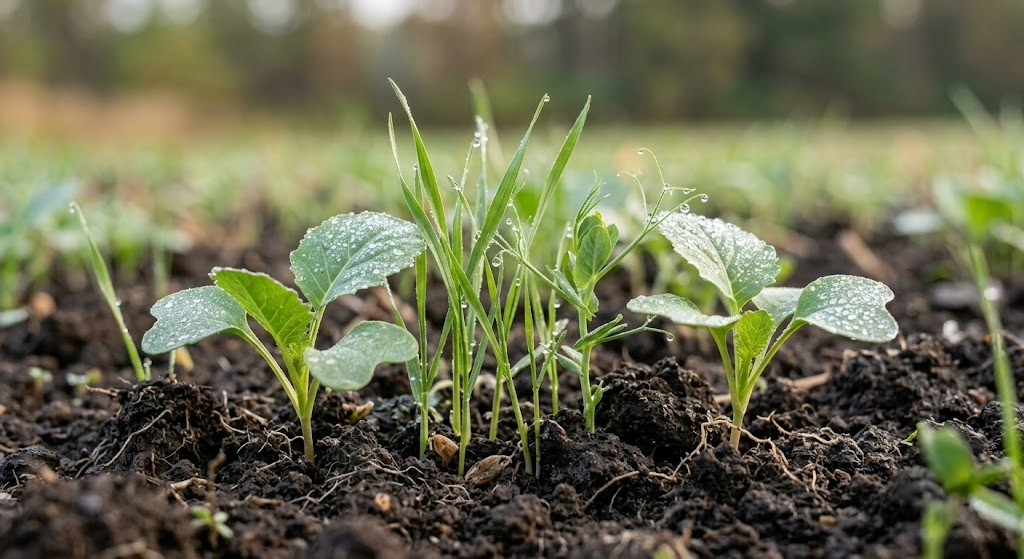
Time it to rain. Fall plots need moisture to germinate. Watch the forecast and plant into a window with rain expected within a few days. Broadcasting seed into dust and hoping for rain is a gamble. Late summer can be dry, so patience for a rain event pays off.
Broadcast or drill by seed size. Plant your brassicas and small seed shallow (quarter inch). Plant your cereal grains and peas deeper (1 to 1.5 inches). If you're planting a blend, a common approach is to broadcast the large seed first, lightly disc or drag it in, then broadcast the small brassica seed on top and cultipack.
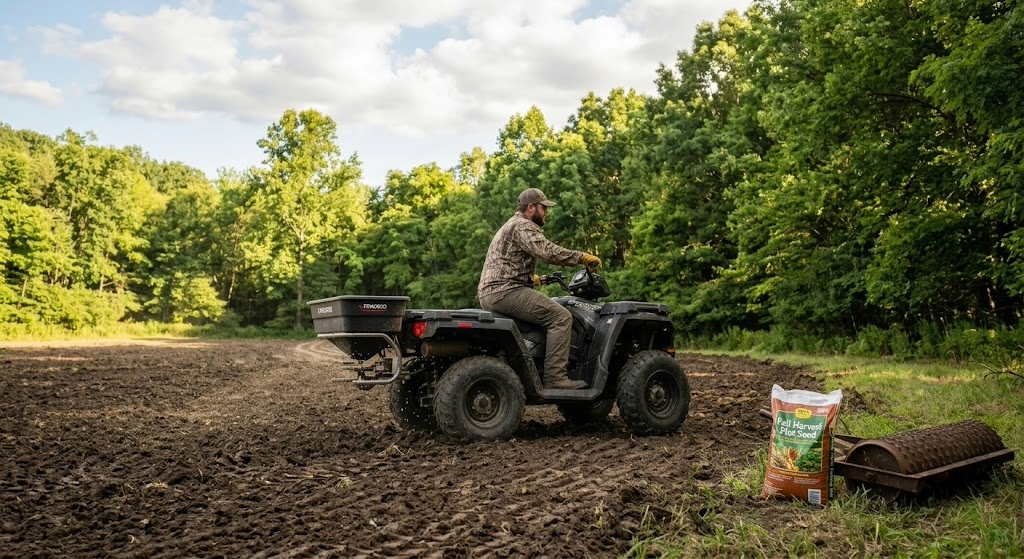
Cultipack after seeding. Seed-to-soil contact is the single biggest factor in germination. Cultipack or drive over the plot with an ATV to press the seed firmly into the soil. This matters most for the small brassica seed.
Don't bury the small seed. The most common fall plot failure is burying brassica seed too deep. If you till, broadcast, and then till again, you've buried your brassicas an inch deep, and they won't germinate. Broadcast small seed on a firm, prepared surface and cultipack. Don't till it in.
Planning Fall Plots Around Your Stand Locations
This is where food plot strategy separates from food plot farming. A fall plot isn't just about growing food. It's about growing food in a location that creates a huntable setup. The plot placement, shape, and relationship to bedding and access determine whether you kill deer over it or just feed them at night.
Place the plot for daylight movement
Mature bucks arrive at large open food sources after dark. If your goal is to kill a mature buck over a fall plot, the plot needs to sit between bedding cover and the deer's ultimate destination, close enough to bedding that deer reach it during the last hour of light. A small kill plot (quarter to half acre) tucked near bedding produces daylight movement. A large open field plot (2-plus acres) feeds deer at night. Build both if you can: a large plot for overall nutrition and herd attraction, and a small kill plot near bedding for the actual hunt.
Shape the plot to create a setup
Long, narrow plots (hourglass, kidney, or L-shapes) concentrate deer movement into predictable entry points and create pinch points you can hunt. A square or round plot lets deer enter from any side, which limits your setup options. Shape the plot so deer enter from the bedding side at predictable spots, and position your stand downwind of those entry points.
Plan the stand before you plant
Pick your stand tree before you plant the plot. Know which wind you'll hunt, where deer will enter from bedding, and where you'll approach from without crossing the deer's path or the plot itself. Then design the plot to work with that setup. Too many hunters plant a plot and then try to figure out where to hunt it. Reverse the order. The stand location and the wind come first, then the plot shape and placement serve the hunt.
Protect your access
You need to reach your stand without walking across the plot or through the bedding that feeds it. Plan a screened entry route, using terrain, a tree line, a standing corn strip, or a switchgrass screen, so you can slip into your stand without alerting every deer in the area. A perfect plot with a bad entry route is a plot deer only use at night. For a screening solution that also provides bedding, a switchgrass screen planted along your access route serves double duty.
For property-level planning of where fall plots, bedding, and stand locations should line up, Hunting Scout's Habitat Strategist reads your drawn property and prescribes plot placement, screening, and access routes anchored to your specific terrain. It tells you where a fall kill plot closes the gap between bedding and food, and scores your access paths by how exposed they are to the deer you're hunting.
Common Fall Plot Mistakes
Planting too late. Brassicas planted in September in the northern zone won't bulb before frost. Know your frost date and plant brassicas early in your window.
Burying small seed. Brassica and small seed planted deeper than a quarter inch won't germinate. Broadcast on a firm seedbed and cultipack. Don't till it in.
Skipping the soil test. Brassicas and cereal grains need a pH of 6.0 to 6.8. Low pH produces a thin, disappointing stand no matter how good your seed and timing are.
Planting a big open plot and expecting daylight bucks. Large open plots feed deer at night. Add a small kill plot near bedding if you want daylight movement.
Ignoring access. A plot you can't reach without spooking deer is a plot deer only use after dark. Plan your entry route before you plant.
Frequently Asked Questions
When should I plant fall food plots?
Plant fall food plots 60 to 90 days before your average first frost. In the northern zone (Michigan, Wisconsin, Minnesota), that means late July through mid-August. In the transition zone (Ohio, Iowa, Pennsylvania, Kansas), early August through early September. In the southern zone (Georgia, Alabama, Texas), late August through late September. Plant brassicas early in your window and cereal grains and peas mid to late.
What is the best fall food plot for deer?
A blend of brassicas, cereal grains, and winter peas is the most effective fall plot because it attracts deer across the entire season. Cereal grains (oats, wheat) draw deer early, winter peas add mid-season protein, and brassicas become the late-season magnet after frost sweetens them. A proven DIY blend per acre is 4 pounds brassicas, 50 pounds cereal grain, and 20 pounds winter peas.
How late can I plant a fall food plot?
The latest reliable planting date is roughly 45 days before your first hard frost for cereal grains, which establish fastest. Brassicas need more time (60 to 90 days), so they have an earlier cutoff. If you've missed the brassica window, plant a pure cereal grain plot (oats in the south, rye in the north) which will still establish and provide attraction. Winter rye is the most forgiving late-planting option because it germinates in cold soil.
Do I need to till to plant a fall food plot?
No. Cereal grains and brassicas can be planted with a no-till approach: spray the existing vegetation with glyphosate, broadcast the seed into the dying vegetation, and let rain and the seed's natural establishment do the work. This "throw and mow" or "spray and broadcast" method works well for cereal grains and brassicas, though a tilled seedbed with cultipacking produces more consistent results. If you don't have equipment, no-till fall plots are a legitimate option.
How big should a fall food plot be?
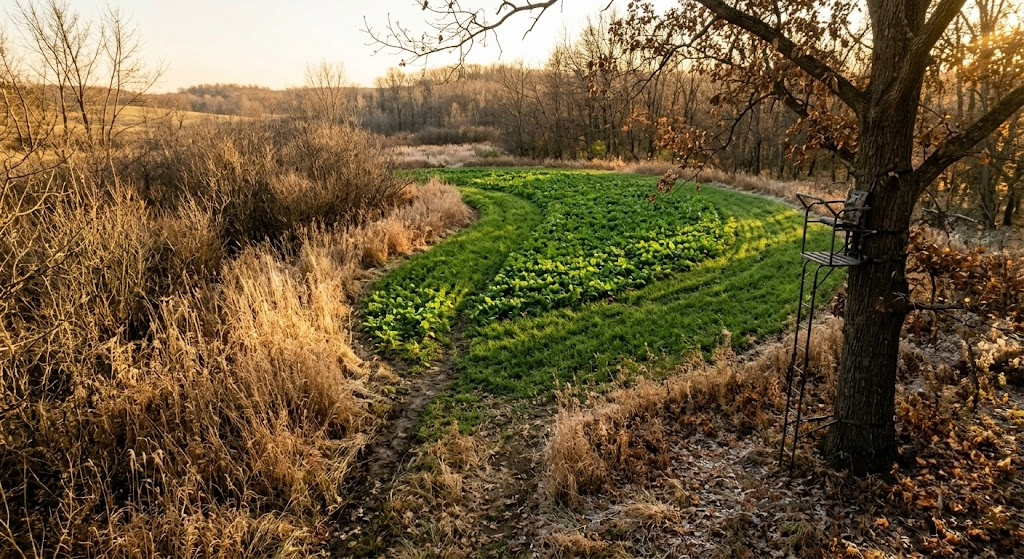
It depends on your goal. For overall herd nutrition and attraction, 1 to 3 acres or larger works. For a huntable kill plot that produces daylight buck movement, a quarter to half acre tucked near bedding is ideal. The small plot gets browsed heavily but pulls deer into range during shooting light because it's close to security cover. Most serious food plot programs run both: a large plot for nutrition and a small kill plot for the hunt.
Want more hands-on food plot guides and seasonal planting windows? Subscribe to the LandsToHunt newsletter and get planting calendars, product recommendations, and habitat strategy delivered to your inbox.
This article recommends specific seed and habitat products. Some links are affiliate links, meaning LandsToHunt.com earns a small commission if you buy through them, at no extra cost to you.
