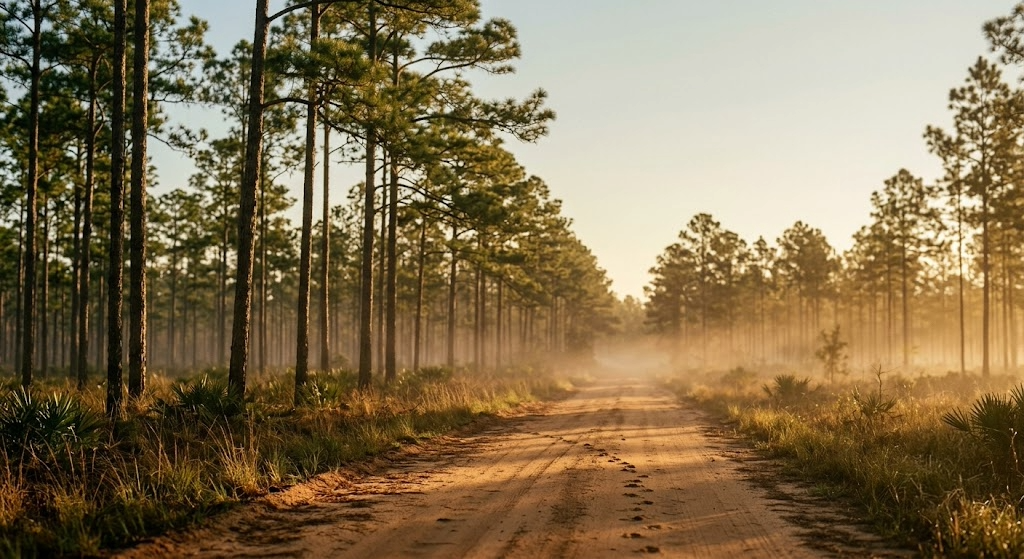
Alabama doesn't show up on most out-of-state hunters' radar, and the hunters who know the state like it that way. The state holds roughly 1.2 million acres of public hunting land across more than 30 Wildlife Management Areas and four national forests. The deer season stretches from mid-October archery through late January firearms, one of the longest in the country. The turkey hunting is elite. Feral hogs are year-round on most WMAs with no bag limit. And the Black Belt region of west-central Alabama grows whitetails with the body mass and antler genetics to compete with anything in the Midwest.
Public land hunting in Alabama rewards hunters who learn the state's WMA system and understand the regional differences between the Appalachian foothills in the north, the Piedmont and Black Belt in the center, and the coastal plain and river delta in the south. Each region hunts differently, holds different deer densities, and demands different gear and tactics. But across all of them, the access is strong, the tags are available, and the competition on public ground is lighter than most hunters expect.
If you're looking for a southern state where you can buy a tag over the counter, hunt whitetails from October through January, chase spring gobblers on public ground that rivals the best in the Southeast, and stick a hog any month of the year while you're at it, Alabama deserves a serious look.
How Much Public Hunting Land Does Alabama Have
The access breaks down like this:
Wildlife Management Areas (WMAs): More than 30 WMAs totaling roughly 700,000 acres, managed by the Alabama Department of Conservation and Natural Resources (ADCNR), Division of Wildlife and Freshwater Fisheries
Talladega National Forest: 392,000 acres in two divisions (Shoal Creek in the northeast and Oakmulgee in the west-central), managed by the U.S. Forest Service
William B. Bankhead National Forest: 181,000 acres in the northwest, managed by the U.S. Forest Service
Conecuh National Forest: 84,000 acres in the far south, managed by the U.S. Forest Service
Tuskegee National Forest: 11,000 acres in east-central Alabama
Army Corps of Engineers lands: Scattered tracts around reservoirs, including Wheeler, Guntersville, and Walter F. George
National Wildlife Refuges: Wheeler NWR, Bon Secour NWR, and others with seasonal hunting
Special Opportunity Areas: Select ADCNR-managed tracts with controlled hunts, often on prime habitat
The Talladega National Forest is the largest single block of public hunting ground in the state, and most out-of-state hunters don't realize it exists. Between the two Talladega divisions, Bankhead and Conecuh, Alabama holds about 670,000 acres of national forest land open to hunting. Add the WMA system and the Corps lands, and you're past a million acres without counting any state-managed timber or Special Opportunity Areas.
For licensing, Alabama residents pay about $24 for an all-game hunting license. Non-residents pay $311 for an all-game license or $51 for a 7-day trip license that covers small game and deer (an additional $51 for turkey). A WMA license is required for hunting any WMA and runs $16 for residents, $51 for non-residents. The WMA license is mandatory. Don't show up without it. National forest hunting requires only the standard hunting license; no separate WMA stamp is required.
Top 12 Alabama WMA Hunting Areas and National Forests
Talladega National Forest (Oakmulgee Division)
Managing agency: U.S. Forest Service
Acreage: 186,000
Region: Bibb, Hale, Perry, and Tuscaloosa counties, west-central Alabama Black Belt edge
Primary species: Whitetail, turkey, feral hogs, squirrel, dove
Terrain: Rolling hills, mixed longleaf pine and hardwood, creek bottom hardwood, some Black Belt prairie edges
Access: Standard Alabama hunting license (no WMA license required on national forest). Extensive forest road network. Dispersed camping allowed.
Insider tip: The Oakmulgee Division sits right on the edge of the Black Belt, and the deer here carry better antler genetics than most Alabama public land because of the rich soil and the agricultural influence from the surrounding farmland. Focus your scouting on the hardwood creek bottoms that feed into the Cahaba River drainage. The creek crossings and confluences are natural terrain funnels, and the mature hardwood along the creek corridors produces white oak acorns that pull deer off the surrounding pine for fall feeding.
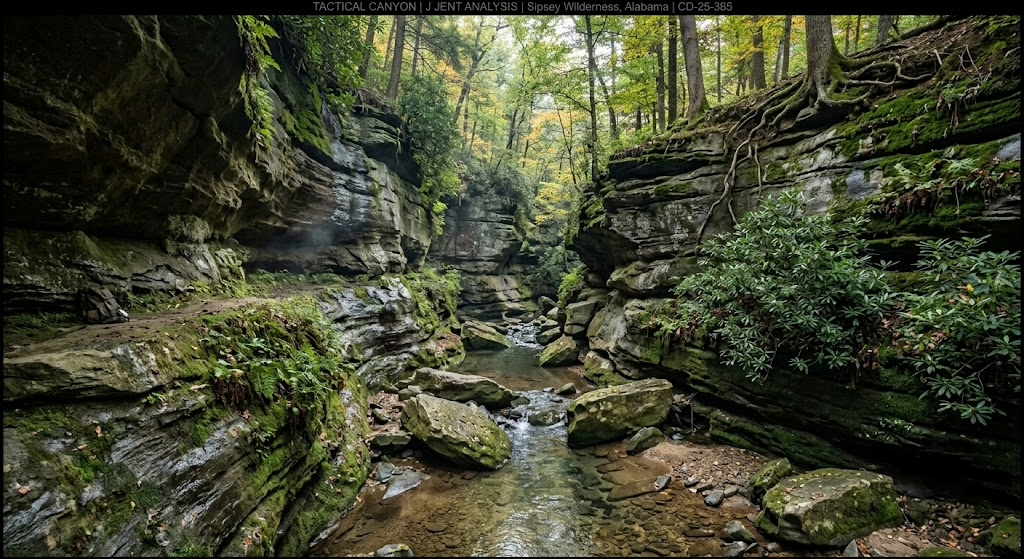
William B. Bankhead National Forest
Managing agency: U.S. Forest Service
Acreage: 181,000
Region: Winston, Lawrence, and Franklin counties, northwest Alabama
Primary species: Whitetail, turkey, feral hogs, squirrel, grouse (limited)
Terrain: Deep sandstone canyons, hardwood-covered bluffs, Sipsey Wilderness, mixed pine-hardwood uplands
Access: Standard hunting license. The Sipsey Wilderness (~25,000 acres) is walk-in only with no motorized access. Dispersed camping throughout.
Insider tip: The Sipsey Wilderness inside Bankhead is one of the most underrated public land deer hunting experiences in the Southeast. The sandstone canyons are steep and the access is tough, which means pressure drops off within the first half mile of any trailhead. Deer bed on the benches above the canyon walls and travel the rim trails between feeding areas. A Tethrd Phantom saddle platform lets you set up on the small-diameter hardwoods along these rim trails without pre-hanging anything.
Barbour WMA
Managing agency: ADCNR
Acreage: 28,000
Region: Barbour and Bullock counties, southeast Alabama
Primary species: Whitetail, turkey, dove, quail, feral hogs
Terrain: Coastal plain longleaf pine, mixed hardwood bottoms, managed dove fields, agricultural borders
Access: WMA license required. Good road network with multiple parking areas.
Insider tip: Barbour is one of the best public land turkey properties in Alabama. The managed longleaf pine with open understory creates ideal strutting habitat, and the birds here gobble well into mid-morning on days when other properties have gone quiet. For deer, focus on the hardwood bottom corridors between the pine uplands. The transition from pine to hardwood concentrates deer movement into narrow lanes you can set up on.
Lauderdale WMA
Managing agency: ADCNR
Acreage: 27,000
Region: Lauderdale County, far northwest Alabama along the Tennessee River
Primary species: Whitetail, turkey, waterfowl, dove, small game
Terrain: Tennessee River bottomland, hardwood flats, managed impoundments, agricultural fields, cottonwood and sycamore bottoms
Access: WMA license required. Boat access for some areas. Road access to most parking areas.
Insider tip: Lauderdale WMA's river bottom hardwood holds excellent deer that feed on the surrounding ag fields. The bottleneck points where timber corridors narrow between open fields and the river are the high-percentage setups during the rut. The waterfowl hunting on the managed impoundments draws most of the attention, which means the deer hunters who push into the timber blocks between the wetland units have the woods to themselves. Glass the field edges at last light with Vortex Diamondback HD 10x42 binoculars to pattern deer movement before committing to a stand location.
Skyline WMA
Managing agency: ADCNR
Acreage: 33,000
Region: Jackson County, far northeast Alabama on the Cumberland Plateau
Primary species: Whitetail, turkey, bear (limited), squirrel
Terrain: Cumberland Plateau sandstone bluffs, deep hollows, mature hardwood, laurel thickets, the most Appalachian-feeling terrain in Alabama
Access: WMA license required. Rugged interior with gated roads. Walk-in to the best hunting.
Insider tip: Skyline is the closest thing Alabama has to Pennsylvania's big-woods hunting experience. The terrain is steep and the hollows are deep, which keeps the casual hunters on the plateau top. Drop off the rim into the hollow and hunt the benches below the bluff lines. Deer bed in the laurel thickets on the north-facing slopes and travel the benches between bedding and the oak flats on the ridgetop. Alabama has a growing black bear population in this part of the state, and Skyline is in the bear zone. You won't get a bear tag easily, but seeing sign keeps the big-woods experience interesting.
Conecuh National Forest
Managing agency: U.S. Forest Service
Acreage: 84,000
Region: Covington and Escambia counties, far south Alabama near the Florida line
Primary species: Whitetail, turkey, feral hogs, quail (limited wild birds)
Terrain: Longleaf pine flatwoods, pitcher plant bogs, hardwood creek bottoms, sandy soils
Access: Standard hunting license. Good forest road network. Dispersed camping allowed.
Insider tip: Conecuh's longleaf pine ecosystem is managed with prescribed fire, which creates the open, park-like understory that deer, turkeys, and quail all thrive in. The best deer hunting is along the hardwood creek bottoms that wind through the pine. These creek corridors are the only dense cover in an otherwise open forest, and deer concentrate along them during daylight for security. During the rut, bucks cruise from one creek corridor to the next checking doe groups. Set up at a creek crossing between two hardwood drains.
Lowndes WMA
Managing agency: ADCNR
Acreage: 17,000
Region: Lowndes County, central Alabama Black Belt
Primary species: Whitetail, turkey, dove, quail
Terrain: Black Belt prairie, managed fields, mixed hardwood and pine, limestone-based soils
Access: WMA license required. Special Opportunity Area hunts for quota-managed deer.
Insider tip: Lowndes WMA sits on Black Belt soils, which are the richest in the state for growing big-bodied, big-antlered whitetails. The calcium-rich limestone soils translate directly to antler mass. Drawn hunts here are worth applying for every year. The odds are better than most hunters think, and the quality of the deer rivals that of private-land hunting in the region. If you don't draw a quota hunt, the non-quota archery periods still put you on Black Belt deer.
Mobile-Tensaw Delta
Managing agency: ADCNR (multiple WMAs within the delta)
Acreage: 50,000+ across multiple managed areas including Upper Delta, Lower Delta, and Tensaw River
Region: Baldwin and Mobile counties, coastal southwest Alabama
Primary species: Whitetail, waterfowl, feral hogs, alligator (drawn)
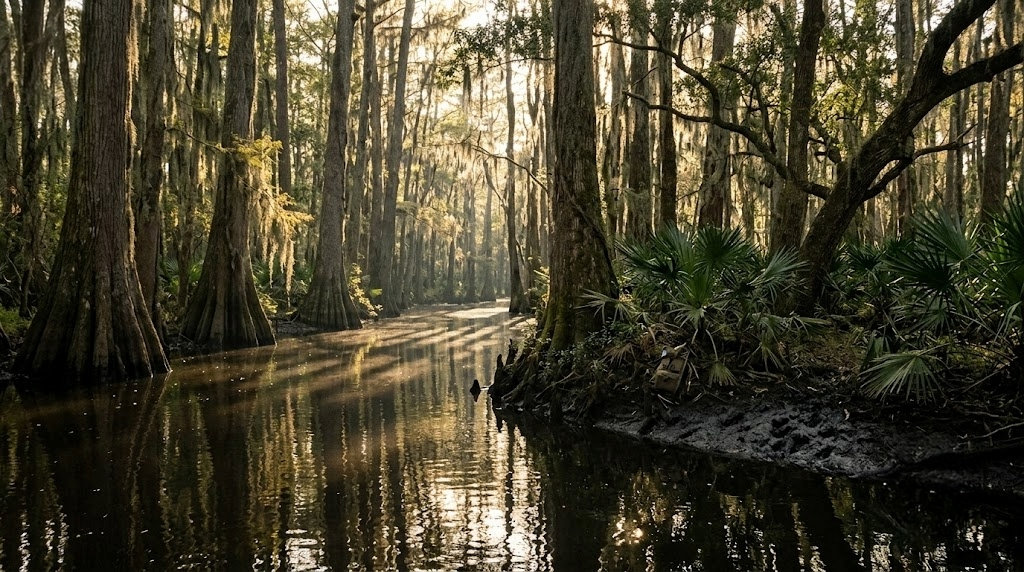
Terrain: River delta swamp, cypress-tupelo bottomland, tidal marsh, hardwood hammocks, coastal flatwoods
Access: WMA license required. Boat access essential for the best hunting. Some road access on the margins.
Insider tip: The Mobile-Tensaw Delta is the second-largest river delta in the country, and the deer hunting inside the swamp is unlike anything else in Alabama. Bucks bed on high-ground hardwood hammocks surrounded by standing water, and the only way to reach them is by boat. Bring a shallow-draft boat or kayak, find the hammocks on satellite imagery, and hunt the transitions where dry ground meets the swamp. Deer densities are moderate, but the bucks see very few hunters and grow old. Hog hunting here is excellent year-round, and alligator tags are available through an annual draw.
Choccolocco WMA
Managing agency: ADCNR (on Fort McClellan former military land)
Acreage:19,000
Region: Calhoun County, northeast Alabama Piedmont
Primary species: Whitetail, turkey, feral hogs
Terrain: Rolling Piedmont hills, mixed pine-hardwood, old military roads and clearings, creek bottoms
Access: WMA license required. Special regulations apply (former military installation). Check for unexploded ordnance warnings and stay on designated trails in restricted zones.
Insider tip: The former military clearings and road network at Choccolocco create edge habitat that concentrates deer movement. The old clearings function like food plots, growing native browse that draws deer from the surrounding timber. Hunt the edges where these clearings meet the hardwood blocks, especially during the early archery window when deer are still on predictable feeding patterns. The ordnance warnings keep timid hunters away, which keeps the pressure lower than it should be for a WMA this close to Anniston and Jacksonville.
Coosa WMA
Managing agency: ADCNR
Acreage: 26,000
Region: Coosa County, central Alabama Piedmont
Primary species: Whitetail, turkey, feral hogs, small game
Terrain: Piedmont mixed pine-hardwood, creek bottoms, rolling hills with moderate slopes
Access: WMA license required. Good road access with multiple parking areas.
Insider tip: Coosa WMA sits in one of the better deer-density zones in the Alabama Piedmont, and the terrain is gentle enough that it draws more pressure than the steep northern WMAs. Beat the pressure by hunting midweek during archery and pushing past the first mile from any parking lot. The creek bottoms that run between the pine ridges are the money features here. Where two creeks merge, the terrain pinches deer movement into a funnel that concentrates both travel and sign.
Mud Creek WMA
Managing agency: ADCNR
Acreage: 7,000
Region: Lawrence County, northwest Alabama
Primary species: Whitetail, turkey, squirrel
Terrain: Tennessee Valley hardwood bottoms, limestone cedar glades, crop field edges
Access: WMA license required. Road access to parking areas.
Insider tip: Mud Creek is small enough that most hunters scan past it, and that's your advantage. The Tennessee Valley's agricultural influence supports strong deer nutrition, and the limestone soils support good antler growth in the region. The cedar glade openings scattered through the hardwood create natural browse areas that function like small food plots. Hunt the edges where cedar glade meets hardwood, especially when acorns are dropping.
Talladega National Forest (Shoal Creek Division)
Managing agency: U.S. Forest Service
Acreage: 206,000
Region: Calhoun, Cleburne, Clay, and Talladega counties, northeast Alabama Piedmont/Appalachian transition
Primary species: Whitetail, turkey, feral hogs, squirrel, bear (limited zone)
Terrain: Appalachian foothills, Cheaha Mountain (the highest point in Alabama), mixed hardwood with some pine, rocky ridges, mountain streams
Access: Standard hunting license. Forest road network with some gated seasonal roads. Dispersed camping.
Insider tip: The Shoal Creek Division holds Cheaha Mountain and the steepest terrain in Alabama. Most hunters stick to the lower road-accessible areas. The rocky ridgelines above 1,500 feet in elevation hold deer that see almost no hunting pressure, and the white oak acorn crop on these upper ridges draws deer from lower elevations in October and November. The terrain is steep enough that the walk up deters most people, but the benches below the ridgetop are classic big-woods bedding features that work exactly as they do in Pennsylvania and West Virginia.
Species You Can Hunt on Public Land in Alabama
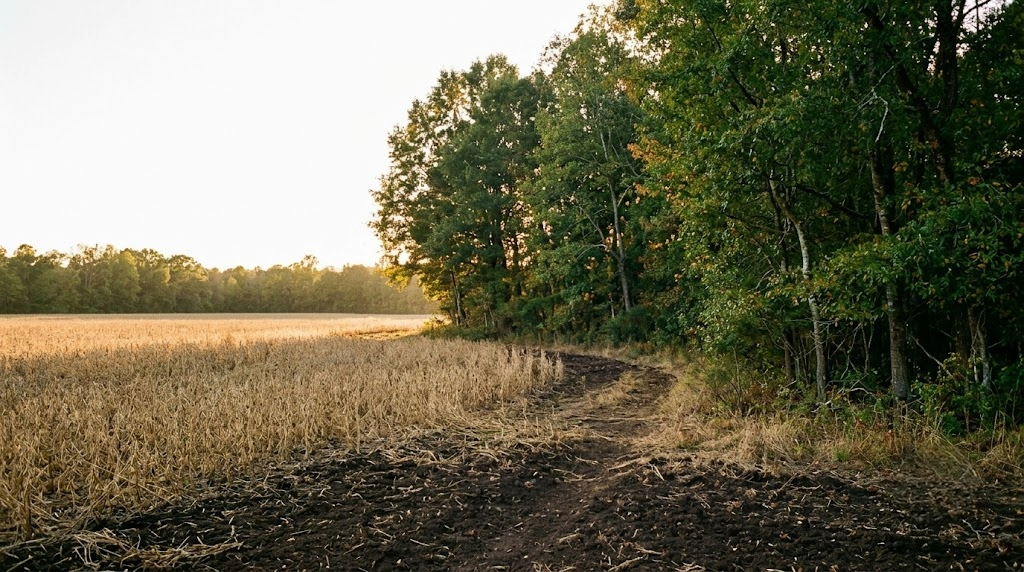
Whitetail is the main draw. Alabama's deer herd is about 1.8 million animals statewide, and the public-land harvest is strong across all regions. The Black Belt counties (Dallas, Lowndes, Perry, Marengo, Hale) produce the state's best trophy potential, driven by rich limestone soils that support heavy body weights and above-average antler growth. The northern Appalachian counties produce smaller-bodied deer but offer steep terrain and low pressure. The coastal plain deer in the south are moderate in both size and density.
Turkey hunting in Alabama is among the best in the country. The state holds one of the largest Eastern turkey populations in the Southeast, and the spring gobbler season runs from mid-March through April. Nearly every WMA and national forest tract holds turkeys, and the longleaf pine WMAs in the central and southern parts of the state produce some of the most vocal, responsive birds you'll hunt anywhere.
Feral hogs are year-round on most WMAs during any legal hunting season, with no bag limit. Hog populations are heavy on the coastal plain WMAs, the river bottom properties, and throughout the Talladega and Bankhead national forests. Hogs are the best excuse to learn a new piece of public ground during the off-season.
Waterfowl hunters find the best access on the Tennessee River WMAs in the north (Lauderdale, Wheeler NWR), the Mobile-Tensaw Delta in the south, and several managed impoundments on interior WMAs. The delta produces excellent wood duck and teal hunting.
Alabama also offers drawn alligator hunts on select WMAs (primarily in the south and Mobile Delta), dove on managed fields across multiple WMAs, and small game, including squirrel, rabbit, and quail (limited wild populations).
Season Structure for Alabama WMA Hunting
Alabama's deer season is one of the longest in the country:
Archery: Mid-October through late January in most zones. Some zones open as early as October 1.
Gun season: Mid-November through late January. Rifles, shotguns, muzzleloaders, and handguns are all legal during gun season, depending on the zone.
Muzzleloader-only: Varies by zone, typically a window in late October or January.
Dog hunting season: Varies by zone and WMA. Dog-drive deer hunting is a legal and deeply rooted tradition in Alabama, especially on the coastal plain WMAs. If you're a still-hunter or stand-hunter, check whether your target WMA allows dog hunting during your planned dates, and plan around it.
The dog hunting element is something out-of-state hunters need to understand. On WMAs that allow dog-driven deer hunting, the dogs push deer through large areas, and the hunting style is very different from stand hunting or still-hunting. If dogs are running on the property you're hunting, the deer movement patterns change completely. Some hunters use this to their advantage by setting up escape routes and pinch points that deer funnel through when driven. Others avoid dog-hunt dates entirely. Check the WMA-specific season dates and regulations on the ADCNR website.
Spring turkey runs from mid-March through late April. Tags are available over the counter. The season typically opens a week earlier for youth hunters.
Access Tips Specific to Alabama WMA Hunting
WMA license is mandatory. You need the WMA license ($16 resident, $51 non-resident) in addition to your standard hunting license to hunt any ADCNR Wildlife Management Area. National forests don't require the WMA license unless you're hunting an overlapping WMA unit within the forest boundary.
Check-in and check-out. Many Alabama WMAs require self-registration at parking lot kiosks. Sign in before you hunt and sign out when you leave. Some WMAs track harvest through mandatory check stations during specific seasons. Read the WMA-specific regulations before your trip.
Dog hunting dates. If you're a stand hunter planning a trip to an Alabama WMA, check whether dog-drive deer hunting is scheduled during your dates. The ADCNR publishes dog-hunt dates by WMA on their website and in the annual regulation booklet. Planning around these dates can make or break your trip.
Camping. Some WMAs allow primitive camping in designated areas. Many don't. National forests allow dispersed camping up to 14 days. Check the specific property before you plan an overnight trip. The Bankhead, Talladega, and Conecuh national forests are the most camping-friendly public hunting options in the state.
Vehicle access. On WMAs, vehicles are restricted to designated roads and parking areas. Don't drive past locked gates or on two-tracks that aren't signed as open. In national forests, the road network is more open, but seasonal gates close some interior roads.
Snake awareness. Alabama has rattlesnakes, copperheads, and cottonmouths on every public tract in the state. Archery season in October and November overlaps with warm temperatures in the southern half of the state, and snakes are still active. Snake boots or gaiters are worth the investment.
Gear Considerations for Best Public Hunting in Alabama
Alabama's climate and terrain demand gear that handles heat, humidity, and a long temperature range from 80-degree October archery to 25-degree late-January mornings.
Heat management for early season. October archery in Alabama is hot. Lightweight, breathable camo is mandatory. Bring more water than you think you need. Early-season sits in the southern half of the state feel more like a summer hunt than a fall one. Your base layer should be the lightest thing you own.
Snake boots. Non-negotiable on Alabama public land from October through November south of Birmingham, and through mid-October in the north. Rattlesnakes, copperheads, and cottonmouths are real and present. The LaCrosse Alphaburly Pro covers both the snake protection and the wet-ground performance you need on the coastal plain and river bottom properties.
Rubber boots for swamp WMAs. The Mobile-Tensaw Delta, the river bottom WMAs, and several southern coastal plain properties involve standing water. Knee-high rubber boots with good tread are standard equipment.
A quiet outer layer. Alabama's long archery season means most of your deer hunting happens with a bow, and noise discipline matters on close-range encounters. The KUIU Axis Hybris jacket handles the mild-to-cool November and December conditions that make up the heart of Alabama deer season. For late-January cold snaps, layer a fleece underneath.
Binoculars. The Piedmont and coastal plain have more open timber than the northern mountains, and many WMAs border agricultural fields where glassing at 200-plus yards is standard practice. The Vortex Diamondback HD 10x42 covers both the open-field glassing and the low-light timber work for under $230.
Mobile stand. A Tethrd Phantom saddle platform with climbing sticks gives you the mobility to adapt to pressure shifts, wind changes, and the varying timber sizes across Alabama's different regions. Public land in Alabama is best hunted on foot because the dog-hunt pressure on some WMAs dramatically shifts deer patterns from week to week.
Cellular trail camera. The Muddy Matrix 2.0 sends photos to your phone without requiring a walk-in visit. On Alabama WMAs where sign-in requirements mean other hunters know you're on the property, keeping your camera locations secret depends on never visiting them. Hang it in August and don't go back until you hunt. [
Mapping app. onX Hunt with the Alabama layer shows WMA boundaries, national forest tracts, and property lines. On scattered national forest parcels mixed with private land (common in the Talladega), the digital boundary line is what keeps you legal.
Finding Unpressured Ground on Alabama Public Hunting Land
Alabama sells about 300,000 hunting licenses a year, and the pressure on public land concentrates predictably: gun-season opener on the well-known WMAs within an hour of Birmingham, Huntsville, and Mobile, and on any WMA during dog-hunt dates when organized drives push through the property.
Avoid dog-hunt dates if you're a stand hunter. This is the single most important pressure-management decision on Alabama WMAs. Dog drives push deer movement into chaos for stand hunters. Either use it to your advantage by sitting escape funnels (creek crossings, pinch points, thick-cover transitions), or hunt on dates when dogs aren't allowed. The ADCNR schedule is published well before the season.
Hunt the national forests. The Bankhead, Talladega, and Conecuh national forests don't run dog hunts, don't require the WMA license, and hold far less per-acre pressure than the WMAs during gun season. The Sipsey Wilderness within Bankhead is walk-in-only and feels like a different state by the second mile. The Oakmulgee Division of Talladega sits on the Black Belt edge and grows better deer than most of the WMAs. These national forest tracts offer the best value in Alabama public-land hunting.
Hunt early archery. Alabama's archery season opens in mid-October, a full month before gun season brings the crowds. Midweek archery sits on any WMA in October draw minimal competition, and the deer are still on predictable pre-rut patterns.
Go deep on the coastal plain. The flat, featureless pine flatwoods of southern Alabama discourage most hunters because there are no obvious terrain features to hunt. But the creek bottoms that wind through the pine are the only dense cover in those forests, and deer stack along them. The hunters who learn to read those creek corridors on satellite imagery before the trip find deer that the rest of the property ignores.
For property-level terrain analysis before your trip, Hunting Scout builds interactive scouting reports from real USGS and NOAA data for any WMA or national forest tract. The funnel detection works on Alabama's subtle coastal-plain terrain as well as the steep Appalachian features in the north. Three free reports per month, no credit card required.
For properties adjacent to public ground that you're evaluating for a lease or purchase, ScoutFlight Hunting Assessments delivers drone-based property reports with terrain, cover, and habitat analysis.
Frequently Asked Questions About Public Land Hunting in Alabama
How much public hunting land is in Alabama?
Alabama has roughly 1.2 million acres of public hunting land, combining WMAs (700,000 acres), four national forests (670,000 acres), Corps of Engineers land, and National Wildlife Refuges. The Talladega National Forest alone accounts for nearly 400,000 acres across two divisions.
Do I need a WMA license to hunt in Alabama?
Yes, for any ADCNR Wildlife Management Area. The WMA license runs $16 for residents and $51 for non-residents and is required in addition to your standard hunting license. You don't need the WMA license to hunt national forest land unless you're in an area that overlaps with a designated WMA unit.
Can non-residents hunt Alabama public land?
Yes. Non-residents buy an all-game license ($311) or a 7-day trip license ($51 for small game and deer, an additional $51 for turkey), plus the WMA license ($51) for WMA access. Tags are over the counter. No draws or preference points required for deer or turkey. Alabama is non-resident-friendly with no separate quotas on public land access.
What is dog hunting in Alabama, and how does it affect me?
Dog-drive deer hunting is a legal, traditional practice on many Alabama WMAs where organized groups release hounds to drive deer past posted standers. It's a deeply rooted part of the state's hunting culture. If you're a still-hunter or stand hunter, dog-hunt dates will change deer movement patterns dramatically on your WMA. Check the ADCNR's WMA-specific season schedule for dog-hunt dates and either plan around them or use the driven deer to your advantage by sitting escape routes and terrain funnels.
What are the best WMAs in Alabama for big bucks?
The Black Belt WMAs (Lowndes, parts of Oakmulgee Talladega NF, and surrounding areas) produce the state's best antler growth due to rich limestone soils. In the north, Skyline WMA on the Cumberland Plateau grows mature bucks in steep terrain that keeps pressure low. The Mobile-Tensaw Delta holds bucks that grow old in a swamp habitat nobody wants to wade into. Each region trades off antler size, deer density, and hunter pressure differently.
When is the rut in Alabama?
The timing of the Alabama rut varies significantly by region, which is unusual. In the northern third of the state, peak breeding falls in mid to late January. In the central Piedmont and Black Belt, peak breeding hits in late December through mid-January. In the southern coastal plain, the rut peaks in January through early February. This means Alabama's gun season (mid-November through late January) covers the pre-rut and rut in most of the state. Time your trip to your target region's rut peak for the best chance at a mature buck on the move.
Are there bears in Alabama?
Yes, and the population is growing. Alabama's black bear population is centered in the northeast corner of the state (Jackson, DeKalb, and Marshall counties), with bears expanding into surrounding areas. There is no open bear season in Alabama at this time, but bear presence on properties such as Skyline WMA and in the Bankhead National Forest is increasing. ADCNR is monitoring the population and may establish a limited season in the future.
Can you camp on Alabama WMAs?
It depends on the WMA. Some allow primitive camping in designated areas, and a few have established campgrounds nearby. Many WMAs don't allow camping at all. The four national forests (Bankhead, Talladega, Conecuh, Tuskegee) all allow dispersed camping up to 14 days, making them the best options for multi-day hunt-camp trips. Always check the specific property regulations on the ADCNR website before planning an overnight stay.
Want the full breakdown of every Alabama WMA with regulations and species data, plus the same for all 50 states? Subscribe to the LandsToHunt newsletter below and get our free state-by-state public land hunting guides delivered to your inbox.
This guide includes affiliate links to tools and gear we recommend for hunting Alabama's public land. LandsToHunt.com earns a commission on qualifying purchases.
