Public Land Hunting in Minnesota: 12 Million Acres from the Prairie to the Big Woods

Minnesota holds more public hunting land than any state in the Midwest and most states in the entire country. When you add up Wildlife Management Areas, state forests, two national forests, county forests, Walk-In Access lands, and the Boundary Waters, the total pushes past 12 million huntable acres. That's not a typo. Twelve million acres of public ground spread from the prairie pothole country in the west through the farm belt in the south to the boreal big woods running all the way to the Canadian border.
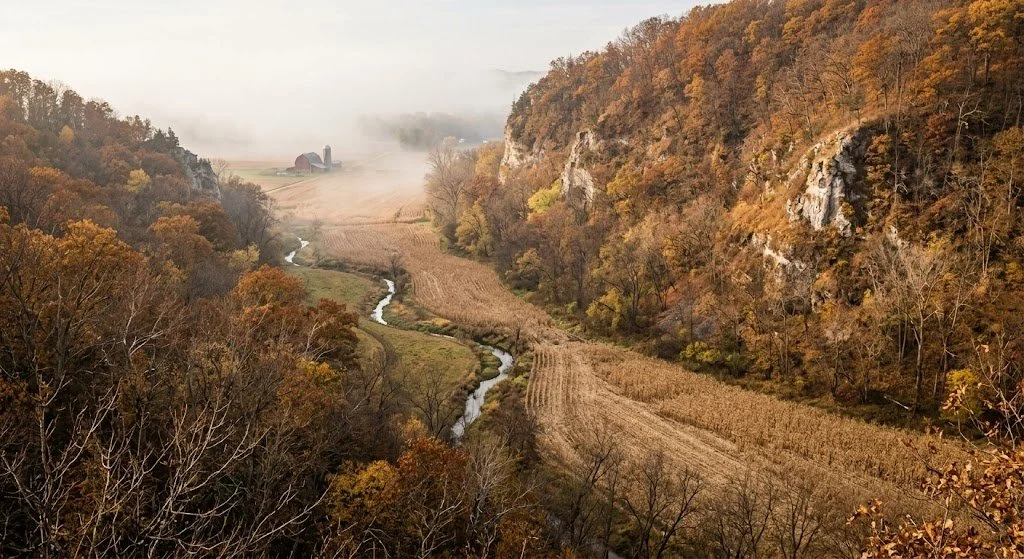
Public land hunting in Minnesota gives you options that no neighboring state can match. Whitetail in the farm-country WMAs that rival Iowa genetics. Big-woods bucks in the northern forests, where you can walk all day without seeing another hunter. One of the best ruffed grouse traditions in the country. Waterfowl hunting across the Mississippi Flyway that draws birds from the entire continent. Black bear draws in the northern third of the state. And a landscape that shifts from 1,000-acre prairie WMAs to 4-million-acre national forests within a three-hour drive.
The state's system is deep enough that most hunters, even lifelong residents, don't know the full scope of what's available. Here's the guide to working it.
How Much Public Hunting Land Minnesota Has
The total public hunting access in Minnesota is staggering:
Wildlife Management Areas (WMAs): More than 1,400 WMAs totaling roughly 1.3 million acres, managed by the Minnesota DNR
Superior National Forest: 3.9 million acres, including the Boundary Waters Canoe Area Wilderness (BWCAW), managed by the U.S. Forest Service
Chippewa National Forest: 666,000 acres in north-central Minnesota, managed by the U.S. Forest Service
State forests: 58 state forests totaling roughly 4 million acres, managed by the Minnesota DNR
County and municipal forests: Additional millions of acres, especially in the northern counties (St. Louis, Itasca, Beltrami, Koochiching)
Walk-In Access (WIA): Private land enrolled in a voluntary program that allows public hunting access, adding tens of thousands of acres primarily in the farm-country western and southern regions
National Wildlife Refuges: Including Tamarac, Sherburne, Big Stone, and others, offering seasonal hunting
The sheer volume of public ground in northern Minnesota is hard to overstate. St. Louis County alone holds more public hunting land than many entire states. When you combine state forest, county forest, and national forest in the northern third of the state, there are blocks of huntable public ground that run 50-plus miles without interruption.
For licensing, Minnesota residents pay about $26 for a firearms deer license and $26 for an archery license, with various combination options. Non-residents pay $166 for a firearms deer license and $88 for archery. Small game runs $19 for residents, $80 for non-residents. Turkey is $26 for residents, $80 for non-residents. Deer tag availability varies by zone. Some zones are over-the-counter for residents but drawn for non-residents. Some are drawn for everyone. Check the specific Deer Permit Area (DPA) regulations on the Minnesota DNR website before planning a trip.
Top 12 Public Hunting Areas for Minnesota WMA Hunting and Beyond
Superior National Forest (including Boundary Waters)
Managing agency: U.S. Forest Service
Acreage: 3.9 million
Region: Northeast Minnesota, Cook, Lake, and St. Louis counties
Primary species: Whitetail, black bear, moose (very limited tags), ruffed grouse, snowshoe hare, waterfowl
Terrain: Boreal forest, spruce and birch-aspen, thousands of lakes, rocky ridges, dense understory, vast unbroken wilderness
Access: Open with a valid Minnesota hunting license. Dispersed camping throughout. The BWCAW requires a separate entry permit and restricts motorized access.
Insider tip: The areas of the Superior outside the BWCAW boundary get far less attention than the wilderness itself but hold excellent deer and grouse hunting with road access. The young aspen regrowth from timber cuts along forest roads between Ely and Isabella concentrates both grouse and deer. Use the Forest Service's timber sale maps to find cuts that are 5 to 15 years old, then hunt the edges where young aspen meets mature spruce.
Chippewa National Forest
Managing agency: U.S. Forest Service
Acreage: 666,000
Region: Itasca, Cass, and Beltrami counties, north-central Minnesota
Primary species: Whitetail, black bear, ruffed grouse, waterfowl, turkey
Terrain: Mixed hardwood and pine, aspen stands, lake-studded terrain, wild rice marshes, rolling glacial topography
Access: Extensive forest road network. Dispersed camping. Multiple boat landings for lake access.
Insider tip: The Chippewa holds the highest density of nesting bald eagles in the lower 48, and the same habitat that supports eagles supports a strong deer and grouse population. Focus your deer scouting on the aspen-dominated areas between the larger lakes. Deer in this part of Minnesota key on the thick aspen regen for both browse and thermal cover, especially after the first snow. The Chippewa gets less out-of-state attention than the Superior because it lacks the wilderness-area cachet, and that's your advantage.
Whitewater WMA
Managing agency: Minnesota DNR
Acreage: 29,000
Region: Winona and Wabasha counties, southeast Minnesota bluff country
Primary species: Whitetail, turkey, pheasant, waterfowl
Terrain: Mississippi River bluff country with steep limestone bluffs, hardwood ravines, trout streams, and crop field valleys
Access: Good road access to multiple parking areas. Walk into the interior bluff terrain.
Insider tip: Southeast Minnesota's driftless region grows the biggest whitetails in the state, and Whitewater WMA sits in the middle of it. The steep bluffs create natural terrain funnels that topo maps make obvious. Hunt the saddles connecting parallel bluff ridges during the rut when bucks cruise between doe groups in the valleys. The terrain keeps casual hunters in the valleys, and the deer on the upper bluffs see very little pressure past opening weekend.
Richard J. Dorer Memorial Hardwood State Forest
Managing agency: Minnesota DNR
Acreage: 800,000 (scattered tracts across the driftless region)
Region: Southeast Minnesota, Houston, Fillmore, Winona, Goodhue, and surrounding counties
Primary species: Whitetail, turkey, ruffed grouse, squirrel
Terrain: Limestone bluffs, deep coulees, hardwood ridges, trout stream valleys
Access: Scattered tracts with varying access. Primitive camping is allowed at designated sites.
Insider tip: The Dorer is not one contiguous block. It's hundreds of scattered parcels throughout the bluff country, and many of them are small enough that other hunters don't notice them on the map. Use onX Hunt to find the 200 to 500-acre Dorer parcels surrounded by private agricultural land. These small tracts hold deer that feed on the surrounding farms and bed on the public timber. A mapping app is mandatory because boundary signage is inconsistent on the smaller parcels.
Carlos Avery WMA
Managing agency: Minnesota DNR
Acreage: 23,000
Region: Anoka and Chisago counties, just north of the Twin Cities metro
Primary species: Whitetail, waterfowl, pheasant (stocked), turkey, small game
Terrain: Marshes, grassland, oak savanna, young hardwood, agricultural edges
Access: Good road access. Multiple designated parking areas. Some restricted zones for waterfowl management.
Insider tip: Carlos Avery is close to the metro and gets pressure that reflects it, especially during firearms opener. But the weekday archery hunting on this property is surprisingly good. The suburban deer population in the surrounding developments pushes animals onto the WMA, and deer density here is higher than in most northern forest zones. Hunt October archery on a weekday, target the oak savanna edges where the prairie meets the timber, and you'll see deer that the Saturday gun-season crowd never encounters.
Lac qui Parle WMA
Managing agency: Minnesota DNR
Acreage: 32,000
Region: Lac qui Parle, Chippewa, and Swift counties, west-central Minnesota
Primary species: Waterfowl (geese and ducks, major migration staging area), whitetail, pheasant, dove
Terrain: Prairie, managed wetlands, Minnesota River bottomland, crop field edges, shelter belts
Access: Road access throughout. Designated waterfowl zones with specific hunting rules.
Insider tip: Lac qui Parle is one of the top goose staging areas in the Central Flyway. During the October and November migration, hundreds of thousands of Canada geese and snow geese funnel through the Minnesota River corridor. The goose hunting gets the attention, but the deer hunting along the river timber corridor is very good and very overlooked. The narrow strips of hardwood bottomland along the river create natural travel corridors that squeeze buck movement into predictable lanes during the rut.
Nemadji State Forest
Managing agency: Minnesota DNR
Acreage: ~42,000
Region: Carlton and Pine counties, east-central Minnesota
Primary species: Whitetail, ruffed grouse, black bear, snowshoe hare
Terrain: Mixed aspen-birch-spruce, alder swamps, beaver ponds, rolling glacial hills
Access: Forest roads with some gated seasonal roads. Dispersed camping allowed.
Insider tip: Nemadji is close enough to Duluth and the Twin Cities that you'd expect heavy pressure, but the terrain and cover are thick enough that most hunters don't push past the road edges. The alder swamps that run between the upland ridges are where pressured deer retreat after opening weekend. If you're willing to wade through alder tag-along (bring the LaCrosse Alphaburly Pro boots), you'll find bedding deer that haven't seen a hunter in days. Grouse hunting along the forest roads between the swamps is some of the best within two hours of the metro.
Mille Lacs WMA
Managing agency: Minnesota DNR
Acreage: ~39,000
Region: Mille Lacs County, central Minnesota
Primary species: Whitetail, ruffed grouse, waterfowl, turkey
Terrain: Mixed hardwood and aspen, tamarack bogs, Rum River corridor, agricultural edges
Access: Multiple parking areas along county roads. Walk into the interior.
Insider tip: Mille Lacs WMA sits in the transition zone between the northern big woods and the central farm belt. The deer here are bigger-bodied and carry more antlers than the deep-woods deer further north because the adjacent agricultural food base supports better nutrition. Hunt the hardwood ridges that border the tamarack bogs. Deer bed in the bog edges for thermal cover and security, and travel to the agricultural fields through predictable corridors that the topo makes obvious.
Roseau River WMA
Managing agency: Minnesota DNR
Acreage: 62,000
Region: Roseau County, far northwest Minnesota, along the Canadian border
Primary species: Whitetail, moose (very limited), waterfowl, upland birds
Terrain: Prairie, marshland, aspen-willow belts, river bottomland
Access: Road access along the perimeter. Interior access varies by season and water levels.
Insider tip: Roseau River is remote enough that it gets minimal pressure from anyone outside the local community. The aspen belts along the river hold deer that feed on the surrounding agricultural ground and bed in the dense willow and aspen thickets. The rut peaks slightly later this far north (mid to late November), and a Thanksgiving-week hunt timed to cold weather and late-rut activity puts you on bucks that see almost no competition. Bring everything you need. Services are limited.
Beltrami Island State Forest
Managing agency: Minnesota DNR
Acreage: 676,000
Region: Lake of the Woods, Roseau, and Beltrami counties, far northern Minnesota
Primary species: Whitetail, black bear, ruffed grouse, snowshoe hare, timber wolf
Terrain: Boreal forest, spruce bogs, aspen uplands, muskeg, vast and roadless in the interior
Access: Forest roads on the perimeter. The interior is very remote with limited access. Dispersed camping allowed.
Insider tip: Beltrami Island is true wilderness hunting. The interior of this forest sees almost zero hunting pressure outside of firearms opener week. Deer densities are lower than in the farm country zones, but the bucks that live here grow old because nobody walks far enough to find them. This is a bring-your-own-everything, pack-in-for-days kind of place. If you want a big-woods experience that feels like northern Canada without crossing the border, this is it.
Crow Wing State Forest
Managing agency: Minnesota DNR
Acreage: 103,000
Region: Cass and Crow Wing counties, central Minnesota
Primary species: Whitetail, ruffed grouse, black bear, turkey
Terrain: Jack pine, red pine, aspen cuts, rolling glacial terrain, scattered lakes, and wetlands
Access: Extensive forest road network. State forest campgrounds available. ATV trails in designated areas.
Insider tip: Crow Wing sits in the heart of Minnesota's best grouse and woodcock range. The jack pine and young aspen habitat produces consistent bird numbers, and the logging roads through the forest give you miles of walkable cover to work with a dog. Deer hunting is secondary to bird hunting for most people who come here, which means deer pressure is lower than you'd expect in a state forest this size and this close to the Brainerd Lakes area.
Talcot Lake WMA
Managing agency: Minnesota DNR
Acreage: 4,200
Region: Cottonwood County, southwest Minnesota prairie
Primary species: Pheasant, waterfowl, whitetail, dove
Terrain: Prairie grassland, managed wetlands, shelter belt timber strips, crop field borders
Access: Road access with parking pull-offs.
Insider tip: Southwest Minnesota prairie WMAs are the state's best bet for pheasant hunting on public ground. Talcot Lake holds wild roosters in the native grass and shelter belt edges, especially in years with good nesting cover. Walk the grass strips between the wetlands and the crop borders with a dog working 40 yards ahead. Deer hunting in the shelter belts is a bonus during firearms season. Bucks bed in the 100-yard-wide tree rows between open fields, and you can see both ends of the shelter belt with a good pair of binoculars. Glass first from the truck, then set up on the downwind end.
What You Can Hunt on Minnesota Public Land
Whitetail is the primary draw for most out-of-state hunters, and Minnesota delivers two very different deer hunting experiences depending on where you go. The farm-country zones in the southeast (driftless bluff country) and south-central regions produce the state's best body weights and antler growth, driven by rich agricultural food sources. The northern big-woods zones produce lower deer densities but offer a wilderness hunting experience with almost zero competition for mature bucks that grow old simply because nobody walks deep enough to find them.
Ruffed grouse hunting is a Minnesota tradition, and the northern forests from the Chippewa east through the Superior hold some of the best public land grouse hunting in the country. The 10-year grouse population cycle means some years are better than others, and the DNR publishes annual drumming survey data that tells you where in the cycle your target area falls. Woodcock migrate through the same aspen cover in September and October.
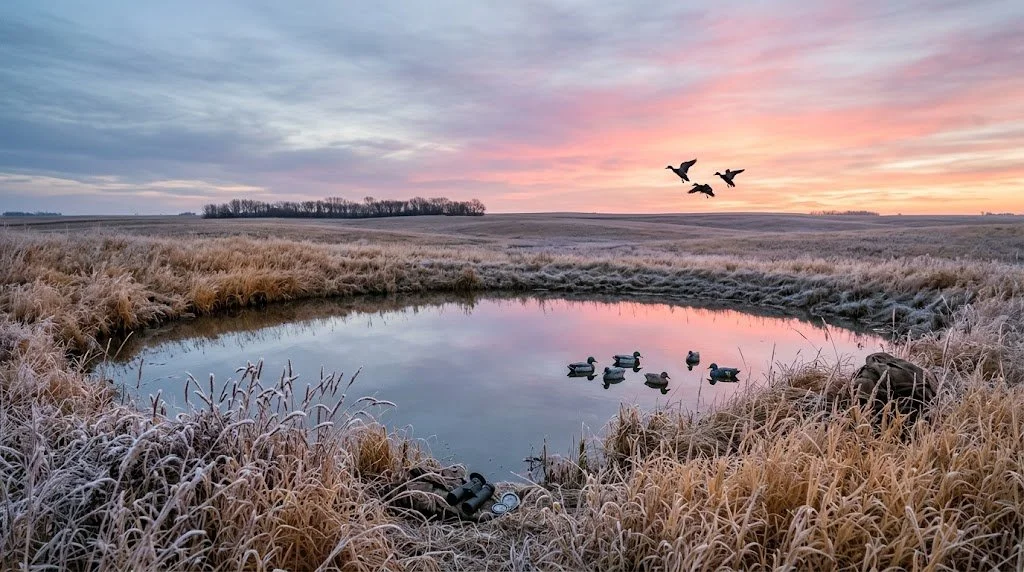
Waterfowl hunting is exceptional. Minnesota sits in the Mississippi Flyway, and the prairie pothole country in the west, and the large lakes and river corridors throughout the state draw ducks and geese from breeding grounds across the northern plains and Canada. Public access is strong on WMAs, state forest lakes, and national forest water bodies.
Black bear hunting is available through a drawn tag system with preference points. The primary bear range runs across the northern third of the state. The wait for a tag varies by zone from 1 to 5-plus years.
Turkey hunting has expanded significantly across the southern two-thirds of the state, with spring and fall seasons available. Spring turkey hunting in the southeast bluff country is outstanding and continues to build momentum as the population expands.
Minnesota also offers limited moose hunting through a once-in-a-lifetime lottery in the northeast, pheasant hunting on prairie WMAs, rabbit and squirrel hunting, and excellent trapping opportunities across the state.
Season Structure for Public Land Hunting in Minnesota
Archery deer: Mid-September through December 31. A long season that covers the entire pre-rut, rut, and late season.
Firearms deer: Opens the first Saturday after November 4 and runs 16 days. This is when Minnesota's woods get crowded. The tradition runs deep, and the firearm opener is a cultural event across the state.
Muzzleloader deer: Late November through mid-December in designated zones.
Ruffed grouse: Mid-September through January. One of the longest grouse seasons in the country.
Waterfowl: Follows federal frameworks, with early teal in September and the regular season running October through November/December, depending on the zone.
Pheasant: Mid-October through January in designated zones.
Spring turkey: Mid-April through May, with multiple time periods drawn by zone.
Black bear: September season drawn by zone with preference points.
Deer Permit Areas (DPAs) determine your tag availability and antlerless quota. Some DPAs are over the counter for residents. Some require a lottery draw. Non-residents draw tags through a separate allocation. Research your target DPA on the Minnesota DNR website well before the application deadline.
Access Tips for Minnesota Public Hunting
Registration requirement on WMAs. Some Minnesota WMA hunting areas require self-registration at a parking lot kiosk before hunting. Sign in, note your vehicle, and sign out when you leave. Not all WMAs have this, but check for the kiosk at every parking area.
Walk-In Access (WIA) lands. The WIA program enrolls private land for public hunting access. These tracts are marked with yellow WIA signs and shown on the DNR Hunting Atlas. Walk-in only, no vehicles on the enrolled land, and respect the landowner's posted boundaries. WIA lands are concentrated in the farm-country western and southern regions and are excellent for pheasant and deer.
Vehicle restrictions. On WMAs, vehicles are restricted to designated roads and parking areas. State forests have more open road networks, but many roads are seasonal and gated after freeze-up. The national forests have extensive road systems with some gated seasonal roads.
Camping. Camping is not allowed on WMAs. State forests allow dispersed camping with some restrictions by forest. National forests allow dispersed camping up to 14 days. For multi-day hunts on WMAs, camp at a nearby state forest, state park campground, or private campground.
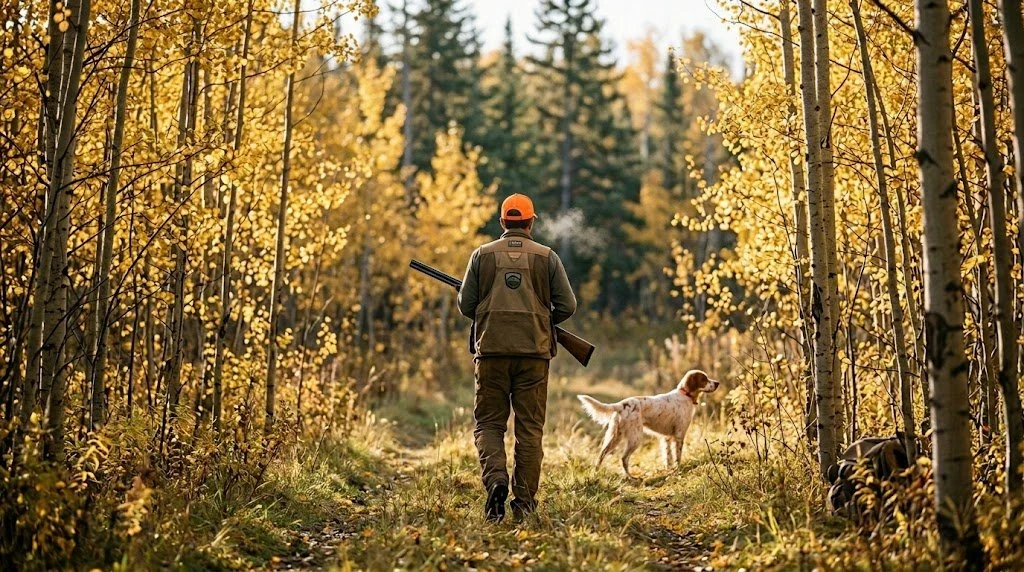
Blaze orange. Minnesota requires blaze-orange on the upper body and a blaze-orange cap during the firearm deer season. At least one blaze orange article is visible from all directions. This applies to all hunters in the field during the firearms window.
ATV use. ATV regulations vary significantly by property. Some state forests allow ATVs on designated trails. WMAs restrict ATVs to designated roads and parking areas. Check the specific property rules before you bring a machine.
The DNR Hunting Atlas is essential. The Minnesota DNR's online Hunting Atlas shows every WMA, state forest, national forest tract, and WIA parcel with boundary layers. Download the GPS layers to your mapping app or phone before you head to the field.
Gear Considerations for Public Land Hunting in Minnesota
Minnesota hunting means cold. The kind of cold that ends hunts, breaks gear, and tests everything in your clothing system. Here's what the terrain and climate demand.
Boots for extreme cold. Northern Minnesota in November regularly drops below zero at dawn. The LaCrosse Hunt Pac Extreme with 2000g Thinsulate is built for all-day sits in these conditions. For the southern bluff country where you're climbing steep terrain, the Danner Pronghorn in 800g or 1200g covers the milder cold and the ankle support you need on the limestone bluffs. For wet terrain (alder swamps, beaver ponds, creek crossings), the LaCrosse Alphaburly Pro in 1600g handles water and cold.
A serious layering system. Minnesota archery starts in 60-degree September weather and firearms season bottoms out below zero. You need the full spectrum. The KUIU Axis Hybrid jacket works as the outer layer from October through November in most conditions. For late-season sits below 30 degrees, add an insulated puffy mid-layer and step up to a heavier outer shell. The base layer review on LandsToHunt covers the full range of merino and synthetic picks by temperature.
Mobile setup. A Tethrd Phantom saddle platform works in the hardwood bluff country and mixed timber of the central zones. In the northern boreal forest, where trees are small (6- to 10-inch-diameter aspens and birches), make sure your climbing sticks and platform work on smaller-diameter trees. Some saddle hunters in the far north switch to ladder sticks or ground setups because the available trees won't support a standard stick-and-platform setup.
Optics. The Vortex Diamondback HD 10x42 handles everything from glassing open farm-country fields in the south to picking apart timber in the northern forests. In the prairie zones, binoculars are the single most important piece of gear for spotting deer in shelter belts and pheasants in grass strips from a distance.
Grouse and upland gear. If you're hunting grouse and woodcock in the northern forests, add a quality upland vest with a bird pouch, a 20-gauge shotgun, and brush-resistant pants. The aspen and alder cover in Minnesota's grouse range will shred lightweight fabrics in a day.
A cellular trail camera. The Muddy Matrix 2.0 sends photos to your phone so you don't have to walk to the camera on WMAs and state forests where every visit leaves scent. Mount high, face north, place at terrain funnels.
Finding Unpressured Spots on Public Land in Minnesota
Minnesota sells about 500,000 deer licenses a year. The good news is that 12 million acres of public ground absorb that pressure better than any other Midwest state. The pressure concentrates predictably: firearms opener week on the well-known WMAs and accessible state forest tracts within two hours of the Twin Cities, Duluth, and Rochester.
Go north. The simplest pressure-avoidance strategy in Minnesota is to drive farther north than most hunters bother to. The state forests and county forests in Koochiching, Lake of the Woods, Roseau, and northern St. Louis counties hold deer that see minimal hunting pressure outside of firearms opener weekend. Deer densities are lower than in the farm country, but the bucks that survive here are mature because nobody hunts them. Pack for cold, plan for remote, and hunt the aspen cuts between the spruce bogs.
Use the small WMAs. Everyone targets the big-name WMAs. The 200 to 2,000-acre WMAs scattered across the farm country don't show up on most hunters' radar. Use the DNR Hunting Atlas to filter by acreage and find small tracts surrounded by agricultural land. These little WMAs hold deer that feed on the surrounding corn and beans and bed on the public timber. A weekday archery sit on a 500-acre WMA in prime farm country is one of the best-kept secrets in Minnesota hunting.
Hunt weekday archery. Minnesota's archery season runs mid-September through December 31. That's three and a half months of bow season with a fraction of the firearms-week crowd. Midweek sits on any WMA or state forest during October and November draws minimal competition.
For property-level terrain analysis, Hunting Scout builds interactive scouting reports from real USGS and NOAA data for any WMA, state forest, or national forest tract in Minnesota. The automated funnel detection works on bluff-country topo features in the southeast and on subtle terrain changes in the northern forests alike. Three free reports per month, no credit card required.
For properties adjacent to public ground that you're evaluating for a lease or purchase, ScoutFlight Hunting Assessments delivers drone-based property reports with terrain, cover, and habitat analysis that would take seasons of on-the-ground work to develop.
Frequently Asked Questions About Public Land Hunting in Minnesota
How much public hunting land is in Minnesota?
Minnesota has roughly 12 million acres of public hunting land when you combine WMAs (1.3 million), state forests (4 million), the Superior National Forest (3.9 million), the Chippewa National Forest (666,000), county and municipal forests (millions more), Walk-In Access private land, and National Wildlife Refuges. The northern third of the state has the largest contiguous concentration of public ground.
Can non-residents hunt deer in Minnesota?
Yes, but tag availability depends on the Deer Permit Area. Some DPAs allow non-resident tags to be issued over the counter. Many require a lottery draw with a separate allocation for non-residents. Non-resident firearms deer licenses run about $166, archery $88. Research your target DPA and apply during the correct window. Archery tags are generally easier to obtain than firearms tags for non-residents.
What is Walk-In Access in Minnesota?
Walk-In Access (WIA) is a voluntary program where private landowners enroll their property to allow public hunting access. Enrolled tracts are marked with yellow WIA signs and shown on the DNR Hunting Atlas. You can hunt these tracts on foot without permission from the landowner, but you can't drive on the enrolled land or camp. WIA lands are concentrated in farm-country regions and are excellent for pheasant, waterfowl, and deer hunting.
When is the best time to hunt public land deer in Minnesota?
Weekday archery between October 25 and November 10 gives you the best combination of rut activity and low pressure. The firearms opener (the first Saturday after November 4) is the highest-pressure day of the year on every public tract in the state. If you hunt during firearm season, days three through five produce well because the initial pressure wave pushes deer into predictable refuge areas that you can scout in advance.
Is Minnesota good for grouse hunting?
Minnesota is one of the best ruffed grouse states in the country. The northern forests from the Chippewa east through the Superior and the state forests in between hold strong grouse populations, especially in 5 to 15-year-old aspen cuts. The season runs from mid-September through January, and the best hunting coincides with the peaks of the 10-year population cycle. Check the DNR's annual drumming count survey for current population trends by region.
Can you camp on Minnesota WMAs?
No. Camping is not allowed on WMAs. For multi-day hunts, camp in nearby state forests (dispersed camping allowed), state park campgrounds, or private campgrounds. The national forests (Superior and Chippewa) allow dispersed camping up to 14 days. Plan your lodging before your trip, especially during firearms opener week when campgrounds fill up fast.
What are the best areas in Minnesota for big bucks?
The southeast bluff country (Winona, Houston, Fillmore, and Wabasha counties) produces the state's best antler growth and body weights. The Whitewater WMA, the Dorer Memorial Hardwood State Forest, and the surrounding WMAs and state forest tracts hold whitetails that compete with Iowa genetics. For a big-woods experience with mature bucks that grow old from lack of pressure, the northern state forests (Beltrami Island, Nemadji, and the Chippewa NF) reward hunters willing to go deep and hunt hard in low-density cover.
Does Minnesota have a moose season?
Yes, but it's extremely limited. Moose tags are issued through a once-in-a-lifetime lottery in the northeast corner of the state. The number of tags issued varies year to year based on population surveys and can be zero in some years. If tags are issued, the odds are very long. Apply if you want to, but don't plan a trip to Minnesota around moose. Plan around whitetail, grouse, and waterfowl, and apply for moose as a lifelong lottery ticket.
Want the full breakdown of Minnesota's WMAs and state forests with maps and species data, plus the same for all 50 states? Subscribe to the LandsToHunt newsletter below and get our free state-by-state public land hunting guides delivered to your inbox.
This guide includes affiliate links to tools and gear we recommend for hunting Minnesota's public land. LandsToHunt.com earns a commission on qualifying purchases.
