
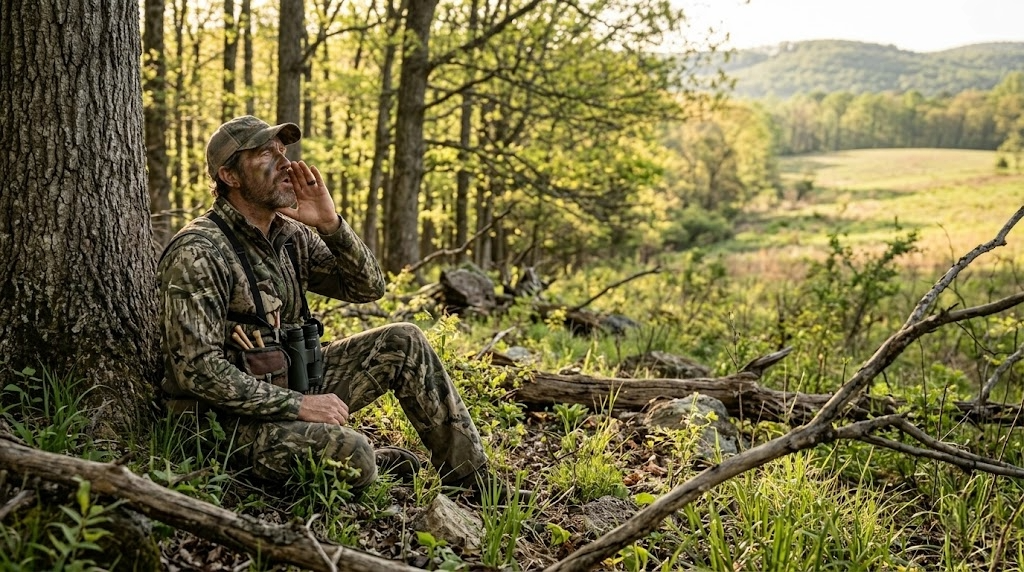
Spring Turkey Hunting Tactics That Actually Work
The gobbler you chase opening morning isn't the same bird three weeks later. Here's how to hunt spring turkeys week by week on pressured land.
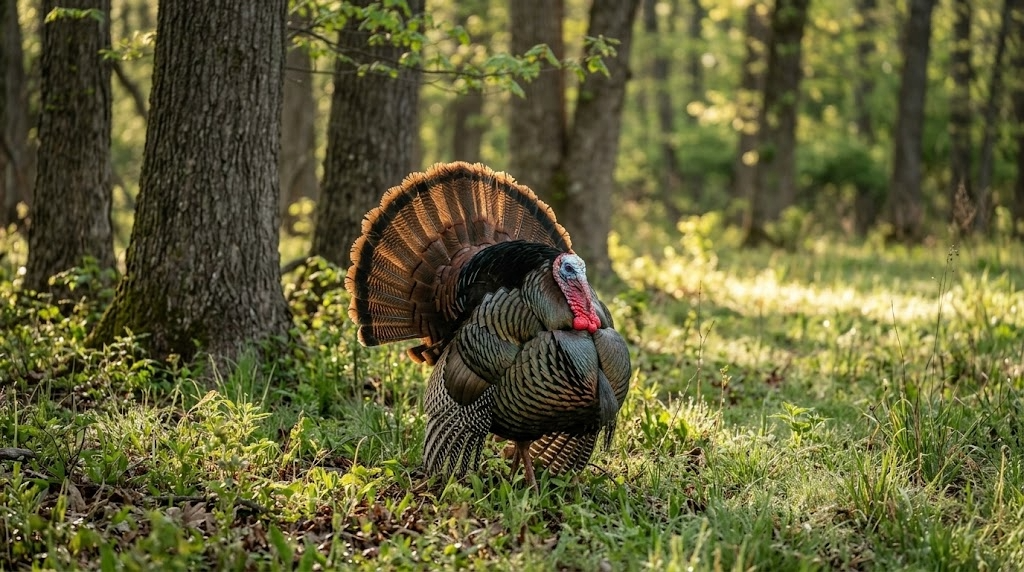
The tom that hammers from the limb on opening morning isn't the same bird you're chasing three weeks later. If you hunt him the same way in May that you did in April, you're going to eat tag soup. Spring turkey hunting tactics have to shift with the season, with the hens, and with the pressure stacking up on every piece of public dirt within driving distance.
Here's how I break down a spring season on public land, week by week, mood by mood.
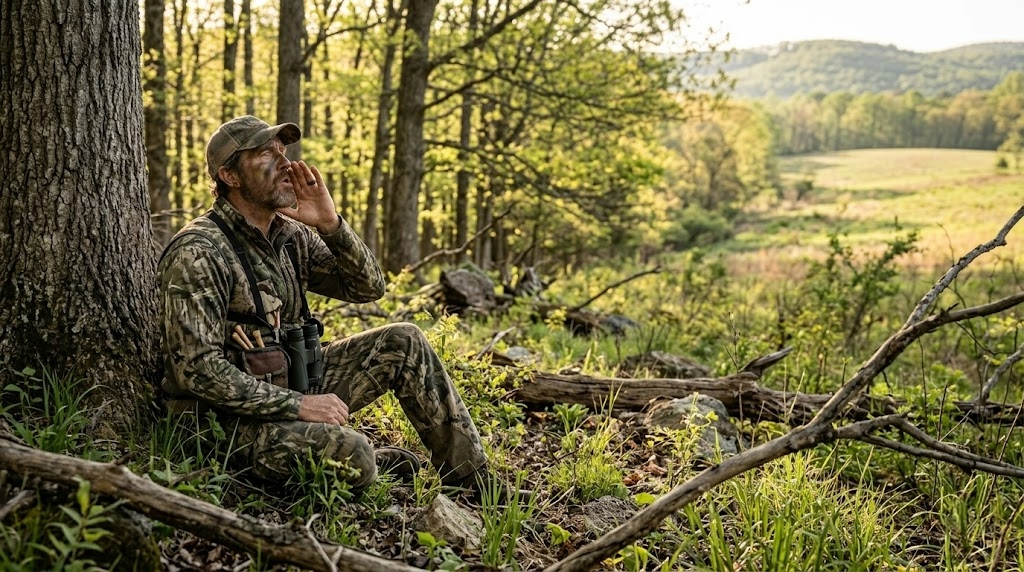
Opening Week: Be the Loudmouth
Opening week birds haven't been called to yet. They've been gobbling at owls, crows, and each other for two weeks, and they're fired up. This is the one stretch of the season where you can get away with being loud, aggressive, and a little sloppy.
Roost a bird the night before if you can. Slip in 45 minutes before legal light, set up 100 to 150 yards from the tree, and let him gobble first. When he hits the ground, hit him with a sharp cutting sequence on a mouth call, three to five sharp cuts followed by a string of excited yelps. If he cuts you off mid-call, shut up. He's coming.
Opening week setup that works on pressured ground: - Single hen decoy, no jake, no strutter - Back against a tree wider than your shoulders - Shooting lanes cleared to 40 yards in a half circle - Sun at your back if you can manage it.
Don't overthink the decoy spread. A lot of these birds have already seen a strutter and bailed. One soft hen looks honest.
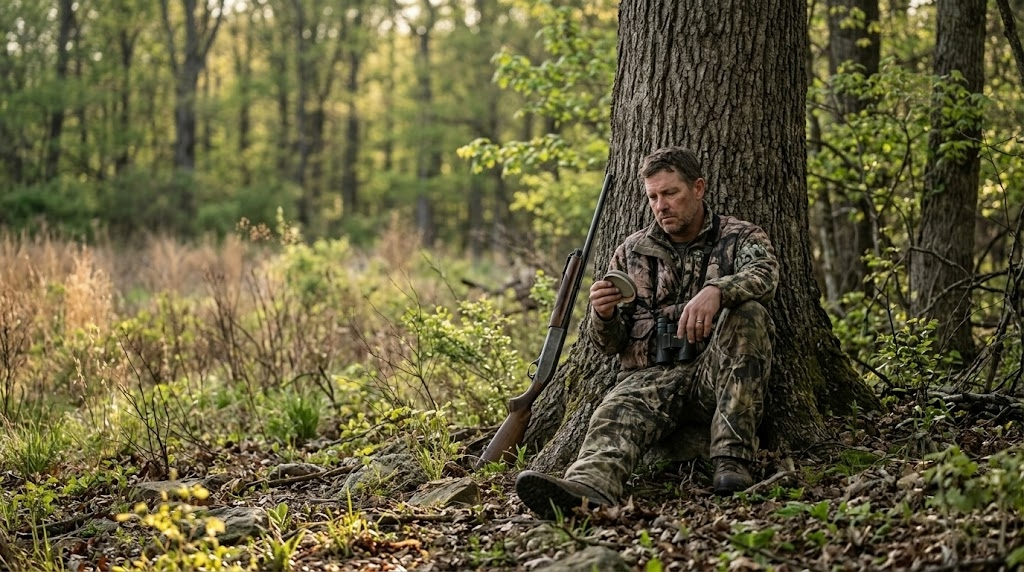
Mid-Season: The Henned-Up Slump
Two weeks in, every gobbler worth shooting has hens on him at daylight. He'll gobble on the limb, fly down, and go silent for four hours while his harem feeds him through the woods. This is when most hunters quit. Don't.
You've got two ways to beat a henned-up gobbler. You can fight the boss hen, or you can wait her out.
Fighting the boss hen means getting close, really close, 75 yards if the cover lets you, and mimicking her exactly. She yelps, you yelp louder. She cuts, you cut over the top of her. You're not trying to call the tom. You're trying to make her so mad she marches over to whip you, and she drags him along behind her. It works maybe one time in four, but when it works it's the most exciting hunt of the spring.
Waiting her out is the patient play. Hens leave gobblers around 10 a.m. to go lay eggs. That lonesome tom is suddenly very interested in any soft yelp he hears. Set up on a known strut zone, a logging road bend, a field edge, an oak flat with a southern exposure, and call sparingly. Three soft yelps every 15 minutes. Let him come looking.
Late Season: Quiet, Slow, and Deadly
By the third and fourth weeks of the season, most toms have been called to, shot at, and spooked off every ridge they own. They're quiet. They might gobble once on the limb and not again all day. People assume the birds are gone. They're not. They're just done talking.
Late season is when you hunt like a bowhunter hunts whitetails. Set up on sign, not sound. Look for fresh strut marks in dusty two tracks, J shaped droppings under roost trees, dusting bowls, and feathers along field edges. Pick a spot where a bird wants to be and sit on it.
Calling late season is a whisper game. Soft tree yelps before fly down, a few clucks and purrs an hour later, and a lot of nothing in between. If you hear a gobble, don't run at it. Move once, set up tight, and make him think a hen is feeding away from him.
Running and Gunning the Right Way
Run and gun gets romanticized, and on public land it gets a lot of guys busted. You can cover ground without bumping every bird in the county if you do it right.
Walk the ridges, not the bottoms. Sound carries up. Stop every 200 yards and hit a loud locator call, a crow call early, an owl hooter at midday, a coyote howler if nothing else is working. Do not yelp to locate. You'll pull in silent toms you never knew were there and educate them when you stand up to leave.
When a bird answers, mark him on your onX Hunt app, drop a waypoint, and close the distance using terrain. Get a ridge or a creek bottom between you and him so you can move fast without being seen. Set up 100 to 150 yards out, never closer on the first sit unless the cover is thick. A mapping app like onX Hunt earns its keep on these moves because the topo lines tell you where you can sneak and where you'll skyline yourself.
Gear that matters for running and gunning: - Lightweight vest with a built-in seat, the TIDEWE Vest, or a Lucky Duck Predator Seat - Quality 10x42 binoculars for glassing fields and openings; the Vortex Diamondback HD does the job for the money. Check current price at Amazon. The downside is they're heavier than premium glass, so if you're walking eight miles a day, you'll feel it. - Two-month calls and a pot call, that's it. Leave the box call in the truck unless it's windy. - Quiet boots that drain. The LaCrosse Alphaburly Pro handles wet spring mornings and creek crossings. Check the current price. They run hot once the day warms up, so plan your walks for early.
Budget option for the guy just getting started: a Primos Hook Hunter mouth call and a slate pot call from any farm store will kill turkeys all day long.

Afternoon Hunting Tactics Most Guys Skip
Where it's legal, and check your state regulations because some states still have half-day seasons, afternoon turkey hunting is the most underused tactic in the spring woods. By 1 p.m., the morning crowd has gone home, the hens have left to nest, and gobblers are looking for one more date before flying up.
Find a known roost area and set up within 200 yards of it by 2 p.m. Call softly every 20 minutes. Yelps, clucks, soft purrs. Don't move. Birds drift back toward the roost slowly through the afternoon, and a lonesome gobbler will commit to a single hen call when he won't come to anything in the morning.
Afternoon birds also hit green fields and food plots hard between 4 and 6 p.m. for bugs and grit. If you've got access to a clover plot or a logging road with green up, that's your spot.
Calling Sequences for Three Common Scenarios
Bird gobbles hard on the limb, no hens visible. Soft tree yelps before flying down, three notes, barely audible. After flying down, a fly down cackle and some loud, excited yelps. Then shut up for 10 minutes. If he hangs up, scratch the leaves with your hand to mimic a feeding hen.
Bird is henned up and drifting away. Get aggressive. Cutting and excited yelping aimed at the boss hen. Match her cadence and step on her calls. If she responds, you're in business.
Bird gobbles once at midday and goes silent. Set up immediately, 100 yards toward where you think he is. Three soft yelps. Wait 20 minutes. Three more. Don't move for at least an hour. Silent toms kill more hunters' patience than they kill themselves.
Frequently Asked Questions
What's the best time of day to kill a public land gobbler?
First light gets the headlines, but the 10 a.m. to noon window is when mature public-land toms die. Hens have left them, hunter pressure has cleared out, and a soft calling setup on a strut zone is hard to beat.
Should you use a decoy on pressured public land?
A single hen decoy works most of the season. Skip the strutter and the jake on heavily pressured ground after week one. Mature toms have seen the trick and will hang up at 60 yards or fade out completely.
How far should you set up from a roosted gobbler?
100 to 150 yards is the sweet spot. Closer, and you risk getting busted at flydown. Farther and a hen can pull him the wrong way before he ever hears you.
Is it worth hunting turkeys in the rain?
Yes, especially light steady rain. Birds spend more time in fields and open areas where they can see, and they tend to be quieter but very killable over decoys.
How do you find turkeys on new public land?
Start with onX Hunt and look for a mix of mature hardwoods, open fields or food plots, and a water source within half a mile. Then go listen at dawn from a high point. Two mornings of scouting tell you more than two weeks of map study.
Want the full state-by-state breakdown of where to chase spring gobblers on public ground? Subscribe to our free state-by-state public land hunting guides, and we'll send the spring turkey edition straight to your inbox.
Subscribe for free state-by-state public land hunting guides and get the spring turkey edition delivered to your inbox before opening day.
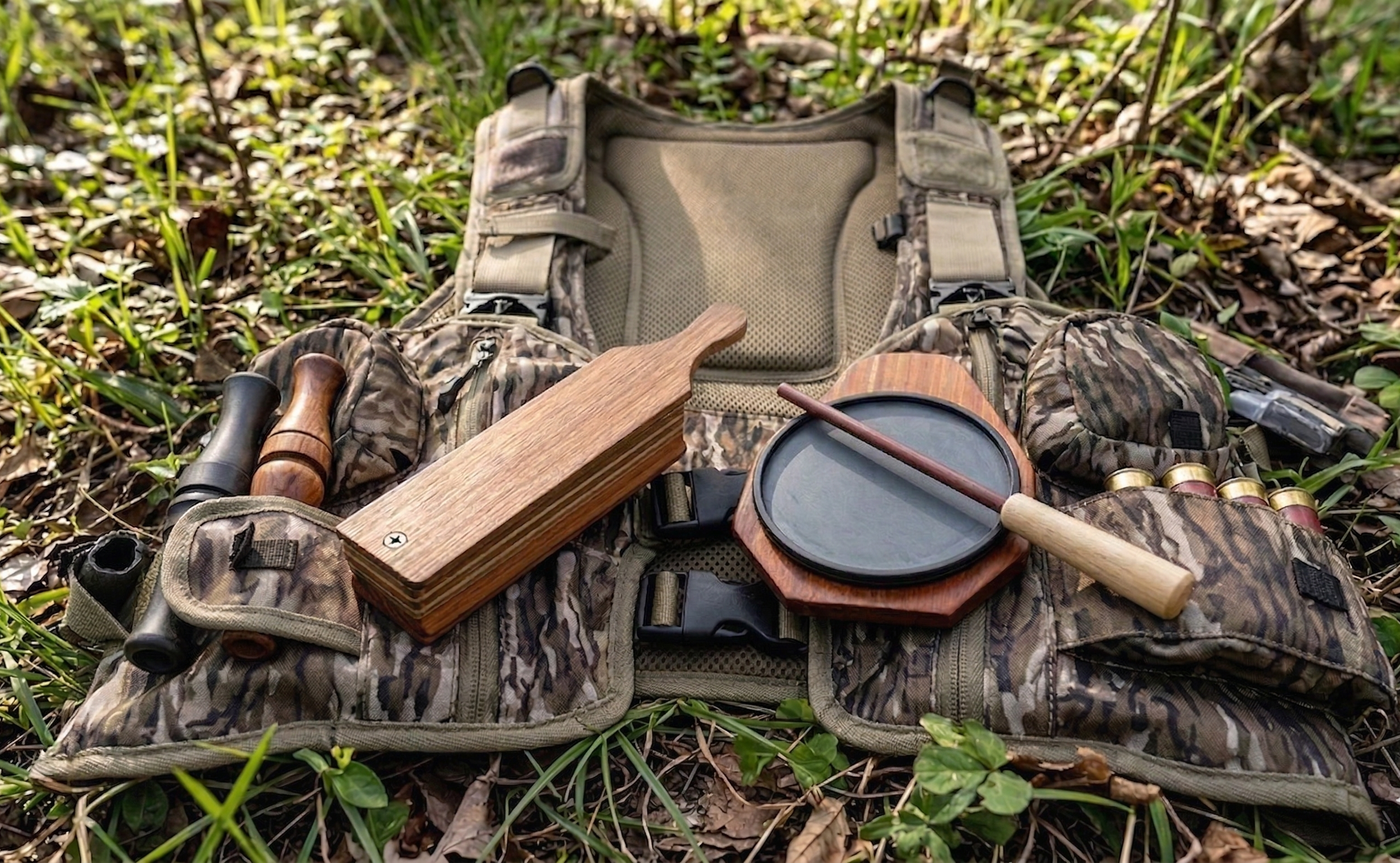
Michigan Spring Turkey Hunting on Public Land: 2026 Guide
Michigan holds about 200,000 wild turkeys. Hunters tag 30,000 to 40,000 of them every spring. And with roughly 4.6 million acres of publicly accessible hunting land spread across both peninsulas, you don't need private ground to fill a tag.
But hunting turkeys on public land in Michigan is a different game than sitting in a field behind your buddy's barn. The birds get pressured. The good spots get crowded. And the regulations changed for 2026, so if you're running on last year's playbook, you need to update it.
This guide covers everything you need to plan a public land spring turkey hunt in Michigan this year. The new TMU structure, license options, the best state game areas and national forest land to hunt, calling strategies for pressured birds, gear that matters, and the mistakes that send most public-land turkey hunters home empty-handed.
What Changed for 2026
The Michigan DNR made some significant changes to the spring turkey season this year. If you hunted Michigan turkeys before 2025, pay attention here.
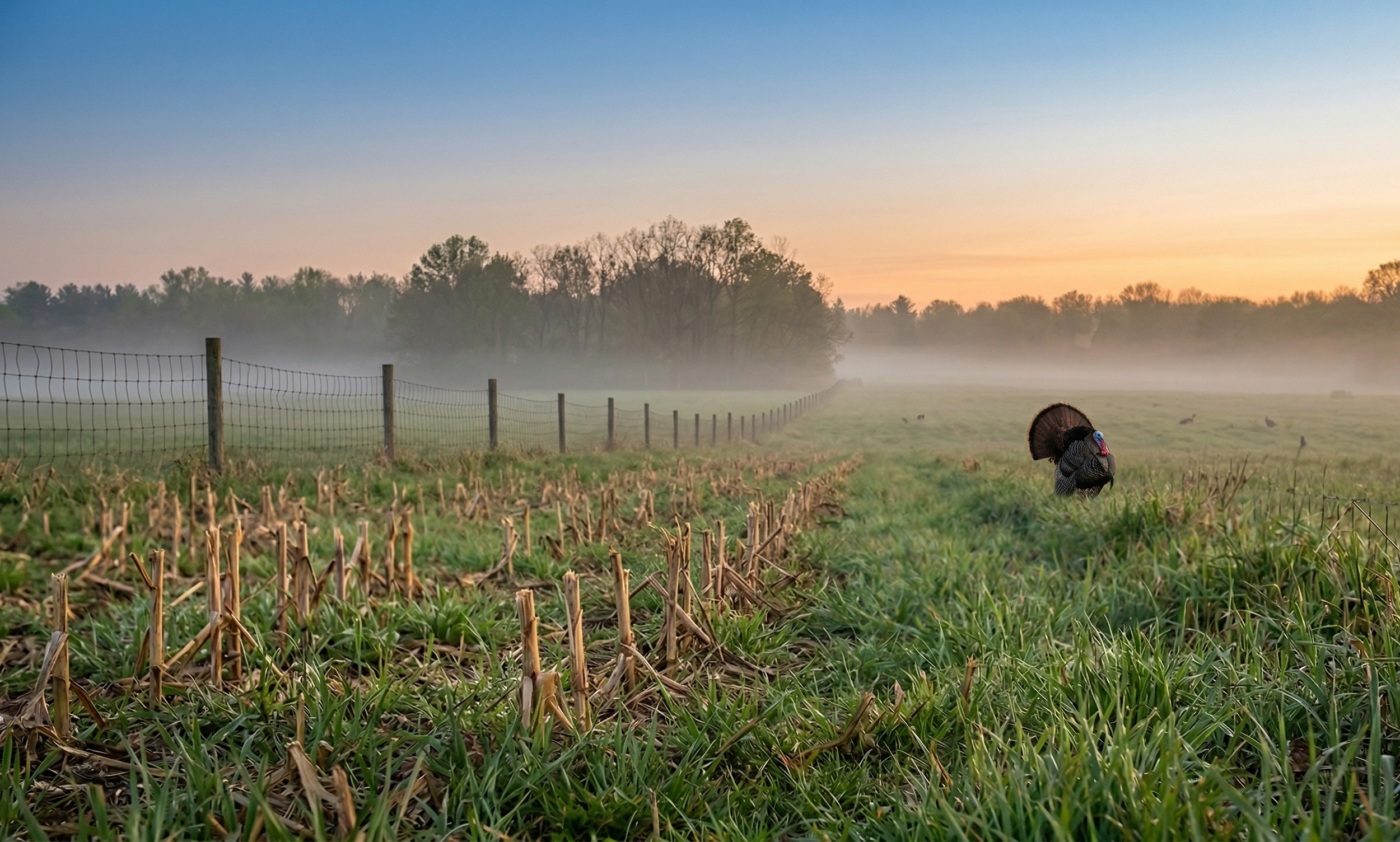
The biggest change is the structure of the Turkey Management Unit. Michigan reduced the number of TMUs from 14 down to three. That's it. Three units for the entire state.
Unit M covers the Upper Peninsula. Unit NN covers the Northern Lower Peninsula. Unit ZZ covers the Southern Lower Peninsula.
The DNR's upland game bird specialist, Adam Bump, said the goal was to give hunters longer seasons and bigger units. In practice, this means less boundary confusion and more flexibility in where you hunt within your unit. But it also means more hunters spread across fewer administrative zones, so quota dynamics shifted.
The other major change: mandatory harvest reporting. All successful spring turkey hunters must report harvests within 72 hours or before transferring possession of the birds, whichever comes first. You can report online or through the Michigan DNR Hunt Fish app. Don't skip this. It's not optional anymore.
2026 Season Dates and License Options
Here's the full breakdown of license types, dates, and quotas for 2026.
Drawing Licenses (required application by Feb. 1)
These options are valid on public and private land within the three TMUs.
Hunt 0110, Unit M (Upper Peninsula): April 18 through May 31. Quota of 6,000 licenses. This is the longest season window in the state, covering the entire UP. If you drew this tag, you've got over six weeks to find a gobbler.
Hunt 0134, Unit NN (Northern Lower Peninsula): April 18 through May 1. Quota of 18,000 licenses. A shorter window, just two weeks, but it lands right on peak gobbling activity for the northern LP.
Hunt 0302, Unit ZZ (Southern Lower Peninsula): April 18 through May 1. Quota of 8,000 licenses.
Hunt 0303, Unit ZZ (Southern Lower Peninsula): May 2 through May 31. Quota of 8,000 licenses. This is the latter season in southern Michigan, running through the entire month of May.
Guaranteed Licenses (no drawing required)
These went on sale on March 16 at 10 a.m. and don't require entry into the drawing.
Hunt 0234, Statewide: May 2 through May 31. Unlimited quota. Valid on public and private lands statewide except for public lands in Unit ZZ. This is your fallback if you didn't draw. You can hunt public land in the UP and northern LP, plus all private land statewide, for the entire month of May.
Hunt 0301, Unit ZZ (Private land only): April 18 through May 31. Unlimited quota. Valid only on private land in southern Michigan.
Leftover Licenses
If you didn't draw, leftover licenses became available on March 9 for unsuccessful applicants and on March 16 for everyone else. Availability depends on how many people applied in each unit.
The Bottom Line on Licenses
If you're reading this and didn't apply for the drawing, your best public land option is the Hunt 0234 statewide license. It runs May 2-31 and gives you access to public land everywhere except the southern LP. For a public land hunter willing to drive to the northern LP or UP, this is a very good tag. May gobbling activity is strong, and you'll face less pressure than the early-season hunters who hit the woods in mid-April.
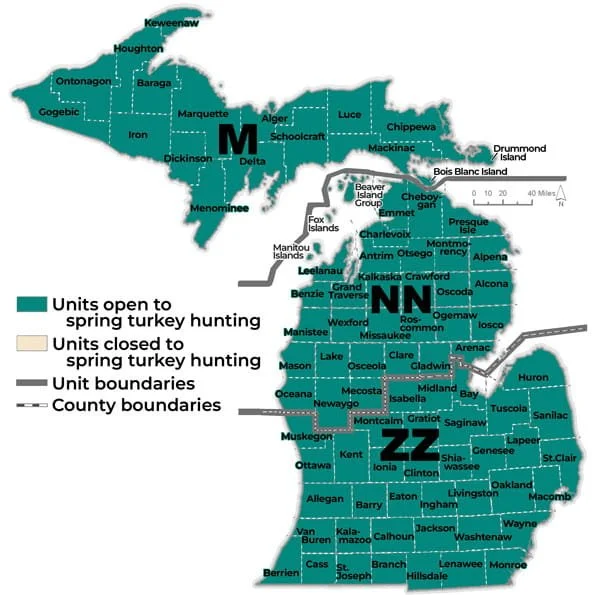
Regulations You Need to Know
Bag limit: one bearded turkey per license. You get one tag for the entire spring season.
Legal weapons: shotgun (must fire a fixed shotgun shell), muzzle-loading shotgun, bow and arrow, or crossbow. No rifles. No handguns.
Decoy rules: mechanical, electronic, and live decoys are prohibited. You can use standard foam or inflatable decoys. Just nothing that moves on its own.
Baiting: illegal. You cannot bait turkeys in Michigan. Hunting over standing crops is legal, but anything you place to attract birds is a violation.
Roosted birds: You cannot shoot a turkey while it's roosting or sitting in a tree.
Shooting hours: half an hour before sunrise to sunset.
Your name and address must be on any equipment left in the field, including ground blinds on public land.
For complete regulations, visit the Michigan DNR Spring Turkey Regulations page.
Looking for more Michigan public land info? Check out our full Michigan public land hunting guide.
Best Public Land for Spring Turkeys in Michigan
Michigan's turkey population is concentrated in the Lower Peninsula, with the southern LP holding the highest densities. The UP has a growing population, particularly in the eastern counties. Here are the properties that consistently produce for public land turkey hunters.
Southern Lower Peninsula
Allegan State Game Area. Allegan County. 50,000 acres. This is arguably the best public land spring turkey property in Michigan. The mix of mature hardwoods, agricultural edges, and open ridges creates textbook turkey habitat. Gobblers use the oak ridges as strut zones and roost in the tall hardwoods along creek drainages. Morning gobbling activity is very strong here from mid-April through early May.
The pressure is real, especially opening weekend. Your edge is going deeper than the parking lot crowds. Most turkey hunters in Allegan set up within 400 yards of a road. The birds learn this fast. Push into the interior timber, especially along the hardwood ridges between creek bottoms, and you'll find gobblers that haven't heard a call in days.
Barry State Game Area. Barry County. 17,000 acres. Rolling hardwood terrain with scattered agricultural fields. Turkey populations are strong, and the terrain creates natural funnels where birds travel between roosting timber and feeding areas. The interior ridges south of Thornapple Lake consistently hold birds.
Flat River State Game Area. Montcalm and Ionia Counties. 11,000 acres. The river bottom and adjacent hardwood ridges provide roosting and strutting habitat. Turkeys work the field edges in the morning and retreat to timber by mid-morning. Set up along the transition zones where hardwoods meet the river floodplain for morning hunts.
Rogue River State Game Area. Kent County. 7,000 acres. Closer to Grand Rapids than most quality turkey ground. The upland hardwoods and swamp edges hold birds throughout the season. Pressure is moderate, and the property is small enough that you can e-scout it thoroughly before your hunt.
Sharonville State Game Area. Lenawee County. 4,000 acres. Southern Michigan farmland is fringed with good turkey numbers. The small size concentrates birds, and the surrounding agricultural land brings them onto public ground to roost and loaf during the day.
Portland State Game Area. Ionia County. 6,400 acres. Underrated turkey property. The mix of upland forest and grassland openings gives you room to work birds with decoys in open areas or call them through timber.
Northern Lower Peninsula
Pigeon River Country State Forest. Otsego and Cheboygan Counties. 106,000 acres. This is big country, and the turkeys here are spread out, but the population is growing. The hardwood ridges in the southern portion of Pigeon River hold the best turkey numbers. The birds are under less pressure than anywhere else in the southern LP.
Your challenge here is to locate birds in a vast landscape. Spend time on the roads at dawn, windows down, listening for gobbles. Once you locate a vocal bird, mark the spot on your app and plan your approach for the next morning.
Au Sable State Forest. Multiple counties. 782,000 acres. The scattered parcels of state forest across the northern LP include some very good turkey ground, especially where the forest borders agricultural land. Look for hardwood stands near open fields. The turkeys in these transition areas are patternable and often less pressured than state game area birds.
Huron National Forest. Multiple counties. 439,000 acres. The hardwood ridges along the Au Sable River corridor hold turkeys, and the dispersed camping option means you can set up a base camp right in the middle of your hunting area. Get on a ridge at dawn and listen. The river bottom acts as a sound funnel, and you can locate gobbling birds from surprising distances.
Upper Peninsula
Menominee and Delta County state lands. The southeastern UP has the strongest turkey population in the Upper Peninsula. State forest parcels near agricultural land hold huntable numbers of birds, and the pressure is almost nonexistent compared to the LP. If you drew a Hunt 0110 tag, the southeastern UP counties are your best bet.
Hiawatha National Forest. Schoolcraft and Alger Counties. 880,000 acres. Turkey numbers in the interior are low, but the southern fringe near farmland holds birds. This is adventure turkey hunting. You won't see other hunters, but you'll need to work for your gobbler.
Explore our state-by-state public hunting directory for more public land across the country.
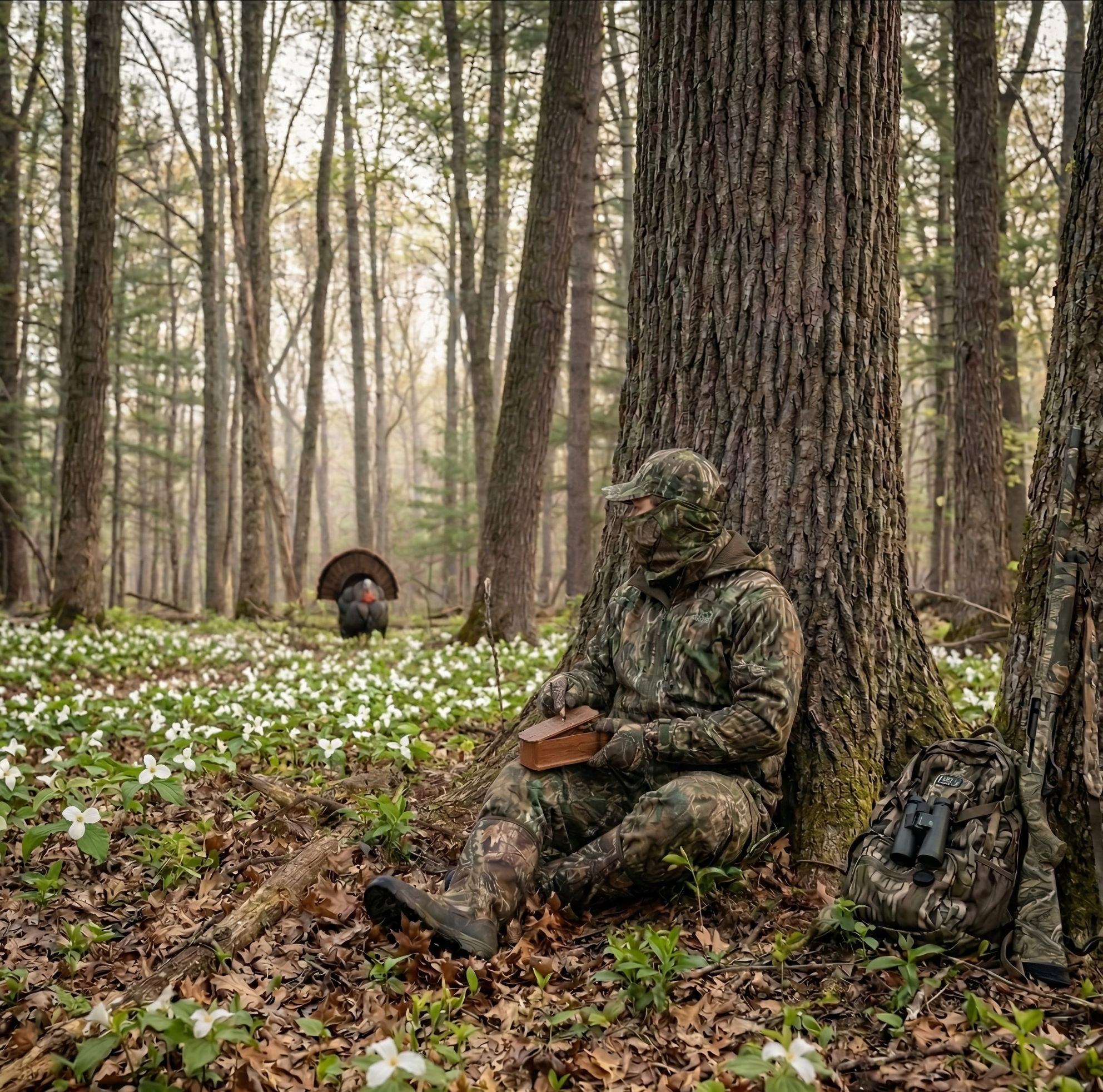
Scouting for Spring Gobblers on Public Land
Start scouting weeks before the season opens. The goal is simple: find where turkeys roost and where they go in the morning.
Roosting
Turkeys roost in mature trees, usually hardwoods, near some kind of terrain feature that provides them a clear view. River bluffs, ridgelines, and timber edges are prime roosting spots. On a calm evening in early April, drive the roads near your hunting area and listen for fly-up gobbles or wingbeats 30-45 minutes before dark. Mark every roost location on your mapping app.
On public land, don't roost a bird and then set up 50 yards from his tree at dawn. You'll bump him. Set up 150-200 yards away, in the direction he's likely to fly down and travel. That usually means downhill, toward an opening or a field edge.
Strutting Areas
Gobblers strut where hens can see them. That means open ground. Look for field edges, logging roads, ridgetop clearings, power line cuts, and grassy openings within the timber. Glass these areas from a distance during mid-morning (9-11 a.m.) in the weeks before the season. If you find a strut zone, you've found a repeatable setup.
Sign
Turkey scratching in leaf litter is hard to miss. Look for disturbed leaves in hardwood stands, especially on south-facing slopes where the ground thaws first in spring. Dusting bowls (shallow depressions in dry dirt where turkeys dust their feathers) indicate regular use. Droppings and feathers confirm the area is getting consistent traffic.
Use Technology
A mapping app like onX Hunt or HuntStand shows you every piece of public land, terrain contours, and property boundaries. Zoom in on the hardwood ridges and field edges adjacent to state game areas. Those transition zones are where turkeys spend their mornings.
Satellite imagery on Google Earth is free and lets you identify strutting areas, clearings, and logging roads from your couch. Look for open patches within hardwood stands. Those are your setup spots.
Calling Strategy for Pressured Public Land Gobblers
Public land turkeys in Michigan hear a lot of calling. By the second week of the season, most gobblers in popular state game areas have been called to, set up on, and either spooked or pressured into going silent.
Here's how to beat that.
Less is More
The biggest mistake public land turkey hunters make is calling too much. A gobbler that answers but won't commit is telling you something. He's heard this before. Instead of cranking up the volume and frequency, do the opposite. Give him a few soft yelps, then go quiet. Set a timer on your phone for 20 minutes. Don't touch your call. Patience kills more pressured gobblers than aggressive calling ever will.
Use Soft Calls
Leave the loud box call in the truck after opening week. Switch to a slate call or a mouth call and keep your volume down. Soft purrs, clucks, and feeding yelps sound like a real hen going about her business. A three-note tree yelp at first light, followed by a fly-down cackle, followed by silence, is a deadly sequence for a roost-adjacent setup.
Call from Where He Wants to Go
Don't call from where you are. Call from where the gobbler wants to be. If you know he roosts on a ridge and flies down to a field edge every morning, set up on the field edge and call from his travel route, not from 200 yards away in the wrong direction. Turkeys take the path of least resistance. Set up on it.
Reap the Silent Bird
Some gobblers go completely silent under pressure. They still gobble, just not when they hear calling. If you've located a bird through scouting but he won't answer your calls, try a silent setup. Get in his travel path between the roost and the strut zone before dawn. Put out a single hen decoy. Don't call. Wait. These silent setups account for a lot of mature longbeards on public ground.
Mid-Morning Reset
Opening morning chaos dies down by 9 a.m. Most hunters leave. The woods get quiet. And gobblers that went silent at dawn often fire back up between 10 a.m. and noon once the hens leave them to nest. Stay in the woods. Move slowly through the timber, pausing every 100-150 yards to give a series of yelps. If a bird answers, sit down immediately, set up, and work him. Some of the best public land turkey hunting of the season happens between 10 a.m. and 1 p.m.
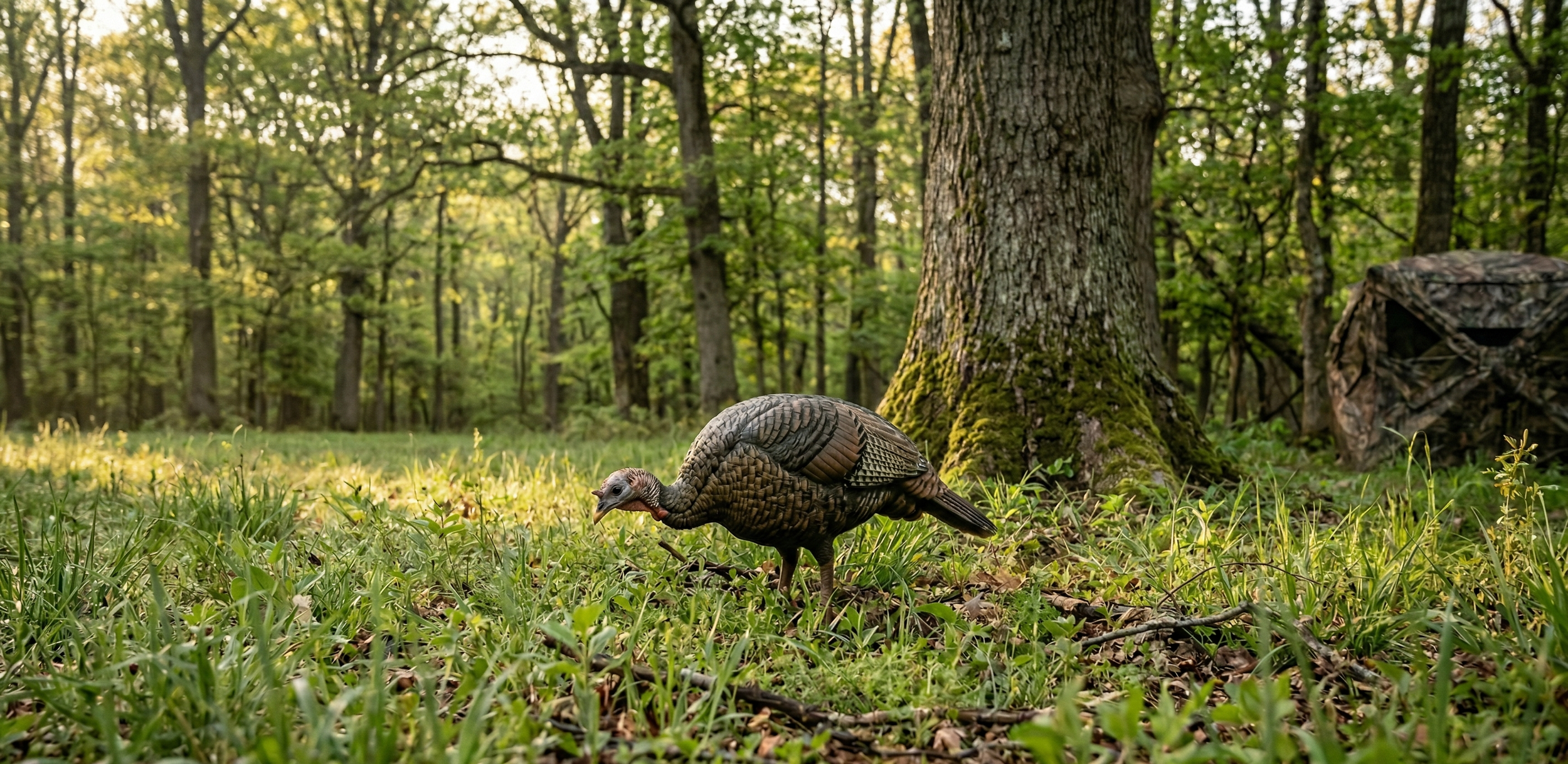
Gear for Michigan Spring Turkey Hunting
You don't need a truckload of equipment. Here's what matters.
Shotgun and Ammo
A 12-gauge is the standard. A 20-gauge works well out to 35 yards, especially with modern TSS (Tungsten Super Shot) loads. If you're shooting lead or standard tungsten, stick with the 12.
Pattern your gun before the season. This is non-negotiable. Set up a turkey target at 30 and 40 yards and shoot it with the choke and load combination you plan to hunt with. You need to know where your pattern centers and where your pellet density drops off. Most turkey misses happen because hunters never pattern their gun.
TSS loads have changed the game. They extend clean kill range to 50-60 yards with the right choke. Federal Heavyweight TSS and Apex TSS are two of the best options. They're expensive, around $5-7 per shell, but you only need one.
Calls
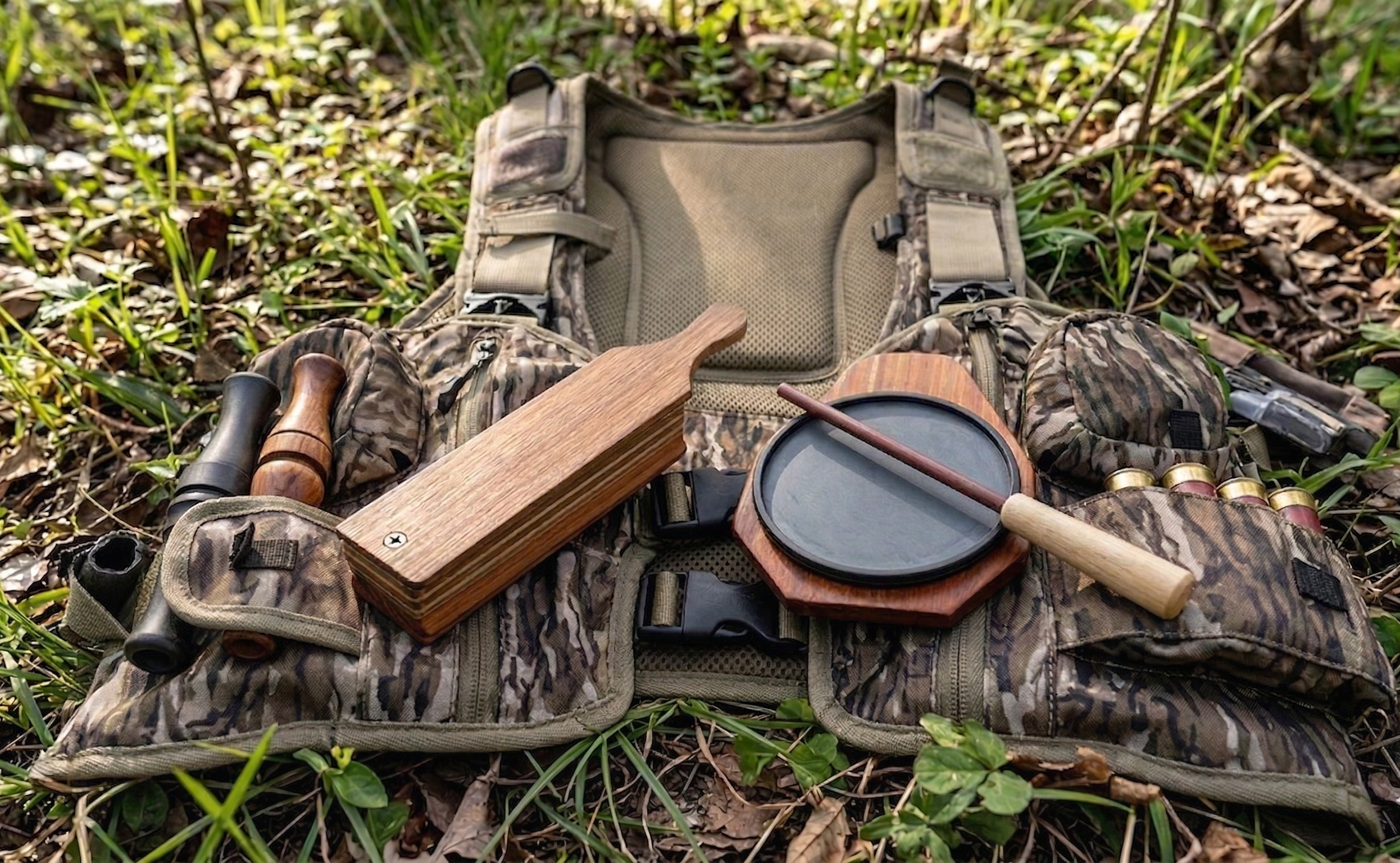
Bring at least three types. A box call for volume and for windy days. A slate or glass call for soft, realistic yelps and purrs. A diaphragm (mouth) call for hands-free calling when a bird is close. If you can only carry one, make it a slate call. It's the most versatile and forgiving for calling cadence.
Primos, Woodhaven, and Zink all make quality slate calls in the $20-35 range. Don't overthink the brand. Pick one and practice with it until your yelps sound clean and consistent. Check the current price on the Woodhaven cherry classic.
Decoys
You're allowed standard, non-mechanical decoys in Michigan. A single hen decoy is enough for most public land setups. A hen and jake combination gets aggressive gobblers to commit faster, but it can also spook subordinate toms. Read the situation.
Avian-X and Dave Smith Decoys make the most realistic options. A budget-friendly Avian-X Lookout Hen does the job for under $80.
Clothing
Full camo from head to toe. Face mask or face paint. Gloves. Turkeys have extraordinary eyesight, and they pick up movement and contrast at distances that will humble you. Your camo pattern matters less than breaking up your outline and staying still.
Michigan spring mornings are cold. Expect 30s at dawn in mid-April, warming to the 50s by mid-morning. Layer accordingly. A lightweight insulated jacket over a moisture-wicking base layer works for the cold sit, and you can shed the jacket as the morning warms up.
Ground Blind vs. Run-and-Gun
Both work on public land. A pop-up ground blind is excellent for field edge setups where you're watching a strut zone and working decoys. It hides your movement completely and keeps you comfortable during long sits. Set the blind several days before you plan to hunt so turkeys can acclimate to it.
For timber hunting and covering ground to locate birds, go mobile. A lightweight turkey vest with a built-in seat pad lets you sit against a tree anywhere. The Tenzing or Alps OutdoorZ turkey vests give you a seat, call pockets, and storage without bulk.
Other Essentials
Bring a headlamp with a red light mode for the pre-dawn walk-in. Bring insect repellent because Michigan mosquitoes show up in May and are aggressive. A compact pair of binoculars lets you glass field edges and identify birds at a distance without moving. The Vortex Crossfire HD 8x42 is a solid, affordable option that earns its place in a turkey vest.
See all of our hunting gear reviews for more recommendations.
Common Mistakes on Public Land
These are the things that burn most hunters every spring.
Setting up too close to the roost. You spook the bird before he even flies down. Give roosting gobblers 150-200 yards of space, minimum.
Calling too aggressively, too early in the sit. Let the woods wake up. Give a bird time to gobble on its own. Your first calls of the morning should be soft.
Leaving too early. Most public land turkey hunters are back at the truck by 9 a.m. Stay until noon. Mid-morning is when lonely gobblers come looking for company.
Hunting the same spot every day. If you pressure a bird two mornings in a row without killing him, he'll change his pattern. Rotate spots. Give areas a day or two of rest.
Not patterning your shotgun. You get one shot. Make sure you know exactly where your pellets are going at 30 and 40 yards.
Ignoring the wind. Turkeys don't smell you, but wind affects how far your calls carry and how well you can hear gobbles. Hunt with the wind at your back or quartering so your calls project toward where you expect birds. On windy days, get into sheltered timber where gobbles carry better, and birds feel more comfortable.
Frequently Asked Questions
Can I hunt spring turkeys on Michigan public land without entering the drawing?
Yes. The Hunt 0234 statewide license is available without a drawing and costs $15. It runs May 2-31 and is valid on public and private land statewide, except for public land in TMU ZZ (southern LP). If you want to hunt public land specifically in the southern LP, you need to draw a Hunt 0302 or 0303 tag or purchase a leftover license, if available.
What time should I be set up for a morning turkey hunt?
Be in position at least 30 minutes before first light. In mid-April, that means being set up by about 6:15 a.m. In May, you'll want to be in place by 5:45 a.m. Getting in early matters because turkeys can gobble on the roost before you can see your hand in front of your face. If you're still walking in when the first gobble rips, you're late.
Is a ground blind or sitting against a tree better for public land turkeys?
Both work. A ground blind is better for field edge setups where you're watching a strut zone and working decoys. Sitting against a tree is better for timber hunting, run-and-gun tactics, and situations where you need to move quickly to a new spot. On public land, versatility matters. If you had to pick one approach, go mobile with a turkey vest and a good seat pad.
Can I use a crossbow for spring turkeys in Michigan?
Yes. Crossbows are legal during the spring turkey season. Bow and crossbow are both valid methods alongside the shotgun and the muzzle-loading shotgun.
What's the best call for public land turkeys in Michigan?
A slate call is the most versatile. It produces soft, realistic yelps and purrs that don't sound like every other hunter in the woods running a box call at full volume. For hands-free calling when a bird is inside 100 yards, a diaphragm call is essential. Carry both plus a box call for high-wind situations or locating distant birds.
The drawing is done, and the season is either open or about to open, depending on your tag. Get your gun patterned, your boots muddy, and your calls tuned. Michigan's 200,000 turkeys are out there. Go find one.
Sign up for our free Michigan Public Land Hunting Guide (PDF) and get weekly updates on access tips, gear reviews, and hunting strategy delivered to your inbox.
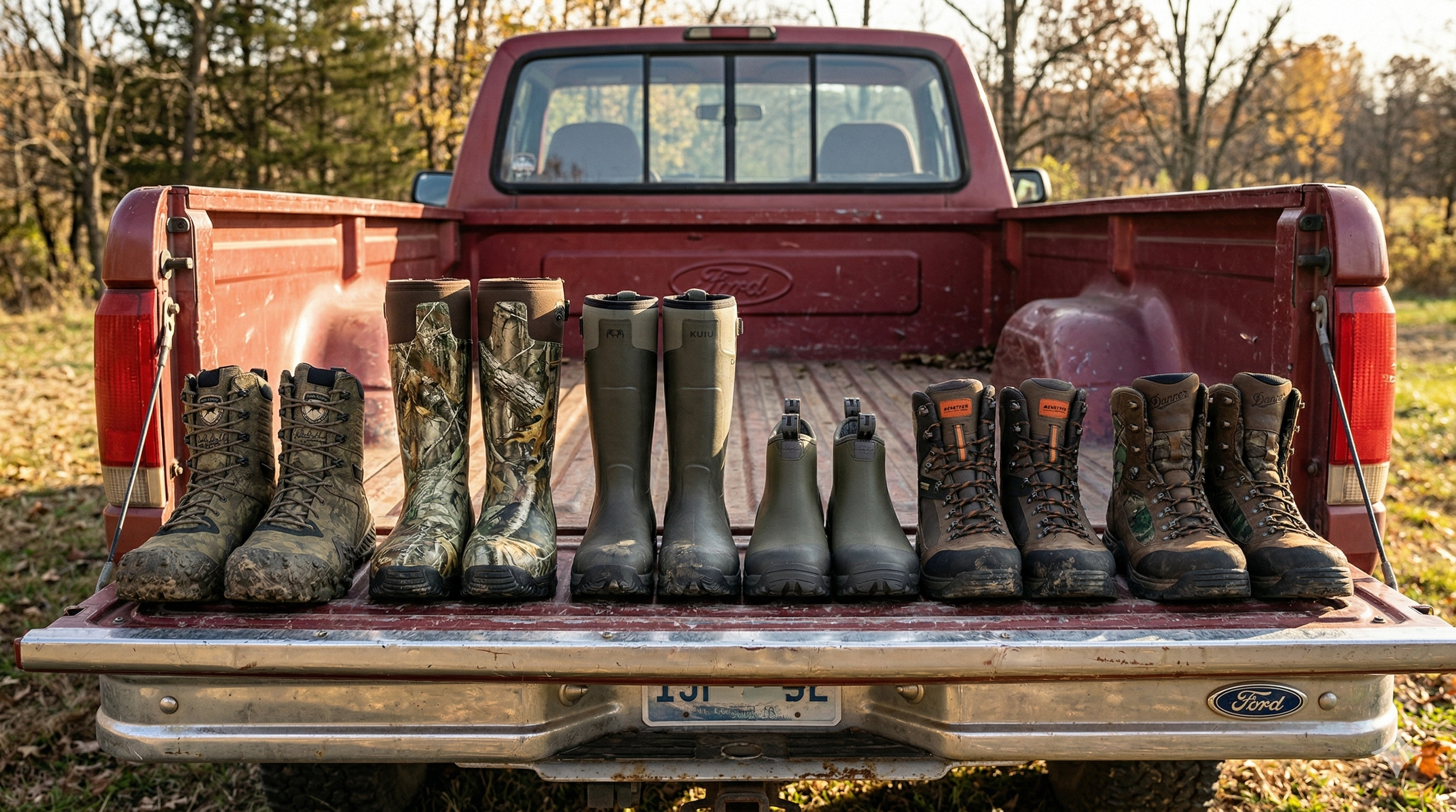
Best Turkey Hunting Boots for 2026: 7 Picks for Every Terrain and Budget
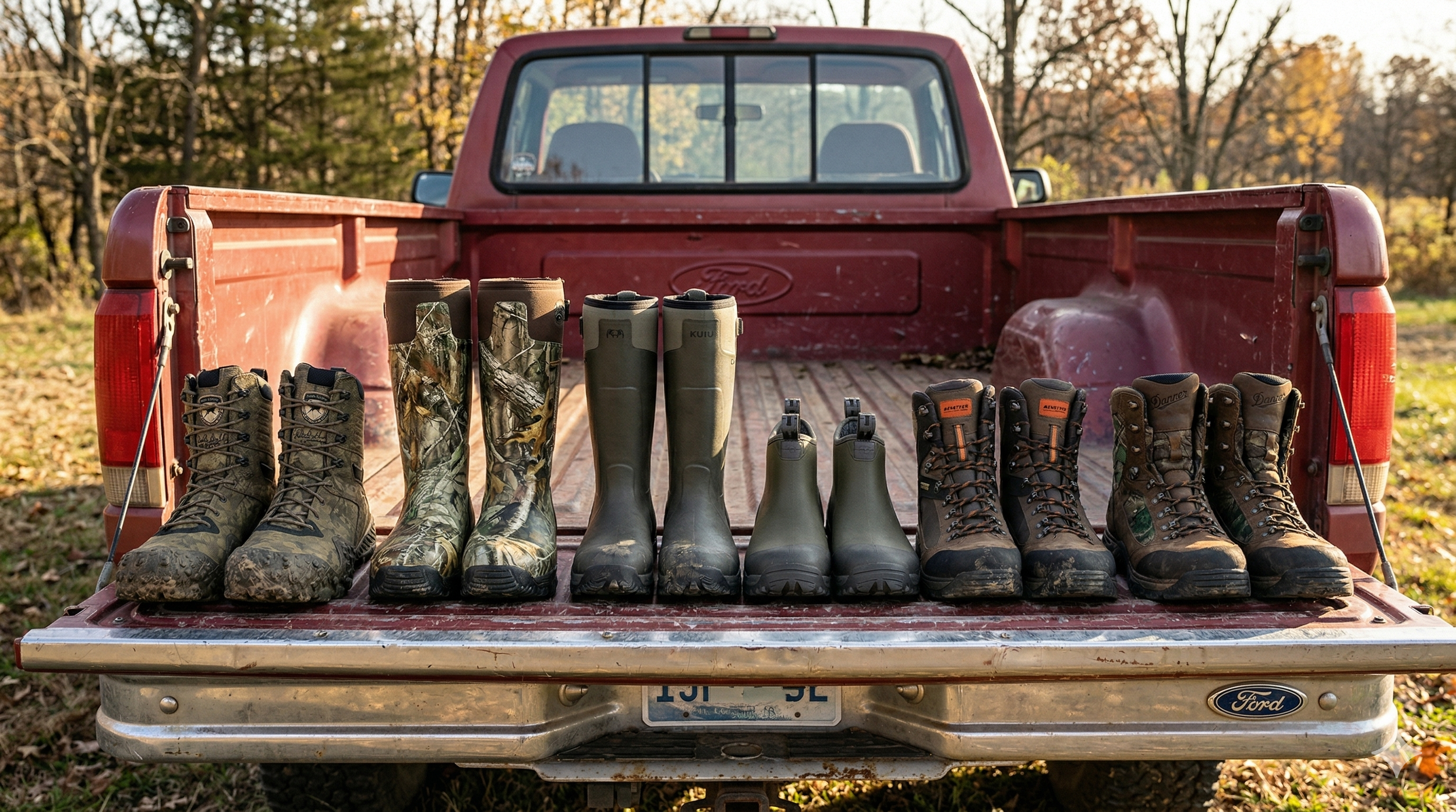
Turkey season punishes your feet in ways deer season doesn't. You're walking logging roads in the dark, crossing flooded creek bottoms at first light, sitting motionless against a tree for two hours, then jumping up and covering a half mile to get ahead of a gobbler that just moved. The boot that handles all of that without leaving you blistered, soaked, or snake-bit is the boot you want on your feet this spring.
I've worn everything from trail runners to knee-high rubber boots chasing birds across public land, and the truth is this: there's no single perfect turkey boot. The right pick depends on your terrain, your hunting style, and what might try to bite your ankle where you hunt. Here are seven boots that cover the full range, ranked by how well they perform for the spring turkey hunter who covers real ground.
Quick Picks: Best Turkey Hunting Boots at a Glance
Best Overall (Lace-Up): Irish Setter VaprTrek 8" — Ultralight, athletic feel, built for run-and-gun hunters. $190-$230.
Best Rubber Boot for Turkey Season: LaCrosse Alphaburly Pro 18" — Waterproof, comfortable enough for miles. $160-$230.
Best for Wet and Muddy Public Land: KUIU HD Mud Boot — Self-cleaning tread and real ankle support in a neoprene boot. $199-$229.
Best Budget Rubber Boot: KUIU Ankle Mud Boot — Same tread technology as the HD, lower profile, lower price. $149.
Best for Hilly Terrain: Kenetrek Corrie 3.2 Hiker — Mountain-boot support with all-day comfort. $250-$290.
Best Snake Boot: Danner Sharptail — 17 inches of fang protection without the typical brick-on-your-foot feel. $320-360.
Best Leather All-Rounder: Danner Pronghorn — Five generations of proven performance in a boot that works from September through May. $240-$270.
Best Boots 2026: Individual Reviews
Irish Setter VaprTrek 8" — Best Overall for Turkey Hunting
The VaprTrek is the boot I grab when I know I'm going to cover ground. At roughly 18 ounces per boot, it weighs less than some trail runners, but it's still a legitimate hunting boot with full-grain waterproof leather, ankle support, and an aggressive Hex Lite outsole that grabs wet hillsides and leaf-covered slopes better than it has any right to at this weight.
What makes it a standout turkey boot is the athletic fit. When a gobbler moves, and you need to circle 300 yards through timber to cut him off, you're not fighting a clunky boot. The sugarcane-based EVA midsole returns energy with every step, and the CuShin tongue design eliminates the pressure point at the front of your shin that most 8-inch boots cause during long walks. UltraDry waterproofing has held up through dewy fields and shallow creek crossings without letting moisture in.
Limitations: This isn't a deep-water or snake-country boot. At 8 inches tall, it won't keep water out if you sink past the ankle, and it offers zero snake protection. If you're hunting bottomland swamps or southern pine flats where copperheads and rattlesnakes are active in April, look further down this list.
Best for: The run-and-gun turkey hunter on public land who covers miles of ridges, hardwood flats, and moderate terrain. Also doubles as an excellent early-season deer boot and scouting shoe.
Price: $190-$230, depending on model and insulation level. Check current price
LaCrosse Alphaburly Pro 18" — Best Rubber Boot for Spring Turkey
The Alphaburly Pro has been the standard rubber hunting boot for a reason. The hand-laid rubber-over-neoprene construction is waterproof, a feature that matters more during spring turkey season than most hunters realize. You're walking through wet fields, crossing creeks, and sitting on damp ground for hours. A boot that keeps moisture out is doing real work.
The EVA midsole is what separates this from cheaper rubber boots. It absorbs impact and adds genuine comfort even after several miles of walking. The adjustable rear gusset fits different calf sizes and makes slipping the boot on and off easier than most 18-inch designs. The multi-layered rubber in the toe and heel withstands rocks and roots without cracking, even in cold morning temps.
Limitations: At 18 inches tall and with a rubber exterior, these are heavier and hotter than lace-up boots. On warm late-April mornings in the South, your feet will sweat. They also take up more pack space if you're traveling, and the break-in period is real; give them a few walks before opening morning. Some users report the neoprene-to-rubber seam degrading after two to three seasons of heavy use.
Best for: Hunters working wet bottomland, river timber, or any ground where you're consistently stepping in water. Also excellent for scent-conscious whitetail hunters who want a boot that pulls double duty in fall.
Price: $160-$230, depending on insulation level. Non-insulated runs are the cheapest and are the right pick for spring. Check the current price on Amazon
KUIU HD Mud Boot — Best for Wet and Muddy Public Land
KUIU's boot lineup is newer to the market than that of the legacy names on this list, but the HD Mud Boot has earned its spot. The standout feature is the patent-pending tread design, inspired by self-cleaning mountain bike tires. The spaced lugs shed mud instead of packing it into the sole, a detail that matters enormously when you're crossing clay bottoms on public WMAs in Missouri or Tennessee, where every step in a standard boot adds a pound of mud to each foot.
The heavy-duty neoprene with a vulcanized rubber overlay keeps water out, and the interior grid fleece liner adds warmth without trapping moisture. What surprised me most about this boot is the ankle support. Most neoprene slip-ons feel sloppy laterally, but the combination of the fitted ankle and 3/4 shank in the HD Mud Boot gives you structure that a typical rubber boot doesn't offer. The EVA sole is comfortable enough for multi-mile walks to remote public land spots.
Limitations: Like all neoprene boots, these will run warm on hot days. The slip-on design means no lacing adjustment; if the fit isn't right out of the box, you're stuck with it. Some users report a pressure point on the front shin from the rubber overlay during long hikes, particularly when wearing jeans instead of hunting pants. Size carefully, as the snug ankle fit that provides support also makes them harder to pull off at the end of the day.
Best for: Turkey hunters on flat to rolling public land where mud, standing water, and creek crossings are constant. The self-cleaning tread earns its keep in clay-heavy soils across the Midwest and Southeast.
Price: $199-$229, depending on color/pattern. Available exclusively at KUIU.com. Check the current price at KUIU.com
KUIU Ankle Mud Boot — Best Budget Pick
If you want the same self-cleaning tread technology and neoprene construction as the HD Mud Boot but don't need 16 inches of height, the Ankle Mud Boot delivers at a meaningfully lower price. It uses the same vulcanized rubber overlay and EVA sole in a lower-profile design that's easier to slip on, lighter on the foot, and cooler in warm weather.
The ankle height makes it a true do-everything boot. I've worn this style for everything from pre-season scouting to food plot work to early-morning turkey sits on higher, drier ground. It works well when paired with gaiters for snake protection or when you just need a reliable, waterproof boot that won't slow you down.
Limitations: The ankle height means no protection in deep water or tall grass with snakes. The neoprene offers no bite resistance. On steep, uneven terrain, you'll miss the ankle support of a taller lace-up boot. This is a fair-weather, moderate-terrain boot; don't ask it to do more than that.
Best for: Budget-conscious hunters who want quality construction without paying $ 200 or more. Also works well as a camp boot, scouting boot, or casual hunting shoe for quick morning hunts on familiar ground.
Price: $149 at KUIU.com. Check the current price at KUIU.com
Kenetrek Corrie 3.2 Hiker — Best for Hilly Terrain
A hiking boot on a turkey hunting list might raise eyebrows, but the Corrie 3.2 is the best boot I've used for covering serious elevation on spring gobbler hunts. If you're chasing Merriam's in the Black Hills, eastern birds through Appalachian hollows, or Rio Grandes across canyon country in Texas, you need a boot built for climbing and descending, not just walking flat logging roads.
The 7-inch leather-and-synthetic upper with K-strap ankle support provides stability on steep sidehills without restricting mobility. The 5mm nylon midsole paired with lightweight Grapon outsoles grips rock and loose dirt confidently, and the cushioning holds up through 10-plus-mile days without breaking down. This boot hikes like a premium backpacking shoe but has the durability and protection of a hunting boot.
Limitations: Not waterproof like a rubber boot; Gore-Tex lined, which means it handles rain and dew but won't survive a creek crossing above the ankle. No insulation in the standard model, so cold early-morning sits can be chilly. The price is steep for a boot that doesn't do everything. And like any lace-up leather boot, there's a break-in period of 15-20 miles before it truly conforms to your foot.
Best for: The mobile turkey hunter in mountainous or hilly terrain who values stability, support, and all-day hiking comfort over waterproof depth. Western turkey hunters chasing Merriam's and Rio Grandes will appreciate this boot most.
Price: $290-325. Check current price
Danner Sharptail Snake Boot Side Zip — Best Snake Boot
Every turkey hunter south of the Mason-Dixon line should own a snake boot, and the Sharptail is the one I recommend for spring. Most snake boots feel like you're wearing a cast, stiff, heavy, and guaranteed to cause blisters by noon. Danner built the Sharptail differently. At 17 inches tall, it provides full lower-leg protection against copperheads, timber rattlesnakes, and cottonmouths, and its full-grain leather upper is noticeably more flexible than that of competing models.
The Open Cell Polyurethane footbed absorbs shock well, and the Plyolite midsole keeps overall weight manageable for a boot in this protection class. The multi-directional lug outsole handles the mix of hardwood ridges, swamp edges, and pine plantations that define Southern and Southeastern turkey country. The 360-degree snake guard doesn't rely on a single panel; it wraps the entire boot.
Limitations: They're still a snake boot, which means they're heavier and less breathable than any lace-up hiker or rubber boot on this list. Breaking them in takes time and patience. On long, aggressive walks in warm weather, your feet will be hot. If you don't hunt in active snake territory, there's no reason to carry this weight.
Best for: Turkey hunters in the Southeast, South, and Mid-Atlantic, where venomous snakes are active in the spring. If you hunt public land in Alabama, Georgia, Florida, the Carolinas, Arkansas, or East Texas, this boot should be in your truck.
Price: $320-360. Check current price
Danner Pronghorn — Best Leather All-Rounder
The Pronghorn is on its fifth generation, and it's earned the reputation it carries. Military, law enforcement, and serious hunters have been wearing this boot for decades, and the combination of full-grain leather, Gore-Tex lining, and Vibram outsole delivers performance that justifies the price across multiple seasons and species.
For turkey hunting specifically, the Pronghorn works on almost any terrain. It provides enough ankle support for steep ridges, enough waterproofing for morning dew and light creek crossings, and enough cushioning for all-day comfort. The build quality means this boot will last three to five seasons of hard use, making the per-season cost very competitive with cheaper boots you'll replace every year or two.
Limitations: At roughly $270, this is one of the most expensive lace-ups on the list. The leather upper is heavier than synthetic alternatives, and it takes 20-plus miles to fully break in. It's also not the quietest boot in the woods; the Vibram sole can click on rock and hardpan in a way that softer-soled boots won't. Not ideal for run-and-gun speed, and not a rubber boot, so deep mud and standing water will get inside.
Best for: The hunter who wants one boot that works for turkey season, early bow season, and late-season sits. If you're buying one pair of lace-up hunting boots and want them to last, this is the investment pick.
Price: $240-$270. Check current price
Turkey Hunting Boots Buyer's Guide: What Actually Matters
Height
Boot height should match your terrain and threats. In snake country, 16 to 18 inches is mandatory. For wet bottomland and creek crossings, 14 to 18 inches keeps water out. For dry ridges and upland timber, 6 to 8 inches is plenty, and you'll move faster and more quietly for it.
Weight
This matters more to turkey hunters than to most other hunters. You're covering ground, sometimes lots of it, in a single morning. Every ounce adds up over miles. A sub-20-ounce-per-boot lace-up like the VaprTrek vs. a 3-pound rubber boot is a meaningful difference by your fifth mile.
Waterproofing vs. Breathability
These are always a tradeoff. Full rubber boots are 100% waterproof but trap heat. Gore-Tex lined leather boots breathe better but won't survive a deep crossing. For spring turkey, where temps can swing from 30 degrees at dawn to 65 degrees by 10 AM, I lean toward boots that breathe unless I know I'm hitting standing water.
Tread Design
Ignore marketing language about "aggressive traction." What matters is how the sole performs on wet leaves, clay, and loose hillside dirt, the three surfaces you'll encounter most during spring turkey season. Self-cleaning designs like KUIU's spaced-lug system matter in heavy mud. Vibram and similar compounds grip wet rock. Shallow lugs tend to pack with clay and become skis.
What's Marketing Hype
Temperature ratings on boots are largely meaningless; they're not standardized, and your feet's warmth depends more on socks, activity level, and blood circulation than any insulation rating. And any boot claiming to be "the only boot you'll ever need" is lying. Different hunts demand different boots.
Budget Spotlight: KUIU Ankle Mud Boot
At $149, the KUIU Ankle Mud Boot is the best value on this list for the turkey hunter who doesn't need snake protection or deep-water capability. You get the same self-cleaning tread technology and waterproof neoprene construction as the $229 HD model, just in a lower-profile package. Pair it with a quality merino wool sock and, if needed, snake gaiters, and you have a spring setup that costs less than most single boots on this list. The ankle height also makes it the most versatile option here; it works for scouting, food plot work, early-season hunts, and camp duty without feeling like specialized gear.
Frequently Asked Questions
Do You Need Snake Boots for Turkey Hunting?
It depends entirely on where you hunt. If you're in the Southeast, Gulf states, or anywhere with an active venomous snake population during April and May, yes, invest in snake boots or, at a minimum, snake gaiters. Copperheads, timber rattlesnakes, and cottonmouths are active during the same warm-up that triggers spring gobbling. If you hunt the Upper Midwest, Northeast, or the Mountain West, where venomous snakes are rare or absent, standard boots are fine.
Are Rubber Boots or Lace-Up Boots Better for Turkey Hunting?
Rubber boots are better for consistently wet terrain, swamps, flooded timber, and creek-bottom hunts. Lace-up boots are better for covering distance on dry to moderately wet ground because they're lighter, more supportive on uneven terrain, and breathe better in warm weather. Most serious turkey hunters own one of each and choose based on the morning's conditions.
How Important Is Boot Weight for Turkey Hunting?
More important than most hunters think. Turkey hunting involves more walking than a typical deer sit, and spring conditions mean warmer temps, which cause fatigue to set in faster. If you regularly cover two to five miles per hunt, the difference between a 20-ounce boot and a 40-ounce boot is significant by mid-morning. Lighter boots also let you move more quietly through dry leaves and timber, a real advantage when you're trying to close distance on a gobbler.
Should You Wear Insulated Boots for Spring Turkey Season?
In most regions, no. Non-insulated or lightly insulated boots are the better choice for spring. Early-morning temps might be cold, but you'll be walking to your setup and generating heat. By mid-morning, insulation becomes a liability. If you hunt northern states where opening week can still bring frost or snow, a lightly insulated option (200-400 grams) makes sense. For the Southeast, Gulf Coast, or any hunt after mid-April, skip the insulation entirely and wear a heavier sock if mornings are cool.
Can You Use the Same Boots for Turkey and Deer Season?
Absolutely. Crossover is one of the best ways to justify spending more on quality boots. The Danner Pronghorn, Irish Setter VaprTrek, and LaCrosse Alphaburly Pro all transition seamlessly from spring turkey to fall deer. The only adjustments are insulation level (swap to insulated models or heavier socks for late-season deer sits) and height (you might want a taller rubber boot for November's rain and snow). Buying a boot that works across seasons is smarter than owning a closet full of specialized footwear you wear three times a year.
Want more gear recommendations and public land strategies delivered straight to your inbox? Sign up for our free state-by-state public land hunting guides and never miss a new review.
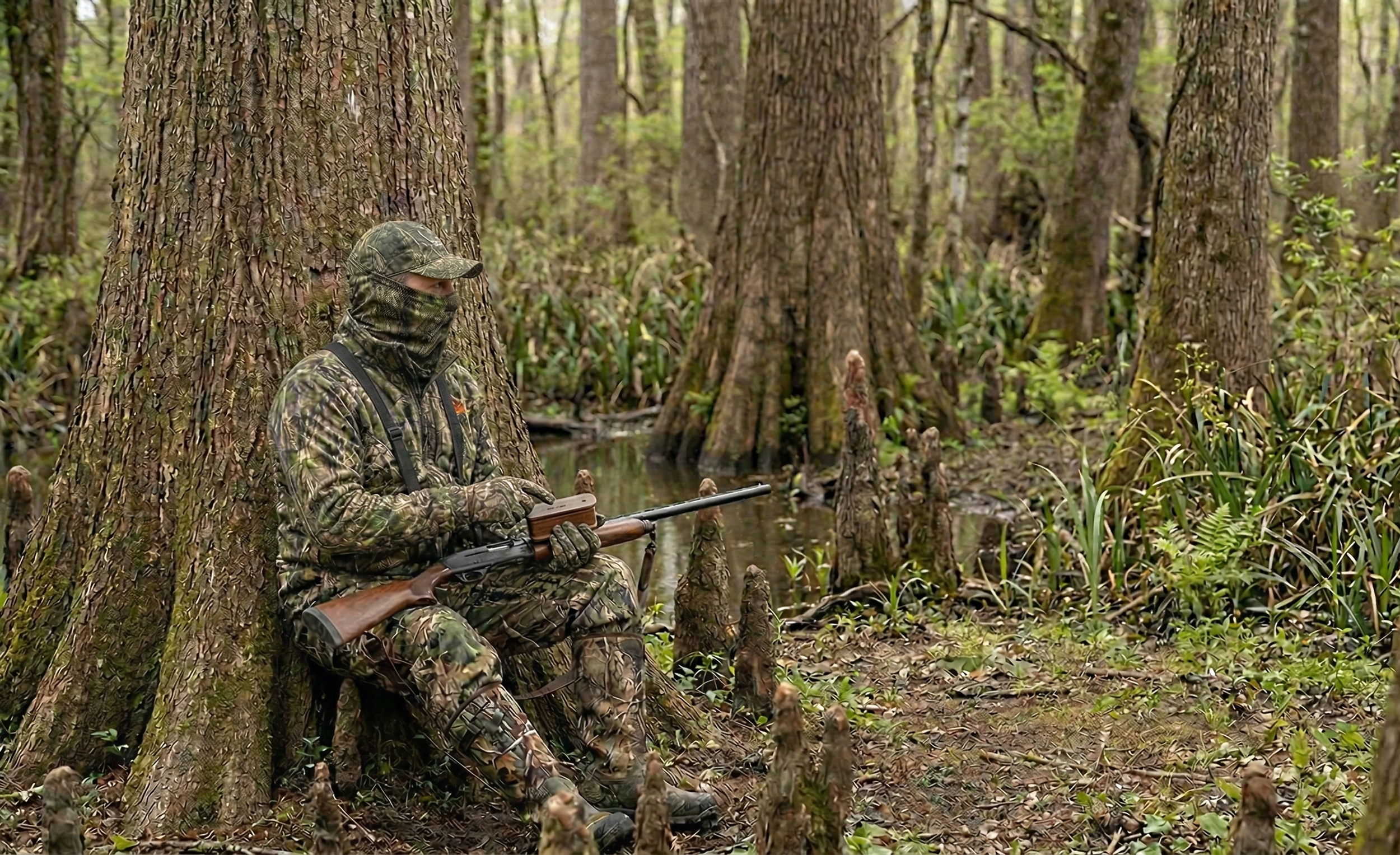
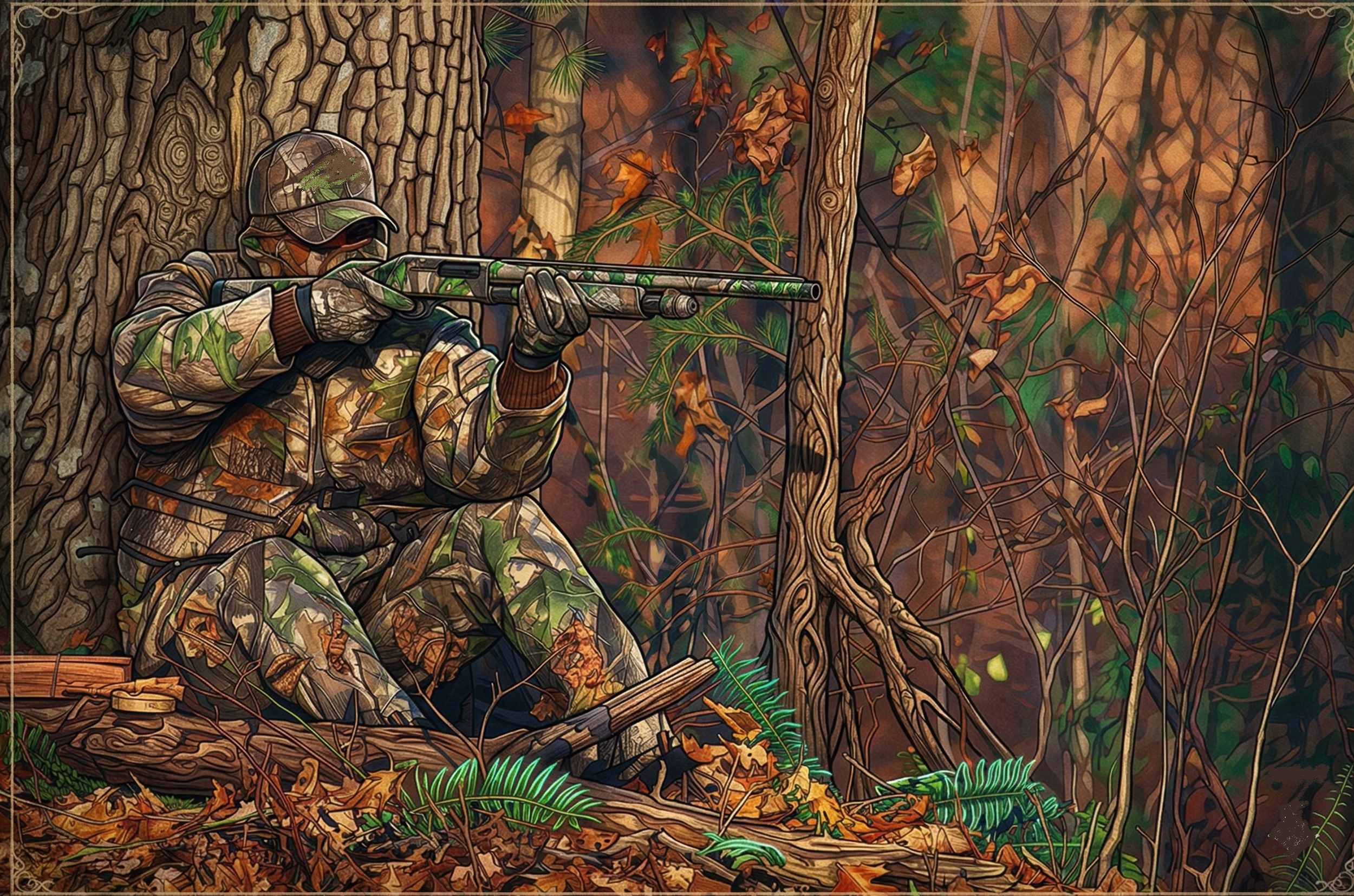
Public Land Turkey Hunting: How to Kill Pressured Toms
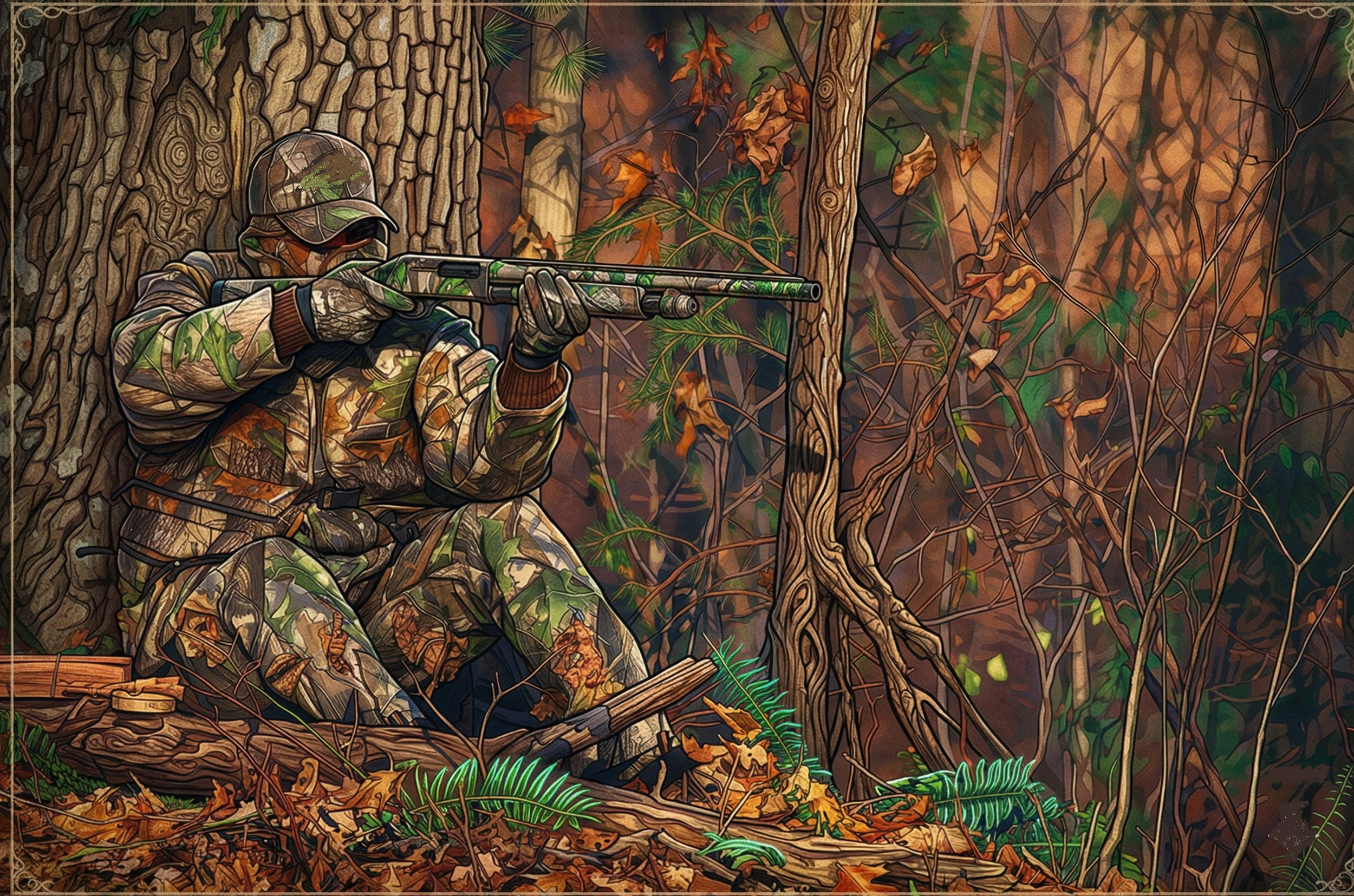
How to Kill Pressured Toms on Public Land
A pressured gobbler doesn't act like the birds you see on TV. He doesn't sprint into your decoy spread at 40 yards. He doesn't hammer back at every yelp you throw at him. He gobbles once on the roost, pitches down the opposite direction, and disappears into a drainage you didn't know existed. If you've hunted public-land turkey for more than one season, you've met this bird, and he's probably still alive.
Killing educated toms on public land requires a fundamentally different approach than what works on private ground or early in the season before pressure sets in. The tactics below aren't theoretical. They come from years of chasing the same birds that every other truck at the parking lot is chasing, and consistently tagging out when the woods go quiet.
Why Standard Turkey Tactics Fail on Pressured Public Land
Most turkey hunting advice assumes a cooperative bird. Set up, call, wait. That sequence works on a gobbler that hasn't been bumped off his roost three mornings in a row or had six different hunters throw slate calls at him from the same field edge.
Public land toms, especially after the first week of season, learn a specific pattern: the sound of a call followed by a motionless setup equals danger. They've been educated by every hunter who parked at the main access, walked 200 yards in, set up on the first ridge, and started hammering a box call at flydown. These birds aren't stupid. They're conditioned.
Your job is to break the pattern they've learned to avoid.
Step-by-Step: A Pressured Tom System That Works
Scout Before Season With Purpose
Don't just listen for gobbles during your pre-season scouting. Map the terrain. You need to know where birds roost, where they go after flydown, and critically, where other hunters set up. Mark trailhead parking areas on your onX Hunt app. Note boot tracks, ground blind locations, and field edges that get the most attention. The spots every hunter gravitates toward are exactly the spots you're going to avoid.
Walk ridgelines and creek bottoms during mid-morning in March and early April. Locate dusting sites, strut zones (look for drag marks in the dirt), and travel corridors between roosting timber and open feeding areas. Log all of it on your mapping app with waypoints. You're building an intelligence file on the landscape, not just listening for noise.
Change Your Access
The single biggest edge you can give yourself on public land is entering from a direction no one else uses. Most hunters walk in from established trailheads and work inward. Pressured gobblers learn to avoid those approach corridors within days.
Study aerial imagery and topo lines on onX Hunt to find alternate entries. Maybe it's a power line right-of-way on the back side. Maybe it's a creek crossing 400 yards downstream from the bridge everyone else uses. Maybe it's a logging road that dead-ends a half mile from the main parking lot, but connects to the same ridge system from the opposite side. The harder the walk-in, the fewer hunters, and the less educated the birds.
Get in early. Forty-five minutes before first light, minimum. If you're walking in at shooting light, you're already behind. Pressured birds gobble less on the roost, and when they do, it's brief. You need to be in position before they make a sound.
Call Less, Listen More
This is where most hunters on public land fail completely. They overcall. A pressured gobbler has heard aggressive yelping, cutting, and purring from every setup in the area. He associates that volume and frequency with danger.
Your first sequence of the morning should be soft. Two or three tree yelps before flydown, nothing more. If a bird gobbles, resist the urge to hammer back. Give him one soft yelp and then shut up. Let silence do the work. A tom that won't commit to aggressive calling will often walk quietly toward a hen he thinks is just out of sight, precisely because she's not making a scene.
If you don't hear a gobble at all, sit tight for at least 30 minutes after flydown and scratch leaves with your hand or the back of your call. Subtle, intermittent feeding sounds, a few soft clucks, a gentle purr, mimic a real hen better than any aggressive sequence.
Set Up Off the Obvious Spots
Where most hunters set up: field edges, food plot borders, road intersections, and open hardwood flats with good visibility.
Where pressured gobblers go: inside the timber, along benches halfway up a ridge, through saddles between two ridge points, and down into creek bottoms where they can travel without skylining themselves.
Set up 80 to 150 yards off the main travel routes other hunters use. Get into the terrain features, the inside corners, the small benches on steep hillsides, and the pinch points between two drainages. Use your topo map to identify terrain funnels: places where the ridge narrows, where two hollows converge, or where a strip of mature timber connects two larger blocks. These are the travel lanes that pressured birds default to because they offer cover and escape routes.
Be Willing to Reposition
Static setups kill more unpressured birds than they kill educated ones. If you've been sitting for 90 minutes without hearing a sound, move. Not to another road or parking lot, deeper into the cover.
When you reposition, go slow. Take 50 to 75 steps, stop, scan, and listen for five minutes. If you hear drumming or spot movement, drop immediately and set up right there. Pressured gobblers often close distance silently, no gobbling, no drumming, you can hear beyond 75 yards. A slow creep through likely habitat lets you intercept birds that aren't announcing themselves.
The Afternoon Shift
Most public land turkey pressure is concentrated between 5:30 AM and 10:00 AM. By noon, the parking lots are empty. That's when pressured gobblers start to loosen up.
Afternoon hunting, where legal, is one of the most underutilized tactics on public land. Toms that were lockjaw all morning will start gobbling again between 2:00 PM and roosting time. Set up near known roost areas, strut zones, or field edges with fresh sign. Call softly every 20 to 30 minutes. Afternoon gobblers are often henned-up toms who've bred and are now looking for company again, and they're more responsive because they haven't been pressured for six hours straight.
Check your state regulations. Some states allow all-day hunting, while others restrict hours to morning only or close turkey hunting at noon or 1:00 PM.
A Real Scenario: Creek Bottom Tom in Southeast Ohio
Late April, second week of Ohio's spring season. The main parking lot at a Wayne National Forest tract had four trucks in it by 5:00 AM. I'd scouted the area two weeks earlier and marked a roost site 600 yards east of a creek, accessible from a township road a half mile south, a route no one was using because it required crossing a knee-deep creek in the dark.
I crossed the creek at 4:45 AM, worked up the east-facing slope, and set up on a small bench 80 yards below the ridgetop. At 5:50 AM, one gobble. Just one. Then silence. Three other hunters on the west side of the ridge started calling aggressively. I could hear at least two box calls and a slate working hard.
I did nothing. Sat against an oak with my Vortex Diamondback HD 10x42 binoculars in my lap, shotgun on my knee, and waited. At 6:20 AM, I caught movement below me, a tom walking the creek bottom, heading south, away from the calling. He was doing exactly what pressured birds do: going the opposite direction from the noise.
I gave one soft cluck. He stopped. I clucked once more and scratched the leaves. He turned and walked uphill toward me, completely silent. No gobble, no drum. At 30 yards, he hit a small opening. I could see his beard dragging the ground, and I took the shot. That bird had been bumped by the same hunters from the same side three mornings running. He'd learned the pattern. I just gave him a different one.
When to Use These Tactics
These approaches work best in specific conditions:
Season timing. After the first week of any public land turkey season. Early-season birds are often still responsive to standard tactics; save the pressure strategies for when the woods have been hammered.
Weather. Overcast, drizzly mornings are ideal for pressured birds. Rain keeps casual hunters home, which means less pressure. Gobblers are also more likely to move through open areas during low-light conditions.
Terrain. Hilly, timbered country with drainages and mixed cover gives you the most options for alternate access and unconventional setups. Flat, open public areas with limited cover are harder. Pressured birds on flat ground tend to hang up at extreme range because they can see so far.
Species. Eastern wild turkeys are the most susceptible to pressure conditioning because they inhabit the most heavily hunted regions. Merriam's and Rio Grande birds in western states face less concentrated pressure, though the same principles apply in walk-in areas near population centers.
Gear That Matters for Pressured Birds
You don't need a truck full of equipment. But a few specific items make a measurable difference.
Mapping app. onX Hunt is non-negotiable. The property boundary layers keep you legal on public parcels with confusing borders, and the satellite imagery lets you scout access routes from your couch. [Try onX Hunt free for 7 days]
Binoculars. A compact pair like the Vortex Diamondback HD 8x32 lets you glass timber edges and creek bottoms without moving. On pressured birds, spotting a tom at 200 yards before he sees you is the difference between a filled tag and a busted setup.
Calls. Keep it simple. A quality pot call with a wood peg for soft, raspy yelps. The Woodhaven Ninja is a go-to for quiet, realistic tones. A mouth call for hands-free work when a bird is closing. Skip the loud box call on pressured birds entirely.
Decoys. On pressured public land, decoys can hurt you more than help. Every other hunter is using them, and educated toms learn to hang up at the sight of a motionless fake hen at 60 yards. If you do use one, go with a single feeding hen, no jakes, no full-strut toms. Better yet, leave the decoys in the truck and rely on calling and position.
Seat or pad. You're going to sit longer than you think. A quality vest with an attached lightweight chair like the ALPS OutdoorZ NWTF Grand Slam keeps you comfortable and still during the long waits pressured hunts demand. Fidgeting and shifting kill more turkey hunts than bad calling.
What Most Hunters Get Wrong
Overcalling
This is the number one mistake. Pressured gobblers don't respond to volume; they respond to silence and subtlety. If a bird gobbles once and shuts up, your instinct says call louder and more aggressively. That instinct is wrong. He heard you the first time. He's either coming quietly or he's not coming at all. Adding more calling only confirms his suspicion that something isn't right.
Hunting the Same Spots Everyone Else Hunts
Walking 200 yards from the parking lot and setting up on the first good-looking ridge isn't a strategy; it's convenience. Every other hunter does the same thing. Pressured birds learn to avoid those setups within days. Put in the extra distance. Cross the creek. Climb the steep side. If you're comfortable, you're probably not far enough from the truck.
Not Staying Long Enough
Most hunters move on after 30 to 45 minutes of silence. Pressured gobblers can take two hours to commit. They circle downwind, approach from unexpected directions, and close the last 100 yards in absolute silence. If you picked a good spot based on solid scouting, trust it. Sit there until at least 1000 AM before repositioning.
Advanced Tactics for Experienced Hunters
Run-and-Gun in the Timber Interior
Once you've identified where pressured birds travel mid-morning, typically through interior timber, along benches, and through saddles, use an aggressive mobile approach. Move through these corridors slowly, calling every 100 to 150 yards with a single series of soft yelps, then sitting for 10 to 15 minutes. You're not trying to pull a bird to you from a distance. You're trying to bump into one that's already moving through the same cover.
The Two-Day Setup
Hunt a specific bird's pattern over consecutive days without trying to kill him on day one. Day one is pure observation. Note what time he flies down, which direction he goes, where he ends up by 9:00 AM, and what terrain features he uses. Day two, set up directly on his travel route before he gets there. This is patience-intensive, but it's deadly on that one bird nobody else can figure out.
Roost Ambush at Last Light
The evening before your morning hunt, slip into the area and listen for birds flying up to roost. Don't call. Just note the tree, the direction the bird faces on the limb, and the terrain below. The next morning, set up 100 yards downhill of the roost tree in the direction you expect him to pitch, which is almost always downhill and into an opening. Be in position an hour before first light and do not make a sound until he's on the ground.
Frequently Asked Questions
How Do You Know if a Tom Is Pressured?
A pressured tom gobbles infrequently, often once or twice on the roost, then goes silent. He tends to move away from calling rather than toward it. He may hang up at 80 to 100 yards and refuse to close the distance. If birds in your area were responsive early in the season and have gone quiet, pressure is almost certainly the cause.
Should You Use a Gobble Call on Public Land?
Generally, no. Gobble calls on public land create two problems: they can pull other hunters toward your position, which is a safety concern, and pressured toms often retreat from gobble calls because they associate aggressive tom sounds with competition they've learned to avoid. Stick with hen sounds, and keep them quiet.
What Time of Day Are Pressured Toms Most Active?
Mid-morning (9:00 to 11:00 AM) and late afternoon (2:00 to 6:00 PM, where legal) tend to be the windows when pressured birds let their guard down. Most hunter activity is concentrated around flydown, so the later you're willing to hunt, the less competition you'll face.
How Far Should You Walk In on Public Land to Avoid Other Hunters?
There's no magic number, but data on GPS-tracked hunter movements suggests that most public-land hunters stay within a quarter mile of road access. Getting a half mile or more from a trailhead puts you past the majority of the competition. On flat terrain, that number drops; even 400 yards off the road can make a difference if you use terrain or water crossings to access areas others skip.
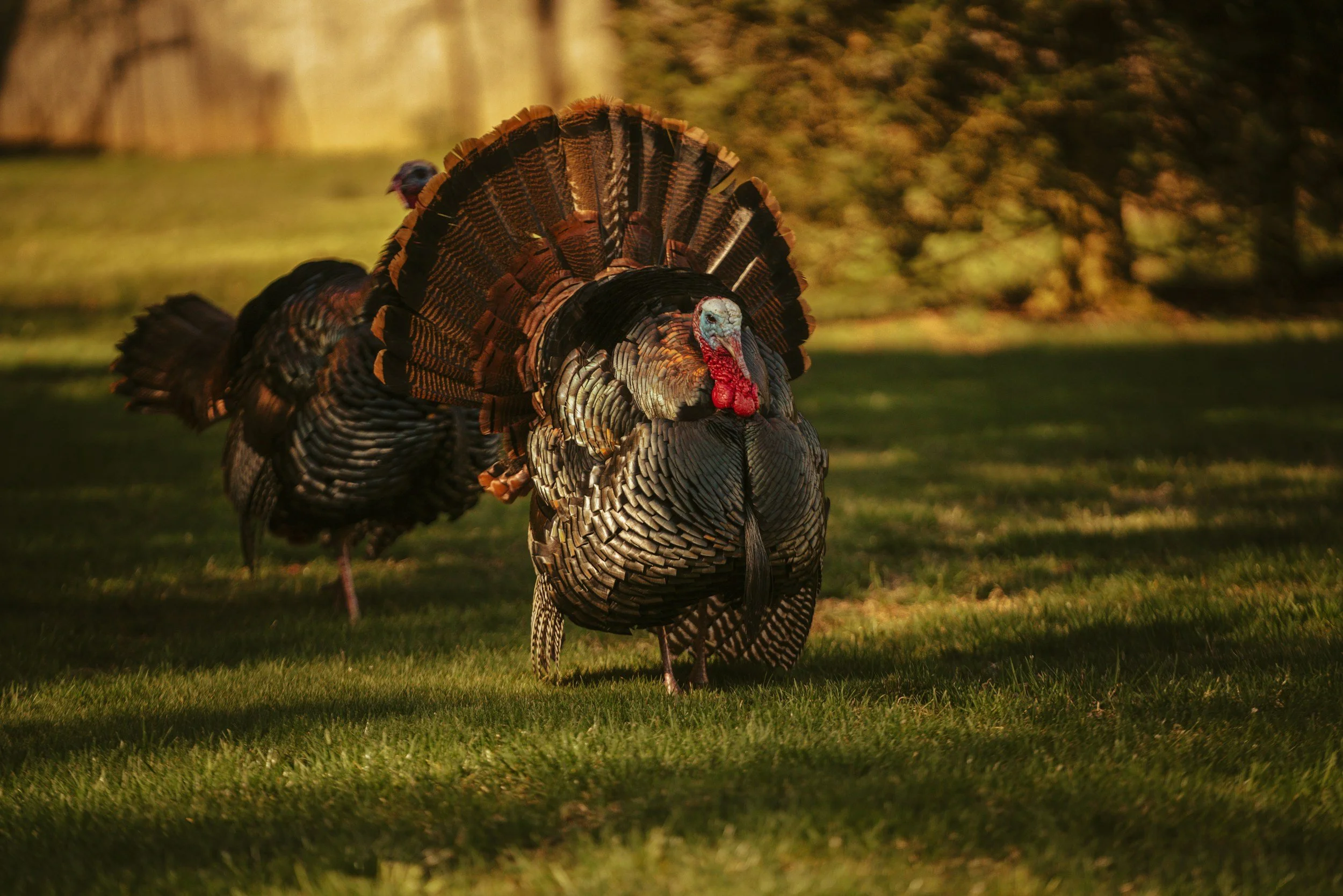

Solo Hunt, Solo Film: Mastering the Art of Self-Filmed Turkey Hunts on Public Land
How to Successfully Self-Film Your Public Land Turkey Hunt
Self-filming a turkey hunt on public land is an ambitious yet rewarding pursuit. Capturing your outdoor experiences on camera can enhance the hunt, help preserve memories, and offer learning opportunities through reviewing your footage. However, successfully filming your hunt while pursuing wary gobblers on public land presents unique challenges. Here's a practical guide to help you document your next spring turkey adventure effectively.
Why Self-Film Your Hunt?
Documenting your hunt provides lasting memories and valuable learning experiences. Reviewing a film can reveal subtle details like turkey behavior, calling effectiveness, and critical mistakes made during the hunt. Additionally, sharing your footage can inspire others, help preserve hunting traditions, and highlight opportunities on public lands. Groups like the National Wild Turkey Federation use hunter-produced footage to educate new spring hunters and preserve wild turkey habitat, and your film can contribute to that tradition.
Essential Filming Equipment
Quality filming requires the right gear. Here’s a rundown of essential equipment:
Camera Options:
Action Cameras (e.g., GoPro): Small, lightweight, and durable, perfect for POV shots or secondary angles.
Camcorders: Reliable and featuring excellent zoom capabilities, ideal for capturing clear footage at varying distances.
Mirrorless/DSLR Cameras: Excellent image quality, but require careful handling and more elaborate setups.
Tripods and Mounts:
Fluid Head Tripod: Offers smooth panning and tilting, crucial for capturing steady footage of moving turkeys.
Ground Stake Camera Mounts: Ideal for quick setups and versatile placement, especially when sitting against a tree or in brush blinds.
Tree or Limb Mounts: Useful for unique angles, overhead shots, or tight setups on public land.
Microphones:
External Shotgun Microphones: Critical for clear, directional audio, particularly when capturing gobbles and hen calls.
Lapel Microphone: Great for clear narration and capturing your live reactions quietly.
Extra Batteries and Storage:
Always bring multiple charged batteries and spare memory cards. Turkey hunts can extend longer than anticipated, and being prepared ensures you don't miss critical footage.
Best Camera Gear for Public Land Turkey Hunting
For capturing your turkey hunt, select gear that combines portability, durability, and quality. Consider using a compact camcorder or mirrorless camera with strong zoom capabilities for clear footage. A fluid head tripod is essential for achieving stable and smooth camera movements. Small action cameras, such as GoPros, are excellent for capturing secondary angles and point-of-view shots. Ensure you pack additional batteries, memory cards, and protective camo wraps to maintain stealth and preparedness in diverse conditions.
Planning and Pre-Scouting
Effective self-filming starts long before the hunt:
Scouting: Identify high-percentage areas on public land, roost sites, travel corridors, strut zones, and set camera positions ahead of time.
Visualize Camera Angles: Determine setup points where you can place your tripod or mounts discreetly without sacrificing hunting effectiveness.
Setting Up in the Field
Early Arrival: Arrive earlier than usual to set up filming gear quietly and without haste. Public land gobblers can be highly pressured, so a stealthy setup is critical.
Camera Positioning: Position your primary camera strategically to capture anticipated turkey movements and your calling sequences clearly. Place secondary action cameras for alternate angles, such as facing toward your blind or facing the anticipated turkey approach path.
Concealment: Ensure that your camera setups are concealed and minimally intrusive. Utilize natural cover, ghillie tape, or camouflage fabric to hide your gear from wary birds and other hunters.
Filming Techniques for Turkey Hunts
Capturing Authenticity: Film every aspect of your hunt, including hiking in, calling, setting decoys, and waiting periods. This provides an authentic storytelling element to your footage.
Steady Shots and Patience: Practice smooth camera movements to achieve steady shots. Use slow pans and deliberate zooms. Turkeys are notoriously observant; minimizing camera movement can mean the difference between success and failure.
Audio Capture: Clearly record calling sequences, gobbles, wingbeats, and natural ambient sounds. High-quality audio dramatically enhances the viewing experience.
Challenges and Solutions
Self-filming presents unique challenges. Here's how to manage them effectively:
Limited Mobility:
Solution: Use compact, lightweight setups that allow for rapid repositioning if turkeys move unexpectedly.Maintaining Stealth:
Solution: Use remote camera controls or smartphone apps to minimize movement during critical hunting moments.Managing Multiple Tasks:
Solution: Practice camera operation thoroughly beforehand to make filming second nature, allowing you to focus primarily on hunting.
Ethical Considerations on Public Land
Respect Other Hunters: Be mindful of other public land users. Avoid filming areas crowded by fellow hunters and respect their space and hunting experience. Organizations like Backcountry Hunters & Anglers exist specifically to preserve the DIY public land experience that self-filming helps document, and their code of ethics is worth reading before you post.
Minimal Impact: Follow the Leave No Trace 7 Principles. Public land ethics extend to filming equipment, so your setups should not negatively impact the environment or other users. Pack out every zip tie, every strip of ghillie tape, every battery.
Editing and Sharing Your Story
Authenticity: Edit your footage honestly and transparently, portraying both successful and unsuccessful moments to accurately reflect the hunting experience.
Storytelling: Construct a narrative—beginning with scouting and setup, progressing through anticipation and calling, and concluding with the climax of your encounter.
Educational Value: Share what you learned, including mistakes and successes, to help educate others and encourage responsible, ethical hunting practices.
Final Thoughts
Self-filming a public land turkey hunt demands extra preparation and patience, but offers immense satisfaction. With thoughtful gear selection, careful planning, stealthy setups, and responsible ethics, you’ll not only capture compelling footage but also create lasting memories and valuable educational content.
This spring, take on the rewarding challenge of self-filming your turkey hunt, it might become your new favorite way to enjoy the great outdoors.

Top 10 States for Public Land Turkey Hunting in 2025
Turkey hunting is more than a spring tradition; it's a test of skill, patience, and grit. According to the National Wild Turkey Federation, more than 2.5 million hunters chase spring gobblers each year across the United States, and public land access varies dramatically by state.
Whether you're looking for Merriam’s in the West or big Eastern toms in hardwood ridges, here are the top 10 states you need to consider for public land turkey hunting in 2025.
1. Missouri
Turkey Population: 400,000
2024 Harvest: 44,516 birds
Public Land: 2.5 million acres
Missouri is a turkey hunter’s paradise, blending high bird numbers with generous access. From state conservation areas to national forests, you’ll find quality habitat and a long history of substantial gobbler numbers. Season dates, quota units, and unit-specific bag limits are set annually by the Missouri Department of Conservation.
2. Wisconsin
Turkey Population: 350,000
2024 Harvest: 42,439 birds
Public Land: 5+ million acres
Wisconsin offers unmatched access for turkey hunters, with sprawling state forests and affordable nonresident licenses ($88.25). Tagging a hard-gobbling bird here is as rewarding as the rolling hardwood hills you’ll chase him through.
3. Tennessee
Turkey Population: 250,000
2024 Harvest: 60,335 birds
Public Land: 2.3 million acres
Tennessee’s diverse terrain—from river bottoms to mountain ridges—provides endless hunting scenarios. Over 60,000 birds were taken in 2023, success rates are strong, and public access is widespread across WMAs and national forests.
4. Pennsylvania
Turkey Population: 210,000
2024 Harvest: 39,500 birds
Public Land: 4 million acres
Pennsylvania combines big woods hunting with accessible game lands, offering a classic Eastern turkey experience. With millions of acres open to the public, DIY hunters have plenty of space to roam.
5. South Dakota
Highlight: Merriam’s Turkeys
Public Land: 5+ million acres
If Merriam’s turkeys are on your slam list, South Dakota should be near the top. Rugged prairies and pine ridges offer stunning backdrops — and plenty of gobbling action.
6. Alabama
Turkey Population: 365,000
Public Land: 1 million acres
Alabama has deep turkey-hunting roots. Despite a more humid spring season, public land hunters can find success in state forests, WMAs, and national forests scattered across the state.
7. Kansas
Turkey Population: 400,000
Public Land: Extensive WIHA (Walk-In Hunting Areas)
Kansas offers the rare chance to hunt both Rio Grande and Eastern turkeys, sometimes even hybrids, all without needing access to private land. The state's Walk-In Hunting Access (WIHA) program opens roughly 1 million acres of private ground to public hunters at no extra cost, making Kansas a sleeper hit.
8. Nebraska
Highlight: Merriam’s Turkeys
Note: Recent tag reductions, but still excellent access
Despite tighter tag numbers, Nebraska remains a must-visit for Merriam’s hunters. Rolling grasslands, cottonwood river bottoms, and accessible public ground make it a top option for an unforgettable hunt.
9. Idaho
Hunter Success Rate: 50%
Highlight: Steep, rugged turkey habitat
For adventurous hunters who love rugged terrain, Idaho delivers. High hunter success rates and lots of national forest land mean a solid chance at a big western bird — if you’re willing to work for it.
10. Oregon
Highlight: Long season, accessible terrain
Oregon’s logging roads and public forests make it easier to reach prime turkey habitat. The state’s generous season lengths and varied landscapes help hunters customize their spring hunts.
Final Thoughts
Public land turkey hunting is more than just chasing gobbles; it’s about the adventure, the landscapes, and the satisfaction of earning your bird. These ten states offer the best blend of high turkey populations, public access, and affordable tags for 2024.
Before you go, always double-check local regulations and consider applying for special permits or researching nonresident licensing requirements. Each state's fish and wildlife agency maintains its own portal, and the details change annually. The Association of Fish & Wildlife Agencies maintains a national directory of state agency contacts if you're trying to find a specific one fast.
Ready to start planning? Explore our Public Land Hunting Directory to find maps, access info, and hunting seasons for every state.
About the Author:
Jamie Jent has been hunting for over 35 years and is deeply involved in habitat restoration and wildlife management through organizations like the Quality Deer Management Association and Pheasants Forever. A retired firefighter, he now dedicates his time to conservation and helping others succeed on public land. He founded LandsToHunt.com, Your DIY Public Land Hunting Resource, to make public land hunting more accessible, ethical, and rewarding.